“Reto, reto, reto!”

After the first few nights out on the town in São Paulo with Fausto and his friends, I guess you could say that I was feeling a little more confident about the way I could handle myself in the city. Despite that, I was still a little thrown when Fausto had asked whether I was going to head out on the Sunday evening, this time by myself.
“Are you gonna head out tonight?” he asked me in the early hours of the evening. “I have to go to work tomorrow so I can’t join you, but there are a few cool places that have things going on tonight.”
“Oh… I… I hadn’t thought about it.” Truth was, I was still a little terrified at the thought of going out on the streets at night by myself. Which, in retrospect, seems pretty ridiculous given the amount of foreign cities whose streets I had drunkenly traversed on this journey so far.
“Well, it’s up to you, but if you do wanna go out I could give you a few recommendations.” After mustering up some courage and confessing I might be interested to check something out, Fausto told me about a club called A Lôca. “It’s a little more grunge, with a slightly younger crowd – definitely your type of place, I think.” I checked it out on the map: it wasn’t too far away from where Fausto lived, though I would still have to get a cab, but it seemed straightforward enough that I would definitely be able to find my way home at the end of the night.
And that’s how I found myself showering and getting dressed up – but not too dressed up, as per Fausto’s recommendation – and hopping into a cab by myself to find my way to this mysterious A Lôca.

***

I’m not going to lie, I was super nervous about going out on my own. I had been practicing a little bit of Portuguese but there’s no way I could speak it on any practical level – with the essential exception of ordering a beer – and I was diving headfirst into the complete unknown, with absolutely no safety net in sight. But hey, no one bothers writing a blog about staying at home, right?

When I first stepped out of the taxi, I thought that I must have been in the wrong place. In the dim street lights it was hard to clearly make anything out, but there wasn’t anything that looked like the entrance to a club… and that’s when I noticed the cave. I’m not even  exaggerating, the entrance to A Lôca was a cave. Granted, I’m not sure if the rock walls were real or artificial, but I immediately understood what Fausto was talking about when he had described the club as underground grunge. The was some dim lighting around the entrance, where my ID was checked and I was handed a piece of cardboard. I studied it for a few seconds before realising that this piece of cardboard was the A Lôca version of the electronic tab cards I had used at Lions and Club Yacht. I folded it in half and tucked it into my front pocket, knowing very well it was just as important as any electronic tag in eventually getting myself out of this place.

A Lôca seemed to take the term ‘underground’ in a very literal sense – the hallways were fashioned into rough, earthy looking tunnels so that it actually felt like I was inside a underground mine or dungeon. It was like a maze, with openings to different rooms appearing out of no where, and twists and turns obstructing your view ahead. I happened across a bar, which I tentatively approached as I pulled out my piece of cardboard again. I must have looked like a foreigner, because immediately someone asked me where I was from. I looked up to the guy next to me and introduced myself, and he explained how the whole card system worked. The card was a checkerboard of different drink values and prices, and rather than electronically recording all your purchases, the bartenders simply checked off the equivalent value of whatever drink you ordered, and at the end of the night the cashiers at the exit would tally it up and charge you accordingly. Essentially just a more archaic version of the same system, although I was highly concerned at how much easier it could be to lose a simple slip of paper.

I got myself a beer – Skol being the local favourite in this bar – and continued through the maze. I followed the largest tunnel until I arrived at what was undoubtedly the main dance floor. I’d arrived relatively early, around midnight, so the dance floor was only slowly starting to fill up. The music was a diverse mix of pop hits, 90s classics and deep house, with a traditional Brazilian song here and there, but it made for an interesting sound. I just made my way to the floor and started dancing on my own, and I was approached by a handful of people and had short, fleeting conversations with many of them. I had some guys telling me to stay away from certain guys, which at first I thought seemed quite threatening, but the evil eye looks they were giving each other made it clear that there were just social circles at play, or potentially scorned ex-lovers – I guess gay drama knows no language barriers or culture shocks. I did my best to steer clear from anything like that, and just enjoy the music and the more light-hearted people within the crowd. I think I ended up dancing with some American tourists for a little while, who didn’t say much but were more than happy to bust a few moves with me.

There were also a couple of drag performances that evening. The first one was… well, she was entertaining, I suppose. But not so much in a “Wow, what a show!” kind of way, but more in the ‘car crash in slow motion and so horrible to watch but I can’t look away’ kind of way. She was more like a court jester – something silly to warm the crowds up before the main event. I mean, it was really just her twerking in a bunch of various positions, and getting offended and slapping one of the boys whenever they tried to jump up on stage and cheekily join in, often accompanied with lewd gestures.

The warm-up act...

The warm-up act…

In her defence, she was pretty good at twerking.

In her defence, she was pretty good at twerking.

The main event, however, was something else entirely. It was a full-blown drag performance with an ‘Alice in Wonderland’ theme set to Lady Gaga’s Applause, which had only been recently released at the time. As a big fan of the drag performers and shows in my own city, it was pretty satisfying to see another quality performance from another city around the world.
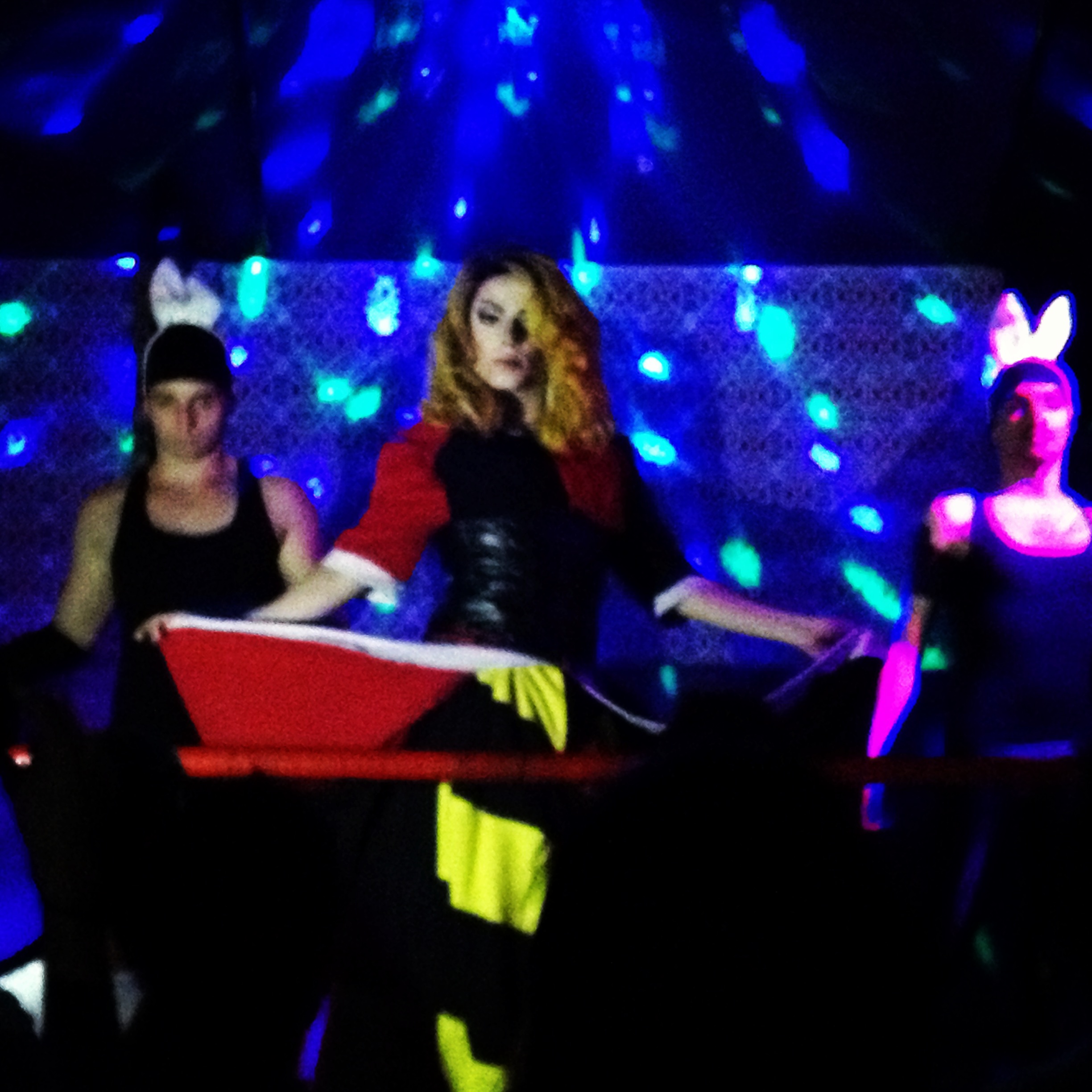
The better drag queen of the evening.

The better drag queen of the evening.

***

When I’d started to get a little tired of dancing, I made my way back through the twists and turns of the cavernous club to where the bar was located. I had another beer and then took my place against a wall, watching the people come and go, observing the different types of characters and just generally people watching. Occasionally there would be a little bit of eye contact, but usually nothing more than a fleeting glance. However, that all changed when I met Rodrigo. He was slightly shorter than me and had gorgeous tanned skin, and I noticed him stealing glance after glance at me between his conversation with his two female companions. It was obvious I was there by myself, and in no time at all the trio approached me and asked me where I was from. I guess it was also really obvious that I wasn’t a local, but in this case it had made it pretty easy for them to approach me and strike up a conversation, so I wasn’t complaining. Rodrigo introduced himself and his friends, Rita and Ducky.
“Why Ducky?” I’d asked, legitimately perplexed. I’d had to direct the question to the others because Ducky didn’t speak English.
“Because,” Rodrigo and Rita tried to explain between fits of giggles, “Well, don’t you think she looks a little… like a duck?” I didn’t know if there was something I wasn’t getting, but I just laughed along as they playfully teased their friend. She didn’t seem to find it quite as funny, but in the end I discovered she was the designated driver, so no one is ever really that impressed to be in that position.
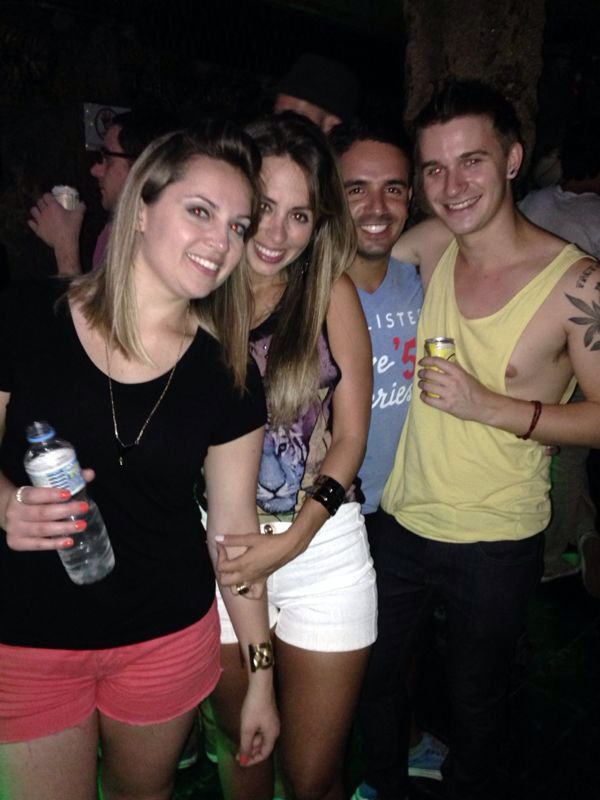
My new amigos.

My new amigos.

I spoke to them for a while, and after a few more beers and a few more flashes of Rodrigo’s cheeky smile, the two of us were all over each other. I don’t know for exactly how long that lasted, but eventually Ducky was rambling about something in Portuguese, and Rita translated. “We’re going to go salsa dancing!” she exclaimed with a laugh.
“Yeah, do you want to come with us?” Rodrigo asked.
“Yes! Come, come!” Rita said with a smile. Between the kisses with Rodrigo I had been laughing and joking around with the three of them, and I was having far too much fun to just throw in the towel now. “Ducky is driving, but don’t worry she hasn’t been drinking.”
So I agreed, and after fishing our pieces of cardboard out of our pockets and paying for the beers, Rodrigo grabbed my hand and led me to where Ducky’s car was parked.

The two girls were in the front, and I climbed into the backseat with Rodrigo. More making out ensued, but it wasn’t until we were actually well underway and driving that I came up for air and actually paid attention to where we were, or more importantly…
“Wait… where are we going?” I said, the gravity of the situation mostly masked in my mind by the alcohol, adrenaline, and probably a few hormones.
“Salsa dancing!” Rita yelled, throwing her hands up in the air. “Don’t worry, we’ll take care of you!” From the looks of it we were on some kind of overpass or highway, so at that stage I didn’t really have much of a choice but to stay with them.
Ducky asked something in Portuguese, and the others began replying. Rita was being a little more helpful, but Rodrigo was just yelling out the word ‘reto’ (pronounced “heto” for native English speakers) over and over again. “Reto! Reto! Reto!”
“What’s she saying?” I asked Rodrigo, once he’d stopped shouting.
“She’s just asking which way to go,” he said with a cheeky smile.
“Oh… well, what’s ‘reto’?”
“It means forward. Straight head. Keep going.”
“Oh… I see.” I don’t know what came over me – well, beer and a sense of bravado, obviously – but at that moment I stood up in the back of the car, stuck my head and torso out through the open sunroof, and screamed at the top of my lungs: “RETO! RETO RETO!”

Down inside the car, everybody fell about laughing, and the directions-turned-war cry became our temporary anthem, screaming the word over and over even as Ducky made the necessary turns to get to wherever it was we were going. Eventually we arrived at a bar – I have to admit, when I took a moment to take in my surrounds, it looked like we were just off a highway in the middle of no where – but unfortunately it looked like whatever salsa dancing that had been going on was starting to wrap up. It looked like the night was coming to an end. We all stopped to pee in the service station next door – me praying that my newfound friends actually were my friends, and weren’t going to drive off and leave me stranded. But they didn’t and suddenly, as I climbed back into the car, I was faced with the questions of: ‘What am I going to do now?’ and ‘How the hell am I going to get home?’

I tried to explain to Rodrigo where I lived, but instead he offered for me to come and crash with him and Ducky and Rita at Ducky’s place. “Do you have to be anywhere tomorrow?”
“Well…” I was on holidays, after all. “No, I guess I don’t.”
“Perfect,” he said with a gorgeous, playful smile. “Me neither.”
And that’s how I ended up with these three crazy, gorgeous Brazilians, singing and shouting all the way home – “Reto! Reto! Reto!” – and taking selfies in the elevator of a rather nice apartment complex. After getting some water into us and raiding Ducky’s fridge for snacks, the girls retired to Ducky’s room and Rodrigo and I attempted to sleep on the couch. There wasn’t really enough room for the two of us though, so Rodrigo suggested that we should sleep in the other bedroom.
“There’s another bedroom?” I said with a laugh. “Well, um… duh. Let’s go there, then.”

Mandatory post-partying group selfie in the mirror.

Mandatory post-partying group selfie in the mirror.

With Rodrigo and Rita after finally arriving home.

With Rodrigo and Rita after finally arriving home.

Things got a little weird when we opened the door to a full-blown child’s bedroom, complete with city map carpet for playing with toy cars and Disney’s Cars bedspread with matching curtains.
“Umm… ” I stared at Rodrigo, literally having no words to express my current feelings.
“This is her son’s room,” he said, stating the obvious but seemingly oblivious to how shocked I was.
“So… where is the kid?”
“With his father, of course!” he said with a chuckle. I didn’t have the energy to ask any more questions about the complexity of that situation, but I will say that sleeping in the same bed with a guy that you just met, in the bed of child that you’ve never met, leads to a mild crisis of ethics and morality the morning. It felt pretty wrong, but hey, what he never knows will never hurt him.

***

In the morning, both Ducky and Rita had to get up early to go to work, so when they did Rodrigo and I made the shortest walk of shame in history, from one bedroom to another. We spent the rest of the morning there, sleeping in and hanging out. Eventually I heard someone walking about the apartment outside the bedroom.
“Don’t worry, that’s just the maid,” Rodrigo said. This wasn’t uncommon in Brazil – Fausto also had a cleaning lady – but it didn’t stop me from feeling uncomfortable with the continually mounting pile of weird upon which I was sitting. But there was nothing I could do except roll with it, and trust that Rodrigo would somehow manage to eventually get me home.

My phone had died during the night, but luckily Ducky had a charger at her house. When the screen finally flashed to life, I had a message from Fausto asking where I was.
“Hmm… that’s a good question… Rodrigo, um… were exactly are we?”
“Well… we’re not in São Paulo anymore,” he said.
I looked at him, an incredulous on my face. “Excuse me, what?”
“We’re not in São Paulo anymore. We’re in São Caetano do Sul.”
“And where the hell is that?!”
Rodrigo just smiled and laughed. “Well technically it’s the next city over from São Paulo.”
I relayed this answer to Fausto, he told me he had no idea where that was and he would ask one of his co-workers. Um, what?! I felt like I’d gone clubbing on Oxford Street in Sydney and somehow managed to end my night in Parramatta, or gone partying in Manhattan and woken up in New Jersey. Except people still know where New Jersey is!
It turned out that São Caetano do Sul was still technically part of the metropolitan São Paulo region, in the same way that the international airport was, meaning that it wasn’t really far but… it definitely wasn’t close.
“How can I get home? Do you have a car?”
“No… Rita works in São Paulo, but… well, she’s already at work.” He grinned sheepishly, and I realised that short of pointing me in the right direction, Rodrigo was not going to be able to take me home.

It was a bit of a sticky situation, but I didn’t have anywhere to be so I didn’t let it stress me out too much. Assuring Fausto I’d be home as soon as I could, Rodrigo and I ventured out of the bedroom to find Ducky’s maid cooking lunch for us. I was about to politely decline and start my journey home, but as it turned out the maid had including my clothes in a load of laundry she was doing, so I was forced to stay and eat while waiting for my clothes to dry. The whole thing seemed a little surreal to be honest, but the food was delicious and it was actually nice to put on some clean clothes – that were actually own, too! – for the journey home to São Paulo. There was no reasonable or logical public transport options that were going to take me to where I needed to go, so once again it was up to the Brazilians best friend – a taxi – to get me home. Rodrigo helped me order one that could take me that distance, and helped explain to the driver where I needed to go when the taxi finally arrived. He flashed me one last cheeky smile as he bid me farewell, and with our parting words I promised to match the hospitality I had received should he, Rita or Ducky ever find themselves in Sydney. The taxi wasn’t even that expensive – though it took almost an hour to get home, it cost about a third of the price that a similar trip in Sydney would have cost.

Sights on my way back to central São Paulo.

Sights on my way back to central São Paulo.

I didn’t get a chance to see Rodrigo again during my time in Brazil, but in the taxi ride home from São Caetano do Sul I did see a variety of different environments and neighbourhoods, all of which made for quite an interesting trip. And though I’m yet to meet them again, I would never have guessed that the night that I chose to venture out in São Paulo by myself would be the night that I found the most amazing friends, had the most wild and crazy fun, and created some of the best memories.

The Emerald Isle: Greenery and Guinness

When I wasn’t passing out in a bar somewhere, and when I was actually out of bed during daylight hours, Dublin proved itself to be quite a beautiful place. After making my way back to Dublin proper after another night of crashing with Matt, I spent the day exploring some of the more touristic sights of the city. I started with O’Connell Street, which is the main shopping street of Dublin. There is a monument called The Spire of Dublin, which is a tall, needle-like aluminium structure and, at about 120 metres high, is probably one of the tallest buildings in Dublin. I also swung past the General Post Office – only because I had to post a few postcards – and discovered that it was actually one of the most prominent and important buildings on the street. The post office actually served as the office of the rebels during the uprising of the Irish Republicans in 1916, although most of the structure was destroyed in the conflict. It was rebuilt in the same place, and all that remains of the original post office is the facade, littered with bullet holes and other marks of destruction, as though this regular building in the everyday life of Dubliners also served as a history museum, and a reminder of a past that seemed to bring them all together. At least, that’s how it seemed to me – I’d never even know much a, bout the uprising before stumbling across the General Post Office, so I learnt a thing or two that morning.

The other thing I did on O’Connell Street – although it had been the day before, while Matt was at the GAA game – was try Supermac’s. “Oh have to, you just have to try Supermac’s”, Matt had said to me while we were lying around in bed on my first day. “It’s an Irish institution, that is. Even the Americans are jealous of our fries.” And upon my first visit, I could see why. They had a ridiculous array of ‘dressed fries’, which essentially meant they were smothered in all kinds of delicious, savoury, and completely unhealthy toppings. I struggled to choose just one, but in the end I made my decision to get the nacho fries, and I would do it again in a slow, cholesterol stifled heartbeat.

The delicious, fast food goodness I ordered from Supermac's.

The delicious, fast food goodness I ordered from Supermac’s.

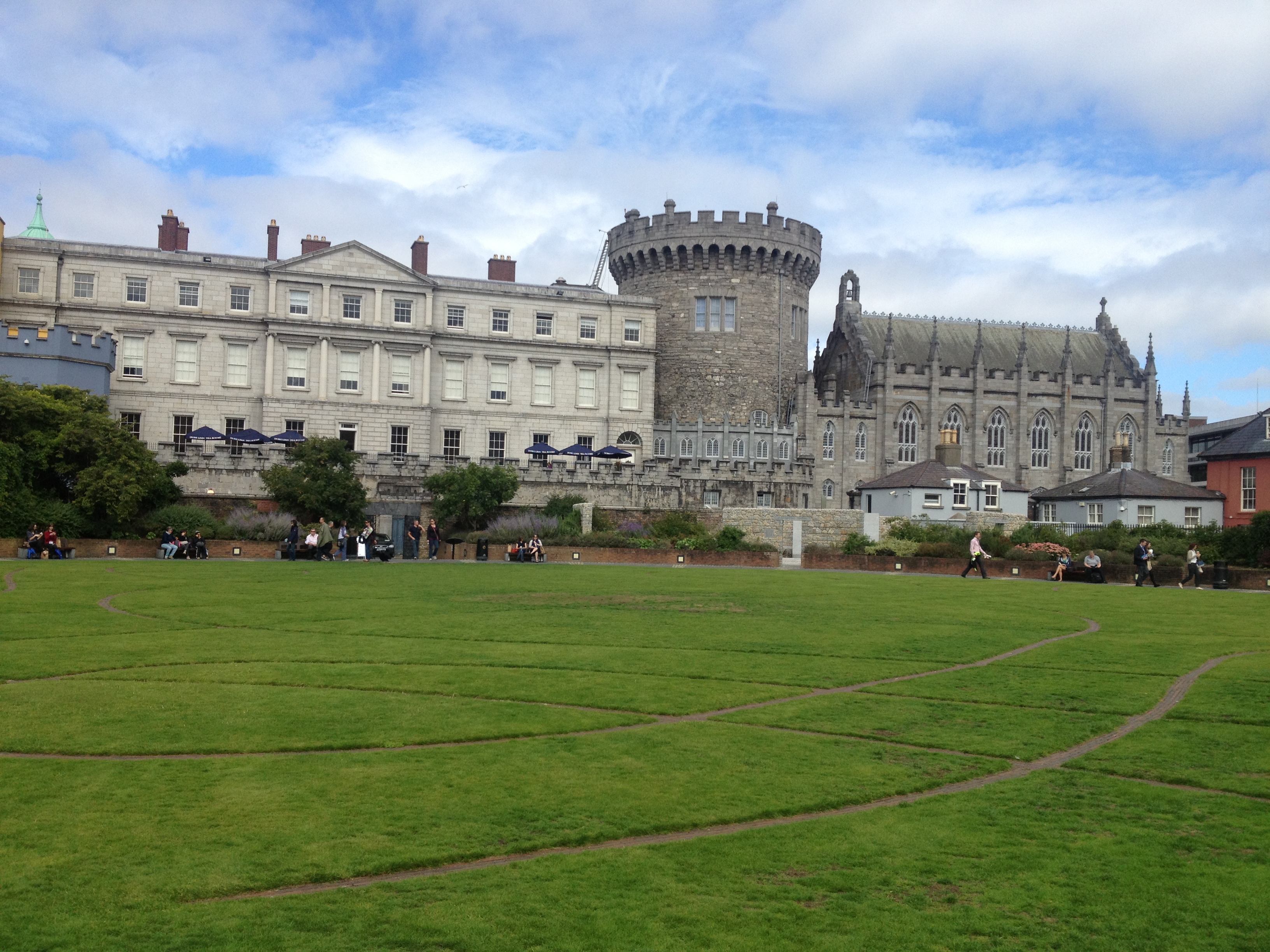
South of O’Connell Street, across the River Liffey, were more things to see, including the Dublin Castle and St Stephens Green. The castle was a large complex with museums, chapels and some beautiful gardens, and I wandered throughout each of the attractions. St Stephens Green was further south of the castle, and it was beautiful park that stretched out and marked its claim within the city. There were lakes and bridges and flowers and green lawns, and it was a beautiful day so everyone was out making the most of the sunshine. I myself, still feeling rather under the weather from my weekend of heavy drinking – laid out on the green with my book and enjoyed the uncharacteristically warm Irish weather.

Entrance to Dublin Castle.

Entrance to Dublin Castle.

Statue of Lady Justice inside the castle compound.

Statue of Lady Justice inside the castle compound.

One of the castles chapels from the outside.

One of the castles chapels from the outside.

View of the castle from one of its several beautiful green lawns.

View of the castle from one of its several beautiful green lawns.

Statue in St Stephens Green.

Statue in St Stephens Green.

That evening, I took a break from both being a tourist and from trying to live like an Irish local. I spent a night sober and headed out to the live gig of one of my favourite bands, Paramore. I had been checking out their touring schedule a few months prior and noticed that they were going to be playing in Dublin a few nights before I was due to fly out, so I had bought myself a ticket, assuming that I would’ve had to have arrived in Dublin by then. Live music and gigs have always been a pretty big part of my life, and something that I obviously hadn’t been able to do much of while I was travelling, so it was a really nice thing for me to do – and also to give my body a break from the copious drinking I had been doing with Matt.

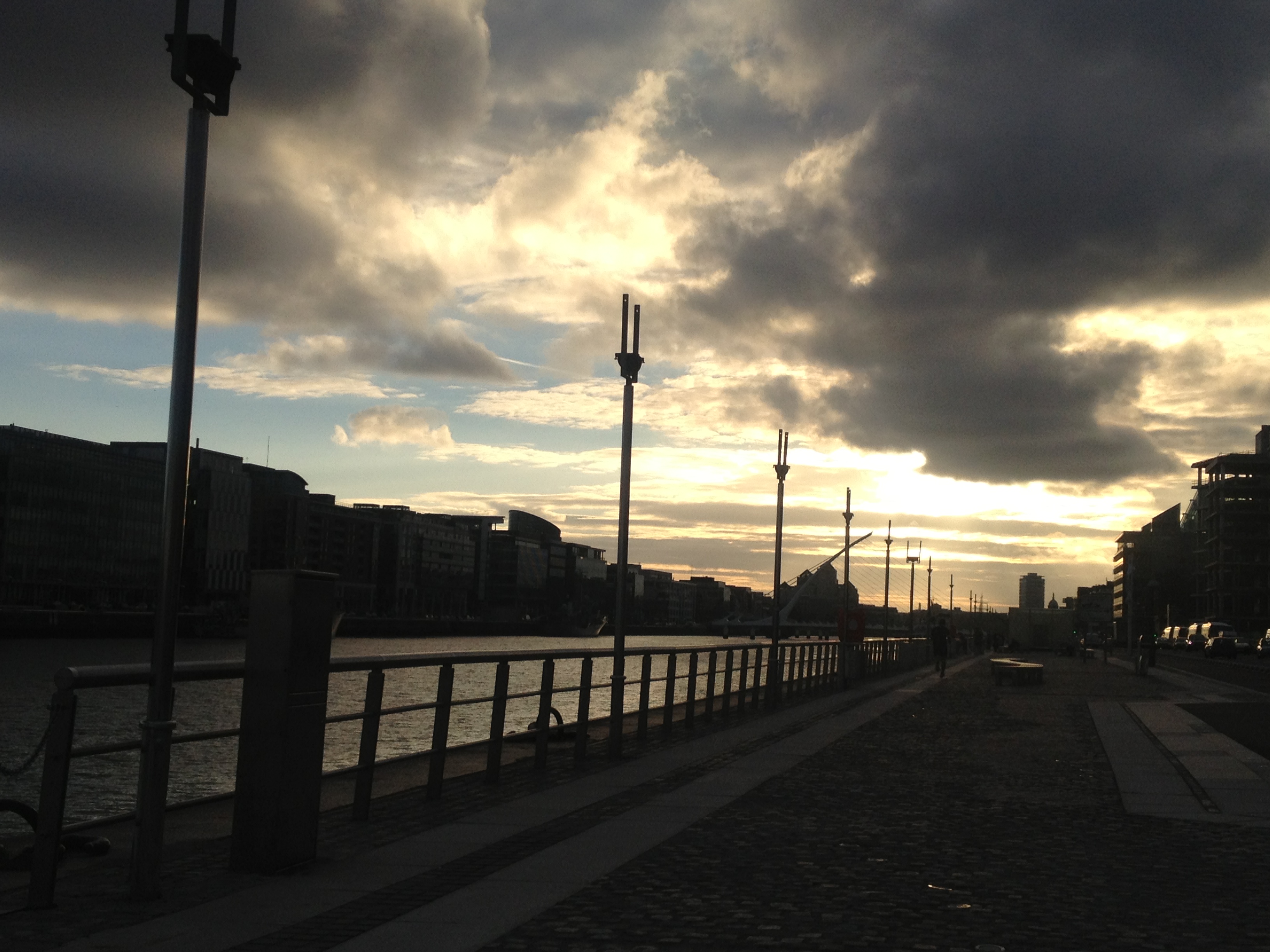
Sunset by the River Liffey.

Sunset by the River Liffey.

Paramore playing live in Dublin.

Paramore playing live in Dublin.

Confetti falling as the band plays their final song.

Confetti falling as the band plays their final song.

The band was amazing and the show was great, and afterwards I walked back to my hostel from the venue, realising that tonight would actually be the first night I spent in the hostel that I had been checked into during this whole time in Dublin. It would also be the last – I was rudely awoken at about 5am by the train station next door. The train tracks were literally right outside the rooms window, so the screaming engine and seemingly endless stream of following carriages with definitely not my alarm clock of choice.

***

The following day, just when you thought that I couldn’t possibly cram any more alcohol into my short stay in Dublin, I went to visit the factory and brewery of what many Irishmen probably consider the country’s pride and joy, their most famous export – Guinness. While it was hard to see from the outside, the building itself was supposed to shaped like a huge pint of Guinness, including a rooftop bar with a 360º view where the frothy head of a real pint would be. The visit was a tour that took you through the entire brewery, starting with the factory itself where the Guinness was made. Despite smelling a little weird, it was quite interesting to see the steps that went into making the brew, and pretty cool to see all the machines churning through the vast amounts of water, hops, yeast and barley.

Outside the Guinness factory.

Outside the Guinness factory.

Huge pools of all the ingredients were being prepared to brew the brew en masse.

Huge pools of all the ingredients were being prepared to brew the brew en masse.

After the actual brewing rooms, there was a brief tour of the history of Guinness, where we learnt all about the founding of the company by Arthur Guinness, and all about its worldwide spread into a globally recognised brand. There was also a gallery of some of the different advertising campaigns for Guinness over the years.

Sculpture from the gallery of Guinness advertising memorabilia.

Sculpture from the gallery of Guinness advertising memorabilia.

A lamp shaped to resemble a pint of Guinness, with light shining out of the white 'head'.

A lamp shaped to resemble a pint of Guinness, with light shining out of the white ‘head’.

We also did a tasting of Guinness, where we were taught how to properly drink it and identify the different stages and flavours you experienced during the process. I would later give Matt a scolding, because I hadn’t realised that there had been a very particular way of drinking Guinness.
“You can’t just sip it,” the worker in the brewery had informed us. “The head isn’t too tasty, so you have to drink through it. You need to take a big mouthful to get past the foam, and then you roll it through your mouth before swallowing it. Almost like it’s a mouthful of food, rather than stout.” Although my nose was wet and white afterwards, I found that those instructions made it much easier to drink the Guinness without it pouring down my chin and all over the table, like it had when Matt had insisted that I tried a pint the other night.
“No, of course you don’t sip it! It’s a man’s drink – big gulps!” Matt had said when I confronted him about that.
“Well why didn’t you tell me that in the first place!?”

One of the last parts of the pour was a lesson on how to pour the perfect pint. When you pour Guinness it takes a long time to settle – like when you’re pouring champagne and you have to wait for the bubbles to subside so you can finish filling the glass up, except a hundred times worse. Because of this, pouring the perfect Guinness has come to be regarded as something of an art. You have to hold the glass at just the right angle, pulling the tab the right direction and having the stout hit exactly the right part of the glass as it pours out. Once you’ve filled it to a precise level, you have to wait for it to continue settling, which usually takes at least a couple of minutes, before gently finishing off the pouring process by topping the glass up with just the right amount of frothy head. The trick is to have it just slightly swelling above the rim of the glass without it actually overflowing. Over the past weekend I had seen far too many pints of Guinness being poured, so it was kind of fascinating to realise just how delicate a process it actually was – most of the bartenders I’d seen could do it seemingly without even thinking, although I guess that probably comes with the experience of being a bartender in Ireland. I don’t think I quite mastered it in the end, but I feel I did a pretty decent job, and in the end I received my certificate that asserted I was “qualified” to pour the “perfect” pint.

The steps to pouring a perfect pint.

The steps to pouring a perfect pint.

A few mouthfuls into the not so perfect pint of Guinness that I poured myself.

A few mouthfuls into the not so perfect pint of Guinness that I poured myself.

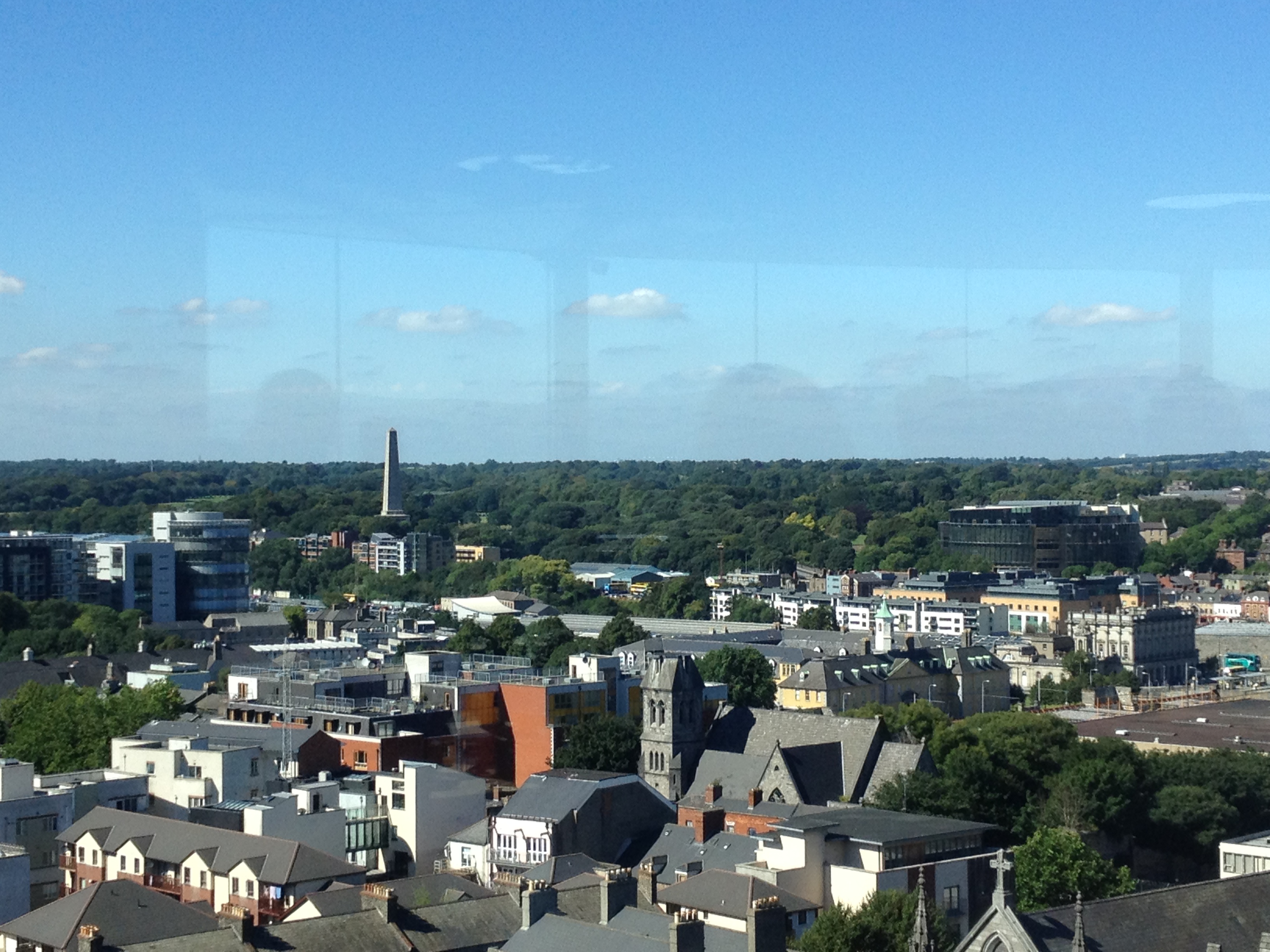
What was most surprising, though, was the fact that I was actually beginning to like the taste of Guinness! Despite all my previous moaning about it to Matt, I think I had had enough samples and been exposed to it enough that I could actually drink a whole pint to myself. Like beer, I suppose, Guinness was an acquired taste that I had finally acquired. It would never be my first choice anywhere else in the world except Ireland though, but at least I could say that I’d sprouted a few extra hairs on my chest and finished a pint to myself. After the pouring I went up to the rooftop bar to take a few pictures as my final stop on the tour of the brewery. There was a complete panoramic view of the surrounding parts of Dublin, and it was a gorgeous and sunny day so the sights were just marvellous.

View from the rooftop bar at the Guinness factory.

View from the rooftop bar at the Guinness factory, with Phoenix Park in the distance.

 ***

I finished off the afternoon with a stroll through the nearby Phoenix Park. While it was quite close, I’d rather underestimated its size – you could probably fit at least 50 St Stephens Greens in the park. It was was a gorgeous afternoon, so the place was full of joggers, bikers and family picnics. The Dublin Zoo was also located in Phoenix Park, so I wandered by that to see if I could catch a sneaky glimpse of any of the animals. I passed by a huge obelisk called the Wellington Testimonial, which I had seen from the rooftop of the Guinness brewery, and climbed the shallow stairs around the base so that I was right beneath it, and looked up as it towered over me. It was a long walk through the huge park, and I’d ended up having at least a few pints at the Guinness factory, so I was feeling a little drowsy. I was meeting Matt later that evening for my final night in Dublin, so I turned my afternoon stroll around and set my course for the city, ambling along in the bright afternoon sunshine.

Wellington Testimonial in Phoenix Park.

Wellington Testimonial in Phoenix Park.

Eurail: A Critique and Review

At this point in time I’d like to take break from retelling the narrative of my journey to offer some opinion and advice, of sorts, regarding the way I travelled around Europe, my major mode of transport: the European train network. Ultimately it was something that worked very well for me, but there were definitely lists of both pros and cons. However, some of these points aren’t really things that were explicitly bad, but rather minor details that easily slipped under the radar, and things that I would have liked to have been a little more aware of beforehand.

***

Choosing to do your Eurotrip with Eurail does require a little forethought and planning. Eurail is the company brand that offers passes to people who are citizens of non-European countries – Interrail is the service offered to European citizens – and therefore you can only purchase such passes outside of Europe, and they can only be sent to non-European addresses. This meant that while I did choose to have a very free and flexible journey around the continent, I had to choose and commit to that kind of journey from the very beginning. Passes come at 4 different levels: Global, which lets you travel up to 24 countries; Select, which lets you travel between any 4 bordering countries of your choice; Regional, allowing you to choose from popular 2 country combinations; and One Country, which is rather self-explanatory. From each of these, you can also choose a Continuous Pass, which allows you to travel every day within your set period, or a Flexi Pass, which meant your pass was valid for a set number of days, but you were only allowed to travel on a certain number of days – however, the amount of trains you could catch on those travel days was unlimited. It was all a bit confusing at first, but it’s quite simple when you put it into practice.

If you’ve been previously reading about my travels then it will be obvious I selected a Global Pass, and I chose a Flexi Global Pass that allowed me 15 days of travel within a 2 month period. This just meant that I had to keep track of how many days it would take me to get where I wanted to go, rather than worrying about how long I was able to stay in each place. It was a cheaper option, with a further 35% discount of the price for people under 26, and with a little bit of planning it was just as comprehensive and useful as the continuous pass would have been, for a fraction of the price. Once I had ordered it, Eurail posted me my ticket and trip log, a train timetable booklet, a Eurail map and an information guidebook. As confusing as some of the fine print was, I can’t deny that Eurail did try to give you all of the detailed information to help you prepare, and I tried my best to read over it carefully to maximise the use of my pass. There are things like discounts at hostels, hotels and cafes,  and reduced entry to some sightseeing attractions, and for your pass can even be used to make reservations on selected ferry lines.

Eurail Travel Log, which you're required to fill out as proof of your travel days.

Eurail Travel Log, which you’re required to fill out as proof of your travel days.

The Eurail Map I used for planning - as you can see, the original plans I made aren't quite what ended up happening.

The Eurail Map I used for planning – as you can see, the original plans I made aren’t quite what ended up happening.

***

Given some of the difficulties I came across, I obviously didn’t read the fine print closely enough. There were times when I got it right – in Stockholm, were I activated the pass, I saw that all the trains to Copenhagen were high-speed trains that required the purchase of a reservation. So I did that, no problems – since I already had the ticket, it was just a small fare to reserve a seat on the train. I had an allocated seat when I boarded the train, and other than a huge delay once the train was already en route to Denmark, there was no issue with the trip. However, when I went to travel to Hamburg from Copenhagen, I’d seen in the timetable that reservations were not compulsory, but when I went to ask someone at the ticket office where I should go to catch the train to Hamburg, she looked at me uncertainly and asked if I had a reservation.
“Oh… um… Do I need one?” was all I could think to say. She pulled a discontenting face which made it obvious she was reluctant to give the final word on that issue.
“Maybe. Perhaps not. You can go down to the platform and ask.” She pointed me in the right direction, and on the platform it was all rather chaotic. I eventually found where the 2nd Class carriages were and stepped onto the train and found myself a vacant seat. It was here I learnt that just because a reservation wasn’t compulsory, doesn’t mean you still couldn’t get one. Several times I saw people come over to other passengers and upheave them from their seats – those were obviously people who had reservations – and the displaced passengers usually had to stand up for the rest of the very long trip. I was lucky during that trip, however, and when the train inspector came along to check my ticket, he didn’t require anything more than a stamp to my Eurail pass to mark off one of my 15 days of travel. That was when I started to get the hang of compulsory vs non-compulsory reservations on the trains.

The ability to catch more than one train on each travelling day was also a life saver for me on the odd occasion, in conjunction with the handy Eurail iPhone app that I downloaded, which effectively made the timetable booklet redundant. When I found myself stranded in Hamburg without a place to stay, I referred to the app and put in ‘Hamburg’ as the origin and ‘Groningen’ as the destination. It searched the timetables and showed me exactly which train I had to catch to what cities, and because I turned on the function that only showed trains that didn’t require reservations, I was able to travel for the rest of the day for no extra charge, and that was how I ended up in the Netherlands with Gemma a day earlier than I had planned. It was generally the less frequented routes, such as the ones that took me to Groningen, which required no reservations, so the pass I had was particularly useful for things like that. Once I’d familiarised myself with how it all worked, I was able to really enjoy the flexibility of my pass knowing that I could stay an extra day or two in certain places, as I ended up doing in Berlin, without it having too much of an impact on the cost-effectiveness of my pass. The desire to take trains that required no reservations also encouraged me to see cities that I probably would have otherwise missed, such as Cologne, Brussels, and Bratislava.

***

There were other problems though. The one I had the biggest issue with was the inability to make reservations for a Eurail pass online. On my last night in Berlin, when Ralf was helping me try to book a ticket to Paris, there was no where for me to state that I had the pass, which would have resulted in me paying for the full-priced ticket (the trains to Paris were all full anyway, but that’s beside the point). This meant that for every journey I took with my Pass that required a reservation, I had to line up in the often monstrously long queues – in Paris, Barcelona, Rome, and Ancona – for what was ultimately a ridiculously small and simple exchange. Paris in general was just a nightmare for train reservations, both travelling to and from the city. In Cologne I got up extremely early and rushed to the ticket office – which had been closed by the time I arrived the previous evening – to reserve a ticket to Paris. The woman told me that all of the allocations she had available for Eurail customers were taken, and that I could pay a full priced fare for either 1st or 2nd Class if I wanted to catch that train. I hadn’t been aware of that point, and it was frustrating to know that there was room on the train, but my pass just simply did not allow for it. I assured her that full fares were not an option, and she eventually found a way for me to get to Paris that day by sending me via Brussels, but I still had to pay reservation fees, with the one for the French train company being particularly large for such a short distance – while Eurail passes are valid all across Europe, they operate in partnership with all the separate national train companies across the continent, which is why it cost me €30 to get from Brussels to Paris, but only around €9 to get from Stockholm to Denmark.

Then there were the difficulties of making a reservation for the overnight train from Paris to Barcelona. The evening that I wanted to leave was completely booked out, and the next day only had reclining seats available, rather than the cabins with beds in them. Desperate to not overstay in a city as expensive as Paris, I took the reclining seat class, which was still a hefty €50 reservation fee. I know that’s significantly less than than the price of the usual ticket, but after having paid around €550 for the pass in the first place, I never expected to be paying quite so much more for reservations. On the whole, I would have spent at least €100 or more just on those reservation fees for my trips, which is – to be fair – briefly outlined in the guide, but it was never really impressed upon me how often I would have to do that, or even indeed that my access to those reservations would be quite so limited due to allocated numbers. It’s also worth noting that while the Eurail pass is also valid for some of the ferry lines between Spain, Italy, Greece and Croatia – something I was considering in my initial plan – they are still limited by availability and incur extra reservation fees that are undoubtedly greater than the ones for train.

***

Then there were just a lot of random nuisances with the trains, as well as random restrictions on the pass. When I’d had my direction dilemma leaving Berlin, Ralf had suggested visiting Poland, but along with Serbia, Montenegro, Albania, Macedonia and Bosnia, it was a country that was not valid for my Eurail pass. Anything east of Poland or Romania was also excluded, and while perhaps they’re not as popular destinations as parts of Western Europe, I thought they’d qualify for an inclusion in the Eurail pass, since it extended down all the way to Turkey – although perhaps that was an issue with those countries rather than Eurail itself.

The other place where I had problems booking tickets as Ancona. I lined up at the ticket office to ask about ticket availability for travelling to Zürich, as I would need to make several stopovers. The man angrily yelled at me and told me to speak to the information office in another part of the building. There, from the amount of effort it took to explain what I wanted – and I’m not even talking about language barriers – it was as though the woman had never had to deal with a Eurail pass before, and Ancona is a popular tourist port for ferries travelling to and from Greece and Croatia, so that can’t have been the case. After moving at a painstakingly glacial pace, she was eventually able to tell me if all the trains I needed to catch had vacancies – they did – so I thanked her and went back to reserve them. Of course, when I went to book it, all the prices she had quoted me were wrong, and I ended up having to pay a lot more for the reservations than I intended. I was also a little apprehensive about making reservations for Italian trains because from what I had experienced they were never running on time. It could take just one delayed departure to mess up my entire booked schedule and have me sitting on trains shooting across the country while I wrung my hands in stress and tried to figure out alternate routes.

Of course, in Switzerland I had the opposite problem. I anxiously checked the time on my phone as I stood at the end of the queue of people who were boarding the train. There were so many people in front of me taking so long to get on that, with a minute before scheduled departure time, I ran to the end of the carriage and jumped on there. While I was still walking to my seat, the train began its movements exactly on time, and I’m almost certain if I had still been at the end of that line, I’d still be on the platform watching my reserved seat haul out to Austria. You just don’t mess with Swiss punctuality.

***

There’s all kinds of hiccups that can make the planing of a Europe train expedition a rather stressful, touch-and-go affair, but in the end, despite all that, I would still say it was worth it, and would highly recommend it to anyone who wants to see a lot of Europe on a budget in a limited timeframe. With the pass I travelled through 12 different countries and bunch of different cities, having in-depth experiences in the cultures of almost all of them, and in the end it was a fraction of the price of what individual tickets would have cost me to do the same trip – even with the added reservation fees. It’s relatively simple – no complicated check-in or security search or customs – you just jump on board, find a seat and away you go. You get to see the countryside pass you by, and you really get an appreciation for the distances that you’re travelling that you really just don’t get when you’re hurling through the air in a big metal flying machine. You get in amongst the people and feel like a real traveller, and that was by and large one of the things I loved about train travel – almost every day felt like an adventure.

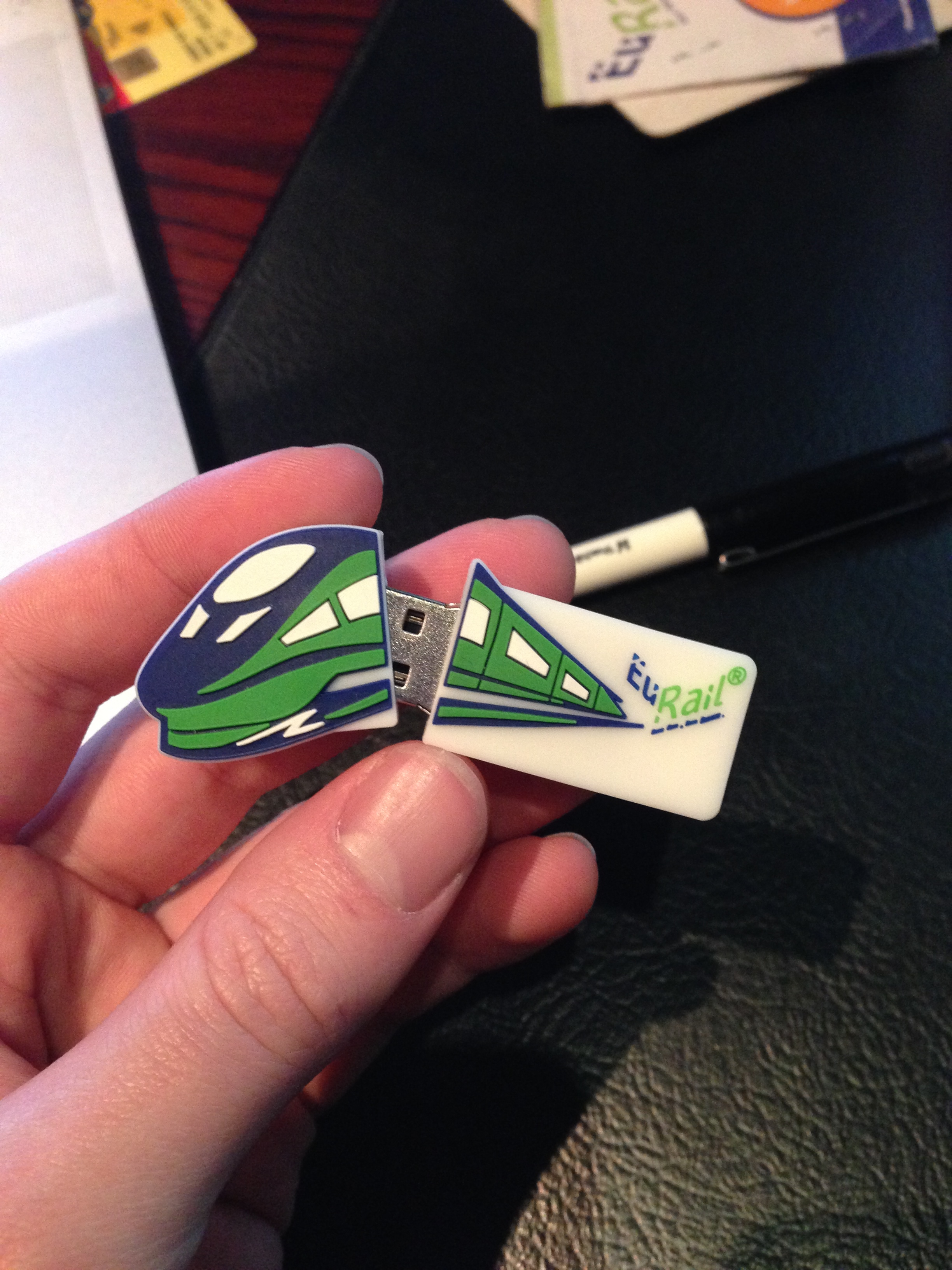
And after your big trip is done, if you send Eurail your travel log – which I assume they record for some kind of research purposes – they return it to you along with a little gift to say thank you for helping them with that research. I can finally throw away the countless ticket stubs I hoarded, knowing that I have this cute little USB stick to remind me of my Eurail adventures.

The neat little gift Eurail sent me after it was all over.

The neat little gift Eurail sent me after it was all over.

Dead and Unburied: Museums in London

After a couple of nights and days spent with locals, and keeping the touristic activities to a minimum, I thought it best to start seeing at least some of the real touristic attractions London had to offer. I was going to be around for a couple of weeks, so I definitely had the time, and London really did have a lot to offer in the way of sights and attractions. It had been a while since I had been to any museums – I’d almost been avoiding them ever since my visit to the Vatican – but from what I had gathered there were definitely a few in London that were definitely worth taking a look. Many of them were also free, which was almost always a big deciding factor as to whether I would bother visiting something that I was only half sure I might really enjoy. But growing up I had always been a massive dinosaur nerd, so there was no way that I could pass up the opportunity to see the Natural History Museum and its collection of fossilised skeletons. What I had failed to anticipate, however, was that such attractions are also really popular among children, and what I had failed to learn before I arrived at the museum was that it was currently school holidays. Yes, the line to get into the museum that morning was probably twice as long as the diplodocus skeleton that I knew was waiting for me inside the main hall of the Natural History Museum, just out of sight. It snaked around the various courtyards and around the edge of the outside park like a fat snake that had eaten a bunch of screaming, squirming and misbehaving children. And there I was, stuck in the middle of it.

Outside the Natural History Museum.

Outside the Natural History Museum.

Thankfully I had my book to keep me entertained, because the wait was easily over an hour, possibly getting very close to two. I stopped looking at my watch after a while because it was simply too frustrating. Even my training as a sociologist and my love for participant observation and people watching failed to ease the painful wait – there’s only so many dumb things children say or do, or family arguments you can eavesdrop in before it all just becomes a monotonous blur. Several times I considered bailing and coming back when the line was shorter, but then I had no idea if the line would ever be shorter, and I’d come this far already that I was determined to hang in there. It felt like a bit of a surreal dream when I finally reached the front of the line, but when I did there was a quick security search before I was ushered in through the front doors and into the main hall of the museum.

Where I was greeted by another line. I nearly screamed, until I realised it was just a line to get into one of the attraction rooms. Of course, it was the main dinosaur room, but I decided I would come back to tackle that one later – I’d had quite enough of lining up for the time being. So I wandered through the halls of the museum, looking at exhibits and learning about all sorts of natural phenomena. I surprised myself with realising how much I actually already knew about a lot of stuff… then was probably less surprised when I remember that a lot of the stuff in the museum was aimed for children. There were halls and halls of taxidermy animals – or authentic looking replicas, I’m not 100% sure – which were also interesting to look through, as well as a bunch of fossilised of creatures which I guess weren’t cool enough, or born in the wrong era or whatever, to be included into the real dinosaur exhibit. Though considering there was no line to see these ones, I wasn’t complaining.

An ichthyosaur skeleton in the Natural History Museum.

An ichthyosaur skeleton in the Natural History Museum.

A wall-mounted plesiosaur skeleton.

A wall-mounted plesiosaur skeleton.

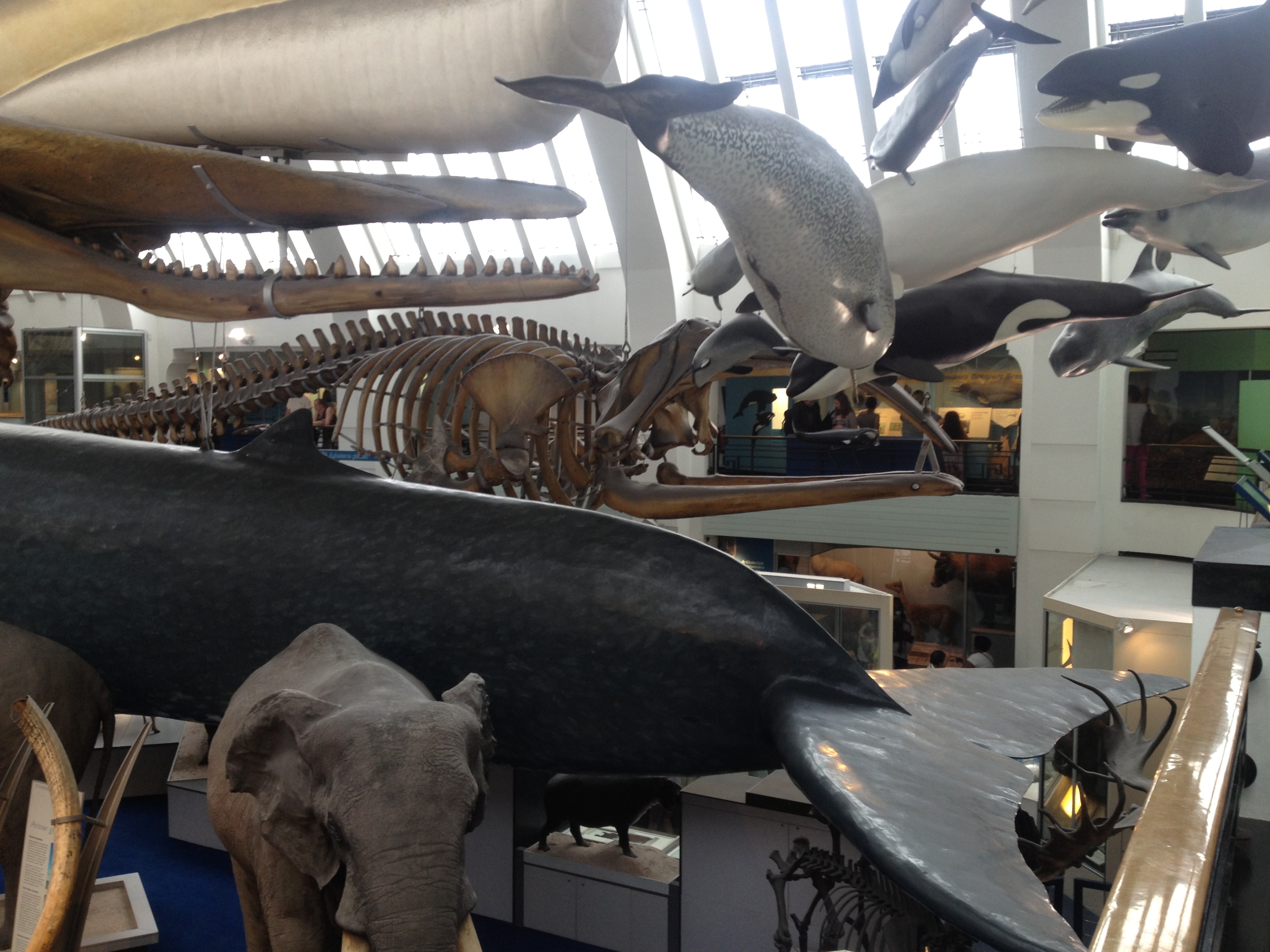
The museum has extensive collections of birds, reptiles and insects, as well as scores of invertebrates, but it was the rooms dedicated to the mammals that definitely had the most to offer. They had models of species great and small from all over the continents of the world, as well as the worlds oceans. Suspended from the ceiling was basically every type of whale or marine mammal under the sun, hanging motionless in the cavernous walls of the museum.

The mammal room is packed full of life size replicas of modern mammals.

The mammal room is packed full of life size replicas of modern mammals.

Narwhale!

Narwhale!

The biggest of the mammals are the whales, the biggest of which is the blue whale. However, it was virtually impossible for me to capture the whole model in a single photograph.

The biggest of the mammals are the whales, the biggest of which is the blue whale. However, it was virtually impossible for me to capture the whole model in a single photograph.

But after I’d exhausted just about every other possibility, it was time to head to the dinosaurs. The line to get into the exhibit room was shorter than it had been earlier in the morning, but there was still a line. The room itself was littered with information and interactive activities and games, which I took way too much pride in beating all the little children at, but there was still a long line that passed over the whole exhibit on a suspended bridge. It seems you couldn’t get down to the rest of the exhibit until you’d lined up to see a special surprise of some sort. The line was long but it shuffled along at a moderate pace. As I waited, I passed by a vast collection of fossilised skeletons, and I stopped to take photos of my favourite ones and the best ones, reliving my nerdy childhood and my love for Jurassic Park.

Stegosaurus.

Stegosaurus.

Triceratops.

Triceratops.

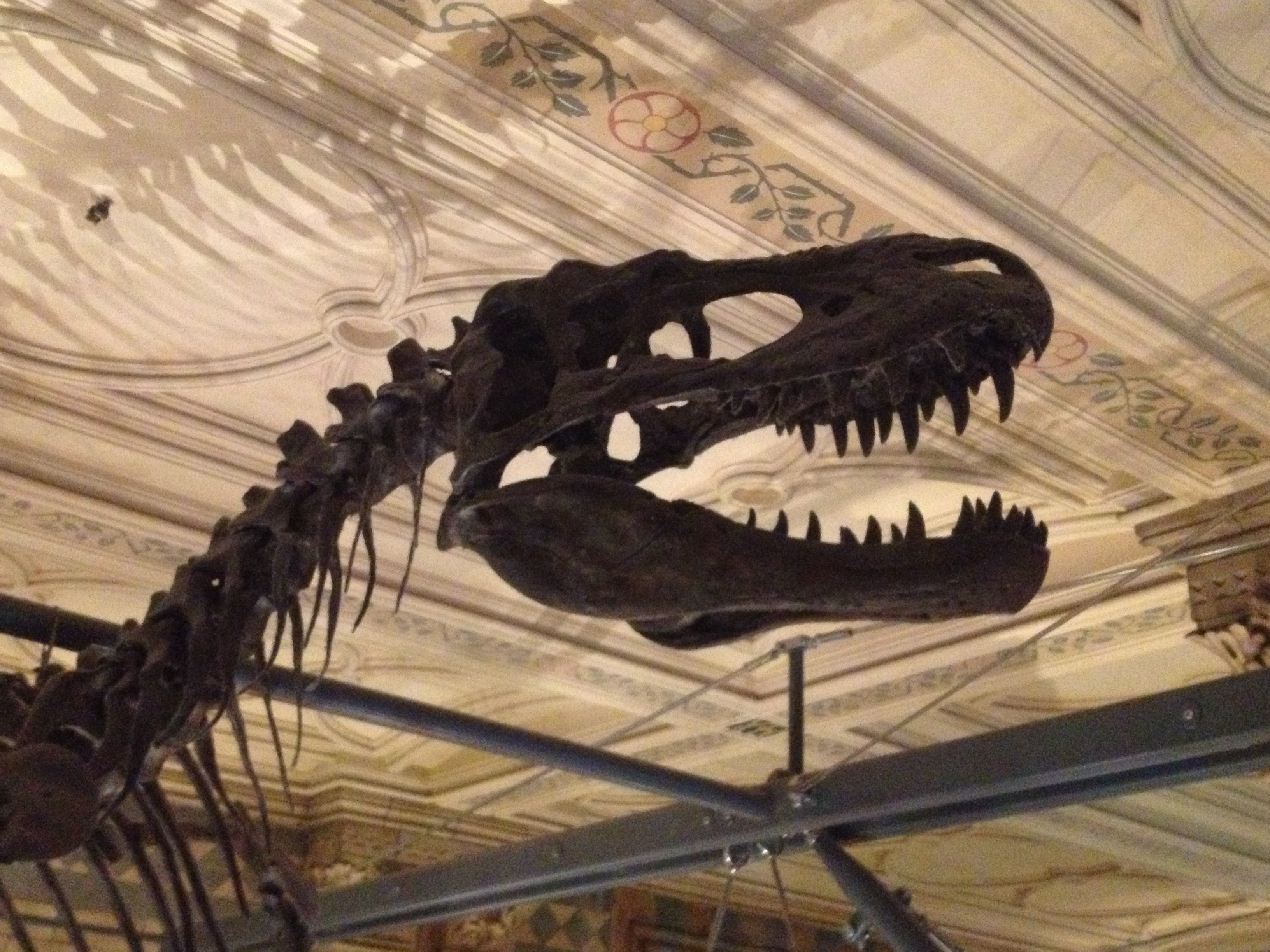
Skulls of a triceratops and an allosaurus.

Skulls of a triceratops and an allosaurus.

A fearsome allosaurus skull.

A fearsome allosaurus skull.

Finally I was at the front of the line, and I got to see what we had all been waiting for. Around the corner in a dimly lit room, we discovered a tyrannosaurus rex. Not a fossilised, inanimate skeleton, but a fully fleshed and very active dinosaur. Well, it wasn’t flesh, but it was a very lifelike robotic model, sniffing and stomping and moving about, opening its jaws to let out screams. It was pretty cool, but I found myself thinking that overall it was rather gimmicky. As I child I probably would have loved it, and I suppose it is there to either frighten or impress the younger children, but I realised that I’d been more interested in looking at the actual fossilised bones of real dinosaurs. It was also at that point that I realised I had never stopped being a dinosaur nerd.

The tyrannosaurus rex moving, life-like replica that we waited for so long to see.

The tyrannosaurus rex moving, lifelike replica that we waited for so long to see.

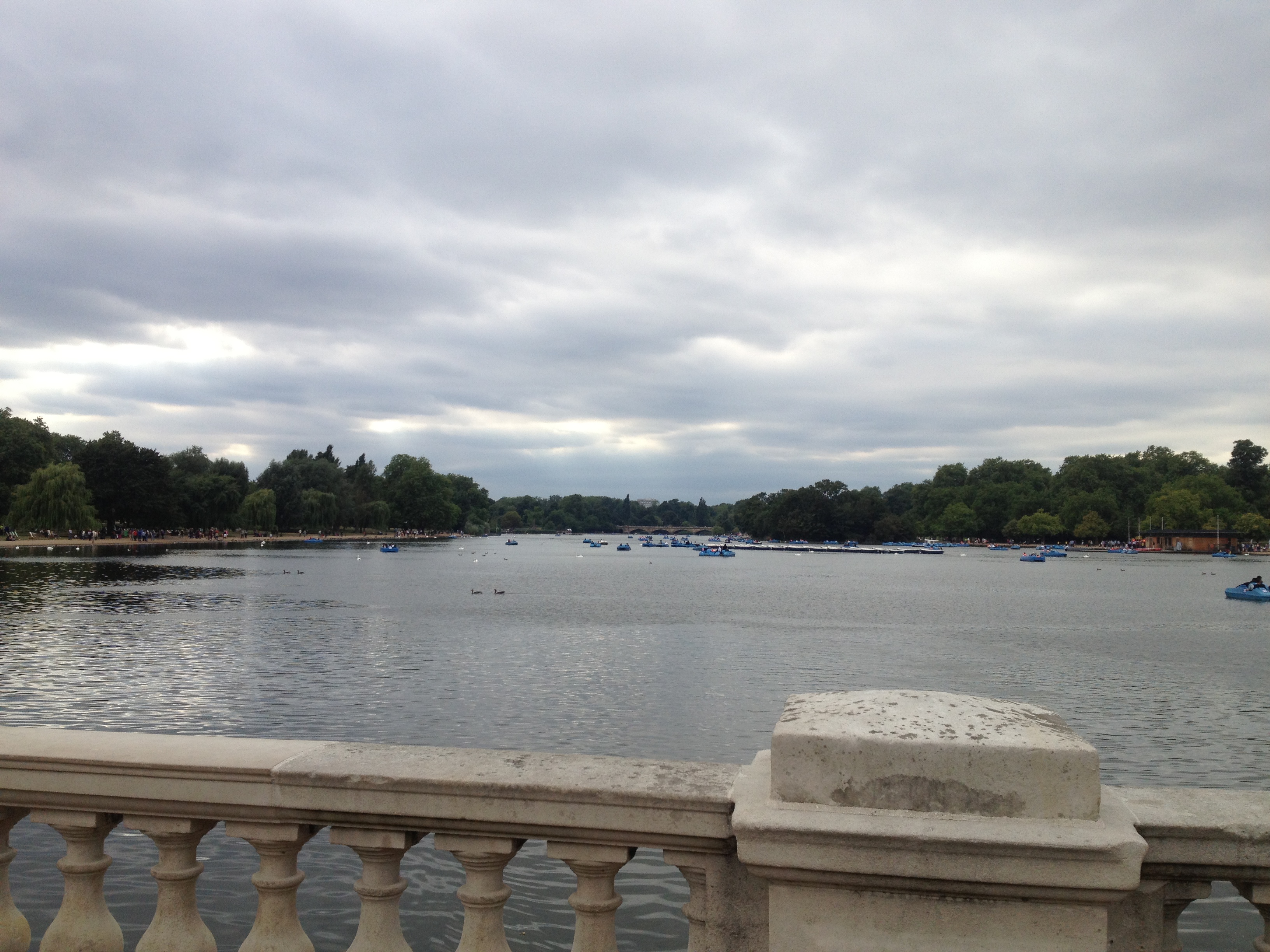
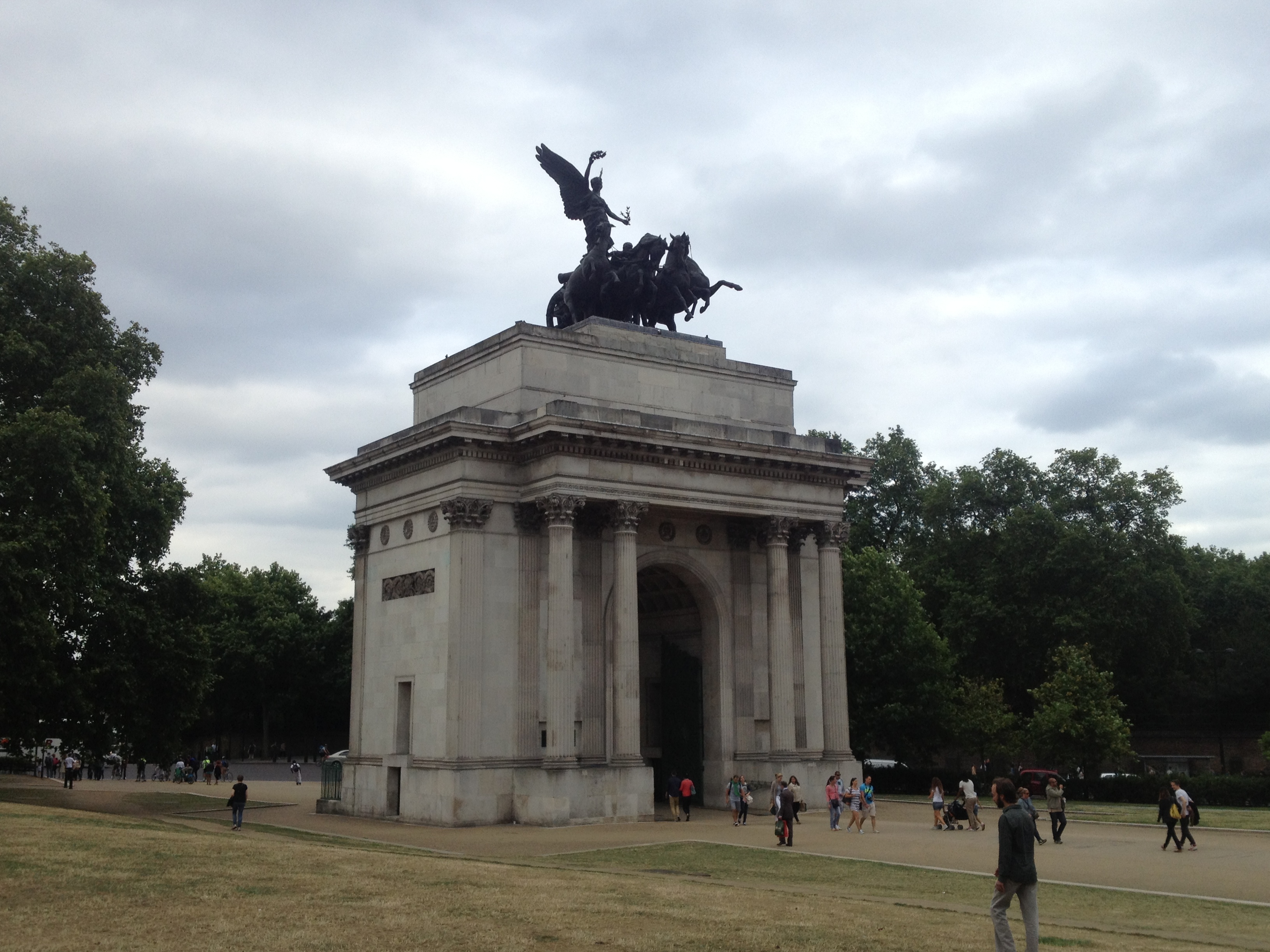
After that I was beginning to feel a little bit of museum fatigue, so I headed outside to leave. To my horror, there was absolutely no line and there were people walking in and out freely. I made a point to remember that for my next museum visit, mornings probably weren’t the best time to visit, and from the Natural History Museum I strolled through the overcast streets of London all the way to Hyde Park, where I wandered through the paths and over to the nearby Wellington Arch for a photograph.

The Serpentine, the major lake of the park, stretching out across Hyde Park.

The Serpentine, the major lake of the park, stretching out across Hyde Park.

The Wellington Arch, the victory arch proclaiming defeat over Napoleon, was finished in 1827.

The Wellington Arch, the victory arch proclaiming defeat over Napoleon, was finished in 1827.

***

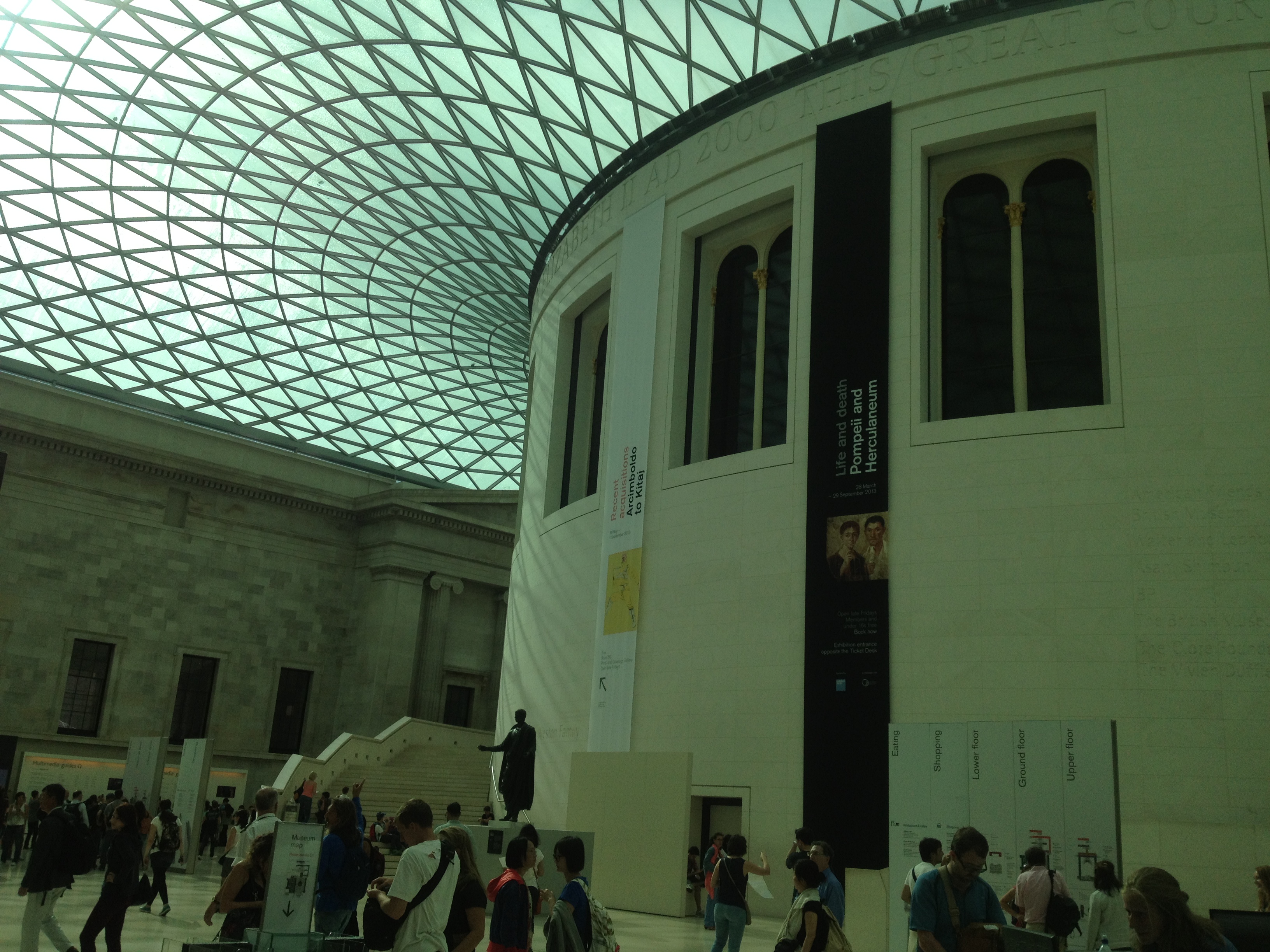
Following the idea that mornings weren’t the best time to visit museums if you wanted to avoid lines, I decided to make my way to the British Museum, another free museum that had a range of artefacts from all over the world, most notably the Rosetta Stone. I wandered throughout the museum, twisting and turning through the confusing maze of a floor plan, with no real direction or intense burning desire to see anything. It was an overcast afternoon that was threatening to rain, so it was really the perfect time to be inside in a museum. However, I suppose the reason that a lot of people choose to visit museums in the morning is that by the afternoon, many of us lack the concentration or patience to wander around looking at ancient relics for too long a period of time. I’m not exempt from this, and I probably spent a significantly shorter amount of time in the British Museum (although morning or afternoon – rain, hail or shine – I’m never one for spending hours upon hours at these kinds of places anyway). Still, I did enjoy my time there looking at the relics, from the beautiful to the interesting to the rather macabre.

Inside the main entrance chamber of the British Museum.

Inside the main entrance chamber of the British Museum.

Statue of Caesar that was being featured in the main hall of the British Museum.

Statue of Caesar that was being featured in the main hall of the British Museum.

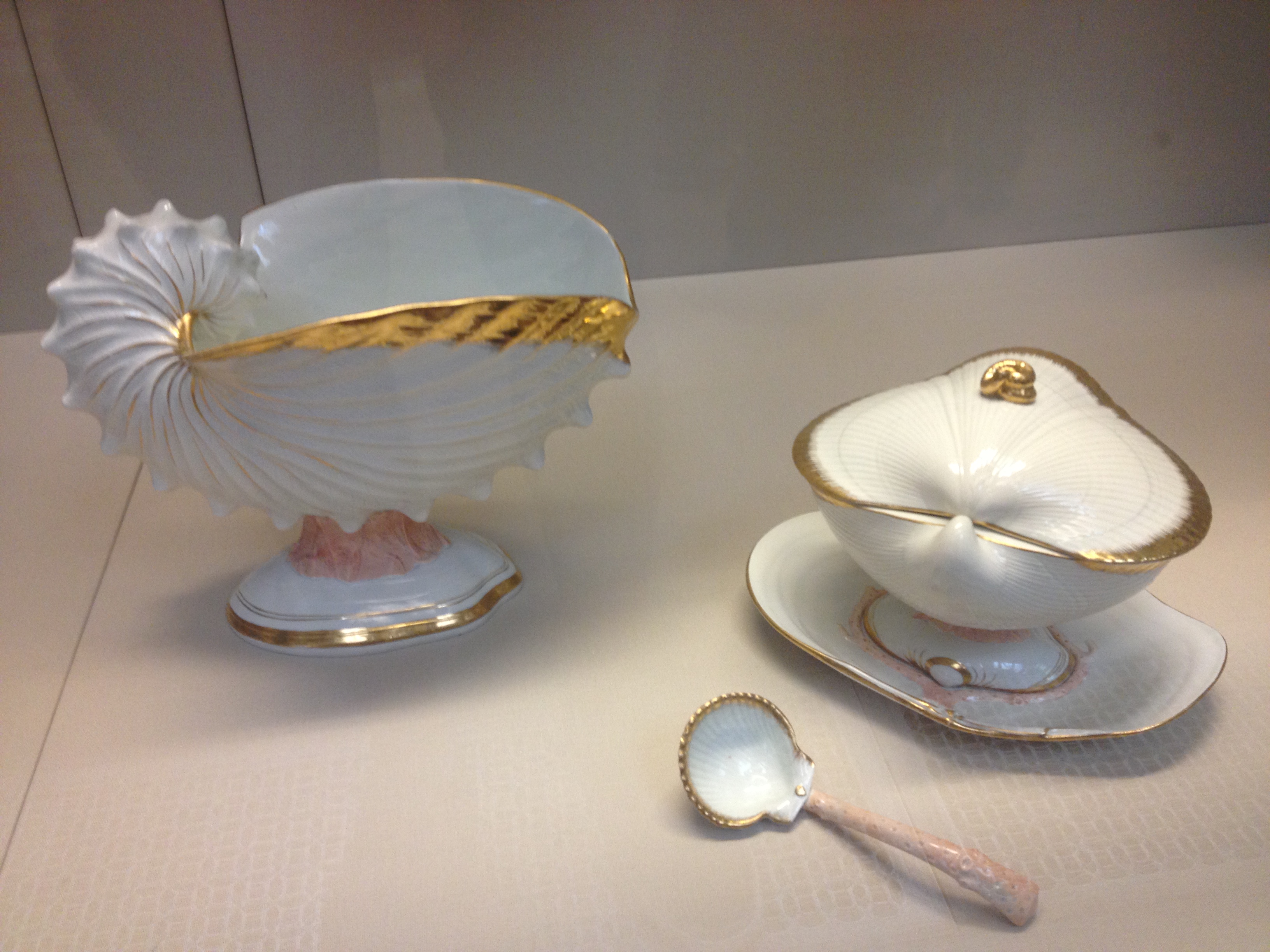
Sea shell tea set.

Sea shell tea set.

An old clock adorned with sphinxes and a golden eagle.

An old clock adorned with sphinxes and a golden eagle.

Mummified cats inside the British Museum.

Mummified cats inside the British Museum.

A perfectly preserved pair of skeletons on display in the museum.

A perfectly preserved pair of skeletons on display in the museum.

The British Museum was the final stop of my day of museums. There’s only so much of that stuff I can take in a day, and considering all these places also involved a significant amount of travel between each one, I’d grown rather exhausted. I’d known that there was a lot to see and do in London, but it turns out that that was jut because London happened to be such a big place. I often misjudged what I thought to be walking distances and found myself on significantly hefty treks across the city. I’d get the hang of it eventually, but for now for the museums I was over and out.

What A Punt: Cambridge on a hangover

Before Giles had set off on his own holiday, he sent out a couple of text messages to some of friends, briefly telling them who I was, what I was doing in London and why I was staying in his house, and giving them my phone number so that they could get in touch with me and hopefully hang out and show me around. John was the first of the friends to get in touch with me, and we arranged to meet up for brunch one morning at Hackney Village, the small main street of the borough that was lined with a whole bunch of shops and cafes, and was also conveniently located around the corner from where Giles lived. John was incredibly friendly, and we instantly got on well as we talked about everything from travelling the world, to the finer details of life in London – and the extensive geography of the city that I was still trying to wrap my head around – as well as stories of my most recent travels and how I had come to meet Giles in Berlin. John himself had done quite a bit of travelling, though it took a little while before I noticed the hint of South African accent in his voice. “England is home now,” he assured me, but he’d also visited some interesting places that were definitely on my travel wish list, as well as having a few crazy stories his life in Africa.

Towards the end of our brunch, John’s phone rang. “Oh, I’m really sorry, I just have to quickly take this.” He answered the phone and spoke for a few minutes before hanging up. “So, I promise there’s a good reason I had to take that call,” John told me. “That was my friend Richard. We’ve got some plans for a late boozy lunch with some other friends of Giles’, so I just confirming a few last things with Richard. But also, you’re more than welcome to join us. We’re going to Richard’s place, which is just down near my place.” John lived south of the River Thames, in Greenwich. “We can go back to Giles’ if you need to grab anything, and then I’ll drive us down there.” I had made no other plans for the day, and a lazy wine lunch sounded like the perfect way to end a Sunday afternoon, so after we finished up with brunch we were off and away to Greenwich. After a quick supply stop at Sainsbury’s, John and I arrived at Richard’s flat. Two more of their friends, a couple named Adam and Dan, arrived shortly afterwards, and I soon found myself in a similar group dynamic that I had when I was Joris and Thijs’ friends in Amsterdam – getting an inside view of the life of the locals – except there wasn’t a mix of languages being thrown around, so I could keep up with all of the conversation. They were all lovely guys, and Richard and John were moving back and forth between the kitchen getting the food ready. ‘Lunch’ was eventually served somewhere between five and six o’clock, but we’d all been drinking so much wine I don’t think that anyone was all that bothered.

“We’ll have to make another trip to Spain soon, John,” Richard said as he opened another bottle of red. “I’ve nearly cleaned out the cellar,” he said with a chuckle. They proceeded to tell me about how they make semi-regular pilgrimages to France and Spain, stocking up the boot of John’s car with as much wine as they could physically (and legally) carry back to England, because it was actually better value for money in the long run. I could definitely believe that, and I was insanely jealous. The fact that they could so easily drive to another country like that just absolutely blew my mind. If you drove that distance in pretty much any direction in Australia, chances are you’d probably just end up in the middle of nowhere. Granted, there could quite possibly be a vineyard in that middle of nowhere in Australia, but you didn’t exactly need to stamp your passport to get there.

It was such a fun night. A wine lunch became a wine dinner, followed by a wine dessert which eventually just turned into wine with more wine – and a few shots of some sort of spirit, if memory serves me correct (although there’s a high possibility that it doesn’t). The next day, Richard would count the bottles and inform us that we consumed 10 bottles between four people – Adam wasn’t a fan of wine and so had been drinking beer. We played music, we danced, we sat on the balcony watching dusk settle over London, and we drank a lot much wine. Despite having been to a handful of pride parties over the last few months, it was quite easily the most I had drank in a very long time. I had absolutely no recollection of the end of the night, which usually never happens to me, but I can only assume I continued to have as much fun as I was having before my memory began to fail on me.

***

Waking up in a strange place is always terrifying. Waking up in a strange place in a foreign country is even worse. I awoke with a start and sat up, looking around and thinking hard for a good minute or two before I realised where I was – I had passed out on Richard’s couch. I guessed that I’d been in no state to catch the tube home the night before, and absolutely nobody had been in any fit state to drive me home. The result was this, and I was greeted by a Richard who looked just as confused and hungover as me.
“What… I… what?” Fully formed sentences were a struggle for everyone at that point, and the sight of all those wine bottles in the kitchen was simultaneously horrifying and impressive.
“I’m definitely ‘working from home’ today,” Richard said sarcastically, holding his head in his hands. We’d later find out both John and Dan had both made the exact same call, for obviously the exact same reason.

I was expecting I’d just have to find my way to the Underground station and catch the tube home, but Richard began asking me what I’d seen so far in London. When I said that I hadn’t really seen much so far, I think he got a little patriotic. “I feel like I should be showing you around or something. I’ve got a car – is there anywhere you want to go?” We Googled the top 20 attractions to see around Britain, and after ruling out ones that weren’t that interesting or too far away, Richard agreed to drive me to see Cambridge. The town of university fame was only about an hour drive away, and by late morning Richard was feeling sober enough to drive, so off we went.

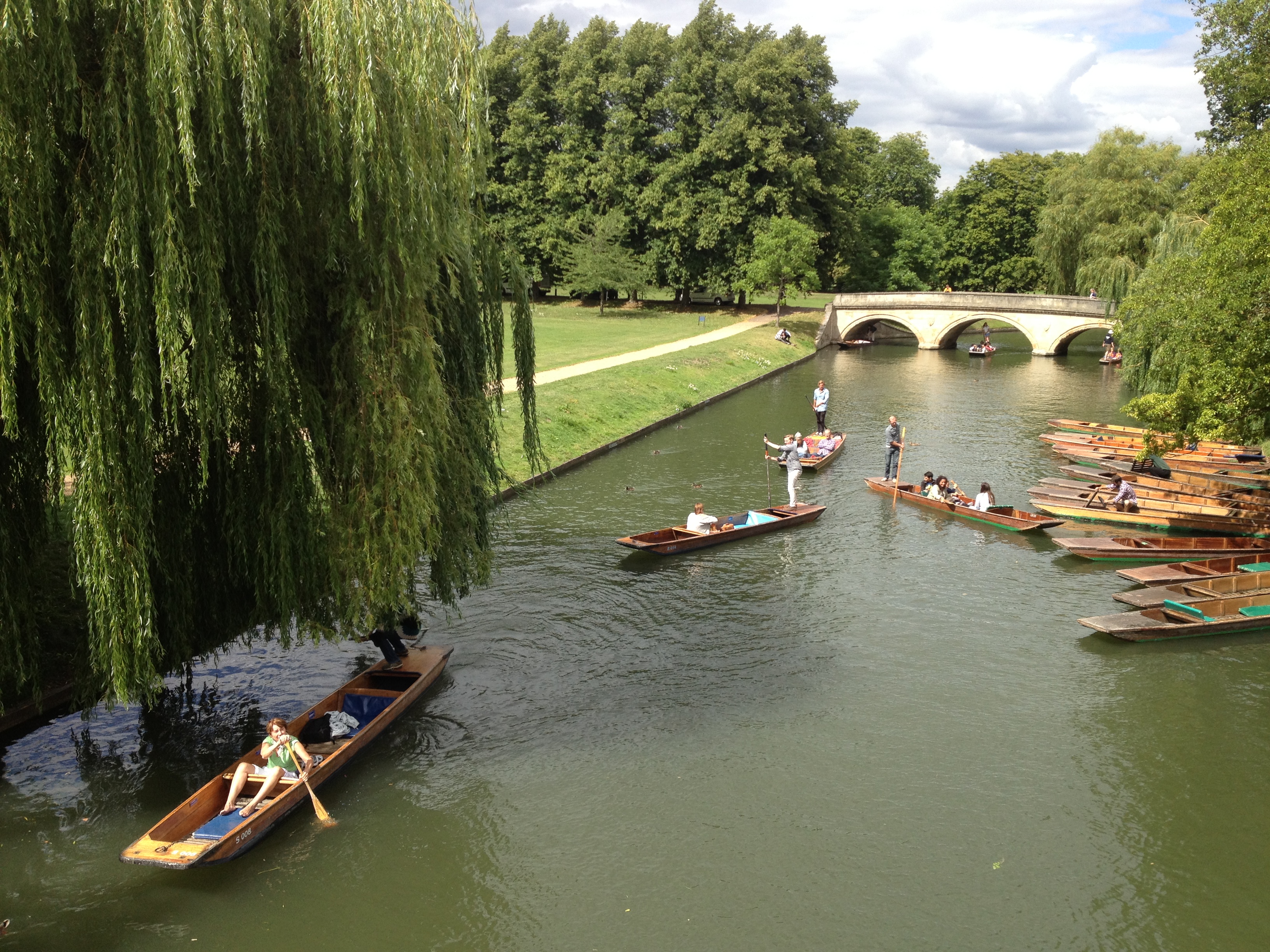
The River Cam.

The River Cam.

The Cam winds through Cambridge in between the various colleges.

The Cam winds through Cambridge in between the various colleges.

The main calling card for Cambridge is the university and colleges, so the small surrounding town is heavily focused on the student population and student life. “Where would you go out? I’d go crazy living here,” I said, only half joking.
“I think they just throw a lot of their own crazy parties”, Richard said. “Either that or they’re all too busy studying.” Cambridge was, I’d been led to believe, a pretty prestigious school.
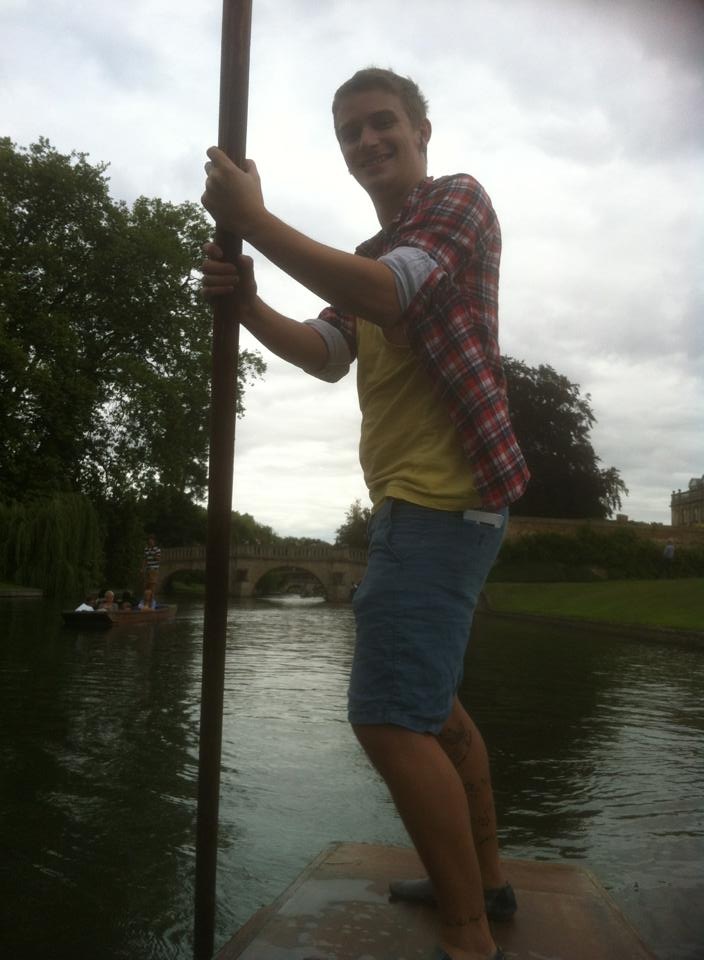
But if you’re not a student living and studying there, there are really only two things to do or see in Cambridge – the colleges and the punts on the river. The terminology of ‘punt’ confused me at first – the word has a range of meanings depending on the culture you’re in – but I soon learnt that it was the name given to the kind of boats that travelled up and down the River Cam, the main waterway that ran through Cambridge. Richard and I followed the signs until we found the docks where the boats were waiting for us. For an extra fee you could hire someone to steer your punt for you, but despite the hangover I was feeling particularly hands on that day, and decided that we should have a go at directing the boat ourselves. Despite the potential for that to go very, very wrong, Richard agreed to it.

Such maturity.

Such maturity.

Our punts name was Bronze.

Our punts name was Bronze.

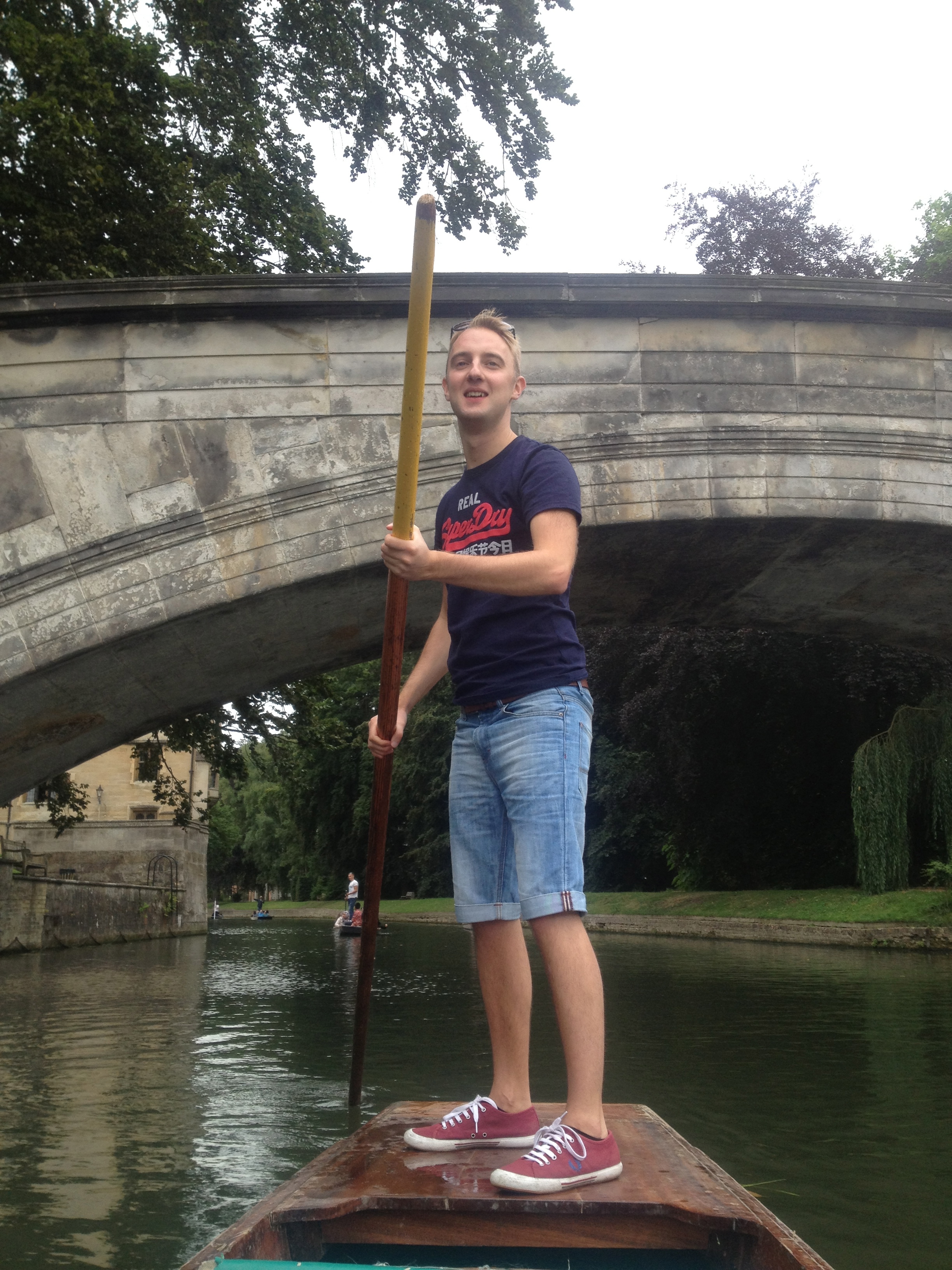
It was a shaky start, and steering the punt isn’t exactly light work. You have to stand on the flat platform on the rear end of the boat and use the long wooden pole to push against the bottom of the river to propel yourself in the right direction. Then, as the boat is gliding through the water, you have to direct the boat by moving the pole to cause resistance in the water. It might sound fairly simple – the physics behind it certainly isn’t rocket science – but after a few minutes it does become a bit of a workout, especially if you’re hungover. And it can also be a bit of a challenge to get the boat to go in exactly the right direction, or to judge how much power you need to put behind each push. Despite that, we weren’t the worst ones on the river that day. We had a couple of run-ins with a few tourist families who really shouldn’t have been driving themselves, although Richard did almost lose the pole when we went to go underneath a bridge without sinking the pole down into the water – the pole is a few metres long, and it crashed into the bottom of the bridge when we tried to go under. But other than that it was mostly fine, though the one really handy thing about the hired punt drivers is that they also served as tour guides, telling their passengers lots of random and interesting facts about the history of Cambridge. Richard and I were guilty of tailing some of the boats around us in an attempt to overhear some of the stories being told.

Captain Dick.

Captain Dick.

Being a passenger on the punt (right before Richard nearly lost our pole at that bridge).

Being a passenger on the punt (right before Richard nearly lost our pole at that bridge).

Myself having a go at steering the punt.

Myself having a go at steering the punt.

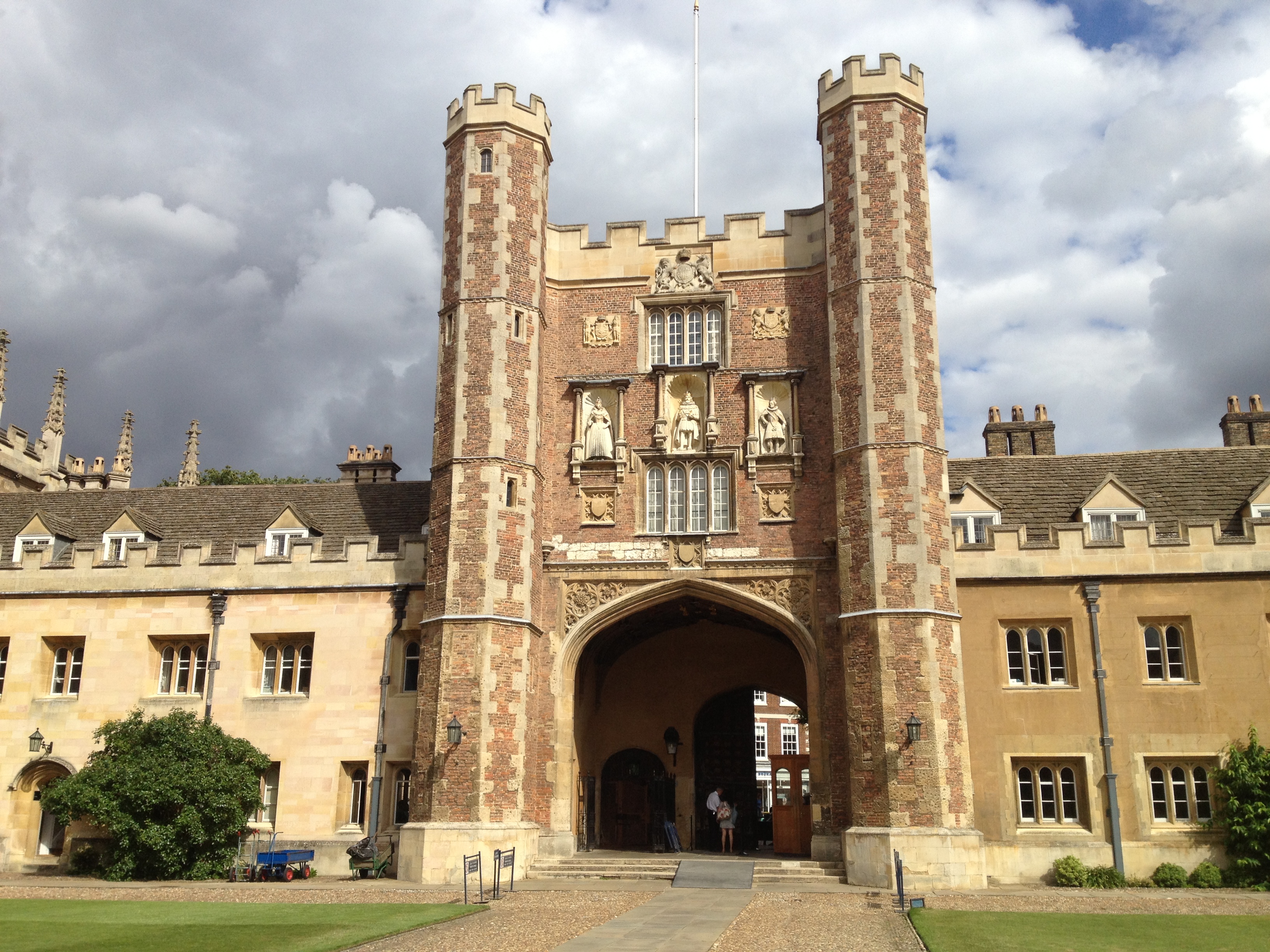
After punting we went to visit one of the colleges. There wasn’t much point going to all of them, since we figured there couldn’t be that much difference between them – at least in the areas visitors were granted access to – but we asked one of the guys down by the punting dock which one he would recommend, and he told us to go see Trinity College. Back home, I’d often heard my own university, the University of Sydney, being described as an ‘Oxbridge’ model – a combination of Oxford and Cambridge, two of the older, more prestigious universities in England. Walking through Trinity College did remind me a lot of the Quadrangle back home in Sydney, except this place somehow felt much more authentic. We wandered through the courtyard, paid a visit to the chapel, and admired the detailed architecture. Despite the trip down the river on the punt being fun, it was somewhat of a workout (when you weren’t being a passenger, that is,) so this was probably a more suitable hungover afternoon activity.

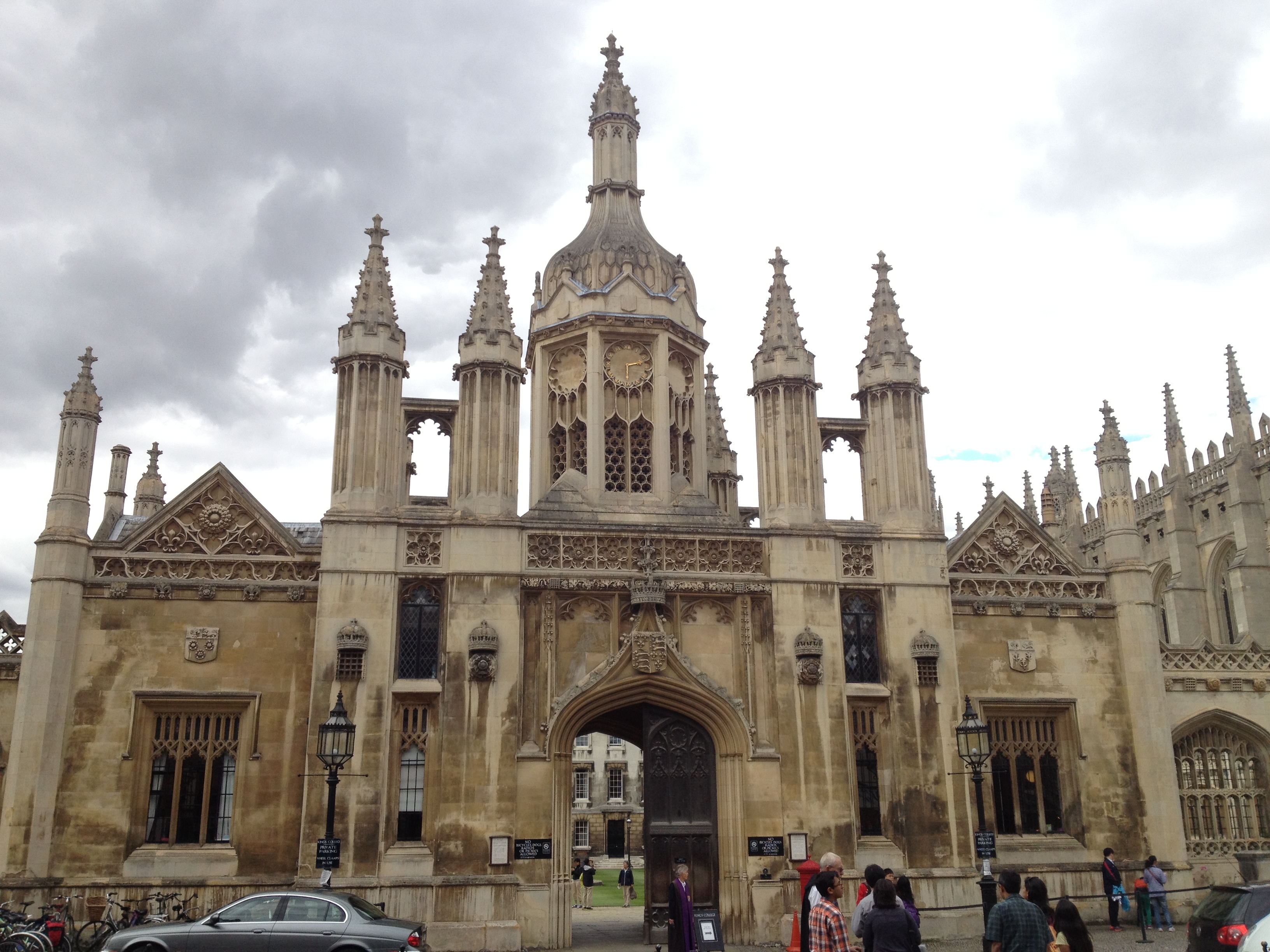
The front view of Kings College.

The front view of Kings College, another of the colleges we passed by on our stroll through Cambridge.

The college from inside the courtyard.

Trinity College from inside the courtyard.

Inside the college chapel.

Inside the college chapel.

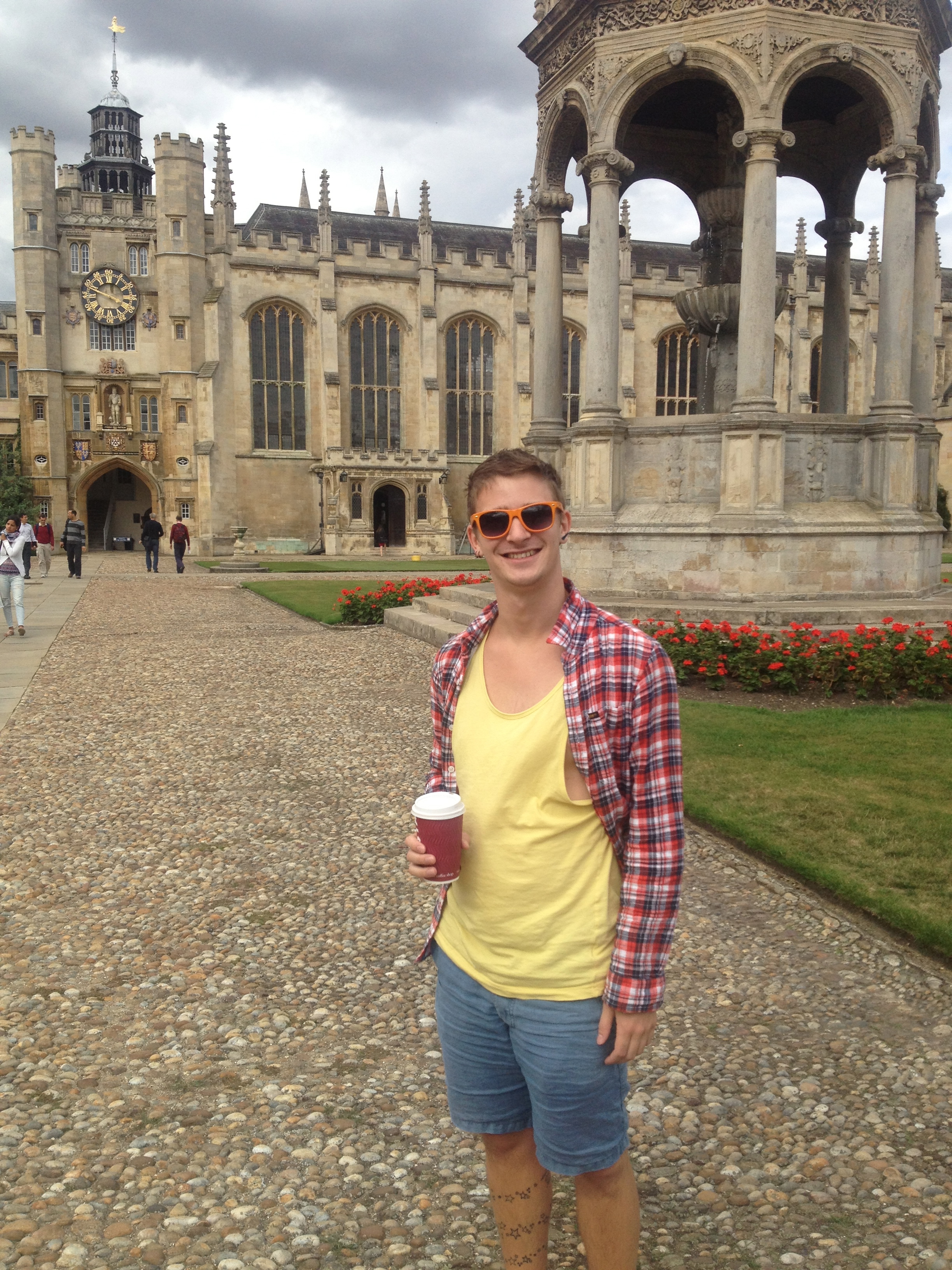
Hungover strolls though the Kings College courtyard.

Hungover strolls though the Trinity College courtyard.

As it got later in the afternoon, we realised we’d seen most of the highlights Cambridge had to offer. We’d taken a punt down the river, we’d walked through the prestigious colleges, and wandered down the classical old English style streets. I was starting to get tired, so we decided to call it a day. Richard drove us back to London, and I definitely fell asleep for at least half of the trip. Richard dropped me home at Giles’ place, and we said goodbye knowing that we would most likely see each other again during my time in London. It had been a fun and slightly crazy 24 hours with John and Richard and their friends, but now it was time to curl up on the couch with fish and chips, British TV and definitely no wine, and wait until I finally felt human again.

Berghain 2.0 – The Lab.Oratory

The city of Berlin in general had left such an impression on me, and I had enjoyed my time there enough to warrant a round trip and pass through a second time, but I would be lying if I said that my arrival on a weekend had been at all left up to chance. The first time around I had arrived on a Friday night and proceeded to have a wild night out with Donatella and Simon, making a bunch of temporary bender friends and stumbling home in the sunlight. This time around I was staying with Ralf, and as a fellow gay man he had a few more ideas of other places in Berlin that I might want to experience. He assumed – correctly, of course – that I would want to return for a final night of dancing at Berghain, but we both agreed that going again on a Sunday evening was probably a better plan of attack. But it was Friday night, so we had to do something. Ralf tossed around a few ideas.

“Well, depending how adventurous you’re feeling, we could go to the Lab,” Ralf said, in a rather nonchalant way that I would later discover to be very misleading. I knew that Berghain was a huge venue that was split up into different, smaller venues in the same building – I had experienced both Berghain proper and Panorama Bar during my last visit – but Lab.Oratory, or simply “the Lab”, was another one of the minor off-sets. I have to admit, my experience with sex clubs was practically non-existent at this time, so I was more than a little intrigued when Ralf was explaining the Lab. “It’s more of a bar for hanging out and cruising rather than dancing,” he continued. “Saturday nights are speciality nights, but on Fridays its pretty open and general.” Speciality, it was explained, referred to the variety of wonderful and kinky fetishes that the Lab catered for. “You don’t want to end up there on the wrong night, or you can be in for a bit of a nasty surprise,” Ralf said with a giggle. As someone who used to work in a fetish store in Sydney, some of the more eccentric themes Ralf listed even made me squirm. “But if you wanted to see it, we could go tonight? It should be pretty… well, not vanilla. But less… extreme.”

As adventurous as I would consider myself, I decided that I did have some limits, and so I agreed to check out the Lab that night. When we were getting ready to go, I felt like I was missing something, and it wasn’t until we set foot out the door at around 10:30pm that I realised I was completely sober. Back home my friends and I would almost never head out to any kind of club or bar without first consuming at least a few alcoholic beverages, and even in a lot of the other cities during my route around Europe I had bought a couple of beers to polish off before heading out, which was to ease away some of the social anxiety of entering a new place by myself as much as it was to save a bit of money by not buying so many drinks in the club. But as a non-drinker, I guess it wasn’t even a blip of Ralf’s radar when he was preparing to go out, and I wasn’t enough of an alcoholic to demand a beverage before we left. It was just a subtle reminder by omission of the kind of crazy partying life I used to have, and how it was possible to divert from that every once in a while. Having said that, though, we were going to one of the most notorious nightclubs in the world. I guess I’d just finally learnt you don’t have to get wasted to have a good time.

When we did get to Berghain, Ralf led me away from the main door, where a substantial line was beginning to form, and around the corner to another entrance. There was already quite a line for that door too, but he assured me were in the right place. The same could not be said for the rest of the people in the line, however. There were the usual suspects – pairs or small groups of men, a variety of body shapes and sizes, even a range of ages, but all looking very stern and solemn as they waited around. Some were dressed up with a suggestion of leather fetish, others were dressed rather plainly. “Dress like you’re not trying to impress. At all.” Ralf had given me advice when I’d been unsure of what to wear myself. “You’re more likely to get in looking like a homeless person than you are an attractive or pretty model.” So it was obvious who wasn’t going to get in the Lab – although I can safely say most of the people who weren’t going to get in were probably in the wrong line anyway. Guys dressed up in fancy collared shirts, or groups of people that had girls with them (Lab.Oratory, for obvious reasons, is restricted to males) were turned away at the door, but most of them looked slightly embarrassed or confused as they passed back down the line, rather than the disappointment or even devastation often exhibited by people who had been turned away by the infamous bouncers of Berghain.

I was a little nervous as we approached the front of the line, but having Ralf there to guide me was definitely a reassurance. He did all the talking, in German, and we paid and walked through the dark club entry. Upon entering we were each given a large plastic garbage bag to put our things in. Some people just stripped down to their underwear of jockstraps, other got completely naked, while some people kept their kinky outfits and just deposited their valuables. I followed Ralf’s suit and put my phone, wallet and keys in the bag before handing it back over the counter. They wrote a number on my bag and then, using a big black permanent marker, wrote that same number across my bicep. When we ventured further into the depths of the club to the bar, all you had to do when ordering was point to your number, and they bar would keep a tab for you that you would fix up when you were leaving.

It was definitely a handy system, because the Lab isn’t the kind of place you’d want to be carrying valuables around in. It’s dark and gloomy, the lights angled in such a way that they created more shadow than visible light. It was grungy and dirty, and the main crowd of people was an even mix of silent solo cruisers, pairs or groups of guys engaging in conversation, or pairs – or groups – of guys having sex. Ralf had been right in his basic description – it was essentially like Berghain, just with no women, less dancing, and a lot more blatant, hardcore sex. For the most part Ralf and I were rather well-behaved, with him giving me the grand tour of all the different sections of the club. There were private discreet corners, there were more open areas to accommodate larger groups, and there was even elevated levels that would appear to be stages, where other patrons could play spectator to whatever happened to be going on. I watched on for a few minutes – half horrified, half intrigued – as the hopefully self-explanatory act of double fisting happened right before my very eyes. Even all the work in a fetish store and the theoretical knowledge that came with it couldn’t have properly prepared me to witness some of the things I saw in the flesh.

Other highlights were the shower rooms which hosted a whole range of water sports – no, I’m not talking about water skiing – and metallic structures with grid floors, so you could either stand up the top and urinate through the drain, or you could stand at the bottom and… well, you get the idea. Given my work experience I found it all incredibly fascinating just to watch, but my participation was extremely minimal. Ralf and I left to head home at some point in the early morning, still rather clean in the physical sense, although some of the things I saw will never be unseen.

***

Berlin, and quite a lot of Europe actually, was experiencing a heat wave that weekend. For an Australian, low thirties in Celsius is hardly a heat wave, but German buildings aren’t really designed to have to cope with such temperatures. As a result, Ralf’s top storey apartment became something of a furnace, so we threw open all the windows and sat around in our underwear trying to keep cool for most of the weekend. But come Sunday evening, we donned our shabbiest outfits and headed back out to east Berlin so I could experience Berghain one final time.

It was quite a different experience to actually go there with someone else. Ralf told me that last time he had been to Berghain – the time he had met me – he had arrived with a small group of people and proceeded to lose them in the crowds as the night progressed. I asked him, trying my best not to sound too needy, if he would please not lose me tonight, since I had no idea how to get back to his apartment from here after the U- and S-Bahn’s stopped running. He just smiled at me, pulled off the plain white shirt he was wearing, and stuffed it behind one of the lounges in the more chilled out rooms next to the dance floor, seemingly oblivious to the threesome of blowjobs that was happening on said couch. “As long as the shirts still here, then so am I.” I could find a million and one flaws in that logic, but his cheeky grin and carefree attitude reminded me that this was hardly the place to be pedantic about such things. Regardless, we still spent most of the night together, dancing under the intense speakers, getting up close and sweaty with the other ravers, and losing ourselves to the beat.

“I think so much when I’m out there on the dance floor,” I remember explaining to Ralf on the bus ride home. “Like, when you’re drunk I guess you just forget a lot of things, and your mind goes to jelly and you don’t think of much at all. It’s all pretty basic and primal. But when I’m with you… well, I was relatively sober. It’s almost like meditation – the beat just blasts through my body and sends me into this kinda trance. Except my mind is going at a million miles an hour and I can’t stop thinking.” Visiting Berghain has been described by many as an almost religious experience, and while I didn’t have quite that kind of connection, it was definitely a surreal place for me. It kicked my mind into overdrive and forced me into having several minor epiphanies.
We weren’t there for quite as long as I was last time, but my second time at Berghain was just as ridiculous, getting lost within the cavernous rooms, passing people on the dance floor who were completely naked, and seeing orgies take place next to a group of people having a casual chat over some drinks. And those are some fond and freaky memories that I’m sure I will treasure for life.

Czech It Out

After saying goodbye to Itzel and alighting at Praha-hlavní nádraží, the main train station of Prague, I set out to navigate the public transport system of the capital of the Czech Republic. It was so close to 5 o’clock by the time I arrived in Prague that I didn’t even have to wait around at all – another perk of my detour was that I had done all my waiting either on the train, or in Bratislava. But first I did have to withdraw some crowns, the local currency, and then find somewhere to spend the large value notes in order to get change when I realised none of the metro ticket machines would accept them. There was also the strange requirement that I had to buy an extension for my luggage on top of my regular ticket, presumably because it would take up more room that could potentially fit another passenger. There was also a similar ticket for taking dogs on the metro, but in the end I had to forgo this extension and just buy a regular ticket simply because I didn’t have enough change to get the right one that I needed. “They rarely check for tickets on the metro in Prague,” Itzel had told me. “But they’re not really that expensive either, so you might as well buy it.” I did the best I could with what I had, and hoped that I could bluff my way out of any encountered trouble with excuses of being a tourist.

I followed the directions that my hosts had given me, though it was still very confusing. There were so many buses going on different routes and in different directions that all left from the same stop, and there was an uncomfortably lack of anyone who spoke English to help me out. But I persevered, and in the end I caught the right bus and followed the little blue dot on my iPhone GPS until I finally made it to my new home. Tomas and his boyfriend Matej’s house was right near the bus stop, and thankfully they were home by the time I finally arrived. Tomas had told me that I would be the first guest that the couple had hosted via Couchsurfing. I’m not sure if they were excited or nervous, but they warmly welcomed me into their home, a gorgeous little flat in a beautiful part of town. They had made me some dinner, too – I couldn’t tell you exactly what it was, but it was a homemade meat dish with some vegetables and it was a traditional Czech recipe and it was absolutely delicious – just what I had needed after a long day of travelling. I also noticed the distinct use of dill in the cooking, and I smiled to myself and remembered my time in Russia, and in my head I could still hear Marti saying “Isn’t this dill-icious?” I guess that’s how I knew I was back in Eastern Europe. We sat around their kitchen for a little while, chatting and getting to know each other, and then Tomas asked if I felt like going out and seeing some of the city. After a day of doing nothing but watch the Eastern European countryside pass me by, I was keen to get out and about, so I showered and got changed and the three of us headed back into the city centre.

***

Tomas was probably one of the best hosts I could have asked for during my stay in Prague – he was incredibly knowledgeable of his city, and was always pointing out the smallest and most random things, yet had some interesting story or weird fact about each and every thing. Some things were history lessons, while others were more modern facts, or even urban street smart tips. “Don’t come here at night, it’s a little dangerous,” he had said as we passed a park area on the bus. “There are drugs. Drug dealing, things like that.” Then he shrugged his shoulders with a smile. “Unless you are looking for that kind of thing.” Our first stop that evening was down by the river, where there was some kind of small outdoor performance on, with a band playing live music and a temporary bar set up selling some local Czech beer. Tomas bought us a few beers and we listened to the music and talked more about Prague, and my previous and future travels. Most of my European hosts seemed a lot more interested about Australia though – I’d been gone for so long that even I started to forget that I was actually a foreigner from half a world away. Out on the water, the river was filled with paddle boats, some of them in the shape of swans, slowly gliding along in the warm afternoon sunlight. The further north I travelled, the longer the daylight hours were becoming, and I loved it.

From there we walked back along the river, Tomas pointing out different architectural features of different buildings until we finally wandered up to the Old Town historical centre. Where the riverside pop-up bar had been a more underground affair, I could tell that we had wandered into the prime tourist zone of Prague as soon as we arrive. It was a beautiful area though, with the main square surrounded by small Gothic churches and cathedrals. I say ‘small’ in comparison to some of the larger churches I’d seen in Madrid and Rome, but they did manage to tower above the cobblestone pavements of Staroměstské náměstí, letting the small city hold its own and even stand out as one of the more beautiful places I had visited so far. The other major feature of the Old Town Square was the Old Town Hall, or more specifically, the astronomical clock on the bell tower. “It’s very popular with tourists,” Matej said, indicating the throng of people that was amassing at the base of the tower.
“Yes, every hour there is this… show… display…” At first it just seemed like Tomas couldn’t find the right word in English to explain what he was trying to say, but later I would realise he was just uncomfortable at using any of those words to even try and explain what we were about to witness.

St Nicholas Church, eerily illuminated by the lights of Old Town Square.

St Nicholas Church, eerily illuminated by the lights of Old Town Square.

The twin steeples of the Týn Church, built in 1365.

The twin steeples of the Týn Church, built in 1365.

The clock tower of the Old Town Hall as seen at night.

The clock tower of the Old Town Hall as seen at night.

The bell tower performance isn’t technically a tourist trap in that it doesn’t really cost any money. Yet still, I couldn’t help but feel a little ripped off after watching it. It’s an extremely famous and popular sight to witness, and the flocks of people surrounding the bell tower had definitely peaked my curiosity. Matej and Tomas must have been rolling their eyes as I stood on my tip-toes to peer over the crowd, but they knew it was something I would have to witness and judge for myself. When the hour rolled around, the chimes began to echo through the square, and little wooden doors opened up from the clock, and out came a small procession of figurines, which Tomas would later inform me were supposed to be a parade of the apostles. Above them, a skeleton emerged to ring a small bell, which clanged out over the crowd. Flashed from hundreds of cameras went off, and I waited eagerly to see what else would happen… The apostles did their loop and went back inside, and the skeleton eventually finished ringing his bell and retired back into the clock. There was a small cheer from the crowd in front of me.
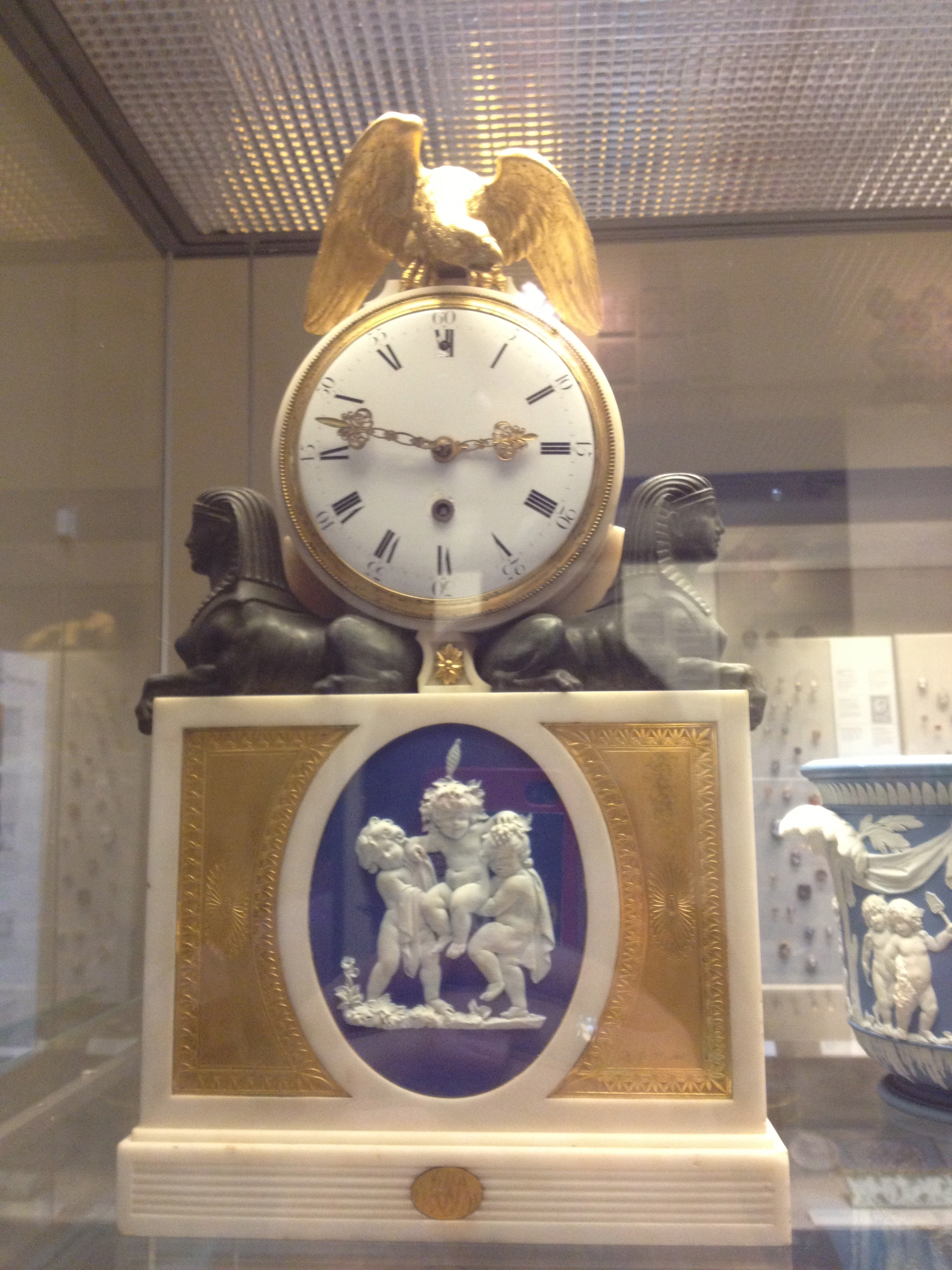
“That… wait, that was it? Everyone stood around waiting for that?” Don’t get me wrong, it was a cute display, and more than most clocks manage to do to entertain a crowd. But I just couldn’t believe that that was all it took to attract such an audience. Tomas and Matej both chuckled, having clearly anticipated my reaction. “It’s a tourist thing,” they both said. “You had to see it at least once.” As fate would have it, I ended up in the same part of town the following afternoon and purely by chance, I happened to be there on the hour. During the daylight hours it was easier to take some clearer photos, although I can’t say they’re that much more exciting than being there to witness the show first hand… which isn’t saying much.

The Old Town Hall tower in the light of day, with the astronomical clock at the bottom.

The Old Town Hall tower in the light of day, with the astronomical clock at the bottom.

The crowds gathering around the astronomical clock to watch the rather anti-climactic performance.

The crowds gathering around the astronomical clock to watch the rather anti-climactic performance.

After that we wandered through some more of the town, exploring the old streets as I marvelled at the simple, intrinsic beauty of the place. Prague really did feel like a kingdom from a storybook, complete with a castle on the hill across the river, gazing down over the city. The three of us stopped by another one of the couples favourite bars on the way home, where we had a few more beers while Tomas told me more about Prague, while also interrogating me about my own journey and travels. They were both such sweet and lovely guys – I was starting to wonder when my luck at finding such nice hosts was going to run out. The two of them both had to work in the morning though, so we eventually stumbled back down the street to crash, and I would continue my exploring of the fairytale city on the morrow.

Down the Danube

Thankfully, unlike my trek from Ancona to Zürich, I only had to catch one train to get me to Austria. I did have to travel from the western tip to the eastern tip of the country though, but travelling through the mountainous terrain did provide some pretty spectacular, picture perfect views. After the long day of travel I finally arrived in the beautiful city of Vienna and was greeted by my next Couchsurfing host. Kathi was the first female that I was staying with whom I had connected with through Couchsurfing – Susanna in Finland had been a family friend – but I had still found her within my search for hosts in the Queer Couchsurfing group. Robin had showed me how Couchsurfing can be used not just to find places to stay, but also to connect with people who had common interests. I decided that I would probably feel more comfortable staying with gay people while I was travelling, since most of my friends back home are gay, and they would be able to show me some of the queer hotspots – but up until now I had only stayed with other guys. It wasn’t a conscious choice – I think there were just more male hosts available, in general – but when I’d stumbled across Kathi’s profile I’d gotten a really good feeling from it, and she had happily accepted my request to stay with her. I had been tossing up between trying to visit Vienna, or travelling slightly more north to visit Holger – who I met in Barcelona – in Munich, but I had had trouble getting in touch with him, so once again my potential Couchsurfing host had been a real game changer in the direction of my travels.

View of the Austrian countryside as I sped towards Vienna in a train.

View of the Austrian countryside as I sped towards Vienna in a train.

There was a kind and carefree air about Kathi from the moment I met her at the train station. She was also relatively new to Couchsurfing, so she was pretty excited about having me stay with her. I think the fact that I was Australian helped win over a lot of my hosts – to all of them I must have seemed exceptionally foreign and exotic, all the way from that mysterious land down under. She explained some of the culture of Vienna and the basics of the city to me – such as the ringed town layout and the different zones – while we got caught the metro to her apartment, which she shared with two roommates. “The coffeehouse culture is a really big thing in Vienna”, she advised me. “That’s something most people want to check out. The centre Vienna is divided up into rings, in particularly the main ring that encloses the city centre. Most of the things you’ll want to see or do will be there.” I wondered how I would have coped on this trip I hadn’t had hosts like Kathi, Umer, Ike and Valerio to help know these things about their various cities. I imagine I would have done a lot of unintentional aimless wandering around – as opposed to a lot of the intentional aimless wandering around that I still did.

It was a Friday afternoon the day that I arrived in Vienna, and both of of Kathi’s housemates were away for the weekend. One of them wouldn’t bet returning until after I left, so rather than sleep on the couch in her bedroom, Kathi told me that she would sleep in her housemates room, so and that I could sleep in her bed and have the room to myself. It was more than I had been expecting when I had sent the request to Kathi, and it was probably one of the best set ups I’d had through Couchsurfing so far. As soon as we got to Kathi’s, I had a well needed shower – the countryside views through the Austrian mountains had been postcard-worthy beautiful, but the 7 hour trip had left me feeling less than fresh. “Be careful with the water temperature”, Kathi had said as I entered the bathroom. “It tends to just alternate between… Antarctica and Mordor.” I laughed, appreciating the reference. After the shower I joined my new host in the kitchen. “Are you hungry? I was thinking I could show you how to cook some traditional Austrian food, maybe.” I assured her that her national cuisine of schnitzel had made it down to Australia, but all the same it was fun to help out in the kitchen and do some cooking. We cooked the schnitzel and vegetables, and she introduced me to an Austrian drink called Radler. “It’s basically beer mixed with lemonade,” she said, placing a bottle in front of me. “You can mix yourself or buy it like this.” It was a little fizzy from the added soft drink, but the taste was extremely refreshing, the sweetness balancing our the flavour of the beer perfectly, and I enjoyed it much more than the Rivella I had tried in Switzerland. We sat and ate and chatting, getting to know each other as we downed a few bottles of Radler.

Kathi was particularly interested in picking my brains about the gay culture down in Australia. “What’s it like for gay girls in Sydney? Here, it can be really difficult for…” She was choosing her words carefully. “For more… feminine, girls. Like… sometimes I’m never really sure… You know, of where – and who – they are?” I realised she was talking about her gaydar – her ability to identify other queer people on sight alone. I must admit, the more feminine lesbians have always been the least obvious blips on my gaydar, but luckily stopping them had never been quite such a pertinent issue for myself. Kathi went on to tell me that queer girls also had less places to meet people, citing the recent pride festivities in Vienna, where there had been multiple parties aimed at all the gay men, and only one event that specifically targeted same-sex attracted females. I had to regretfully tell her that gender ratio of gay bars and parties in Sydney was of a similar level, though I won’t pretend I know much about the lesbian scene – not for the first time I pondered on the curious fact that the party scenes for gay guys and gay girls were so divided in the first place.

We continued to talk for hours about gay life, travelling and Couchsurfing, and even music. Kathi was learning how to play the ukulele, so as part of the condition of me staying with her I had promised her that I would show her a few tips I had picked up along the way. I was only teaching myself, but as an acoustic guitar player of nearly 10 years I didn’t have too much difficultly figuring it out. But before it we knew it, it had gotten quite late, so I said goodnight to Kathi and hit the hay after the exhausting day of travelling.

***

The next day, at Kathi’s suggestion, we caught the train north of her rather centrally located apartment to the banks of the Danube River. It was a gorgeous sunny day, and we had lunch at a little restaurant next to the river that served some excellent Austrian dishes, and of course, more Radler. That wasn’t the most exciting part about this restaurant though – after we had finished eating, I followed Kathi down to the small jetty that was actually a part of the restaurant. There, we hired a small electric motorboat and went for a cruise down the river. “There’s some nice views of the city from the water. Perhaps we could bring our ukulele’s and have a sing-a-long, or something?” Kathi had suggested the previous evening before we had gone to bed. I had told her that that sounded absolutely marvellous, so once we got out on the river I pulled out my ukulele and started strumming away.

The view of the city from out on the Danube.

The view of the city from out on the Danube.

The sunshine was streaming down on us as I worked my way through the small repertoire of songs that I had managed to teach myself over the last few months, and Kathi steered the boat up the river. We passed a couple areas that were substitute beaches for the Austrians – the idea of living in a landlocked country with no nearby coastal area still seemed so odd to me – but I have to say, they weren’t as nice as the riverside swimming areas in Zürich, probably because the water in the Danube wasn’t quite clean enough to be drinking quality. But it was still beautiful, and Kathi told me how she often comes down here to bathe in the sun and go for a swim. When we reached a wider part of the river, Kathi killed the engine and we just floated for a little while, watching others glide by us on their paddle boats, and soaking it all in while I strummed away on the ukulele. “It’s so nice,” Kathi said between songs, with a huge smile plastered across her face. “It’s just a nice, holiday feeling, to have the ukulele going in the background while we’re out on the water in the sun.” It was no tropical island getaway, she but was right. Kathi didn’t even end up playing her ukulele, and in the end I was just playing random chords to give the scene a nice and cheerful soundtrack. On our way back to the jetty we passed many boats full of other people, both locals and tourists, and they all smiled at us or exclaimed with delight when they saw or heard the ukulele. It really did feel like a scene from a movie, or even a travel brochure, but it was so much fun, and I couldn’t have thought of a better way to spend the afternoon.

Kathi took a sneaky photograph of me while I was playing the ukulele.

Kathi took a sneaky photograph of me while I was playing the ukulele.

The Churches of Old Town Zürich

When I wasn’t exploring the great outdoors with Robin in Zürich, I took time out of the busy, active lifestyle to do a little bit of sightseeing. The city centre of Zürich itself wasn’t exactly huge, or full of iconic landmarks, but simply wandering around the charming little streets and up the cobblestone footpaths was a pleasure in itself, appreciating the quaint and classical beauty that the city maintained.

A cute little Swiss street that is obviously very proud to be a Swiss street.

A cute little Swiss street that is obviously very proud to be a Swiss street.

Gedenkbrunnen für Bürgermeister Stüssi, or Stüssi's Fountain, which I accidentally stumbled across in my roaming.

Gedenkbrunnen für Bürgermeister Stüssi, or Stüssi’s Fountain, which I accidentally stumbled across in my roaming.

The most notable sights worth seeing in Zürich were probably the small handful of churches located in the city centre. While I had sworn I was done with churches after my trek through the Vatican City in Rome, these Swiss churches couldn’t be more different from the St Peters Basilica in Italy. They were a fraction of the size, modestly squeezed in between all the surrounding buildings, though the classical design suggested that the holy buildings had been there much longer than their neighbouring structures. The first of the three main churches in Zürich that I passed is called Grossmünster, which translates into “great minister”. It is located along the banks of the River Limmat and served as a monastery church when it was first inaugurated some 800 years ago. The Romanesque architecture was impressive from the outside from where I admired it, but it was a beautiful day outside, and I just wasn’t in the mood for trailing through another church museum.

The grand Grossmünster.

The grand Grossmünster.

So on I moved across the Limmat, where the other two main churches were situated – next was St Peterskirche, or St Peters church. The structure itself was significantly smaller than Grossmünster, and it was in the midst of a sea of buildings to the point where I couldn’t actually find the building itself. However, the main feature of St Peterskirche rose above the sea of buildings so that it could be seen from a great distance – the clock tower. Again, I wasn’t particularly interesting in seeing the inside of yet another church, and the main feature was best viewed from a distance anyway. “The clock on that steeple is the largest clock face in Europe,” Umer had said to to me as we’d breezed through the city on my first afternoon in Zürich. It has a diameter of 8.7 metres, but I hadn’t previously managed to capture any photographs of the impressive clock, so I took a few snapshots before moving on to the third and final church.

The clock tower of St Peters church.

The clock tower of St Peters church.

Fraumünster was the only church in Zürich that I actually went inside, but in retrospect I’m glad that I had made the time to take a quick peek. The English translation is “women’s minister” and the church, which is built directly across the Limmat from Grossmünster, was built on the remains of a former abbey. From the outside, Fraumünster doesn’t seem particularly impressive. However, once you set foot inside the cool and quiet halls, you quickly realise that it’s the inside perspective and the view from within that truly matters in these sacred rooms. I’m talking, of course, about the stained glass windows. From the outside on a bright sunny day they look incredibly unremarkable: black holes leading into the depths of the church. But from the inside, that sun streaming in lights up the coloured panes of glass to produce something beautiful, mystical, and even a little breathtaking. I reiterate that I’m not exactly religious and have no affinity with the Christian faith, especially after the disillusionment that came with my visit to the Vatican, but something about being in Fraumünster recaptured my sense of mysticism.

Fraumünster, looking deceptively plain from the outside.

Fraumünster, looking deceptively plain from the outside.

Back in my days at university I took quite a variety of sociology courses, one of them being a class titled the Sociology of Religion. In the first lecture, our teacher read us a metaphor about religion being like a stained glass window. You can study a religion from the outside – the rituals, the doctrine, the history, the beliefs – but the real meaning of a religion requires an understanding that one can only get from being inside of the fold, and being a part of that religion. Perhaps thats why, whenever I step into any of these beautiful churches far and wide across this continent, I get that superstitious sense that I just can’t quite put my finger on. Until you’re ready to fully accept it and be a part of it, maybe you’ll never be able to truly understand what it means to be part of a religion. I doubt that I ever will fully know what that is like, but for the meantime I was definitely understanding the stained glass window metaphor first hand. I tried to take a couple of photos, but the quality of my camera did absolutely no justice to the images I was seeing in front of me. Not for the first time, I took it as a sign that some things we experience in this world as just so significant to ourselves as individuals, that attempting to share them with others would simply fail to have the same effect on them as it did on us. So I momentarily lost myself there, in the cold stone chambers of Fraumünster, before saying a silent prayer – to who, I’m still not sure – and exited back out into the sunshine.

***

After my church sightseeing and soulful contemplation, I lightened the mood of my day with a stroll through the sunshine by the lake. This was before the afternoon of slacklining with Robin, so I hadn’t been swimming in the lake or river at that point. I found a seat on a bench and read my book for most of the afternoon, but I did come across a huge diving platform from which people were jumping off, and plunging into the depths of the crystal clear water. I considered doing it myself, but at that stage I wasn’t exactly feeling 100% healthy – I was still feeling a little under the weather, and recovering from the effects of prolonged partying in Madrid during Pride. I knew I would  inevitably be getting wet when I went slacklining over the river, but I didn’t want to wait around in wet clothes for the rest of the afternoon, so instead I contented myself with watching others jump off the huge platform and into the water.

The huge structure that had been set up in the lake, from which people were jumping off into the water.

The huge structure that had been set up in the lake, from which people were jumping off into the water.

There is one thing that I found shocking about Switzerland, even though it wasn’t exactly unexpected, and that was the cost of living. I had been warned about it, but it still hit me like a slap in the face. I wasn’t even paying for my accommodation, but my time spent in Zürich was fairly limited simply due to the fact that I didn’t have the budget to do very much. Even eating was a ridiculously pricey affair. I went to get lunch from what seemed to be a relatively cheap sausage stand – they love their wurst in Switzerland – and ended up paying around 6 francs for a simple sausage and a small piece of bread. I felt like that would have almost bought me a meal in any other country, but from what I had seen of the rest of Zürich, I had basically stumbled across a bargain. I considered it a blessing in disguise that I wasn’t feeling too well during my time in Zürich, because it meant that I didn’t have the desire to go out and investigate many of the bars or nightclubs – something that I just didn’t have the funding to do there. Robin and I visited a bar or two and sampled some delicious Swiss beer, made in various microbreweries around the country, but for the most part Switzerland was a continuation of my much needed down time. My pride tour down western Europe had really gotten the better of me.

One of the Swiss beers I shared with Robin.

One of the Swiss beers I shared with Robin.

***

Eventually necessity required me to move on from Zürich – there were a handful of other destinations I still had to hit before my Eurail pass expired, and I just couldn’t afford to stay in Switzerland any longer. So on my final morning I packed up my bags, thanked Robin for his hospitality, for introducing me to the world of slacklining, and inspiring me to be that little bit more physically active in my life. Then it was onto the station for another train, another country, and another city on on my ‘greatest hits’ tour of Europe.

Recovery: From the city to the sea

I watched the Italian countryside whizz past me as the train carried me away from Rome. Eventually the train tracks became parallel with the seaside, and I gazed out into the distance over the Mediterranean. In one short trip I was going from coast to coast in Italy, from the capital city of Rome to the tiny port town of Ancona. “Ancona?” Valerio had asked me with a very confused expression, when I had informed him of my next destination. “Nobody… I mean nobody, goes to Ancona. Pass through maybe, but… well, there’s nothing there!” Ancona was a regular port for ferries that routinly carried passengers from the east coast of Italy to Croatia and Greece. It hadn’t exactly been on my high priority list of places to see, but while I had been searching desperately for a place to stay in Rome via Couchsurfing, I had received a message from Ike.

The interesting thing about Couchsurfing is that you can send requests to potential hosts, but you can also publicly post your travel itinerary so that hosts in areas where you are planning to travel are able to find you and invite you to stay with them. The majority of people who I have spoken to about this assured me that that was way too creepy for them, and that they wouldn’t just accept offers from random people they didn’t know, but my journey so far had showed me that taking a chance on the generosity of strangers can sometimes have the most rewarding results. I had been looking for other places to stay in while travelling Italy, but so far all my other searches had been unsuccessful. Meanwhile, Ike had sent me a message saying he had noticed I was travelling through Europe, and that if I ever made it to Ancona he would be happy to host me. We had stayed in correspondence during my frantic search for hosts in Rome and my breakdown in Madrid, and from what I could gather he seemed to be a nice and rather genuine guy. So when I arrived in Rome and had to make plans for my next upcoming destination, I agreed to visit Ike in his sunny little corner of Italy. Four days later, and I was stepping off the train into the blistering afternoon sun, where he was waiting to pick me up.

Ike was a fun and outgoing guy with a cheeky sense of humour, and just like when I had met Stefan – who had also stayed with Ike – we got on well straight away. I knew I had made the right decision in coming here – better to spend a couple of days in a town you’d never heard of with a fun stranger than wander around a well known city by yourself. I’d done plenty of that in Rome, so during my time in Ancona I was determined to do absolutely no sightseeing. I needed a break from all that. When we got back to his place, Ike showed me a map of the area and a bunch of information pamphlets about things to see and do. “There’s a short historical walk through the main centre,” he said, pointing at the map to a spot in the centre of town – Ike lived a little further up one of the many rolling hills that surrounded the port, about a 10 minute drive from the train station. “Stefan was very into that kind of thing, but I’m not sure what you want to do while you’re here.” I told Ike that I would be happy to find a spot on the beach and just chill out, so he gave me a few options for the nearby beaches that I could try, most of which were pretty easily accessible by bus. “I’d love to come with you if I had the time, but unfortunately I’ve got to work.” Ike even had to go back to work that afternoon, so he left me at his place to do some laundry and get some rest. When he got home, Ike cooked dinner and we had a night of great conversation over a bottle of wine. We talked about travelling, our Couchsurfing experiences, and he even taught me a couple of phrases in Italian. It was a fun and carefree evening, and I was already very pleased with my decision to stop by Ancona and take some time out in this Italian hideaway.

***

The next day Ike had to go to work again, so after a bit of a sleep in and a lazy morning, I caught a bus down the hill to the city centre and then transferred to another bus that would take me to the nearby beach of Portonovo. The bus was crowded with lots children and teenagers, and it was only then that I realised it was the height of summer and that school was probably out, and everyone in town would be heading for the beach. It also took a little longer to get there than I had anticipated – I was on the bus for over half an hour, going up and down the twisting and winding hills of the outskirts of Ancona before we finally arrived at Portonovo. I wandered through some of the shrubbery around the bus stop and down through a small woodland area before emerging onto the beach. The area had a handful of restaurants and other overpriced-looking places where you could hire beach chairs, but I bypassed all that and went straight to the waters edge.

There, I faced a problem that I hadn’t really faced since I’d been in Thailand – I was alone on a beach with a backpack containing valuables such as my phone and wallet, and I had no way of properly securing them. Even if I was to put a lock on my bag, there was nothing stoping someone from simply running away with it. The beach was fairly crowded, but not so much that I wouldn’t be able to see my things if I left them in plain sight from the water, and it was too hot to not go swimming. In the end I just had to take a chance and leave my backpack while I went into the water. I never swam too far from where I’d left it, but I was a little more relaxed than I had been on the beach at Ao Nang. And it was worth it – with the hot sun beating down on the crowds of beach goers, the cool blue water felt absolutely amazing to dive into. When I’d had enough of that, I crawled back onto the beach, lathered myself in sunscreen, and laid down to soak up some rays. I think it was something I’d first noticed lying in the park in Christiana during my time in Copenhagen, but the sun in Europe just doesn’t seem to be as strong as it does down in Australia. Obviously Italy has a lot stronger sunshine than Denmark – Ike told me he regularly uses 50+ SPF sunscreen – but compared to the sun in Australia it felt like a casual warm day. I was very conscious of my sunscreen use though, which allowed me to relax enough to actually doze off into a state of semi-sleep more than a couple of times. It was the perfect temperature, and I stayed there on the beach for as long as I dared before I thought there really was a chance of me getting significantly burnt.

The refreshing blue waters of Portonovo Beach.

The refreshing blue waters of Portonovo Beach.

Lots of people set up camp for a day on the beach in the gorgeous sunshine.

Lots of people set up camp for a day on the beach in the gorgeous sunshine.

I took one final dip in the ocean before heading back to the bus stop, and indulging in some amazing Italian gelato while I waited for the bus. When the bus finally arrived, slowly making its way down the hill from the highway, I hopped on board, thinking it would take me back to the centre of Ancona. I was surprised to find that its final stop was simply at the top of the hill. “Last stop – everyone off,” the bus driver called out to me. It was definitely up there in my travel nightmare scenarios – being forced off the bus but having absolutely no idea where I was or how I was going to get back. However, when I hopped off the bus I was momentarily distracted by the field of sunflowers that spread out in front of me in the paddock beside the road. I took the opportunity to take a few photos, and just sit back and marvel at the Italian countryside and the picture perfect landscape I had laid my eyes on.

The sunflower fields just next to the bus stop by the beach.

The sunflower fields just next to the bus stop by the beach.

But then it was back to panicking. Another bus with the right number came along, so I hopped on. It took me… back down to the beach. What the Hell was going on? I decided to swallow my pride, realising I needed help, and approached the bus driver, crossing my fingers and praying he spoke some English. I explained where I wanted to go, and he knew enough to understand and give me a reply: “Ahh – next bus!” I sighed, knowing it was about as much help as I was going to get, and stepped off the bus. It wasn’t too long before the next bus came trundling down the hill, and when it finally did I was relieved to feel it make the turn onto the main road that led back to Ancona. I had given up trying to understand how public transport timetables – or indeed, any kind of timed service – operated in Italy. I’m not one for generalising stereotypes, but I can honestly say that chronic lateness was something that I experienced in pretty much all public services in Italy. Countries like Italy and Spain are currently suffering from unbelievably high levels of youth unemployment, but I can’t help but wonder if the people who were actually employed were doing any more work than the people who weren’t.

***

That evening was my second and final night staying in Ancona, so when Ike got back from work we decided to go for a little drive to see some of the other parts around the area that I hadn’t been able to see by myself. We headed south down the coast, admiring the countryside in the dying daylight. At the small town of Sirolo, we stopped the car and got out to watch the sunset behind one of the cliffs. It was nice to be outside of the huge cities for a change, and to experience some very natural beauty such as this. I took a few photos before we continued on to the next small town of Numana. There we got out and walked around the town. It was a little more tourist-orientated than the centre port of Ancona had been, and the streets were quite well preserved in an older, historical style, with uneven tiling and cobblestones lining the streets. We walked down to the docks and looked out over the water as twilight settled in. It wasn’t quite as prominent as the white nights in St Petersburg, but even in southern Europe it still took a very long time for nighttime to actually become dark – often there was still a lot of natural light and visibility as late as 10pm. It was a strange phenomenon that I was only now getting used to.

Overlooking the beach at Sirolo at sunset.

Overlooking the beach at Sirolo at sunset.

The ocean view from our vantage point near Sirolo.

The ocean view from our vantage point near Sirolo.

Overlooking the town of Numana.

Overlooking the town of Numana.

Ocean views as dusk settles over the province of Ancona.

Ocean views as dusk settles over the province of Ancona.

After wandering through the old, steep streets, we headed back to the car and went home. I didn’t ask, but in a small town like Ancona I assumed that there wasn’t much of a nightlife scene, gay or otherwise. Even if there was, I don’t think I would have bothered going. My time in Ancona had been all about relaxing and taking the down time that I had been unable to take in the past couple of weeks. I helped Ike make some dinner and we had some more wine before retiring to bed. He was leaving for a work trip the following day, and I had several trains to catch. But I’d had a fun and memorable few days with Ike in Ancona. He’d told me that it was often just a passing through town for so many people, and that people rarely discovered the little gems of beauty it contained. At that moment, I was eternally grateful that I’d decided to travel the way I was travelling: solo, using Couchsurfing, and meeting all kinds of interesting locals along the way. It assured me that not only was I having an amazing once in a lifetime trip, but that I was seeing parts of the world that many other travels might breeze over without a second glance.