“Home is where your phone recognises the wifi”

After the weekend of depravity and sin, it was mostly back to the working week for Ralf, which gave me some time to sort out my next move in the bigger scheme of things on this world tour. While I was flying by the seat of the pants for the majority of the trip, there were times when I really had to sit down and look at a map and figure out at least the general direction of where I would be heading next. My romp through mainland Europe was almost at an end, so I had to start thinking beyond trains and onto planes and international airports. However, there was sufficient time to just hang out with Ralf, and some of the other friends I had made in Berlin.

***

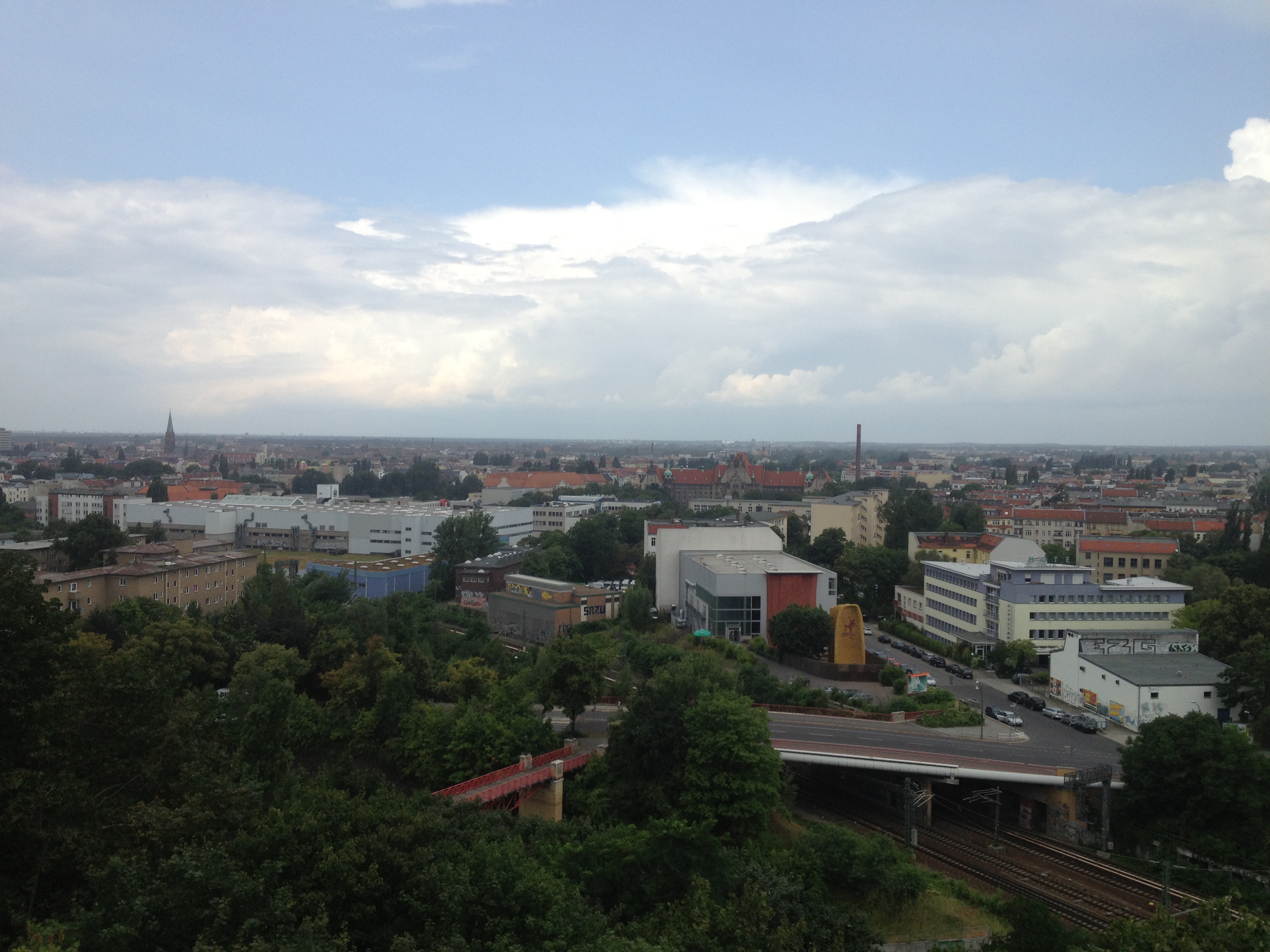
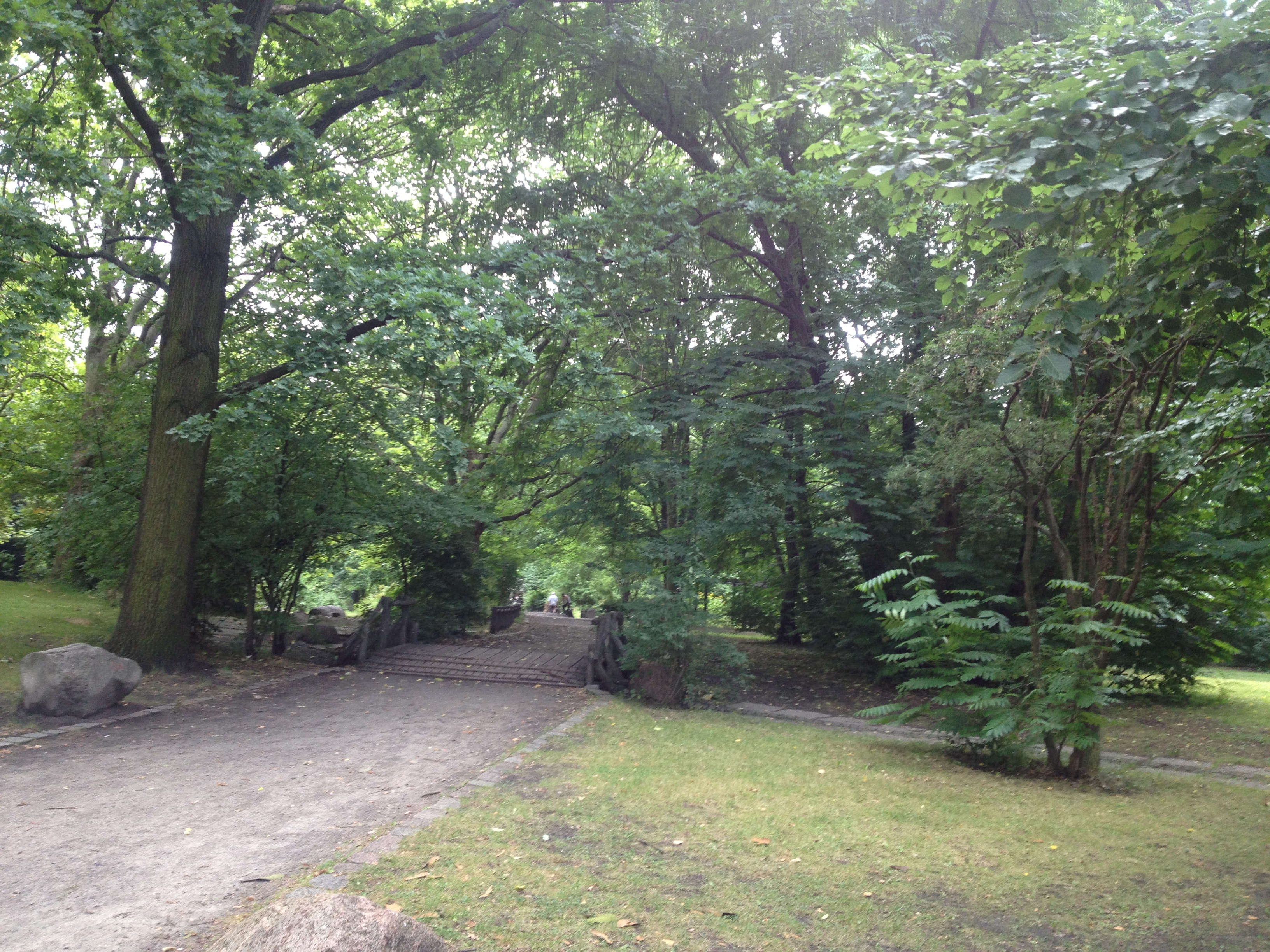
One afternoon, Ralf took me to a park near his house that had a lookout with a view over the north-eastern side of Berlin. He pointed out certain structures and gave me interesting, little historical facts about the area. Afterwards we took a walk through some of the greenery, stopped for ice cream, and I just enjoyed not being on such a tight schedule of trains and sightseeing and searching for Couchsurfing hosts.

A sculpture at the lookout in  Volkspark Humboldthain, the park near Ralf's place.

A sculpture at the lookout in Volkspark Humboldthain, the park near Ralf’s place.

The view of Berlin from the lookout.

The view of Berlin from the lookout.

Ralf leading the way through the park.

Ralf leading the way through the park.

The greenery of Volkspark Humboldthain.

The greenery of Volkspark Humboldthain.

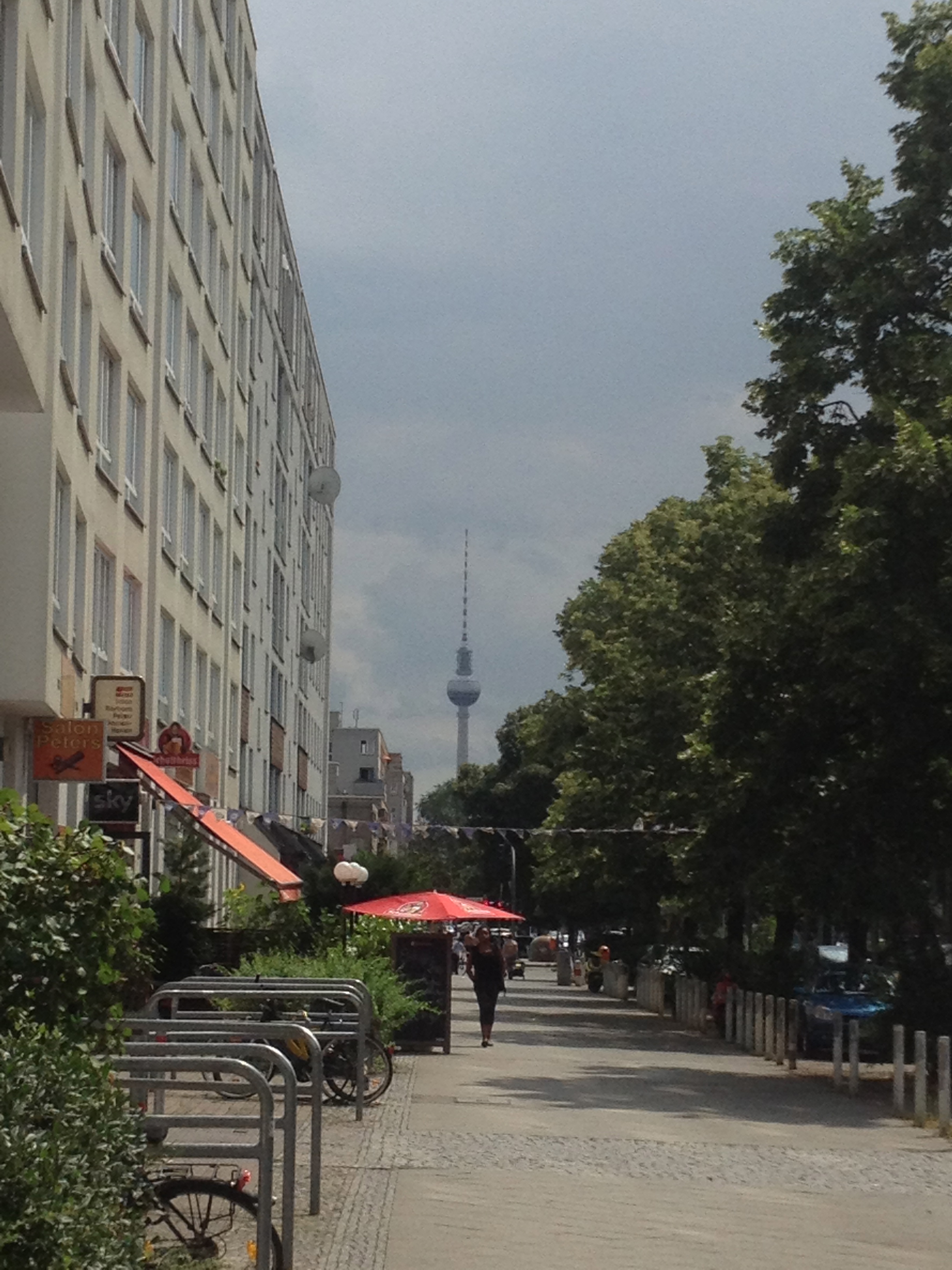
Berlin's TV Tower from a new angle.

Berlin’s TV Tower from a new angle.

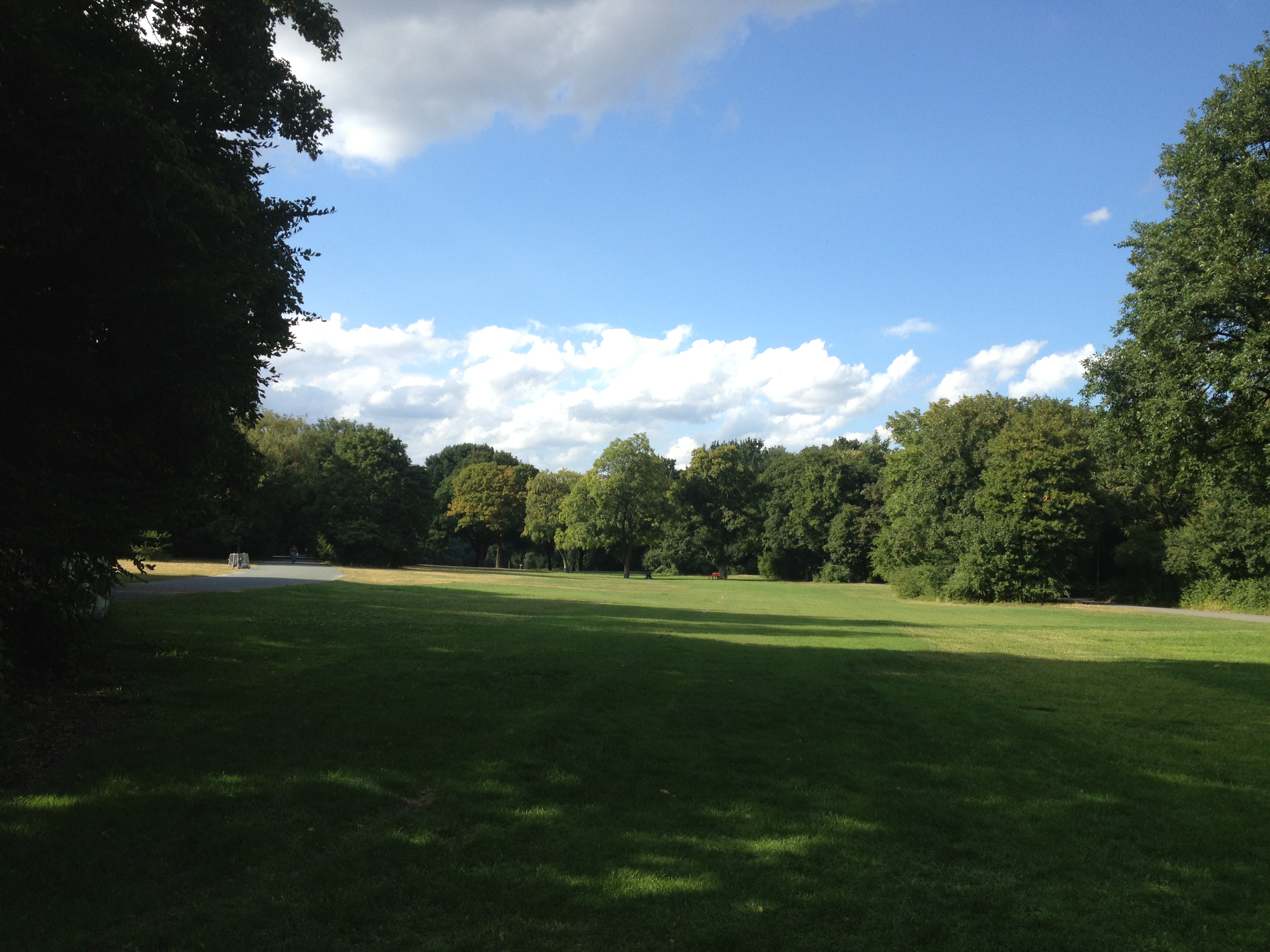
Another afternoon I went on a trek down south in the city to visit Tempelhof Airport, not because I had a plane to catch, but because the airport had ceased operation in 2008 and been converted into a huge parklands area. Rivalling the Tiergarten in size, the park was full of people enjoying the afternoon sun – riding their bicycles, walking their dogs, playing sports and having picnics. I swear I saw a couple of shady looking guys hanging out in the trees, beckoning me over in what I can only assume was an attempt to sell me drugs, but they spoke in German so I just shook my head and kept on walking.

The transformed Tempelhof Airport.

The park surrounding the transformed Tempelhof airport – the old airport itself is much more flat. 

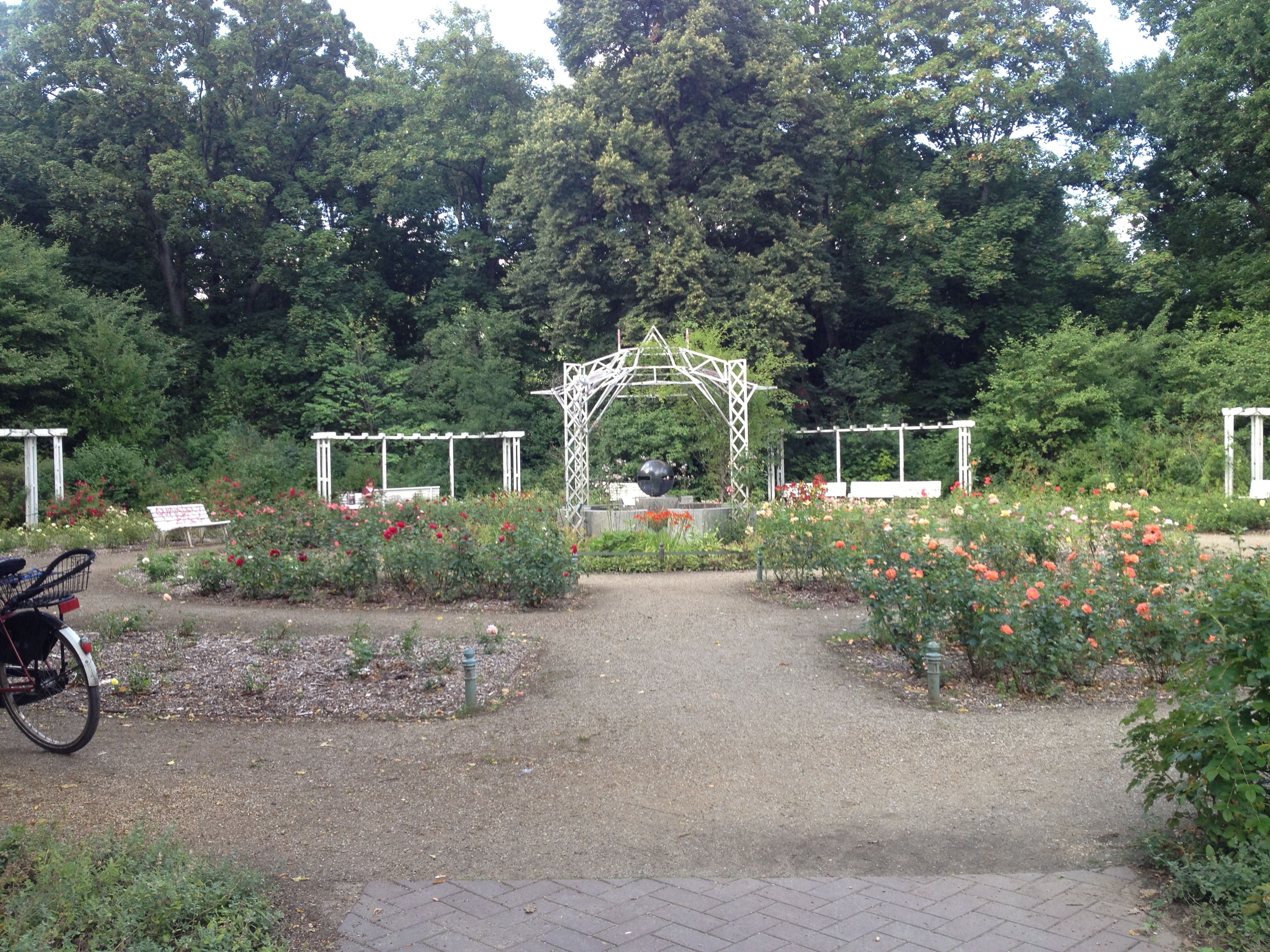
A rose garden within the Tempelhof airport park.

A rose garden within the Tempelhof airport park.

After that I met up with Micha for a drink. The last time I had seen Micha was on his birthday, during my last weekend in Berlin, and I had been slumped over the bar at Rauschgold, struggling to stay awake. He’d said to drop him a line if I was ever back in Berlin, though like Ralf, I don’t think he was expecting me to be back quite so soon. Yet we did catch up for a drink, and I told him more about my travels throughout Europe, and it was a strange but nice feeling to actually have familiar faces to catch up with in a familiar city. Micha had work to do though, so it was only a quick afternoon drink before he had to head off again. Though on my way back to the U-Bahn station, who should I run into but Donatella and Eva, on their way out to get some dinner. I guess it wasn’t too much of a surprise, considering that we were only a ten minute walk away from the apartment where I had been staying during my first time in Berlin, but randomly running into people you know on the street was definitely an experience that I had not had in a long time – the closest thing would have been bumping to Xavier at his work during Parisian Pride, and that wasn’t exactly a good thing. I had told Donatella I would be back in town, but I’d spent a lot of time on the other side of the city in Ralf’s neighbourhood, so hadn’t gotten around to catching up with her again. We stopped and chatted for a little bit before saying farewells and parting ways, knowing that it would most certainly be a much longer time before I was ever back in this crazy city. But I skipped off down the street with a little spring in my step and a grin on my face. I felt like a bit of a local, or at least like I had left my mark in the city, by the fact that there were even familiar faces I could bump into on the street.

***

When I’d arrived at Ralf’s for this second visit to Berlin, I’d collapsed on the couch and tried to sort out my personal belongings a little bit, without taking over his living room entirely. When I pulled out my iPhone I almost went to ask for the wifi password, but then I remembered that I had been here before, and the bars of signal had already appeared at the top of the screen.
“I have this friend”, Ralf said to me when he noticed, “who has this favourite saying: home is where your phone recognises the wifi.” He smiled as he helped me unpack my things and sort out my dirty laundry. “So welcome home, or at least, home for now.” It was nice to have a familiar place to crash, and it did feel a little like home away from home. But it wasn’t just Ralf’s apartment – it was Berlin itself.

I remember talking about it with my sister via Skype, who had just relocated to Hawaii a month or so beforehand.
“I know what you mean,” she said when I told her of the unexplainable connection I felt with the place. “I never thought I would ever want to live in another city, let alone another county! But the first time I came here I just loved it – I hated having to leave, and I knew I had to come back.” I had been to quite a number of cities on my travels so far, but there was something that had drawn me back here, and I knew exactly what my sister was talking about.
“I just really feel like I could live here, you know? Like if someone told me ‘Your trip ends here, you have to stay’, I would be completely okay with that.” Of course, there were still so many destinations in my future that I was so excited to see, so that wasn’t entirely true – I’d be pretty upset if I was unable to do all the other things I’d been planning. But in terms of actually spending time in a city, getting amongst it and actually living there – Berlin had already truly won my heart.

Where Art Meets History: East Side Gallery

The train from Prague to Berlin was probably one of the worst trips in the whole of my travels through Europe. It sat idly at the station for over half an hour before it finally departed from Prague, and suffered major delays along the way. Parts of the air conditioning weren’t working, and the cabins inside the train were reaching ridiculous temperatures, with everyone on the train dripping in sweat before we were even halfway there. When the train attendants came down the aisle at one point handing out bottles of water to everyone, I knew that the problems were actually pretty serious, and I had no hope of getting to Berlin at my previously anticipated time. But as it is with such unavoidable nuisances, all I could do was sit there in the stinking hot train with a bunch of other travellers around me. Everyone was was so hot and bothered and looking rather fed up with the whole thing that I wasn’t even going to bother trying to strike up a conversation to pass the time. I listened to my music, read my book, and closed my eyes, dozing off and dreaming of my current destination.

The last time I was in Berlin I had stayed with my family friend Donatella and her assortment of wild and zany housemates – Lola’s words about never leaving the city were still nagging at the back of my mind as I found myself drawn back to it. But after meeting and staying with him for the last two nights of my previous stay, Ralf had said that I was welcome back to stay with him any time I was in Berlin. I don’t think he had anticipated my return being quite so soon, but he agreed to let me stay with him when I told him I would be coming back on my way west to Amsterdam. I’d really enjoyed the brief time I had spent with him last time, so I was pretty excited to seem him again. Of course, the train was running late, so some of the logistics in actually finding each other were a little difficult. Yet when I stepped off the train at Berlin Hauptbahnhof there was a slightly different feeling that I hadn’t felt in quiet some time, and that was the feeling of returning to a familiar city. Not since arriving back in Bangkok after the bus ride from Hell had I arrived in a city where I was able to say: Yes, I recognise this place. I know where I am and I know where I have to go. As much as I love the excitement that comes with discovering a brand new place and city, that kind of familiarity with a place is strangely comforting. When I finally met Ralf – and had changed out of my soiled travel clothes, showered and freshened up – we had dinner, and I told him all about the adventures I’d had throughout Europe since I had last seen him. He listened and smiled as I told him my stories, and I was glad I had come back to Berlin – that adorable smile was the cherry on top of all the things that I already loved so much about the city that had drawn me back here.

***

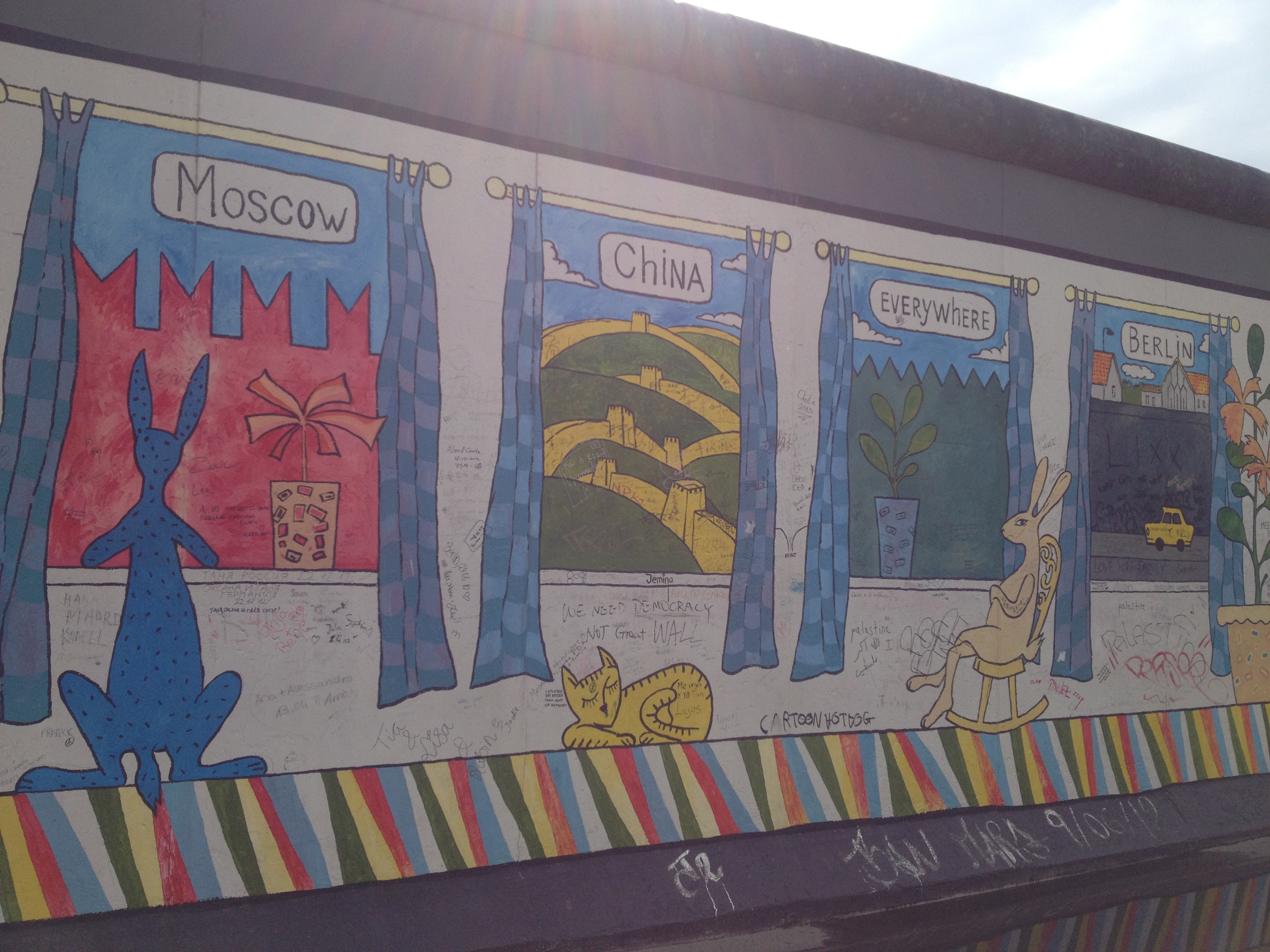
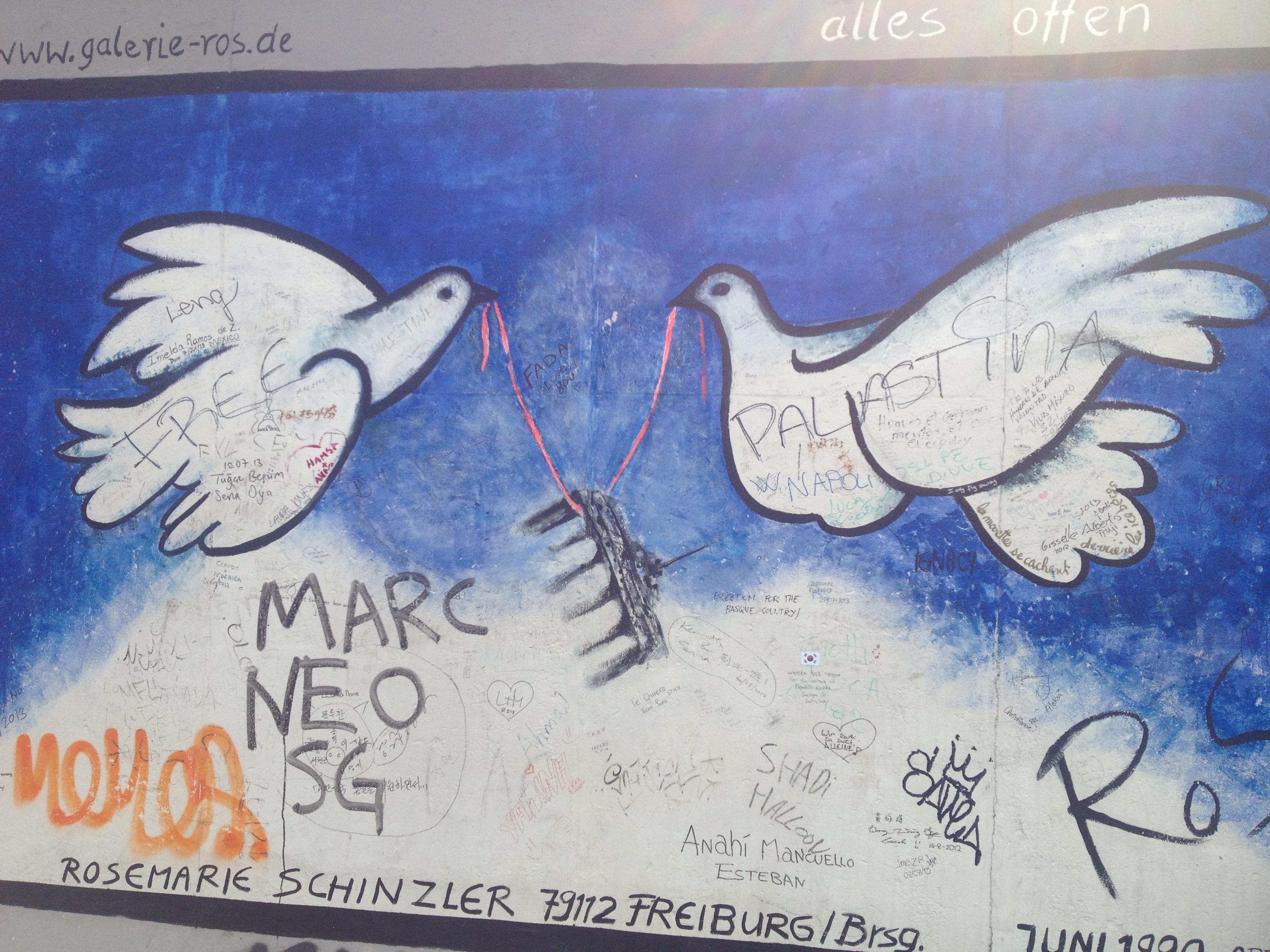
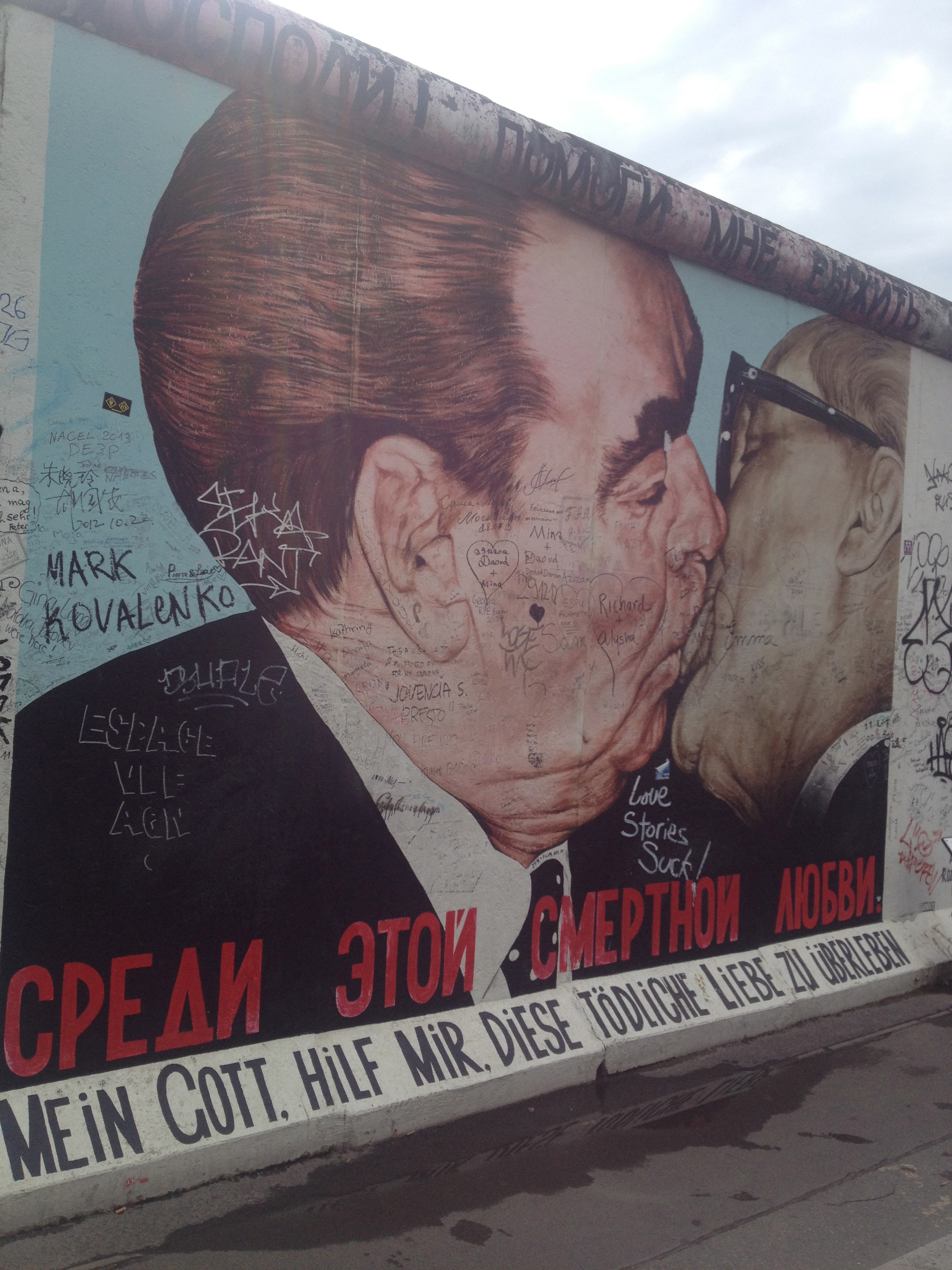
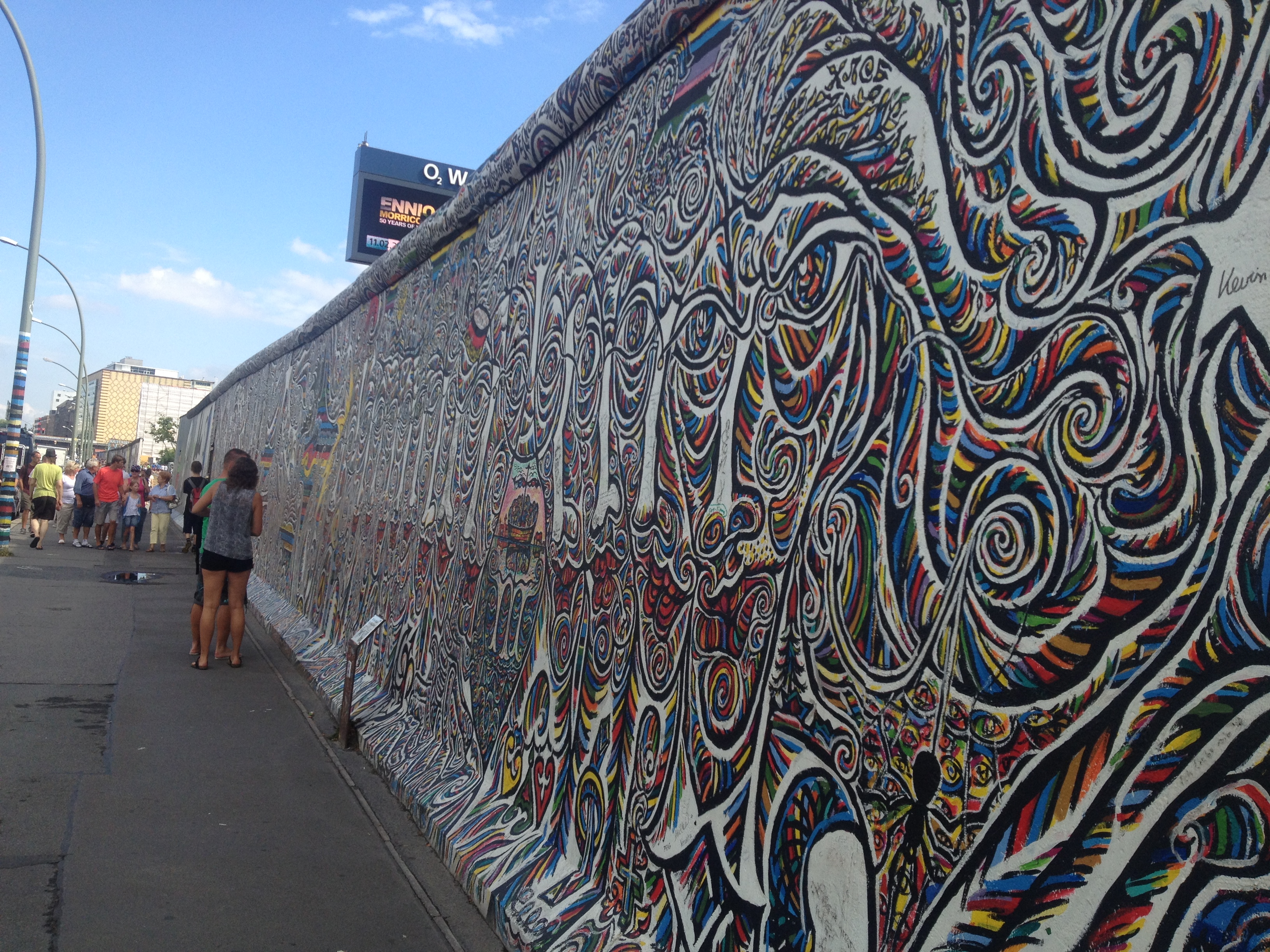
Ralf had to work during most of the week, so I had to find other things to do to amuse myself. I spent a lot of time just resting and hanging out, happy to have a place to myself while Ralf was out, but one of the major things to do in Berlin that I hadn’t gotten around to doing last time I was here was see the East Side Gallery, which is actually the painted and decorated remains of the Berlin Wall. I had only briefly seen it in the dark with Dane on our first attempt to get into Berghain, and I wanted to go back and really take it in. I have to say, I had seen to some pretty amazing art museums on my travels – famous notables include the Hermitage in St Petersburg, the Louvre, and the Vatican Museum – but I have to say that out of all of them it was the East Side Gallery that captivated me the most. The artworks are such a diverse collection, from detailed masterpieces to simple murals that could have been done by children to sections that looked more like elaborate graffiti more than anything else. In fact, despite it obviously not being allowed, many sections of the wall had been vandalised, but in a way I feel like it was almost some kind of artistic extension. The wall is part of a long history for Berlin and Germany, but the periodic graffiti that marks it almost gives the face of the wall itself a traceable history, a reflection of ideas presented in both an official and unofficial capacity.

Whether it was the graffiti or the actual murals, the thing I loved about the East Side Gallery is that there is such a strong and powerful meaning behind each and every word and image. With the wall itself long being a symbol of division and oppression, that’s hardly surprising, but I often found my slow stroll coming to a gradual halt just so I could stand there and look both ways, up and down the wall, and just take it all in. I have no idea what it would have been like here during war time – I couldn’t even begin to imagine – but for me these paintings scratched the surface of the emotions and impacts of the wall that inspired them. It was art and history seamlessly combined into one, and it gave me shivers to behold, something I can’t say for any of the other artworks I’d come across.

At the start of the East Side Gallery walk.

At the start of the East Side Gallery walk.

Beginning my walk down the wall.

Beginning my walk down the wall.

I got excited because I'd been to all of these places - well, almost everywhere.

I got excited because I’d been to all of these places – well, almost everywhere.

Doves carrying the Brandenburg Gate, an iconic symbol of Berlin.

Doves carrying the Brandenburg Gate, an iconic symbol of Berlin.

An image that doesn't need much explaining.

An image that doesn’t need much explaining.

A beautiful and intricate rainbow piece.

A beautiful and intricate rainbow piece.

I loved this painting. So simple yet so powerful and suggestive.

I loved this painting. So simple yet so powerful and suggestive.

A colourful mural tainted by graffiti.

A colourful mural tainted by graffiti.

Even exchanges between graffiti like this I found fascinating, the ever changing face of the wall and the continuing history or perspectives.

Even exchanges between graffiti like this I found fascinating, the ever changing face of the wall and the continuing history or perspectives.

That’s not to say that all those artworks in the previous galleries didn’t have any meaning – there was plenty of beautiful and moving pieces in all of them. But there’s just something kind of sterile about the museum environment, where things are locked away behind glass cabinets, or sectioned off with velvet ropes. There’s a division between the viewer and the art, and it’s kept pristine and preserved in its slice of history. The East Side Gallery at the Berlin Wall had none of that – it was real, it was there in front of you. You could feel it with your hands, and it had moved forward and changed, developing its own history, for better or for worse. It’s not your conventional art gallery, but then I suppose I don’t really like conventional art galleries all that much. There were plenty of other ones I could have visited while I was in Berlin, but I had found such a sense of fulfilment after seeing the East Side Gallery that I really didn’t see the need.

***

It felt great to be back in Berlin, but there’s a danger in getting too familiar and thinking that you really know the city when you still have so much to learn. Previously in Berlin, I had only bought tickets for the U-Bahn about 50% of the time, rationalising it with the fact that you don’t need them to actually enter the trains or platforms, and I had never seen anyone ever checking for them. I had bought them the couple of times I’d travelled places with Ralf, because I wouldn’t be able to play ‘dumb tourist’ if I was hanging out with a local. But for the times I was out on my own, I took a chance and skipped the ticket machine on my way into the subway.

Never really expecting to have it happen, you can imagine my surprise when someone did come around inspecting tickets – of course, on my journey back from the East Side Gallery when I was not in possession of a ticket. I fumbled wildly through my backpack, triple checking my wallet for a ticket that I knew wasn’t there, trying to convince the plain clothed inspector that I had bought one, and I must have lost it somehow. He wasn’t buying any of it. “For not having a valid ticket you will have to purchase an increased fare ticket,” he explained to me, which essentially is a glossed over way of saying you’re going to get a fine. “It’s going to be €40. You can pay for it now, or you have two weeks to pay for it at one of our offices.” I stopped and thought for a second.
“I’ll pay for it later, thanks.” I was only going to be in Berlin for another 4 days, so I figured if I skipped town there was little they could do about it. The guy had already taken my Australian drivers licence to record my name and address, and he told me it would be in the system for two years. He gave me a pice of paper with the payment details and was on his way again. I hadn’t given them my passport, which I feared might have caused migration problems, but he did have my address in Australia. “I’m not going to pay it though. There’s no need, right?” I had said in a discussion with Ralf. “It’s not like they’re going to send me a fine to the other side of the world.”

Fast forward a few months to me sitting on the couch, finally in the United States, with my new friend Mike in Washington, DC. As we were drinking red wine and watching The Walking Dead on Netflix, my phone vibrated. It was an email from my mother with the subject line: “The Germans are after you!”
Yo Bob, got a bunch of what appear to be angry German letters from your letterbox today. Something about not having a ticket. Care to explain?
Well I’ll be damned – I certainly got a schooling in German efficiency. They sold the debt on to debt collectors who had also sent me letters. I have to admire their tenacity, as I had never really expected them to send a single letter, let alone a few. In hindsight, it was a reckless disregard for another countries rules and I do feel a little bad about the whole thing now – though not bad enough to pay the fine, which to this day I still haven’t done. But I did learn a lesson from the whole ordeal – from that day on, no matter what country I was in, I made sure I always bought tickets for the public transport. 

Language Barriers and Being Monolingual in Europe

“So what languages do you speak?” was one thing that a lot of people asked me when I was preparing for my trip. There was also a pretty unanimous expression of shock on the faces of everyone who asked when I replied with, “Other than English, none.” The Asian languages in particular would have been a bit of a challenge that would require a mindful application I just didn’t have, but what of the other languages that use the same Latin symbols and letters? I made a rather naive excuse for it, saying “I’m going to be going to so many countries, there’s no way I could learn the languages of every single one of them!” It sounds lazy, I know, but it was the truth – I was rarely in a country for more than a week, and never exactly knowing where I was going to end up next, so never knowing which language I should prioritise in learning. Because they all had their own languages that were dominant, with no major common lingual factor except – yep, you guessed it – English, in one form or another.

But the honest truth is that I never went into the trek around Europe expecting the world to cater to what was probably my biggest touristic flaw. I was expecting to have a much more difficult time as a monolingual than I did, and the ease with which I actually did around is a surprise for which I am quite grateful. I often found myself playing charades or using broken English in the most obscure or random places, only to be told, “It’s okay sir, I do speak English.” It was slightly humiliating, but it was the one thing I couldn’t escape or distance myself from, or make any immediate move to change that would be directly helpful – by the time I learnt the basics of any language it would be time to move on to the next country! Still, it wasn’t always smooth sailing, and Europe provided me with more than a handful of awkward and memorable linguistic experiences.

***

The Russian and Mongolian languages and their Cyrillic alphabet did inspire a bit of my fascination with other languages, but for the most part, everyone in Russia and Mongolia spoke Russian or Mongolian, and not much else. It was when I got to Finland that the concept of widespread multilingualism really hit me. I watched on, slightly intimidated, as Susanna’s Finnish friends seamlessly moved between Finnish, Swedish – the countries two official languages – and English, which everyone just seems to know anyway despite it not being an official language. Scandinavia and northern Europe were like that, I was told from the beginning – almost everyone learns English in school, so I should have no problems. Yet I was still exposed to what felt like at least three different languages in each country. It actually made me feel a little less intelligent, to see small children yapping away in a foreign language and switch over to what was an impressive command of rudimentary English, especially for a 5 year old, and back again as though it was nothing. In an attempt to make more excuses, I told myself it was the geography and logistics of Europe than lent its residents to learning so many languages. They have many neighbours in close, bordering proximity, with everyday practical uses for the languages they were learning, and a constant need to practice them. How often were my Year 7 French lessons going to come in handy in the middle of Sydney?

Although I shouldn’t speak so soon – the country where I did encounter my first language barrier was, of course, France.
“The French are so arrogant – they’ll understand English, and know you don’t speak French, but they’ll pretend they don’t know what you’re saying because they think it’s beneath them to speak your language in their country.” That was the general idea a lot of people had told me to expect in France, particularly Paris, but I’m so pleased to say that it was not my experience at all. A lot of the guys I was with for Parisian Pride spoke amongst themselves in French, but when they addressed me they always spoke in English, or at least to the best of their abilities. Which was more than I was doing for them, considering I was in their country, so I feeling nothing but gratitude towards the Parisians I encountered. Well, perhaps a little more than gratitude… whatever language they spoke, Parisian men were still Parisian men.

However, during my frantic last morning at the hostel in Paris, packing before my 12pm check-out time, I was accosted by one of the housekeeping staff. She seemed a little flustered when she entered the room and saw me doubled over my backpack, trying to shove everything inside as quickly as I could. I probably looked like a deer in the headlights too, and we both just stared at each other for a few seconds. Then she started speaking to me in French.
“Oh… ah… sorry. I don’t speak French,” I said sheepishly. However, she continued motioning to my bed and speaking to me in the foreign tongue.
“Ahh… Check out is at noon? I still have fifteen minutes?” I said, pointing to the clock. She said something else in French, with some emphatic hand gestures, and stared earnestly at me.
“Ahh… I don’t speak French,” I muttered, before trying again. “I’m about to leave, I’m just packing my things now.” I was mortified to realise I had begun raising my voice, as though the housekeeper might suddenly start to understand English if I said what I was saying loud enough. She just looked and me and said something else in French. We both just stared at each other. It was pointless: neither of us had the slightest clue what the other one was saying, and we weren’t talking to each other anymore – we were talking at each other, and it was achieving nothing except frustrating the hell out of us. In the end she just shrugged her shoulders and left the room, in what I can only assume was a non-verbal cue for “Hurry up and pack your things and get the hell out!”

***

Given that northern Europe was better known for the English skills of its residents, it’s no surprise that Spain was the next country to present me with a language barrier, although this time it was an entirely different situation. I learnt a fair bit of Spanish before a trip I took to Costa Rica a couple of years ago, and even studied it for a semester at university afterwards. Despite all that, the only phrases I had mastered allowed me to tell people I speak Spanish, just not very well, and to order a beer – priorities, right? It wasn’t much, and it really wasn’t enough when I tried to make conversation after locking lips with a guy on the dance floor at a nightclub in Madrid. He spoke about as much English as I did Spanish, or even less, so I basically had to stand there with a blank stare until he finally said something that I even half recognised. Not that he was saying much, other than “guapo“, between our kisses, though. I guess there are some situations where body language really does suffice.

Yet the country does have some other linguistic tensions that are a little bit more important than a Spanish one night stand. When I was in Barcelona I thought my Spanish was just exceptionally poor, but it turns out that in the region of Catalonia, almost everything is written in Catalan, and a lot of the locals get annoyed when you ignorantly launch into speaking to them in Spanish, regardless of your fluency. It meant little and less for me, someone who could hardly speak either, but for a Spanish speaker like Rich it was quite frustrating. But probably not as frustrating as it was to all the local Catalonians who everyone just assumes speak Spanish. I was able to discreetly bow out of that internal national conflict, as my reliance on English wasn’t as likely to offend anyone as much as it would just make them think I was an ignorant tourist.

The way I was able to explore Europe despite only knowing one language does give you an idea of the kind of power that fluency in English can offer you. Some people even find the language rather intimidating. I remember talking about it with Ike when I was staying with him in Ancona. Ike is half Dutch, so he spoke English and Italian as well as a bit of Dutch, but he told me of his own interesting experiences with language in Spain.
“It’s interesting – people are almost afraid of speaking English incorrectly, especially a lot of younger guys”, he mused as I told him my own experiences in Madrid. “I mean, they won’t get better if they don’t practice, but they don’t want to speak it if they can’t speak it perfectly. It doesn’t really make sense. A lot of the guys, they would rather try and speak to me in Italian.” He had a good chuckle remember thing that. “And… I mean, they don’t even know Italian. There’s some small similarities between Spanish and Italian… but, you know, not enough. They’re rather speak to me in terrible Italian than use slightly imperfect English.” It was something that I never came across – most likely because English was the only option they really had when talking to me – and it’s something I still haven’t been able to really explain.

***

Spain and Catalonia aren’t the only regions to have geo-lingusitic tensions. On my first night in Vienna with Kathi, she had explained to me some of the differences between the dialects of German that are spoken in Austria and Germany. “It’s mostly the same, but there are some different words for things that we have that the Germans don’t.” The more she explained it, the more I realised it was much the same as differences between American English and British English and even Australian English. At first it doesn’t seem like much, but you when you think about the different meanings we assign to different words – the use of “thongs” springs to mind – you understand just how much confusion there can be with these slight differences within the language. “It’s also frustrating when we go to Germany,” Kathi continued, “because most of the people in Austria take the time to learn some of the differences in the German they speak in Germany, but not many Germans do they same when they come to Austria.” She sighed and rolled her eyes. “It’s like they think they’re the ones who speak real German.” I couldn’t help but giggle to myself a little. It was interesting to see that such little problems could be, quite literally, the same in any language.

Yet there were other times when the different language posed absolutely no problems at all, and appeared to exist side by side with the greatest ease. When I arrived in Prague and was sitting down in Tomas and Matej’s kitchen eating the dinner they made me, the two often had short, lively exchanges in another language. When I asked Tomas what language they were speaking, Tomas seemed like he had to pause and think about it for a minute. “Well… I am speaking Czech, and Matej is speaking Slovak.” Tomas was originally from the Czech Republic, while Matej was a native of the neighbouring Slovakia.
“So… the languages are the same?” It was confusing, and seemed like literally the opposite of the kind of thing that Kathi had been talking about with the German language – instead of one language that everyone had trouble understanding, this seemed to be two languages operating like one.
“No, not the same,” Tomas said, thinking more. “They’re just… similar. I can speak Czech, and understand Slovak. Matej can speak Slovak, so we can just speak either.” He shrugged, not thinking much of it, but I found the concept rather mind-blowing: that you could speak in one language and listen to someone else speak in another. It was almost more than my poor little monolingual brain could handle. Considering they both used to be part of Czechoslovakia, I can only assume that the languages must be very similar, but even still, I was slightly amazed.

While I was impressed with the way the two languages operated so smoothly in sync, Prague was probably the least English-friendly city that I visited in the whole of Europe. Buying a bus ticket in the corner store proved to be a bit of a mission – Tomas had been having a cigarette outside, but I had to call him in to help me when I realised the woman behind the counter didn’t speak a lick of English. After that, I just had to hang on to my old tickets to show her the one I wanted whenever I went to buy a new one. There was enough English to get by in the main touristic parts of town, but I was lucky I usually had Matej or Tomas around whenever I was in the more obscure parts of town, because something tells me I wouldn’t have fared so well there as I had in the rest of Europe. Even sitting down to chat with their neighbours in their award-winning backyard was a bit of a challenge – out of all the places I’d visited, Prague was the city where learning to speak English hardly seemed like a priority at all. Tomas had only learnt it because he had lived in San Francisco several years ago, but he was definitely in a minority of those who did speak English.

***

I am so lucky that the one language that I do speak afforded me so much opportunity to travel relatively unhindered, but the more I saw of the world, the more my status as a monolingual felt like a handicap. I was insanely jealous as I watched people slip between different tongues so easily – I knew they weren’t saying anything specifically more profound than anything that could have been said in English, but it just felt like there was a wealth of knowledge that I was missing out on. Living in a country like Australia, with no countries with direct borders and no extremely obvious choices of a language to learn that might be useful in your own city, I’d never really considered that learning another language would be such a beneficial skill. Now, after travelling around so many different countries and discovering the complexities of a range and huge variety of languages, it’s become another one of my goals to learn, practice, and eventually become fluent in another language. Which language – for now – is undecided, but I have to thank the many companions and friends I made along the way in Europe for inspiring me, and opening my eyes to the importance of languages, and the highly valuable skill of multilingualism.

One Friend, Two Friends: Old Friend, New Friends

When Kathi and I returned from our excursion on the river, we parted ways for our separate plans that afternoon. She had a date, and I actually had another friend who lived in Vienna whose birthday, as it happened, was that very day. It’s not everyday that you accidentally arrive in your friends city on the other side of the world on their birthday weekend, so we had made plans to catch up for a drink to celebrate both his birthday and my being in Austria.

I’d originally contacted Stephen asking if I might be able to crash with him when I was in Vienna, but unfortunately he didn’t have any room for me in the place that he lived in with his girlfriend. Luckily things had worked out through Couchsurfing in the end, and I just met up with him on the afternoon of his birthday instead. I had met Stephen when I was studying at university – he was on an exchange semester at The University of Sydney, and we sat next to each other in one of our philosophy tutorials. Now, almost exactly a year later, we were sitting at a beach-themed bar on the side of the Danube in the middle of the city, catching up and reminiscing and soaking up the sun. I say afternoon, but it was actually closer to 7pm – what I would have typically called “evening”. But this was European summer, and if we measured parts of the day by how much daylight the had, “afternoon” wouldn’t end until approximately 10:30pm. I ordered another Radler and sat down to tell Stephen more about my travels, and what I was planning to do next, both short-term and long-term. “You could always get a working visa and come back to Europe to teach English,” he had suggested. “I know of a lot of places that are always looking for native English speakers to help adult students perfect the language, especially places in Austria and Germany.” Scenarios flashed through my mind of living in Berlin, teaching English to the locals during the week, and spending my weekends on the dance floor or in a dark corner at Berghain. I could definitely think of worse ways to spend my life, but at that stage I was thinking as little as possible about my life after my year of travelling. I’d been on the road for months now, and I wasn’t even halfway through my journey.

Our mugs of beer and Radler in the Viennese sunshine.

Our mugs of beer and Radler in the Viennese sunshine.

Stephen and I.

Stephen and I.

Eventually Stephen had to go, so I wished him a happy birthday one last time as we bid each other farewell. I hadn’t drank too much, and I ended up just heading back to Kathi’s, but that night was still rather significant. After all the travelling I’d done in the past few months, that conversation with Stephen had planted a seed in my mind, an idea in my head – the idea of living abroad. Every following city that I visited, and every time I cast my memory back to the places I’d visited, it wasn’t a question of whether I liked the city or not, but rather, ‘Could I live in this city?’

***

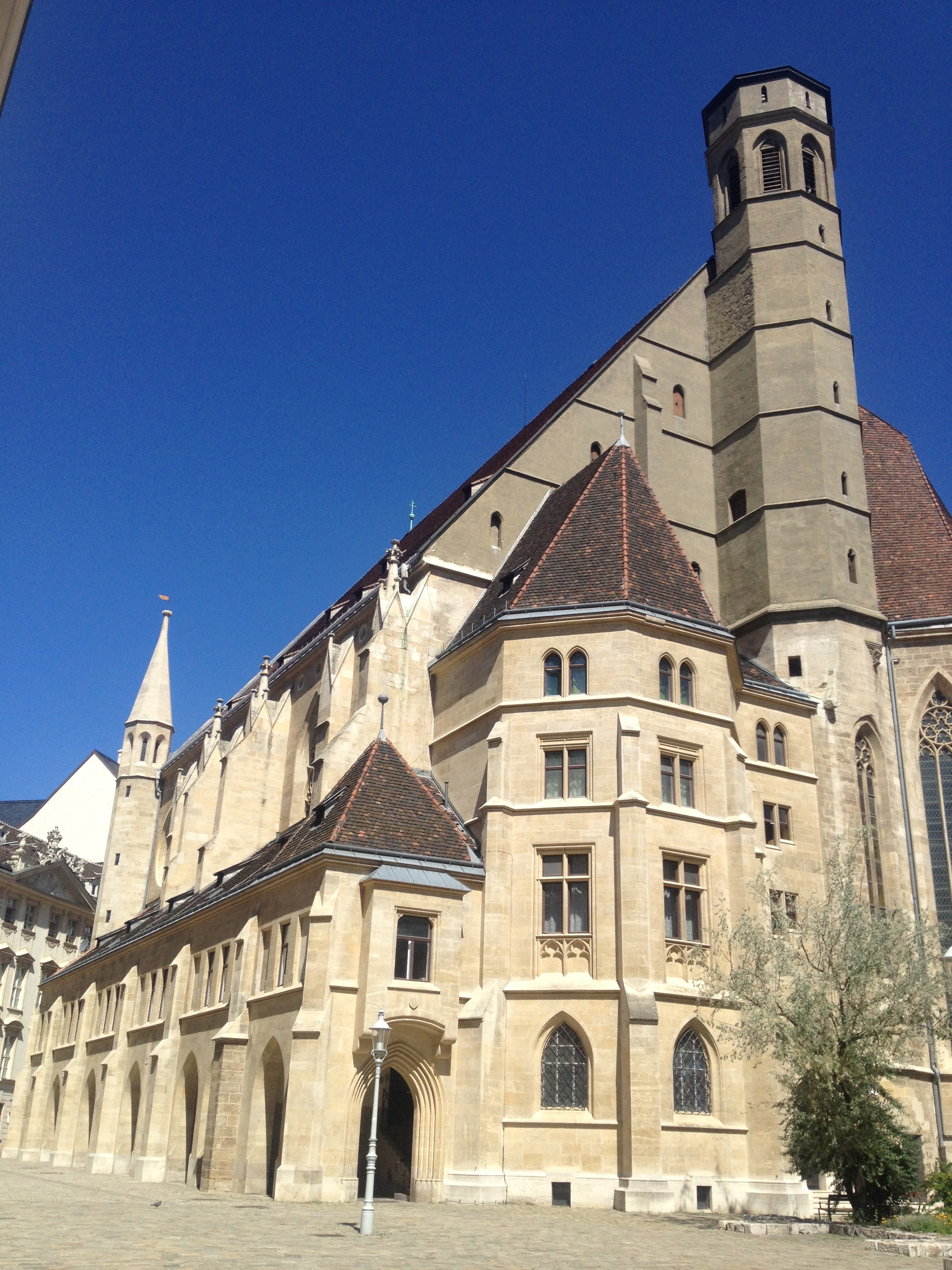
The following day was my final one in Vienna, and since Kathi had to work for most of the day I figured it would be the best opportunity to do my loop around the tourist ring and see some of attractions Vienna had to offer. The inner city, or Innere Stadt, of Vienna is a designated Unesco World Heritage site, and the architecture easily takes you back to centuries past. I wandered the streets and got a little bit lost, just soaking up in the atmosphere as I strolled past the coffeehouses and other eateries and watched the flocks of other tourists come and go.

One of the older buildings on one of the quieter streets in the city centre.

One of the older buildings on one of the quieter streets in the city centre.

Some more classical looking architecture I stumbled upon in my exploring.

Some more classical looking architecture I stumbled upon in my exploring.

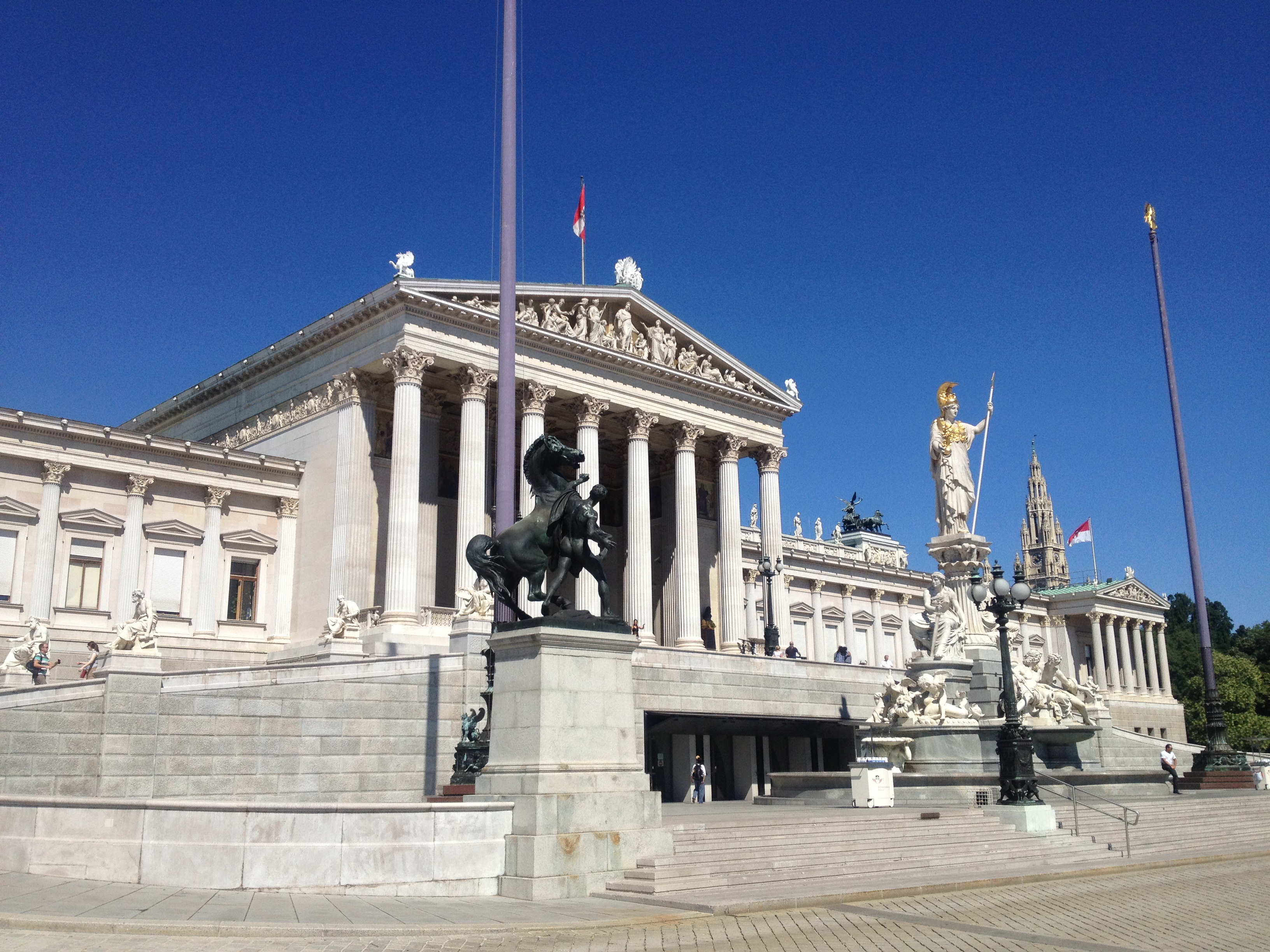
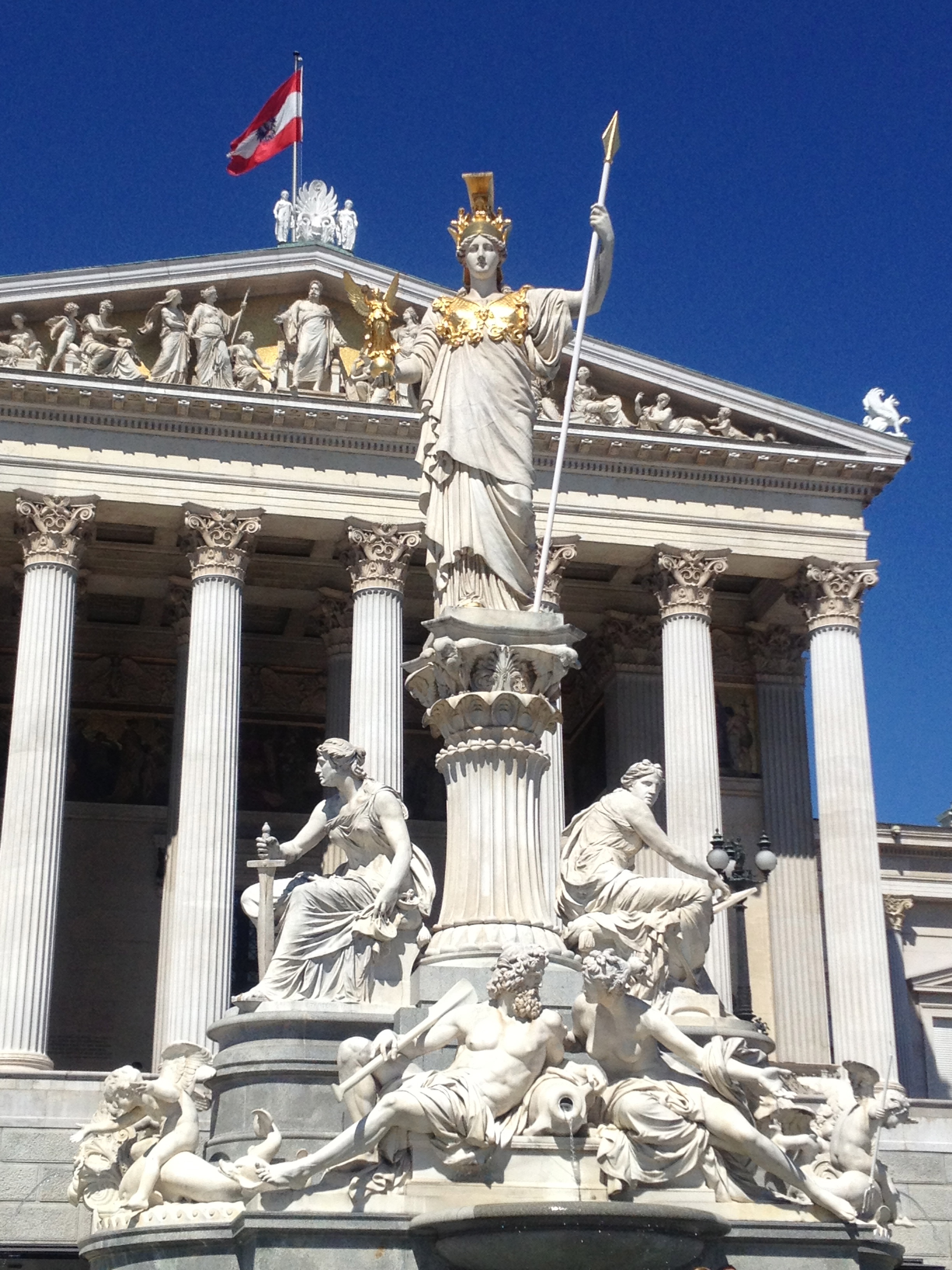
A lot of the major sights are situated along a tram line that does a consistent ring around the city centre, but after I finally made my way out from getting lost in the Old Town streets, I decided that it was such a nice and beautiful sunny day that I would walk around the ring, instead of staying cooped up on the public transport. Some of the highlights of the sightseeing in Vienna were Stephansdom, or St. Stephens Cathedral, a 12th Century Gothic church that towered above the streets, and the impressive neo-Greek architecture of the Austrian Parliament Building, complete with a gold trimmed fountain depicting the goddess Athena, with the four figures around the base of the fountain representing the four most important rivers in the old Austro-Hungarian Empire.

Stephansdom looking overhead.

Stephansdom looking overhead.

The Austrian Parliament Building.

The Austrian Parliament Building.

The statue of Athena in front of the Parliament Building.

The statue of Athena in front of the Parliament Building.

I didn’t take too many photos, but then I didn’t know too much about all the different sights in Vienna. It was kind of better that way, I think. There was no pressure to see all the important things, like their had been to visit the greatest hits of Rome. I was able to just meander around, stopping when I saw something I thought was interesting, taking the odd picture here and there, strolling through the greenery in the various city parks and just enjoying the relaxing atmosphere the city had to offer. I laid down in grass and had a snooze, had a slice of cake at a coffeehouse – it was all just so chilled out that it didn’t even feel like sightseeing. It just felt like living.

***

In the late afternoon I met up with Kathi and one of her housemates who had returned the previous evening, Anna-Greta. Kathi had suggested meeting at Naschmarkt, a popular market that had all kinds of amazing foods and fresh fruit and produce, as well as flea market stalls that were selling all kinds of things. Unfortunately I didn’t have much need for all that food, since I’d be jumping on another train to a new city the following day, but it was interesting to check out. Kathi and Anna-Greta bought a few things, and then we sat down to have some food at one of the restaurants that was set up along the market. We ate Thai food – something I hadn’t seen since Thailand – and I told them how popular it was in Australia, and we discussed other cultural differences between Austria and Australia. My favourite moment, however, was when it took us at least a few minutes to translate the word “bruise” from German to English. I thought something was seriously strange when they were telling me how they sometimes got “blue stains” on their skin – it still makes me chuckle when I think about it.

After we’d finished eating, the three of us just hung out at home for the rest of the evening. Anna-Greta had been partying all weekend at a big festival, and all three of us had to get up relatively early the next day, so we didn’t feel like heading out anywhere. Kathi and I pulled out our ukuleles and Anna-Greta grabbed her guitar, and I gave them a couple of lessons and taught them some chords to be able to play a few new songs. I introduced Kathi to Paramore, whose most recent album has a couple of ukulele tracks that I had learnt how to play. She loved the music, and was pretty stoked when I taught her how to play ‘Interlude: Moving On’, and we also learnt how to play ‘Blowin’ In The Wind’, a challenge that Kathi’s other housemate had set for her. Then we just sat around chatting, and the girls told me about parties that they throw, and the music that they play and all the fun that they have, and it made me a little sad to be leaving the next day. “You’ll just have to come back next time we have a party,” Kathi said with a grin. “And at the end of the night we can run around being crazy while we play the ‘Spanish Flea’.” We all laughed, and I smiled to myself, sincerely hoping that one day that would actually happen. I’d made some great friends during my travels so far, and there wasn’t a doubt in my mind that some of those people such as Kathi – despite the distance – would remain my friends for life.

The Churches of Old Town Zürich

When I wasn’t exploring the great outdoors with Robin in Zürich, I took time out of the busy, active lifestyle to do a little bit of sightseeing. The city centre of Zürich itself wasn’t exactly huge, or full of iconic landmarks, but simply wandering around the charming little streets and up the cobblestone footpaths was a pleasure in itself, appreciating the quaint and classical beauty that the city maintained.

A cute little Swiss street that is obviously very proud to be a Swiss street.

A cute little Swiss street that is obviously very proud to be a Swiss street.

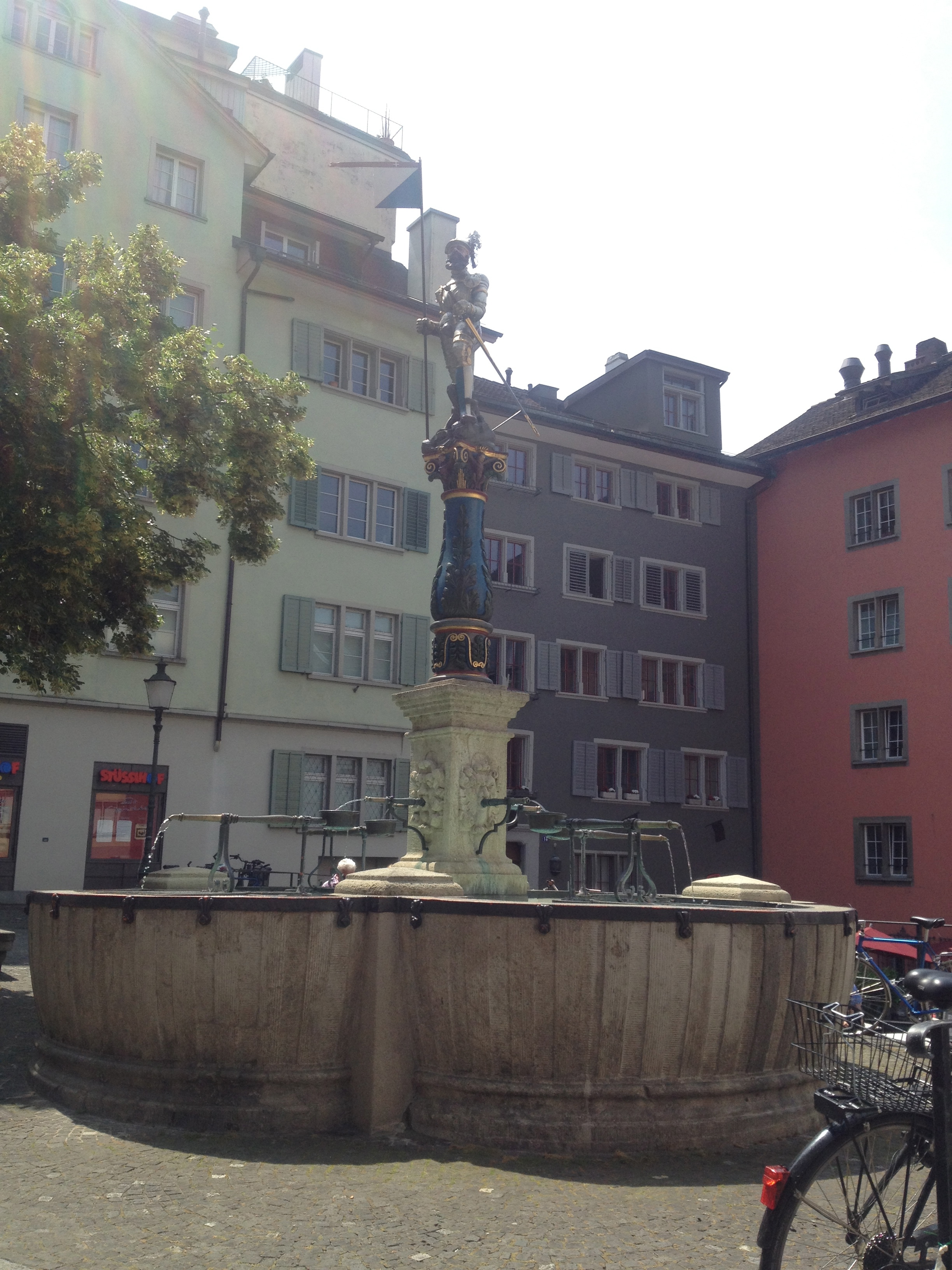
Gedenkbrunnen für Bürgermeister Stüssi, or Stüssi's Fountain, which I accidentally stumbled across in my roaming.

Gedenkbrunnen für Bürgermeister Stüssi, or Stüssi’s Fountain, which I accidentally stumbled across in my roaming.

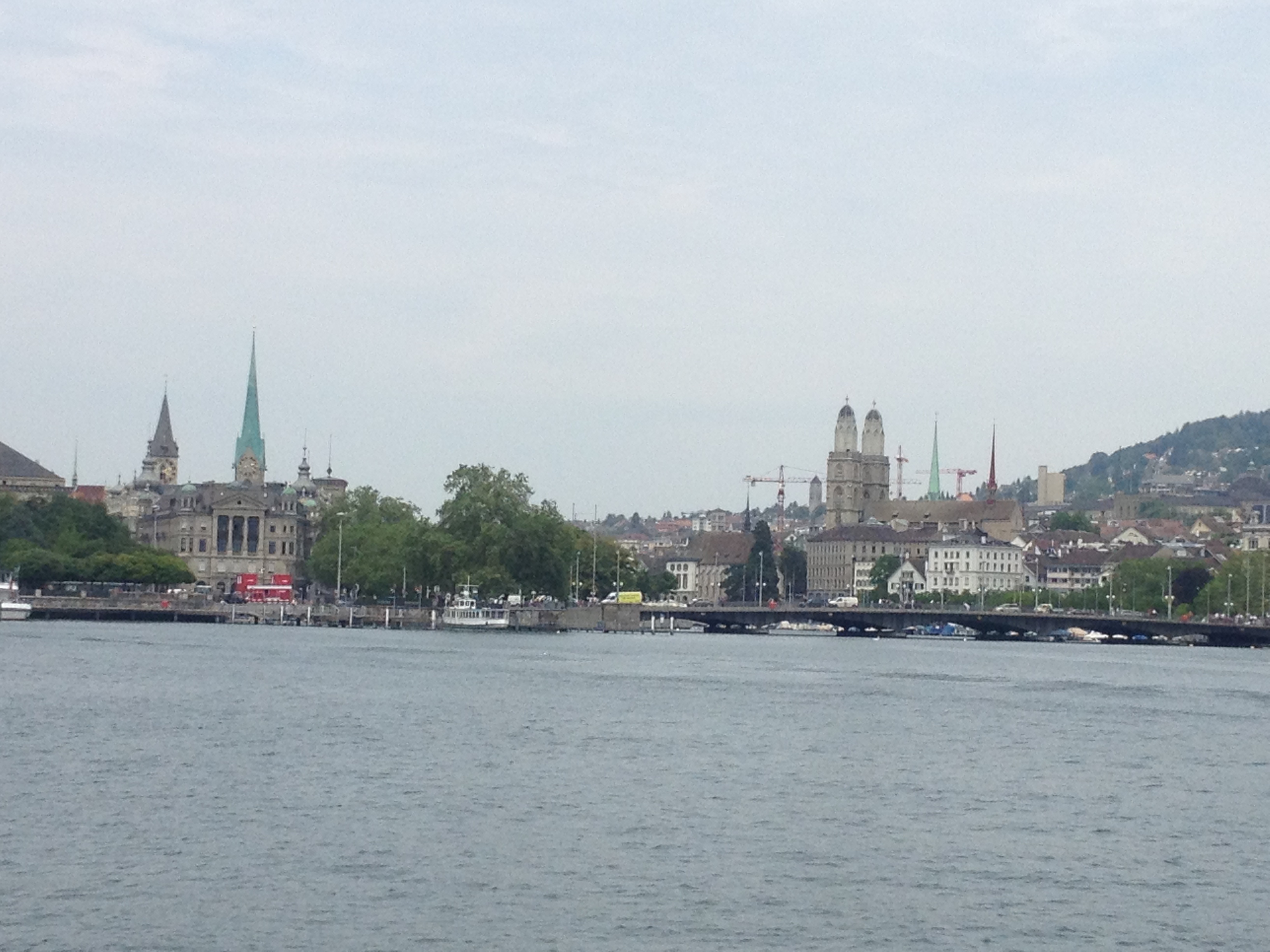
The most notable sights worth seeing in Zürich were probably the small handful of churches located in the city centre. While I had sworn I was done with churches after my trek through the Vatican City in Rome, these Swiss churches couldn’t be more different from the St Peters Basilica in Italy. They were a fraction of the size, modestly squeezed in between all the surrounding buildings, though the classical design suggested that the holy buildings had been there much longer than their neighbouring structures. The first of the three main churches in Zürich that I passed is called Grossmünster, which translates into “great minister”. It is located along the banks of the River Limmat and served as a monastery church when it was first inaugurated some 800 years ago. The Romanesque architecture was impressive from the outside from where I admired it, but it was a beautiful day outside, and I just wasn’t in the mood for trailing through another church museum.

The grand Grossmünster.

The grand Grossmünster.

So on I moved across the Limmat, where the other two main churches were situated – next was St Peterskirche, or St Peters church. The structure itself was significantly smaller than Grossmünster, and it was in the midst of a sea of buildings to the point where I couldn’t actually find the building itself. However, the main feature of St Peterskirche rose above the sea of buildings so that it could be seen from a great distance – the clock tower. Again, I wasn’t particularly interesting in seeing the inside of yet another church, and the main feature was best viewed from a distance anyway. “The clock on that steeple is the largest clock face in Europe,” Umer had said to to me as we’d breezed through the city on my first afternoon in Zürich. It has a diameter of 8.7 metres, but I hadn’t previously managed to capture any photographs of the impressive clock, so I took a few snapshots before moving on to the third and final church.

The clock tower of St Peters church.

The clock tower of St Peters church.

Fraumünster was the only church in Zürich that I actually went inside, but in retrospect I’m glad that I had made the time to take a quick peek. The English translation is “women’s minister” and the church, which is built directly across the Limmat from Grossmünster, was built on the remains of a former abbey. From the outside, Fraumünster doesn’t seem particularly impressive. However, once you set foot inside the cool and quiet halls, you quickly realise that it’s the inside perspective and the view from within that truly matters in these sacred rooms. I’m talking, of course, about the stained glass windows. From the outside on a bright sunny day they look incredibly unremarkable: black holes leading into the depths of the church. But from the inside, that sun streaming in lights up the coloured panes of glass to produce something beautiful, mystical, and even a little breathtaking. I reiterate that I’m not exactly religious and have no affinity with the Christian faith, especially after the disillusionment that came with my visit to the Vatican, but something about being in Fraumünster recaptured my sense of mysticism.

Fraumünster, looking deceptively plain from the outside.

Fraumünster, looking deceptively plain from the outside.

Back in my days at university I took quite a variety of sociology courses, one of them being a class titled the Sociology of Religion. In the first lecture, our teacher read us a metaphor about religion being like a stained glass window. You can study a religion from the outside – the rituals, the doctrine, the history, the beliefs – but the real meaning of a religion requires an understanding that one can only get from being inside of the fold, and being a part of that religion. Perhaps thats why, whenever I step into any of these beautiful churches far and wide across this continent, I get that superstitious sense that I just can’t quite put my finger on. Until you’re ready to fully accept it and be a part of it, maybe you’ll never be able to truly understand what it means to be part of a religion. I doubt that I ever will fully know what that is like, but for the meantime I was definitely understanding the stained glass window metaphor first hand. I tried to take a couple of photos, but the quality of my camera did absolutely no justice to the images I was seeing in front of me. Not for the first time, I took it as a sign that some things we experience in this world as just so significant to ourselves as individuals, that attempting to share them with others would simply fail to have the same effect on them as it did on us. So I momentarily lost myself there, in the cold stone chambers of Fraumünster, before saying a silent prayer – to who, I’m still not sure – and exited back out into the sunshine.

***

After my church sightseeing and soulful contemplation, I lightened the mood of my day with a stroll through the sunshine by the lake. This was before the afternoon of slacklining with Robin, so I hadn’t been swimming in the lake or river at that point. I found a seat on a bench and read my book for most of the afternoon, but I did come across a huge diving platform from which people were jumping off, and plunging into the depths of the crystal clear water. I considered doing it myself, but at that stage I wasn’t exactly feeling 100% healthy – I was still feeling a little under the weather, and recovering from the effects of prolonged partying in Madrid during Pride. I knew I would  inevitably be getting wet when I went slacklining over the river, but I didn’t want to wait around in wet clothes for the rest of the afternoon, so instead I contented myself with watching others jump off the huge platform and into the water.

The huge structure that had been set up in the lake, from which people were jumping off into the water.

The huge structure that had been set up in the lake, from which people were jumping off into the water.

There is one thing that I found shocking about Switzerland, even though it wasn’t exactly unexpected, and that was the cost of living. I had been warned about it, but it still hit me like a slap in the face. I wasn’t even paying for my accommodation, but my time spent in Zürich was fairly limited simply due to the fact that I didn’t have the budget to do very much. Even eating was a ridiculously pricey affair. I went to get lunch from what seemed to be a relatively cheap sausage stand – they love their wurst in Switzerland – and ended up paying around 6 francs for a simple sausage and a small piece of bread. I felt like that would have almost bought me a meal in any other country, but from what I had seen of the rest of Zürich, I had basically stumbled across a bargain. I considered it a blessing in disguise that I wasn’t feeling too well during my time in Zürich, because it meant that I didn’t have the desire to go out and investigate many of the bars or nightclubs – something that I just didn’t have the funding to do there. Robin and I visited a bar or two and sampled some delicious Swiss beer, made in various microbreweries around the country, but for the most part Switzerland was a continuation of my much needed down time. My pride tour down western Europe had really gotten the better of me.

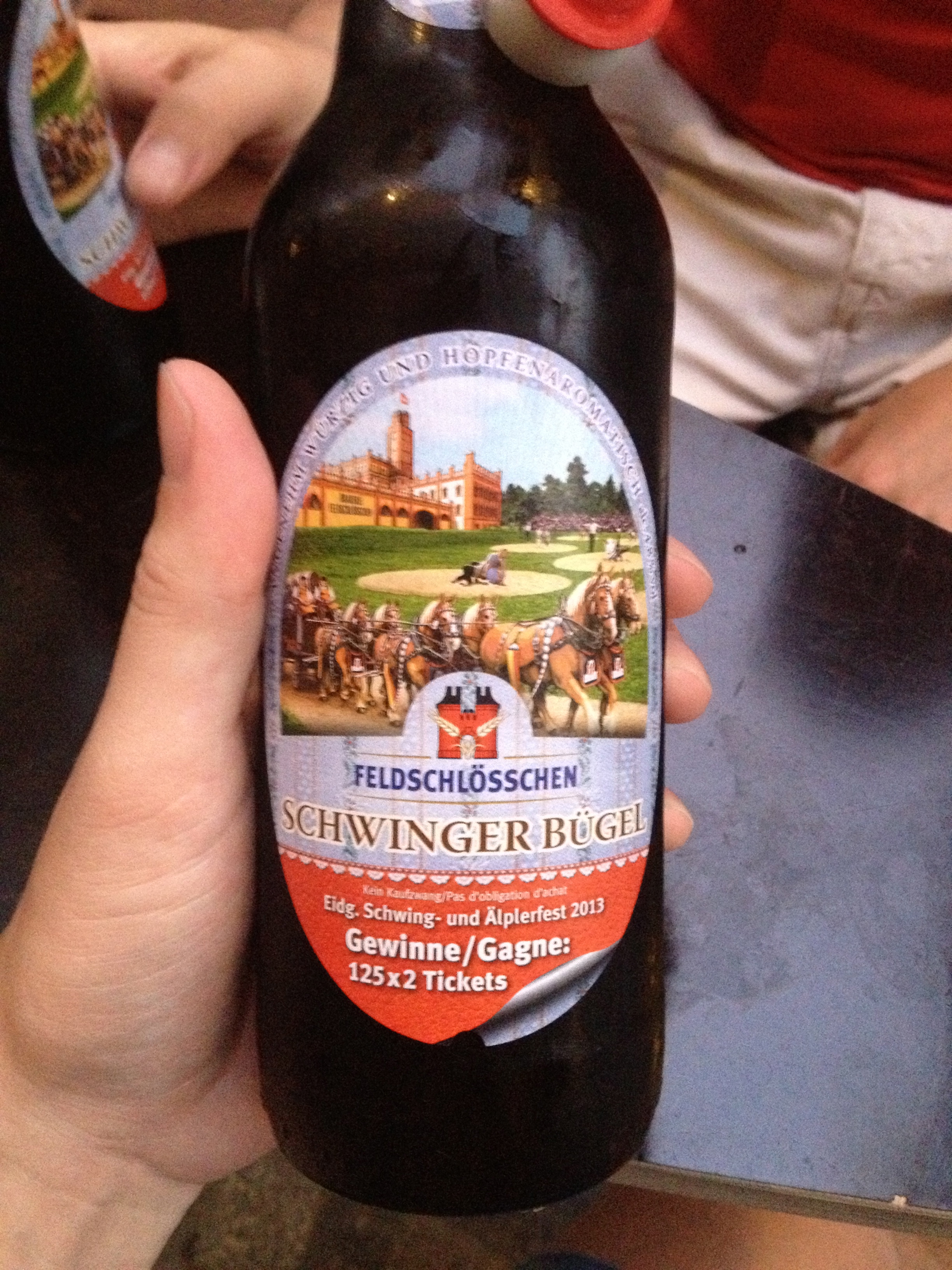
One of the Swiss beers I shared with Robin.

One of the Swiss beers I shared with Robin.

***

Eventually necessity required me to move on from Zürich – there were a handful of other destinations I still had to hit before my Eurail pass expired, and I just couldn’t afford to stay in Switzerland any longer. So on my final morning I packed up my bags, thanked Robin for his hospitality, for introducing me to the world of slacklining, and inspiring me to be that little bit more physically active in my life. Then it was onto the station for another train, another country, and another city on on my ‘greatest hits’ tour of Europe.

River Deep, Mountain High: The Great Outdoors in Zürich

The following morning, I bid farewell to Umer as he set off on his own trip. Before he left, he gave me his dads monthly travel pass again. “My father said he won’t need this today, so you can borrow it for one more day while you’re staying here. It let’s you go a lot further around the city than one of the standard daily tickets, so perhaps you’d like to make use of that while you can.” It was the last of the numerous suggestions and tips that Umer had offered me, and I thanked him for his stellar advice as he headed off to the airport.

***

The first thing I did that morning was head back to the centre of town to the dock at Lake Zürich. The monthly pass that I was using today also covered use of the ferry, which made round trips around the lake to certain points much further down the shore. There were long trips that went to the other end, as well as shorter ones that did rotations to closer docks. Umer had said it was a nice relaxing way to spend the morning, and it was a beautiful day to be out on the water. I took one of the shorter trips, which still took the better part of an hour, and watched the shoreline glide past, admiring all the adorable traditional houses that were situated right by the water. One thing that I would continue to notice during my time in Zürich is that the Swiss love their outdoor activities. It has something to do with the seasons – during the winter there is very little daylight, and the cold doesn’t permit people to be outside for too long, so when summer rolls around and the sun doesn’t set until after 10pm, people seem to take full opportunity of as many daylight hours as possible.

Statue of Ganymed and Zues, represented as an eagle, beside the lake.

Statue of Ganymed and Zues, represented as an eagle, beside the lake.

One of the smaller docks on the edge of Lake Zürich.

One of the smaller docks on the edge of Lake Zürich.

Cute little houses beside the lake.

Cute little houses beside the lake.

There were lots of pools and parks along the edge of the lake, and plenty of people were out sunbathing and swimming and kicking balls and all sorts of recreational activities. I sat in the sheltered shade of my seat in the ferry and just took it all in. I had just come from the small coastal town of Ancona, and I had been expecting to be returning to my tour of major cities when I arrived in Zürich, but I was pleasantly surprised to find that there was a small village feeling very much entrenched into the essence of this place. Even in the major intersections where trams tracks overlapped and cars seemed to be turning in all sorts of random directions, there were no skyscrapers, no obvious central business district, and no particularly large or overwhelming buildings. The feeling was cute and quaint, and it suited the city perfectly.

The main centre of Zürich as seen from the ferry on the lake.

The main centre of Zürich as seen from the ferry on the lake.

***

After my tour across the lake, I returned to the shore where I had plans to meeting some. Robin was to be my second Couchsurfing host in Zürich. Originally I had had three lined up: Umer had been the first and Robin the third, but my second host had to cancel at the last minute, which was why I was staying an extra night with Umer’s parents. Robin currently had a friend staying with him, which is why I could not come to stay with him any earlier, but when I told him Umer was going away he said he would be more than happy to meet up to see some more of Zürich with me. When I told him about the pass I was using for the day, he suggested we catch the train south west, just outside of Zürich to the mountain Uetliberg, which was another popular site for recreational activities in the city. Robin’s friend Tammy was busy filling out an application – the two of them were Chilean, with Robin living and studying here and Tammy visiting him, but also applying for courses so that she might be able to come back and live here too – so it was just the two of us as we hopped on the train and set off up the mountain.

As I chatted with Robin, he confirmed what I had observed from the boat – that everyone in Zürich was slightly obsessed with physical activities and outdoor recreation. The bike on the train up the mountain had quite a few people with mountain bikes, which they would ride down steepest parts of the mountain, following the popular trails before turning around and riding back up again. The public transport passes in Zürich ran on 24 hour period, so you could ride as many times as you liked as long as you were in a zone that was covered by your ticket. Robin had to buy an extension on his regular ticket, and off we went along the train towards the mountain. We got chatting along the way up – Robin was a sweet, short and soft-spoken guy who spoke with a pretty heavy accent. He was currently living in Zürich doing research and writing a Masters thesis, about a particular niche in microbiology that I would struggle to reiterate in any further detail, but it was definitely quite interesting.

When we reached the Uetliberg station – it was only about a 20 minute trip – we headed along the short hiking trail that led to a lookout. On the way we saw dozens more people out and about, who were doing a whole manner of exercising such as running, jogging, riding bicycles, and even taking part in what seemed to be some kind of boot camp drill work out. Robin and I casually trekked our way up the hill and dozens of people passed us by – we had all afternoon while Tammy filled in her application, so there was no rush. We eventually reached the lookout at the top peak of Uetliberg and gazed out over the impressive view. There was a metal tower that looked something like a huge lightning rod that we were able to climb, so Robin and I marched up the stairs to the viewing platform at the top. From there you could see the around the whole mountain, the horizons lined with even higher mountains that were cloaked in clouds and a pale pink afternoon sunlight. Up there the air was so fresh, and I breathed in a lungful as I soaked in all my surroundings. Robin pointed out a few of the natural features of the area, and we chatted about each of our home countries, our travelling experiences, and our impressions of Zürich. The nice thing about Couchsurfing is that no matter who you end up meeting or staying with, there’s always at least one thing you usually have in common – a passion for travelling. It’s the reason most people get involved – to be able to go travelling themselves – and in turn allows other people to go travelling and see the world. The more experience I had with the website and organisation, the more amazed and impressed I was at such a simple idea that very could very literally change lives.

The sun setting behind the clouds, as seen from Uetliberg.

The sun setting behind the clouds, as seen from Uetliberg.

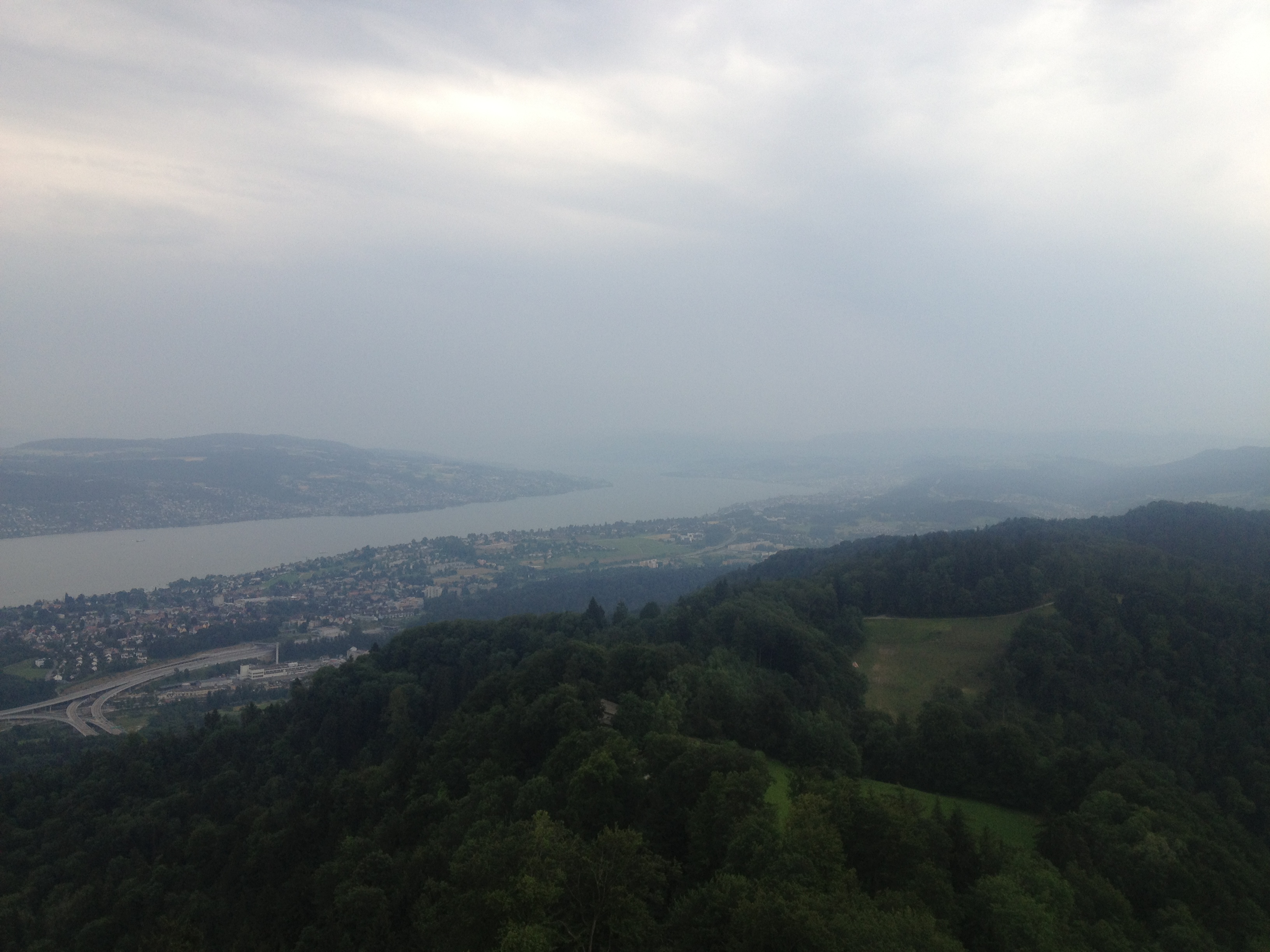
The view from the tower at the top of Uetliberg.

The view from the tower at the top of Uetliberg.

After soaking in the sights from the top of Uetliberg, Robin and I headed back to Zürich to meet up with Tammy, and once we did we headed to the west of the city, where Robin told us there was an outdoor concert happening. He didn’t have too many details, but he thought it might be something cool to check out, so we jumped on a bus across the city. When we arrived, we found what seemed like a huge picnic in a park, with people spread out across the relatively small stretch of grass. In the corner, a large folk band was playing all kinds of music, and there was a crowd who had gathered around them to watch. We bought some snacks from a nearby store and laid out on the grass, listening to the music from across the park and just hanging out, enjoying the cool, pleasant evening air. It was actually getting quite late, but twilight was still lingering over the city, and there didn’t appear to be any signs that the party would be dissipating any time soon. I had to get home though – I hadn’t told Umer’s parents what time I was expecting to be home, so I didn’t want to keep them waiting too late into the evening. I bid farewell to Robin and Tammy for the evening, making plans to see them again when I arrived at Robin’s place the next morning to stay with him for my last two nights in Zürich.

***

The following morning I left Umer’s parents place and made my way to Robin’s. He would be working during most of the day, so that’s when I would do my typical and touristic sightseeing, but in the afternoons when he was free Robin introduced me to some of the activities he did during his spare time and, like any typical resident of Zürich, those were outdoor activities. Enter slacklining: a sport that holds a lot of similarities to tightrope walking – you are required to balance on, and walk across, a piece of nylon or polyester webbing that is tensioned between two anchor points. However, the main difference is that while a tightrope is rigid and taut, a slackline gets its name in having a considerable amount of slack – it is stretchy and bouncy, almost like a long and narrow trampoline. The more extreme variations of slacklining involve doing it unsupported in crazy places such as between skyscrapers or mountain peaks, but Robin was taking me to learn in a much safer but still rather exciting place: over the River Limmat.

We got to one of the bridges that crossed the river, down near the riverside bars where everyone had congregated on the warm, sunny afternoon. We weren’t the only ones setting up a slackline over the river – there were two other guys setting up a much longer one than Robin’s, from the bridge to the rivers edge. “That guy is very, very good. He does it professionally,” Robin said as we set up our slackline. There were a couple of guys walking along the other slackline, but one of them was obviously extremely experienced. He would stop in the middle of the line and do all sorts of acrobatic tricks, bouncing on the line and landing on one foot, or even on his hands, pushing himself back up to keep bouncing and even walking across the line. It was seriously impressive. Robin had only been getting into slacklining recently, he assured me, so he wasn’t that good. I assured him he would be better than me, but nevertheless I was still keen to give it a go.

Once I first stepped onto the line, I realised how sensitive and reactive the slackline was to my body. It wasn’t too windy that afternoon, but as soon as I stepped out onto the line it violently shook from side to side, like a leaf in a hurricane. Robin held my hand to steady me as I took my first step, but he couldn’t take me the whole way. I tried my best to stay balanced, but as soon as I took my first step on my own, I came tumbling down to land in the river. I plunged into the cool and deep blue water, and when I finally resurfaced I realised that I had already floated a couple of metres downstream. The river was flowing exceptionally fast, to the point where if I tried to swim upstream, it was the equivalent to running on a treadmill – going nowhere fast. I quickly swam back to the edge of the river to rejoin the others on the bridge. Robin was definitely a lot better than myself at the slackline – for the first time ever he managed to cross the whole way across the slackline without falling off. That only happened once though – most of the times we both always ended up plunging into the river. I quickly learnt that you can’t be afraid of falling, and when you do fall you have to let it happen and not fight it. The one time I panicked and tried to stay on the line, I fell so awkwardly that I landed on my back in the water, and the impact left a huge red mark on my back that attracted quite a lot of comments from passers by.

Slow and steady across the slackline...

Slow and steady across the slackline…

... keeping his balance...

… keeping his balance…

... and he made it!

… and he made it!

Getting ready for my first attempt on the slackline.

Getting ready for my first attempt on the slackline.

The first, and only, step...

The first, and only, step…

... and down I go.

… and down I go.

Splash!

Splash!

That wasn’t the only reason strangers talked to us, though. The shared love of outdoor activities seems to seamlessly bring all surrounding people from all walks of life together, and make new friends out of complete strangers. Robin and I had plenty of people come up to us and ask us questions about slacklining – most of which I couldn’t answer, though – and asking if they could have a turn. The area was already pretty social with the bars lining the river, as well as a bunch of other cool things – there was a restaurant that also doubled as a DIY garage where people could come and use tools to fix and customise their bikes – so the slacklines on the bridge were just another added element to that friendly social vibe that seemed to be almost everywhere in Zürich. It made for a fun and interesting social experience – all the activities that were happening around the city made me realise something about my life back home: I didn’t have very many hobbies. The closest thing I had to a hobby was playing guitar and writing music – other than that, I just spent a lot of time drinking with my friends and going clubbing. It was a refreshing change, and I think that afternoon was when I made a pledge to myself that when I got home, I was going to find fun new things to do with my time other than drink myself stupid.

It was also an exhausting afternoon though, so afterwards Robin and I headed home for a relatively early night. We sat up for a while just chatting in his room though – there’s just something unnatural about going to bed before the sun does.

***

The following evening we set out after Robin finished work to meet some people in a nearby park. “I haven’t met these people, but there’s a group on Couchsurfing that organises hikes and other outdoor trips and stuff,” Robin told me as we made our way there. “We’re planning something for this weekend, so we’re meeting up to go over the details.” It made me realise that Couchsurfing wasn’t just a place to stay – it was a global, online community. When we arrived at the park, it was a similar sight to my first night in the park with Robin and Tammy, except instead of lazily enjoying the outdoors, everyone was extremely active. There were games of volleyball and soccer, people doing yoga and other aerobic activities, people throwing balls and frisbees, and Robin even brought along his slackline again, and set it up between two trees. It was quite remarkable to see so many people outside until the very limits of daylight. “It really is the summer drawing everyone out,” Robin later said. “The winter was horrible this year – it lasted five months and it was terribly cold, so everyone is very excited now that the warmer weather has finally arrived.” It was a familiar story that I had been hearing for the last month from all over Europe, from Finland and Sweden to Germany and even France. Not so much in Spain and Italy, but I had started heading north again, away from the Mediterranean.

It made me realise just how lucky we are with the weather in Australia, especially the temperate climate in Sydney. It’s never exceptionally cold, and only very occasionally does it get extremely hot. We get a healthy balance of rain and sunshine and we never have days with extreme excess, or lack, of sunlight. Watching these people flock outside to enjoy the weather made me realise just how little I appreciate the weather here, and so in Zürich I made a pact to myself to not only get a few more hobbies when I got home, but also to get out and enjoy the outdoors a little more too.

Friends, Romans, Countrymen

After a day of extremely touristic activities at the Vatican, I was looking forward to doing something a little different on Saturday night. When I first arrived in Rome, Valerio had told me about something called the ‘Gay Village’, an annual event that was held in Rome. I shouldn’t have been surprised – after being to three different gay pride festivals during my time in Europe so far, I had to conclude that it was simply the season for pride all over the continent. “The gay scene isn’t as big here in Rome as it is in other cities or countries,” Valerio had informed me. “We’re so close to the Vatican, so there’s lot of influence from the Catholic church… It’s not repressed, exactly, but it’s just very… subdued.” Valerio went on to inform me that rather than having one weekend full of pride festivities and a parade, there was this event called the Gay Village which ran for weeks during the middle of summer. Valerio hadn’t been yet this year, so I told him I’d happily join him. He also had another Couchsurfer who arrived that Saturday evening, and American from New York named Steve. Steve himself wasn’t gay, but he had no plans and was keen to come along, so the three of us got into Valerio’s car and went off to investigate whatever Rome had thrown together as part of their pride celebrations.

After driving though dark roads in areas that seemed almost rural, we emerged at what appeared to be a festival ground. That’s what Gay Village seemed to be – a big festival village, with food stands, games and rides, performances, bars and a huge dance floor. We met up with a few of Valerio’s friends once we’d lined up to pay and gotten inside, and after a quick wander around to see some of the sideshow attractions, we inevitably ended up by the bar and on the dance floor. I was still fairly exhausted, so I only had a couple of drinks for fear of passing out right there if I overloaded myself with booze, and the group of us danced among the huge, seething, sweaty crowd. Oddly enough, the person who seemed to be having more fun than anyone was Steve – I’ve always found that straight people are usually rather impressed by the way the gays can throw a party. We danced and danced until the ice in our plastic drink cups had all but melted and keeping my eyes open became a little too much of a struggle. It was fairly late by then, and we’d seen the best of the performances, so we said goodbye to Valerio’s friends and headed back to the car to drive home.

The pumping crowd in the Gay Village.

The pumping crowd in the Gay Village.

The lights turning up over the dance floor.

The lights turning up over the dance floor.

On the drive home, I questioned Valerio about something I’d noticed throughout the night. “So did you not drink tonight because you were driving, or do you just normally not drink anyway?” Not that long ago I wouldn’t have even thought to consider that second option, but meeting Ralf at Berghain had definitely shone a light on that perspective for me.
“No, I don’t drink alcohol,” Valerio said rather simply. “I don’t really like the way it affects me – I don’t really like being drunk.” For a man of such small stature, I could only imagine that it wouldn’t take much to get him heavily intoxicated – something of a foreign concept for me. Now, I’m not a complete idiot – I know there are plenty of people in the world who don’t drink for the sole purpose of getting drunk. I guess that binge-drinking behaviour is mostly the kind of thing I’d been experiencing back home, but I was surprised that find that there were people who actually liked going out to nightclubs to dance and party while not even drinking the smallest amount of alcohol. It was a pleasant change, because for the first time in my life I didn’t feel like I needed to drink as much as I could in order to catch up and keep up with the rate at which all my fellow companions were drinking. Being outside of it for the first time, it was made painfully clear just how problematic and potentially dangerous Australia’s drinking culture can sometimes be. Not that I’m condemning or praising any culture either way – it was just some food for thought on the quiet drive home.
“Well, either way, thanks for driving us tonight. That was definitely a side of Rome we wouldn’t have seen without you.”

***

The next day I slept in. I know, I know – there is so much to do in Rome, how could I possibly waste an entire morning just sleeping? But I was exhausted, and I had reached a low point in the cycle of motions you move through when travelling. Some days you’re so full of energy and feel like you can do anything and literally get out there to take on the world. Other days, things catch up to you a little bit, and you have to remember you’re only human. It was another new perspective I had to consider – on a two week holiday you can cram every day full of activities and sleep it off when you get home, if you so desire. When you’re on the road for nine months, you really do need to be a little more self-conscious and give your body time to relax and recover. It was something I’d neglected over the past few weeks, and I’d paid for it when it culminated in the form of a small breakdown.

Steve had gone off for a day full of sightseeing, but I awoke very late in the morning to hang out with Valerio for a while. The most peculiar and interesting thing about Valerio was his obsession with Madonna. His living room was crammed with memorabilia that spanned back through the years of her career, from CDs and DVDs to posters to books to official tour merchandise, much of which had been signed by the Queen of Pop herself. Normally I might have found such an affinity with one artist slightly creepy, but when Valerio got talking about Madonna, there was such passion and vindication in his voice that it was almost a little inspiring. The decades long career, the different themes and styles in her music, the shocking and controversial material in some of her discography, and the way she’d adapted to achieve longevity in her musical career – but the end of our discussion, Valerio had me wanting to go and purchase all the Madonna albums to discover it all for myself. There was definitely a look of disapproval when I mentioned that I only had two Madonna songs on my iPod – I decided it was best not to mention my Lady Gaga inspired tattoo. We had a good afternoon though, sitting in our pyjamas and drinking tea while he showed me some of his favourite scenes from her MDNA tour – which he assured me would never make it to Australia. “She’ll never go to Australia,” he said rather simply. “She always announces it, but she’ll always cancel. Her tour is too elaborate and expensive. The cost of getting it down there would be more than she could ever make back from an Australian tour.” At that moment, arguing about the worlds various pop divas when I was still in my pyjamas at noon, I felt more at home than I had in a long while.

***

However, I did have other plans for the afternoon. A couple of days ago I had received a message from my next arranged Couchsurfing host – a man by the name of Ike, who lived in Ancona, on the eastern coast of Italy. We had been exchanging messages to arrange my stay since I’d been in Madrid.
“Robert, how are you? Are you still in Rome? I’ve just had a Couchsurfer named Stefan stay with me. He’s a lovely guy, he’s gay too, and he’s heading to Rome now. I’m not sure if he knows anyone – if you have a chance you guys might like to catch up?”
It wasn’t really a lot to go on, so I can’t tell you exactly why I bothered following through – but I got in touch with Stefan, and after a few miscommunications we planned to meet on the Sunday afternoon near the Colosseum, one of the last sights I had left to visit.

From the moment our conversation began, neither of us were at a loss of words. Stefan was from Austria and was currently travelling through Europe as well. We talked about our travels, or lives back home, friends and studying and working. We seemed to have so much in common, and before long we found ourselves discussing things like our hopes and dreams for the future, the things that inspired us and the things that terrified us, things we were doing, and the things we really wanted to be doing. Stefan spoke several languages and had been working as a translator for some time – he’d been a conscientious objector to the compulsory military service in Austria and had instead spent the time working on peace efforts and treaties in Japan. “But I’m also an artist,” Stefan had confessed to me. “I do sculpting… for me, that’s my real passion.” I asked him why he didn’t do that – why he didn’t pursue the dream that meant so much to him. He struggled to answer.
“I feel a similar way, I guess, but about music,” I told him. “I write and play music, and God, there isn’t much else I love in the world more than that. But to actually pursue it further? To really do it? I guess… I’m a little scared.”
“Scared of what?”
“I guess… of failure. What if  you gave it all you had, 100% give it your all, but you’re still not good enough? It’s just a cut-throat world out there…”
“Well, I’m scared too. But not of failure.” We were sitting on a park bench, staring out over the broad Colosseum in front of us. “But of losing that dream. What if you do make it, but it’s not all you dreamed it to be? That dream keeps me alive some days. If I made it that far, only to learn I’ve been wrong along…” He didn’t need to finish his sentence.

Posing with the Colosseum from where Stefan and I had our long afternoon conversation.

Posing with the Colosseum from where Stefan and I had our long afternoon conversation.

It was a strangely profound moment to have with someone that I had just met, and a tragedy that we probably wouldn’t be meeting again for a long time. I’d wanted to stay and talk more – I felt like I could have talked to Stefan until the end of time itself and still not gotten bored. But my time in Rome was fast coming to an end, and I wouldn’t forgive myself if I didn’t catch even just a glimpse of the Roman Forum and the inside of the Colosseum. We had already talked for much longer than I had anticipated, and I only had about an hour and a half to get down and see those final attractions before closing time. But the structures had stood there for thousands of years, so I could always return another time if necessary – the Forum wasn’t going anywhere in a hurry. And if I’d made such a point on seeing every last speck of historical tourism Rome had to offer, I would never have met up with and made a new friend in Stefan. It was a brief yet memorable moment, and I’m eternally grateful that it happened.

***

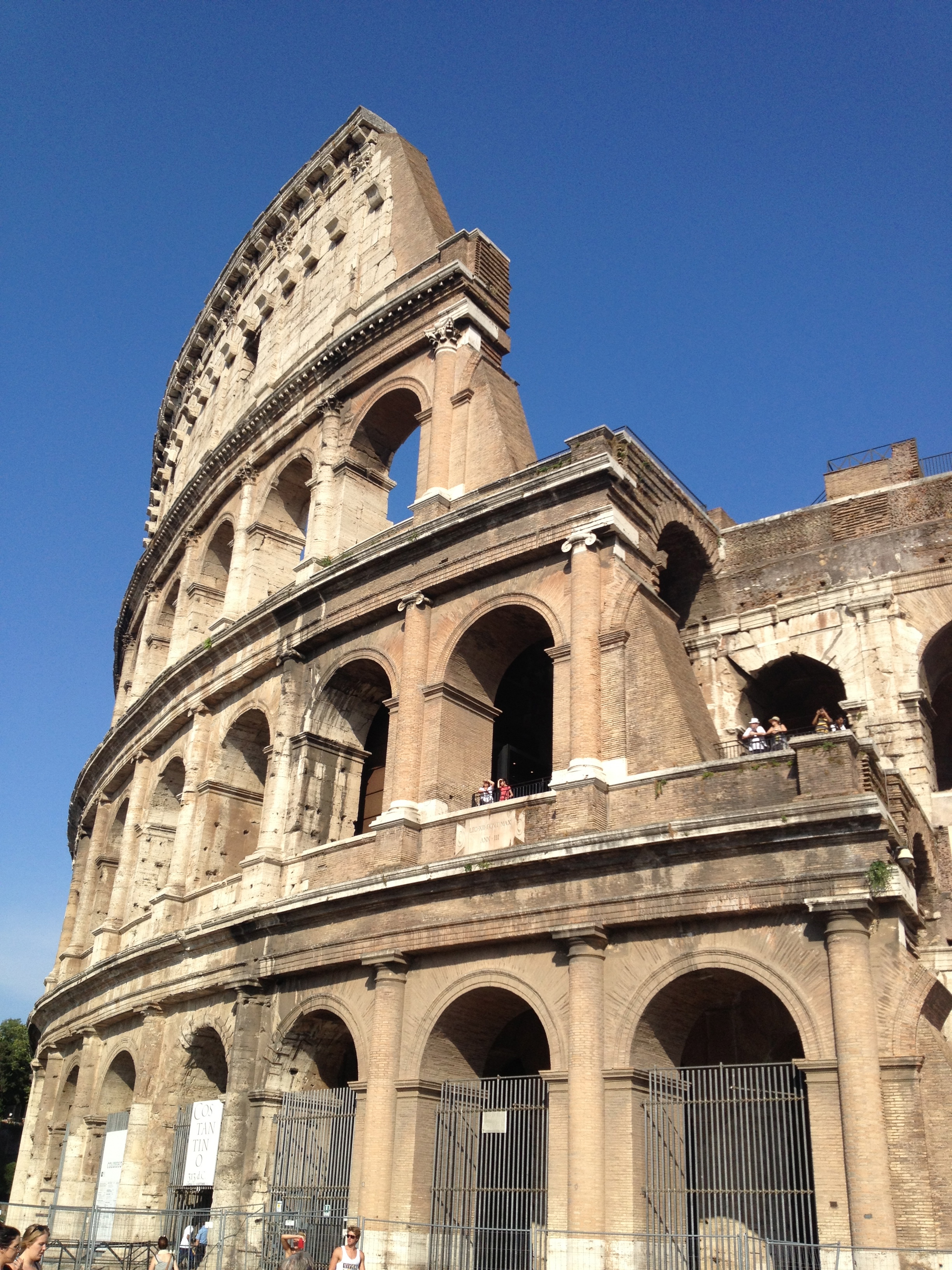
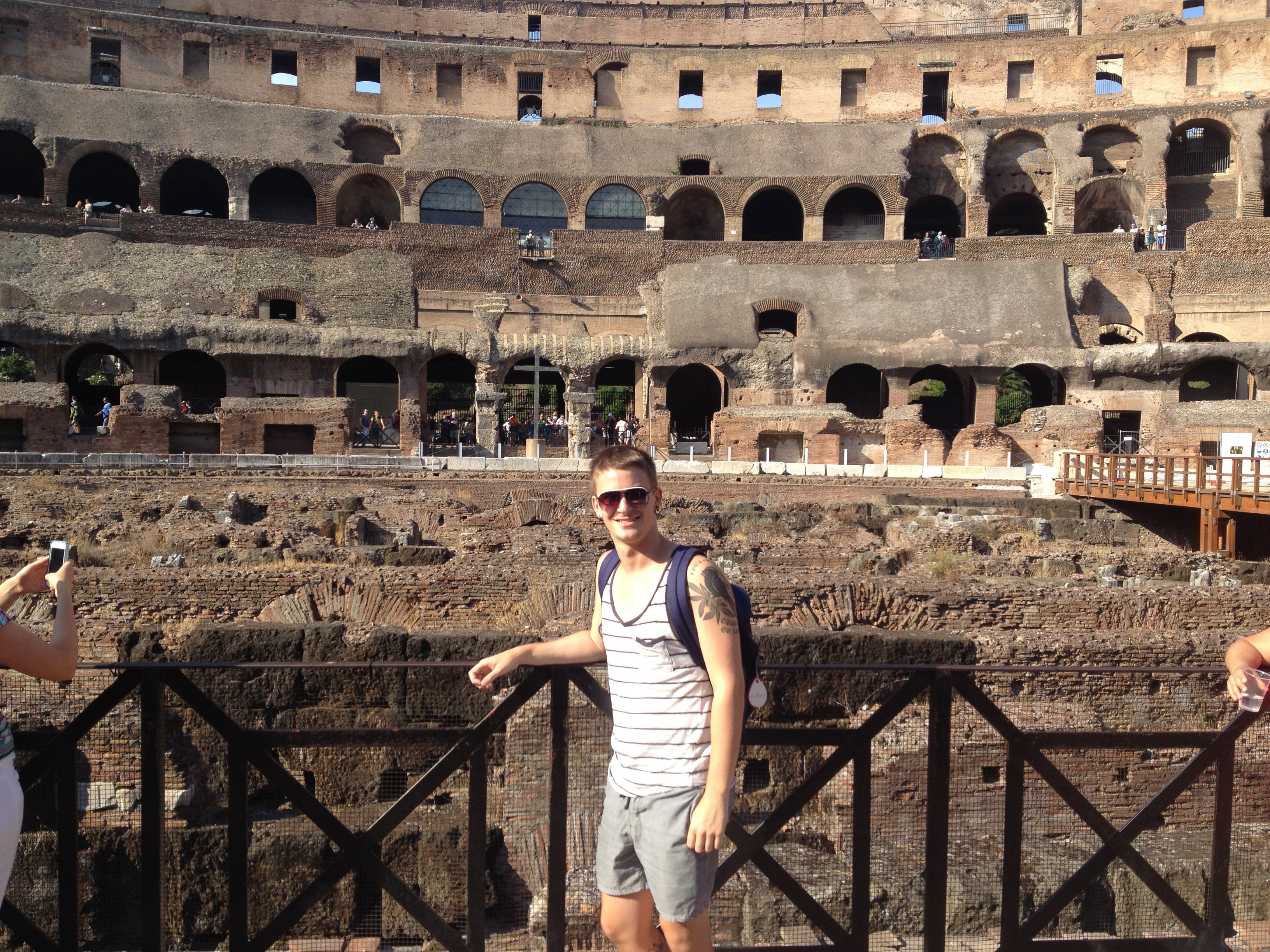
Fortune was favouring me that afternoon, because I somehow managed to breeze through the swift-moving line for the Colosseum and get in an out in what was probably a record speed. I didn’t climb to the upper tiers for the view down on the main arena, but standing at the bottom and looking up and the walls of relics towering over me was enough to give me a few shivers. The main stage was overrun and off limits to tourists, but I spared a moment for the countless men who would have died there centuries ago.
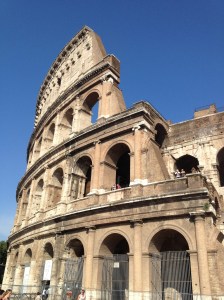
The Colosseum close up.

The Colosseum close up.

Inside the arena of the mighty Colosseum.
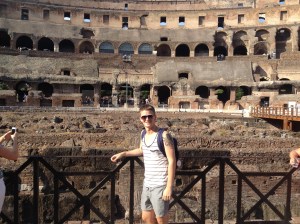
Inside the arena of the mighty Colosseum.

Inside the Colosseum.
Inside the Colosseum.

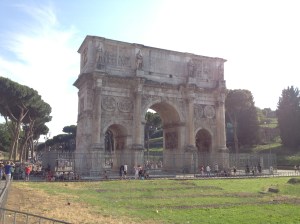
Arco di Costantino right beside the Colosseum.

Arco di Costantino right beside the Colosseum.

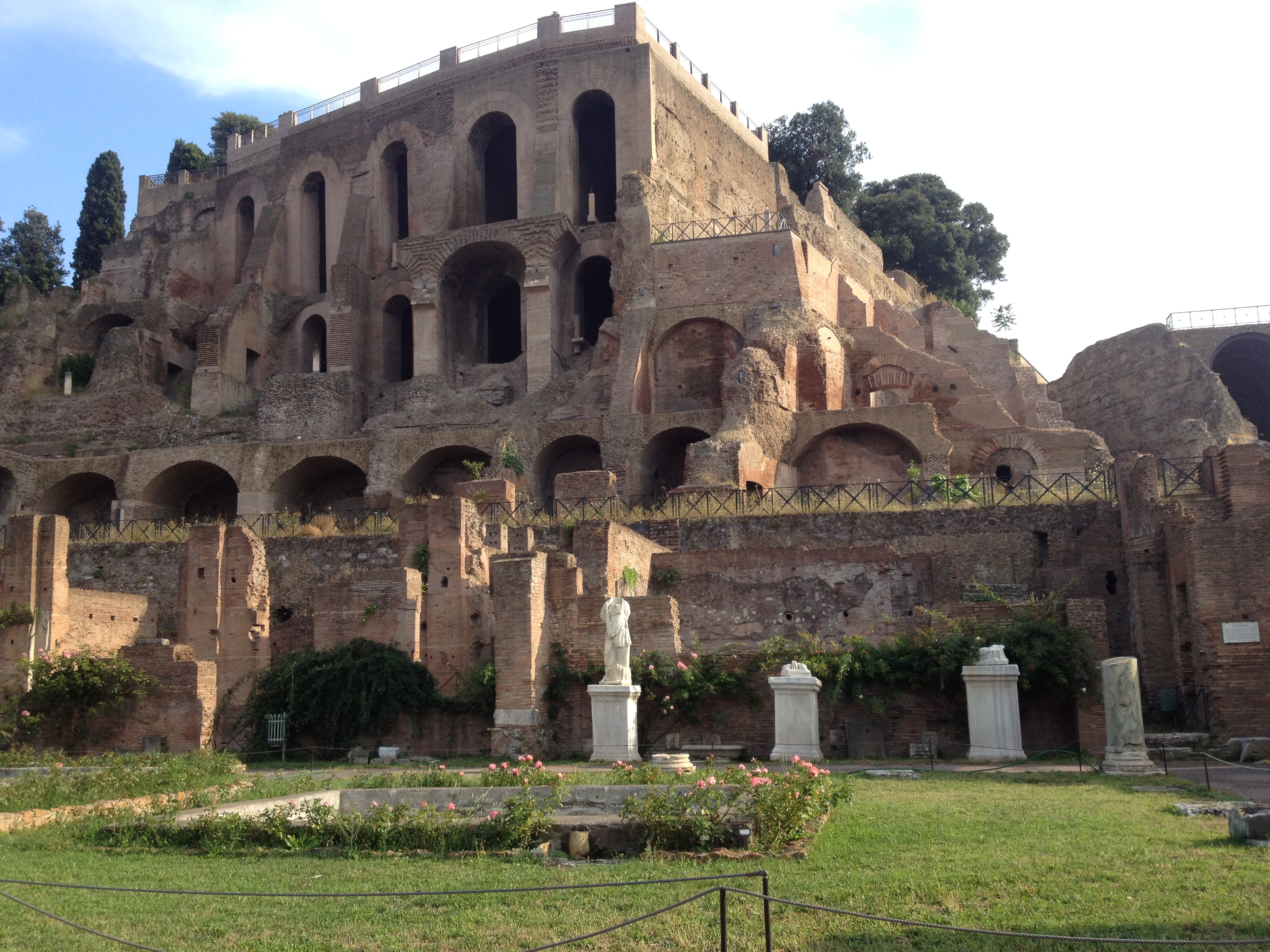
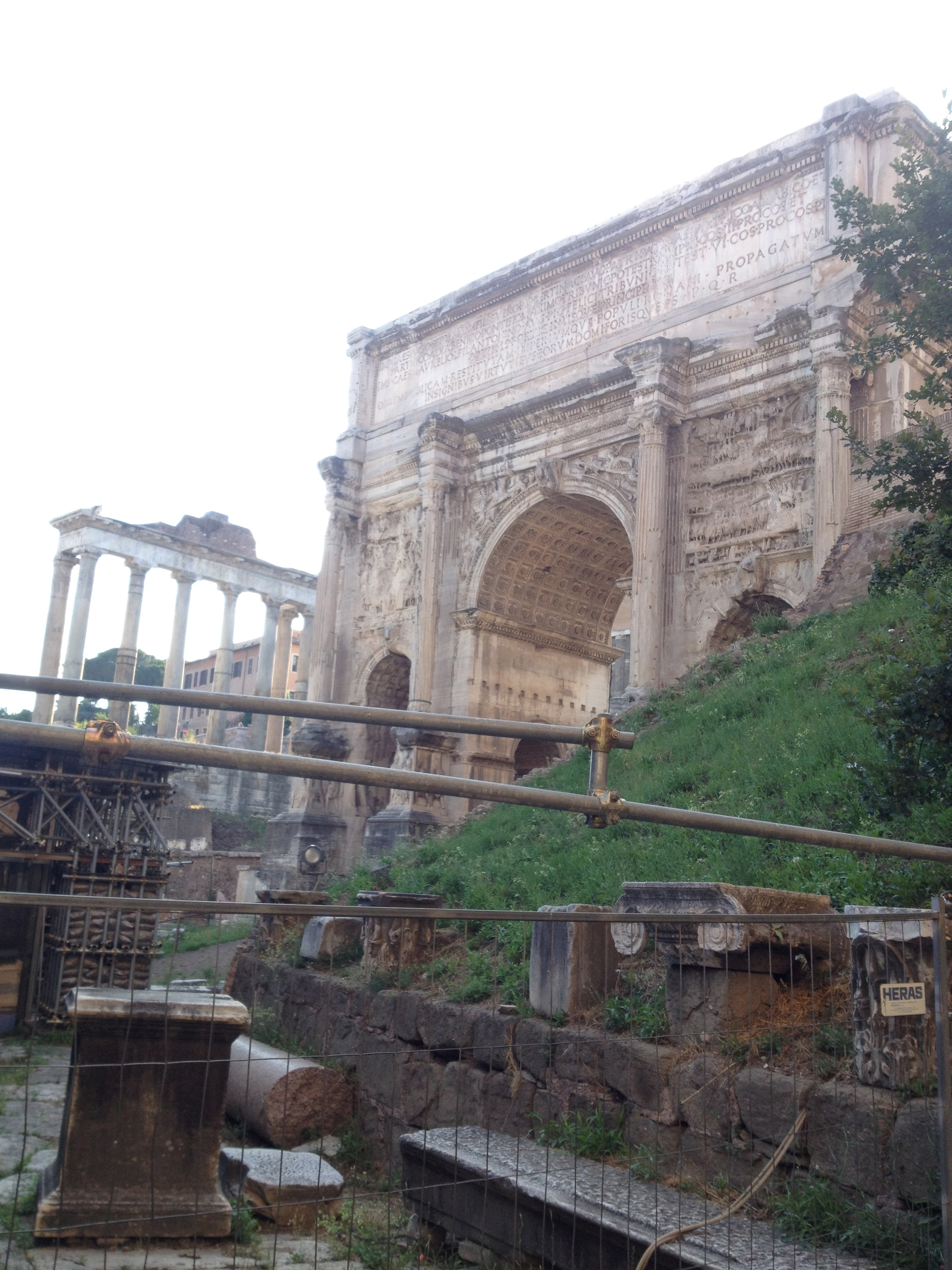
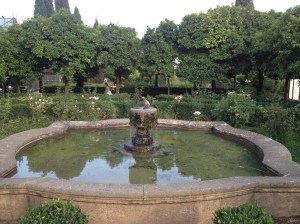
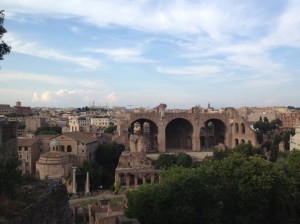
The Roman Forum was a little bit overwhelming. After finally finding the entrance, I entered the grounds and wandered through the ruins, using my Lonely Planet book to roughly guide me through the highlights – there was only an hour left until the Forum closed. I didn’t rush through it too quickly though, but instead appreciated the sights that I did get to see. In the end I think I saw a great deal of the ruins, but Valerio was mildly horrified that I hadn’t spent more than hour there. Still, it was a beautiful afternoon as I watched the dying light fall across the Forum, and the furthest part of the ruins up near Palatine Hill offered a pretty remarkable view of the area.
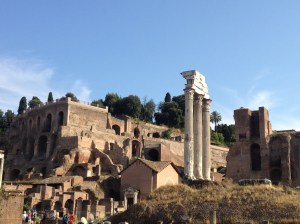
Some of the first sights I saw upon setting foot in the Roman Forum.

Some of the first sights I saw upon setting foot in the Roman Forum.

Ancient ruins.
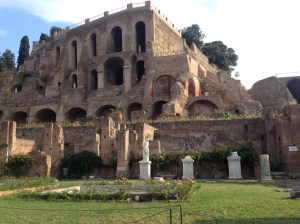
Ancient ruins.

Ruins in the Forum. There were far too many for me to keep track and remember them all.

Ruins in the Forum. There were far too many for me to keep track and remember them all.

Monument inside the Forum.

Monument inside the Forum.

Unfortunately some parts of the Forum were under repair while I was visiting.

Unfortunately some parts of the Forum were under repair while I was visiting.

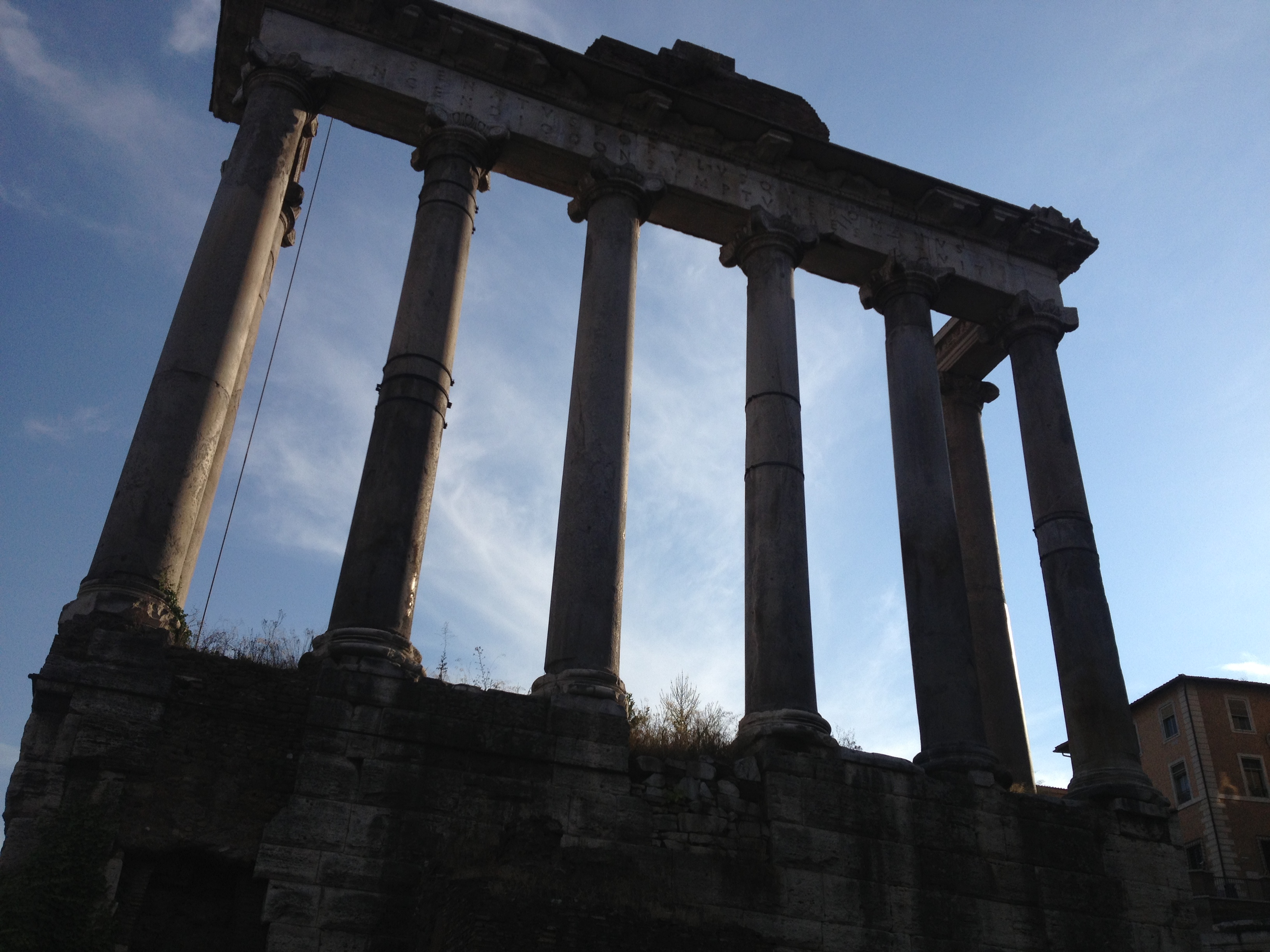
Tempio di Saturno - the Temple of Saturn.

Tempio di Saturno – the Temple of Saturn.

More ruins in the Forum.
More ruins in the Forum.

A fountain in the upper reaches of the Forum on Palatine Hill.
A fountain in the upper reaches of the Forum on Palatine Hill.

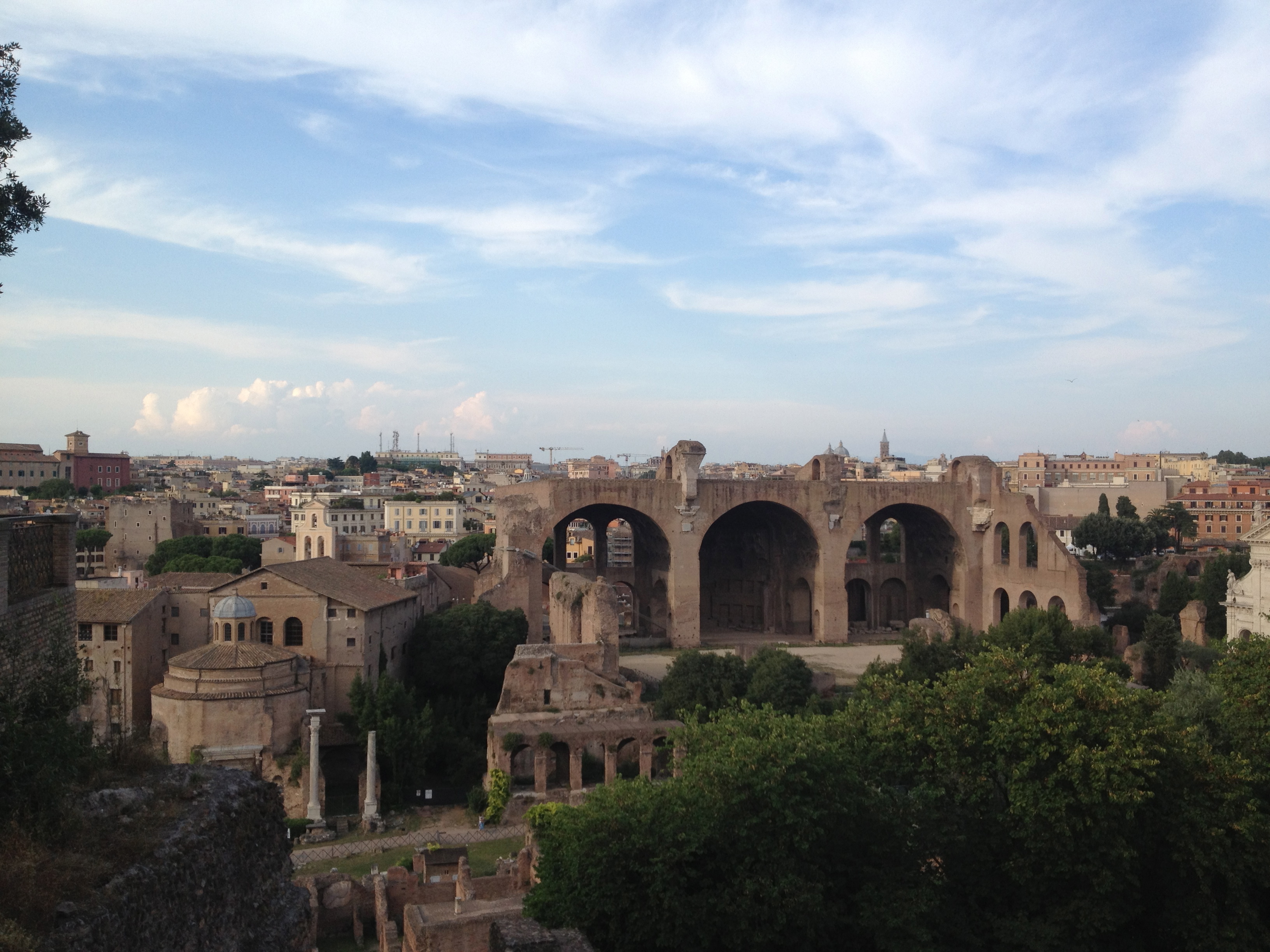
View from the top of the surrounding area and of the Forum itself.

View from the top of the surrounding area and of the Forum itself.

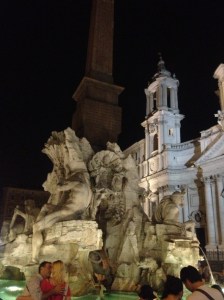
Afterwards I met Valerio back near the Colosseum, and we wandered through the streets as dusk sank over the city. Valerio told me that there are over 900 churches in the city of Rome, and he himself had managed to visit a few hundred of them during his time living there. We walked past the National Monument for Victor Emmanuel II, and ended up back in central Rome. The area looked quite different at night, as we wandered past the Pantheon, through Piazza Navona, and ended up near Trevi Fountain, where we were due to meet up with Steve.
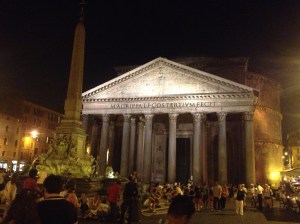
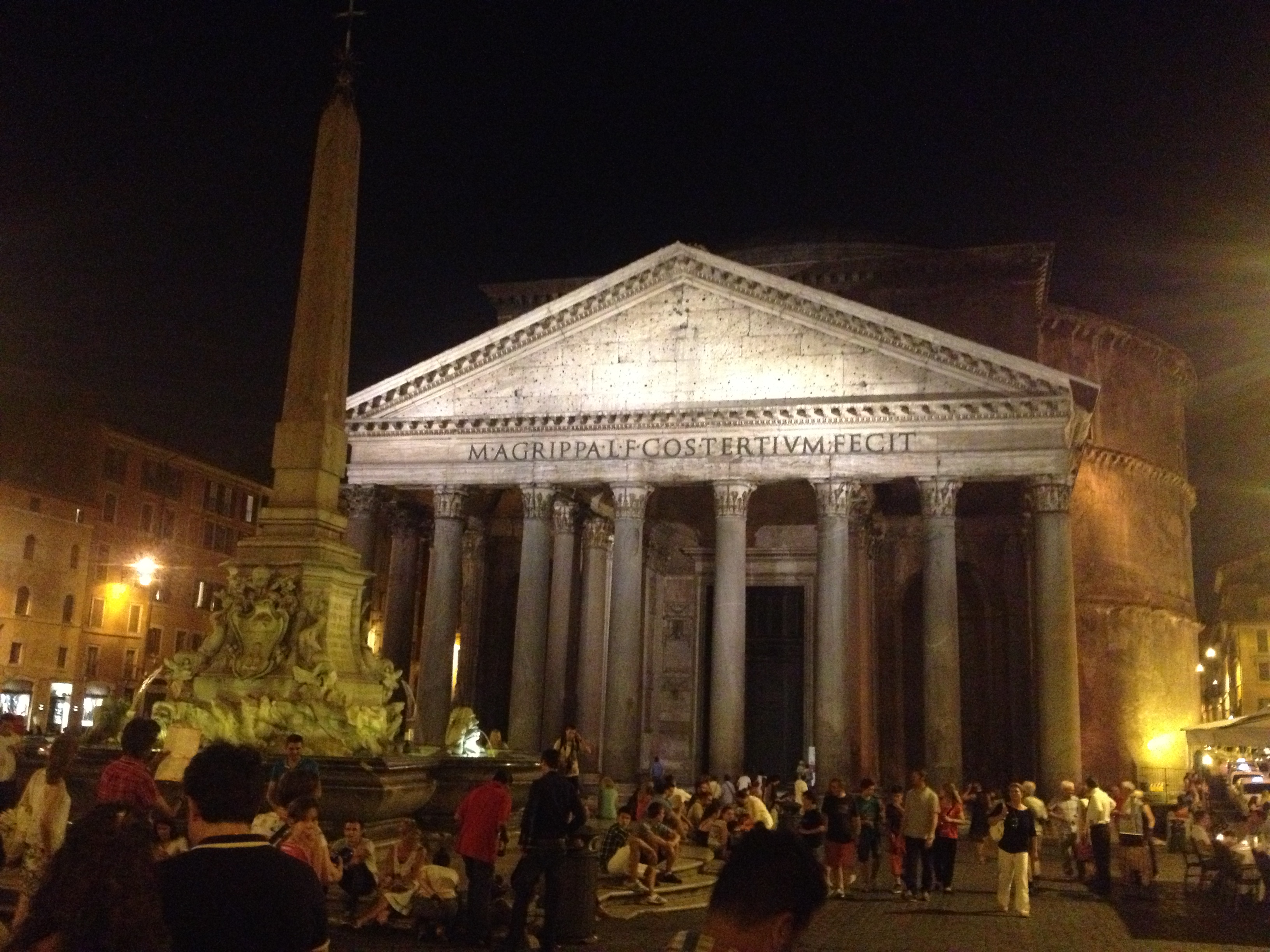
The illuminated Pantheon at night.
The illuminated Pantheon at night.

Fontana dei Quattro Fiumi - Fountain of the Four Rivers -  at night.

Fontana dei Quattro Fiumi – Fountain of the Four Rivers – at night.

“Did you throw a coin into the fountain?” Valerio asked me as we watched the hordes of tourists struggle to get their picture taken with the fountain in the background.
“Nah, it was too crowded when I was here,” I replied pretty casually. But Valerio turned to me with a look of horror.
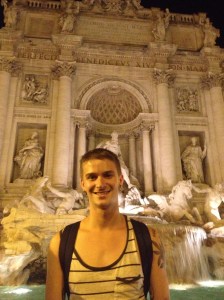
“What?! No, you must throw a coin into the fountain, or you will never again return to Rome!” That was one superstition that I hadn’t heard of, and I just laughed. But Valerio seemed insistent, so I went down the fountain to appease him, tossing 20 euro cents over my shoulder, and getting another picture with the fountain, remarkably without anyone else in the crowd creeping into the shot. Later, I would read in my guide book that an average of €3000 is thrown into Trevi Fountain everyday – I guess that’s one superstition that a lot of people take pretty seriously.
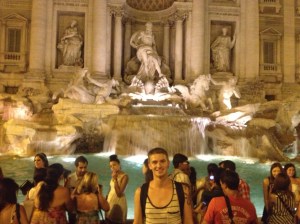
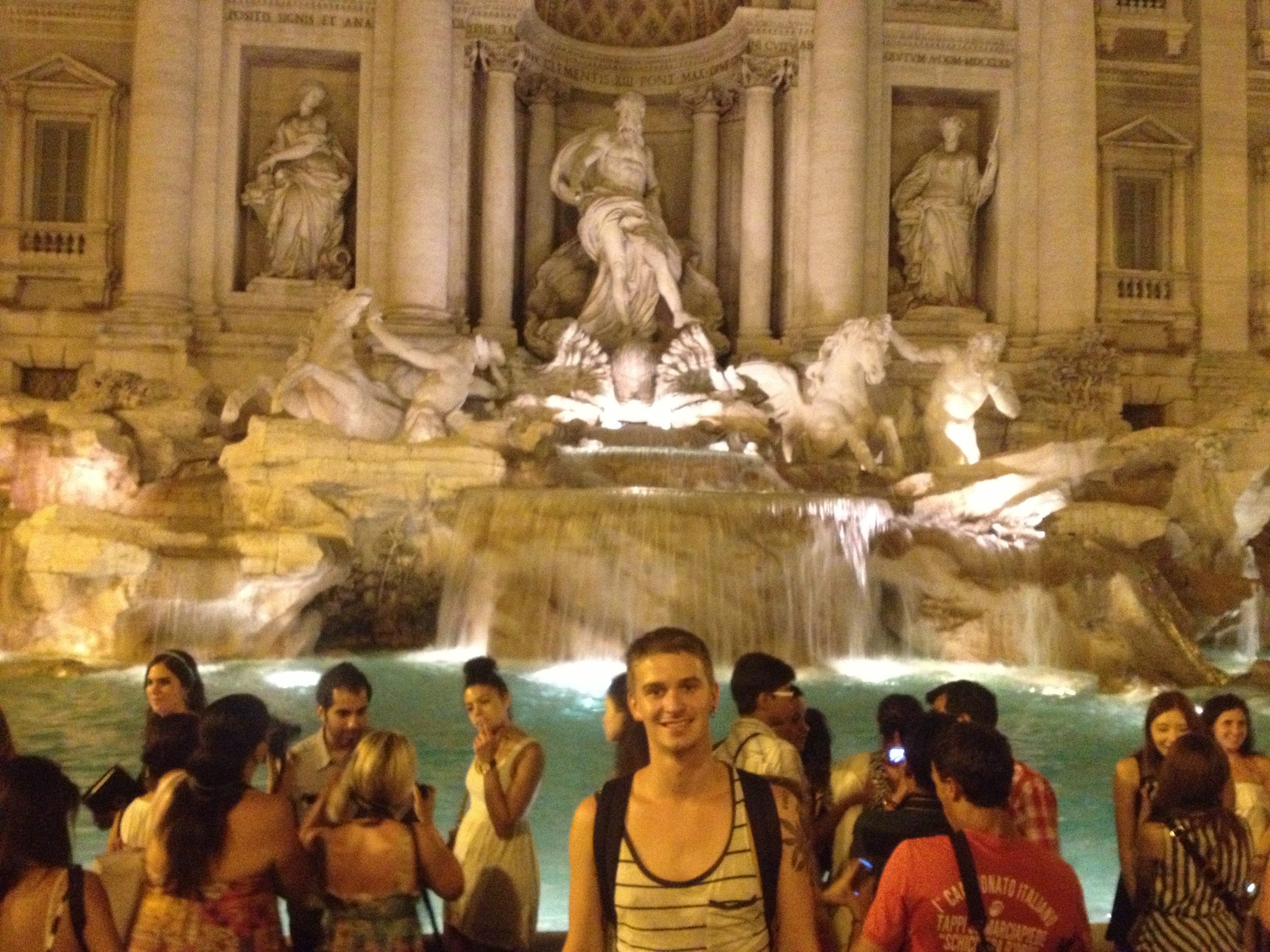
Just before braving the crowds to throw my coin into Trevi Fountain.
Just before braving the crowds to throw my coin into Trevi Fountain.

Valerio managed to capture a shot of me and the fountain without the hordes of tourists around me.

Valerio managed to capture a shot of me and the fountain without the hordes of tourists around me.

We finally caught up with Steve, and we went for a wander to the Piazza di Spagna and the Spanish Steps, which were even more crowded than the afternoon I had first visited them. The whole city seemed to have a different vibe at night, and the three of us sat at the top of the steps and just looked out over the crowd of people, enjoying the warm, humid air. That was my last night in Rome, and I have to say it was a rather enjoyable one. I’d made some new good friends, and after the few days of sightseeing, it had been great to just wander around with someone as chilled out and relaxed as Valerio and, if you will, do as Romans do.
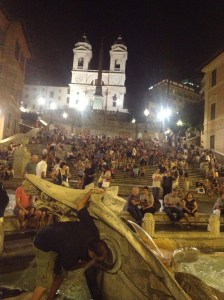
View of the Spanish Steps from the bottom...

View of the Spanish Steps from the bottom…

... and from the top.

… and from the top.

***

The next morning Valerio dropped me off at the metro station so that I could make it to my train out of Rome in time. He bid me goodbye and wished me good luck on my travels. I thanked him for his hospitality and his generosity, and with a wink I reminded him that I threw that coin into Trevi Fountain, “So I’m sure I’ll be back to visit you again.”

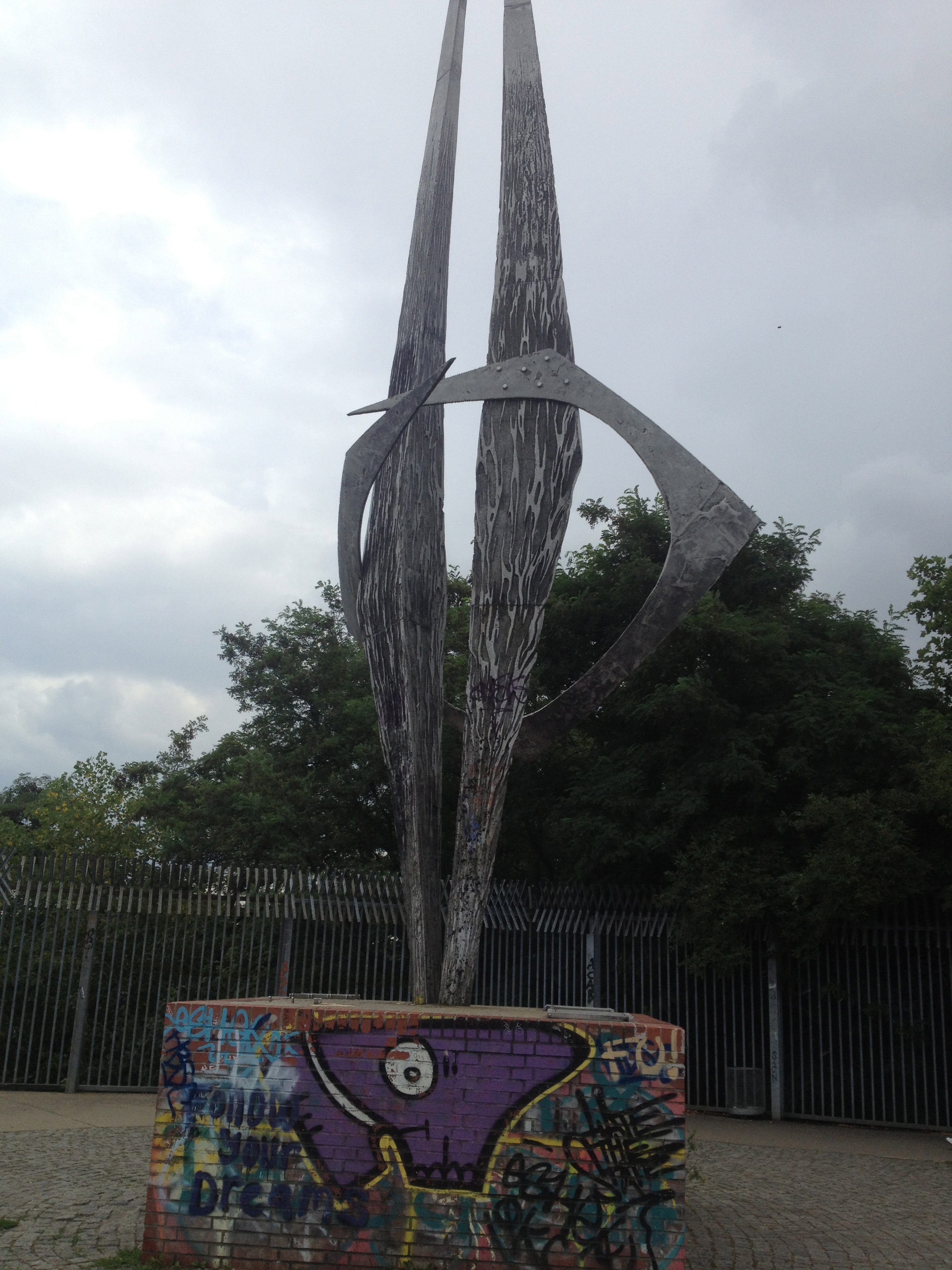
Losing My Religion

Day Two of Selma’s itinerary started off with another sight that was deemed one of Rome’s “must see” attractions: The Vatican City. The further along I got on this itinerary, the more I realised that there are just so many things to see in Rome, and that I would have probably wasted a whole heap of time had I not had the good fortune of Selma’s advice. Still, the Vatican was something I was almost in two minds about. “The Vatican? Won’t you, like, burst into flames or something when you step inside?”, my best friend Jesse had said during a Skype conversation while I was getting ready to head out. I just laughed and shrugged. I hadn’t let my homosexuality or my distaste for organised religion stop me from entering any of the other churches throughout Europe so far, so why should I treat the Vatican any differently. By that reasoning St Peter’s Basilica was – to me, at least – just another church.

The Vatican is located slightly north-west of central Rome, and Valerio’s place was in the south-east, so it took even longer to get there than it had taken to get into the centre yesterday. Selma’s instructions had advised I wake up early to visit the Vatican, presumably to avoid the queues, but unless it is absolutely essential, I have discovered I am just not a morning person. Especially not for the Pope. So the sun was high and bright as I stepped out of the metro system and into the streets, where I immediately could find my way to the Vatican by simply following the flocks of people. There were lots of people holding signs advertising guided tours, hollering at passers-by with things like “You going to the museum? Vatican Museum is not this way, you want want guided tour, aye?” Every now and then I would see people stop and talk to them, and I wondered if any of them realised how ripped off they were probably going to get. “Long lines for the museum, but not with guided tour!” Maybe I was wrong though – I never bothered to investigate them further. I dodged the assumed tourists traps as I blended into the throng of the crowd.

The centre of the Vatican City.

The centre of the Vatican City.

There were lines to get into the main church – there was absolutely no way around that. Entry to St Peter’s Basilica is free, so there wasn’t really any reason not to go in, once you realised the lines moved at quite a constant and steady pace. I couldn’t have been in line for more than 20 minutes before I was through the security check and on my way in. Some of the other tourists around me, however, were not so lucky. Like many holy sights that I had visited in places like Bangkok and Angkor Wat, respectful attire was compulsory for entry into the largest Catholic church in the world, and I had done my research. As I approached the front of the line, I pulled out the pair of jeans that I had stuffed into my backpack and pulled them on over my short, immodest shorts. I’d been sure to wear a t-shirt with decent length sleeves, so once I had covered up I was given the green light by security. The women behind me in their sandals, summer dresses and light gauze shawls weren’t so lucky.

The first thing I noticed when I was finally within the compound was, lo and behold, another line. It was a line to climb the steps to the basilica’s atrium, a dome that supposedly offered views of the Vatican and the surrounding area. I stood in line for a short while before I realised a sign that read “Exact fare only” (it cost €5 to walk the stairs or €7 to take the lift). I checked my wallet – all I had was a €50 note. I deliberated in the line for a little while, but in the end I decided that it wouldn’t be worth the wait to be turned down for not having the correct change, and even if that didn’t matter, I wasn’t sure the view itself would be worth even more waiting. So instead I slipped out of the line and entered into the main chamber of the church.

The Michelangelo Dome inside St Peter's Basilica.

The Michelangelo Dome inside St Peter’s Basilica.

One of the many statues inside St Peter's Basilica. Unfortunately, I am unable to recall it's name.

One of the many statues inside St Peter’s Basilica. Unfortunately, I am unable to recall it’s name.

I have to admit that my musings in the morning before my arrival at the Vatican had been a little bit off – I had seen a lot of churches so far, but this place was impressive. I wandered around the hollow space aimlessly for some time, just staring at the walls and the ceilings and the masterpiece artworks that adorned them. It was almost similar to the interior of the Hermitage in St Petersburg, with gold plating and lavish trimmings, but as I admired all the beauty, I couldn’t help but think that it was all so over the top, and question whether or not it was necessary for a church to be so intricately decorated. Although these places were built in a completely different time period, almost a completely different world, and I suppose institutions such as the Catholic church would have had enough power that they could have commissioned anything to happen, not just a masterpiece by Michelangelo. Which isn’t really any more of a comforting thought. I had been able to admire almost all the other churches I’d visited during my travels simply as holy places of worship, where people found solace in their faith, even if I did not. But there was something else, something more than the interior design within St Peter’s Basilica that made me a little uncomfortable, somehow reminding me of all the things that I really did have against religious institutions such as this one. I couldn’t put my finger on it, but all my previous attempts at finding some kind of enlightenment came to naught as of that day, and I fell back into a phase of religious disillusion.

The statue of St Peter with his worn worn down foot.

The statue of St Peter with his worn worn down foot.

The main alter in the church, featuring the Apse Cathedra (the chair of St Peter) and the Apse Gloria (the stained glass window).

The main alter in the church, featuring the Apse Cathedra (the chair of St Peter) and the Apse Gloria (the stained glass window).

Personal reflection aside, the basilica is still rather wondrous to behold. A highlight is the statue of St Peter, whose toes on this right foot have been worn down to a smooth nub after centuries of pilgrims touching and kissing his foot while they pray to the saint. As I was taking a photo of the main alter in the church, I was tapped on the shoulder. I turned around to see a couple, a man a woman, extending their camera out to me and pointing at the alter. Figuring that they wanted me to take a picture for them, but also guessing that they didn’t speak English or Italian, I just smiled and nodded. I took the camera and snapped a few shots before handing it back to them, and then motioning for them to take a few for me in return. “спасибо,” (or phonetically ‘spasiba’) the man mumbled to me in a deep voice as we parted ways. I got momentarily excited, and went to say “You’re welcome”, until I realised that ‘thank you’ was pretty much the extent of all the Russian that I knew. After I had finished looking around and taking a few pictures, I exited St Peter’s Basilica through the underground crypts, where former Popes are laid to rest. It was a solemn route in which photography was not allowed, so after I left I snapped a few last pictures out the front in St Peter’s Square.

Having my photo taken with the main alter by the surly Russian couple. Also annoyingly photo-bombed.

Having my photo taken with the main alter by the surly Russian couple. Also annoyingly photo-bombed.

This rebel worshipper decided to touch the other foot instead of the traditional one. St Peter's left foot still have distinguishable toes.

This rebel worshipper decided to touch the other foot instead of the traditional one. St Peter’s left foot still have distinguishable toes.

Outside St Peter's Basilica.

Outside St Peter’s Basilica.

Outside the church in St Peter's Square.

Outside the church in St Peter’s Square.

***

The next stop of the day was the other major feature of the Vatican – the Vatican Museums. Now I’m not a huge art buff, but I’m no snub either, so I wanted to take my time and at least see some of the highlights – according to Lonely Planet you would need a couple of hours for that alone. I followed the crowds exiting the basilica and found my way to the museums. I instantly knew that I had made the right decision in forgoing the expensive tourist trap guided tours of the Vatican Museums – what appeared to be a long waiting line to get in was actually just a steady stream of people moving into the building. I never actually stood still once while I was ‘waiting’, and I was in and away in no time.

The collection of artworks in the Vatican is quite remarkable though. Every room is crammed with as many works of art as possible, from the most minuscule and seemingly insignificant to the most amazing of masterpieces. There were sculptures, statues, paintings, portraits, walls and ceilings decorated with the most extravagance: it just went on and on. I won’t even attempt to describe or explain everything I saw, but I did take a few photos of some of my favourite pieces.

The Vatican statue of Neptune.

The Vatican statue of Neptune.

The famous statue titled "Laocoön and His Sons", which depicts them being strangled by a snake.

The famous statue titled “Laocoön and His Sons”, which depicts them being strangled by a snake.

A collection of various sculptures on display.

A collection of various sculptures on display.

The Belvedere Torso.

The Belvedere Torso.

One of the roof paintings in the halls of the Vatican. Unfortunately they're not so easily marked, thus not easily identifiable.

One of the roof paintings in the halls of the Vatican. Unfortunately they’re not so easily marked, thus not easily identifiable.

The statue of Hermanubis, a god who was a combination of Hermes in Greek mythology and Anubis in Egyptian mythology.

The statue of Hermanubis, a god who was a combination of Hermes in Greek mythology and Anubis in Egyptian mythology.

A mummy in the Egyptian wing on the museum.

A mummy in the Egyptian wing on the museum.

The sarcophagus of St Helen.

The sarcophagus of St Helen.

Another ceiling painting in the Vatican.

Another ceiling painting in the Vatican.

I followed the signs and directions for the most brief tour of the museums, which as expected still took a couple of hours. But no matter how you go about it, the final stop on any tour of the Vatican Museums inevitably has to be the Sistine Chapel. Photographs are forbidden in the main chamber, and rightly so. I’ve previously expressed similar sentiments that being unable to take a photo of a place, such as inside the temples of the Emerald Buddha in Bangkok, make the place a little more special and sacred, and you really have to be there to see it. Of course, you can see the highlights of the chapel with a quick Google search, but there is so much more to the room than Genesis. The chapel itself would have been quite a chilling and moving sight to behold, if it weren’t for the fact that the rule of silence was so heavily policed. Don’t get me wrong, I think that requiring to be silent in places like the Sistine Chapel is totally acceptable – it’s still a holy place and I’m sure there’d be dozens of Catholics around the place casting prayers up to Heaven as they gaze around in awe. But the effect of that silence, and indeed the point of requiring it, seems a little defeated by the “ATTENTION! SILENCE PLEASE! NO PHOTOGRAPHY!” boomed out over a very loud speaker system in 6 different languages every thirty seconds. It’s a little hard to be impressed while standing in the midst of a famous work of art when you feel like you’re being ordered around like a herd of cattle.

One of the halls leading up to the Sistine Chapel.

One of the halls leading up to the Sistine Chapel.

The famous Spiral Staircase that leads to the exit of the Vatican Museum.

The famous Spiral Staircase that leads to the exit of the Vatican Museum.

Although, it’s disappointing to admit that more than half the tourists in the room were behaving like cattle. I left the museum after that, and the Vatican as a whole, feeling not exactly underwhelmed by what I had experienced, and not necessarily disappointed. I just felt a little confused. Like, was there something I wasn’t getting? I appreciated these places as world renowned and works of art, but I just felt like I was missing something that made it all really seem that worth it. Maybe it was the disillusionment I felt in St Peter’s Basilica, or maybe I was just suffering from museum fatigue, or was just tired of an itinerary that was starting to feel like a season of  “Europe’s Next Top Cathedral”. I was glad that I had seen what I had seen, but I decided after my visit to the Vatican that I was going to terminate the rigid itinerary that Selma had provided me with. There were still a couple of major sights I legitimately wanted to see, but I think my trip to the Vatican marked the day that I had officially grown tired of museums, churches, and every other typical tourist attraction.

Bathroom Breakdown

The hostel that I stayed in during my time in Madrid would end up being the last one I stayed in for quite a while, but it was also one of the most fun and sociable hostels that I stayed in during my entire journey. The open layout and the party atmosphere meant that it was incredibly easy to strike up a conversation with whoever happened to walk into your dorm room. After my night out at Studio 54, I stumbled into the hostel with just enough time for a quick power nap before my check-out time. However, it was Monday morning, and the flight to Rome I had booked while I was in Barcelona didn’t fly out until Wednesday evening. I had two more nights left in Madrid, and since I hadn’t found anyone who had been able to put me up for those final nights, I had to try and book into the hostel again.

“We do have some room,” the guy working at reception said to me, “but…” There’s always a ‘but’. “You’re going to have to switch rooms. The bed you’re in now has been assigned to someone else.” I have no idea how their booking system works, or why they put particular people where, because I ended up moving from a full four bed dorm to an empty one, but I was way too tired and hungover to care. It actually worked out perfectly – I just dragged everything down the hall, down one flight of stairs, and into my new empty room, where I spent most of the day having a prolonged and much needed siesta. Later that evening, I was graced with the presence of some new roommates. Rachel was a girl around my age from Missouri, and she collapsed onto one of the bunks in an exhausted heap as soon as she arrived. She’d been travelling with her brothers and cousin, and now Rachel and her cousin Talon were in Madrid after being at the Running of the Bulls festival in Pamplona. We got chatting straight away, as she unpacked the mess that was her backpack and began sorting out all her things. I have to say, despite the reputation that American travellers have as the typical “stupid American tourists”, they were ultimately some of the nicest and friendliest people that I met during my time in hostels. Rachel and her traveling family crew had been all over Europe via train as well, so we shared stories and experiences and before long it felt like I was catching up with an old friend. She was exhausted at that point, but we made plans to meet up later for a drink at the hostel bar.

***

I headed out to have some tapas for dinner, and drink a small bottle of wine that was served not with a wine glass, but a large shooter glass… okay then. Very confused, I took my shots of red wine while I contemplated what my next move was going to be. I had my flights to Rome booked for the following evening, but absolutely no idea what I was going to do when I got there. During my down time over the last few days, I have been frantically searching for Couchsurfing hosts in Rome. It was high season in Europe at that moment, and I had made the horrifying discovery that almost all of the hostels and accommodation within my price range were completely booked out. It was exactly like my arrival on that Friday night in Hamburg, except this time I had sufficient time to search for alternatives on Couchsurfing. I wrote over a dozen long, personalised requests to hosts from all over Rome, but I only ever received replies from about a quarter of the people I contacted, and none of them were able to host me while I was in town. It seemed a little strange, given the size of the city, and by Tuesday evening I was stifling the rising panic inside myself.

Tiny bottle of wine with a glass that is probably highly appropriate to Spanish culture.

Tiny bottle of wine with a glass that is probably highly appropriate to Spanish culture.

After a few deep breaths and a final shot of shiraz, I headed back to the hostel to meet Rachel and Talon for a beer. I found them on the rooftop with a pitcher of beer, and the warm evening air was giving way to a cool change that blew through the balcony. They were sitting with a pair of brothers, also around our age and also American, and the five of us sat around chatting, only moving to take cover under the large cloth shade umbrellas when a brief but heavy downpour of summer rain bucketed down on us. After a couple of pitchers of beer, Talon decided that he wanted churros, the traditional Spanish doughnuts, and so we headed out into the streets, the smell of rain on the hot asphalt filling the air. We got a dozen churros and a bottle of chocolate dipping sauce to go, and walked on up to Puerta del Sol, where we saw crowds of locals and tourists alike, hanging out in the square doing tricks on their skateboards, or playing instruments and busking for money. We sat by the edge of the fountain and watched the world go by. It was there, relaxing in the plaza with my new friends, that I didn’t feel so bad about the way I’d spent my time in Madrid. I had done minimal sightseeing – there hadn’t been any major sight or particular attraction that I had wanted to see, and I had passed up every opportunity to visit museums. But I had been partying like crazy – for me, Madrid was a city that you do, not a city that you see. I had spent almost my whole time in the streets amongst the people and the nightlife, and as I reflected on my stay in Madrid, I was incredibly satisfied with the experience I had had, and my time spent in the city. I’d made friends, both locals and other travellers, and I had done things that no admission price could have bought me.

***

I had fun in Madrid, but my time spent there also took its toll on me. In my attempt to make up for the failed nights out in Barcelona, I had managed to go out drinking and partying every night for over a week straight. That, combined with the unanticipated lack of Couchsurfing hosts and the spending on accommodation in the last few cities, threw my budget a little out of whack, but the biggest blow the week of partying in Spain had dealt me was to my health. A week of excessive alcohol consumption, lack of sleep and very little nutritious food left me feeling like something of a train wreck come Wednesday morning. It was a combination of a summer cold and mild malnutrition, coupled with the stress and anxiety that it was now less than 24 hours until I was due to land in Rome and I had absolutely no idea where I would be going after that. I had secured a single night in hostel in town, which was a long way from the airport I would be arriving in at approximately 11pm. I had to check out of my hostel room in Madrid at 10am when my body was telling me “Lie the Hell down, you exhausted idiot!”, so there I found myself, sitting alone on a sofa in the common room of the hostel, searching desperately through Couchsurfing profiles, scared and alone.

I’m not really proud of what happened next, but I’m going to tell you, because it was actually somewhat of a milestone in my journey. I had a bit of a breakdown. I went into the  bathrooms, locked myself in a cubicle, sat down, and cried. Not just cried – I sobbed, balling my eyes out into my palms and wiping my nose on my sleeve, to little avail given that I was already pretty physically sick on top of being an emotional mess. And I can’t exactly put my finger on what it was that cracked me – sure, there had been a couple of disappointments and a few close calls and rather scary or stressful incidents, but for the most part my journey had been an incredible experience that was overwhelmingly positive and fun. I suppose I could put it down to the deterioration of my current personal situation – if something in the outside world of my surroundings goes wrong, it’s not difficult to come up with a plan or solution or something else to fix it. But as soon as my body began to be the thing that was going wrong… Sometimes we’re not as tough as we think.

I also felt a bit lonely, which seems a little paradoxical. Physically, there were always people around, and aside from sleeping I very rarely had time to myself – and in the hostel environment, sometimes not even then. But it was the familiarity of close friends that I was starting to miss. Meeting new people every day was an amazing experience, and it’s always fun to get to know people and start fresh with that kind of thing, but there are days when things begin to catch up to you, and all you want is that friend who knows exactly what you’re thinking without you having to say it, knows exactly what’s wrong without having to ask it, and knows how to make you feel better by seemingly doing nothing at all. Ever since leaving Ralf behind in Berlin, this trip had been a crazy whirlwind of faces coming and going – and I guess somehow it all became a little too much. I wouldn’t exactly  say I was homesick – Hell, I knew I was doing a lot more fun and exciting things here than I thought I was ever going to do back home – but I was definitely tired, and in dire need of some of the more homely comforts that are hard to come by while on the road.

Sometimes I think everyone just needs a good cry. Whether the matter is trivial or life-altering, sometimes things just upset us, and the straw that breaks the camels back is enough to burst open the waterworks too. People might think it’s a sign of weakness, but afterwards you sometimes feel significantly better. I sat there for a little while after the heart of the breakdown, sniffling and wiping the tears from my cheeks, but in the end I got to the realisation that no one was going to come looking for me. No one was going to notice I was missing from the common room and ask if I was okay. I’d seen no sign of Rachel or Talon that morning, but to be honest I was glad that they didn’t see me post-cubicle breakdown: it wasn’t a pretty sight. I was on my own. But now, as the emotional storm was clearing, being alone wasn’t such a scary thing. It was a challenge. I’d been accosted by a shady monk in Thailand, I had survived motorcycle accidents in Cambodia, I’d had money scammed right out from under my nose in China, and I survived as an openly homosexual man in Russia without getting arrested, or worse. I’d made it through a lot worse: was I going to let a mere week of partying be my undoing? Not a chance in Hell!

With new resolve to take better care of my body and an optimism that I would overcome whatever obstacles my travels had in store for me, I emerged from that cubicle a better man. I could have easily left out this chapter of my journey when telling this story, but I think it’s important for anyone who is thinking of travelling, to let them know it’s not always a walk in the park. It’s not always a holiday or a vacation. Sometimes things go bad and it really sucks and at that very moment you really wish you weren’t there, that you were back home, or some place else a little more comfortable. And that’s okay. Because thats why we – or why I, at least – choose to travel this way. It pushes you to your very limits and faces you with challenges where you really have no choice but to overcome them. My little emotional breakdown was a milestone in that it taught me the true value of character building that comes with extensive travelling. And I wouldn’t have had it any other way.

A Little Luxury

One thing I’ve learnt about travelling is that, try as you might, there is no possible way to prepare for every single situation. You can spend weeks or months planning a trip, but odds are that life is going to throw you a curve ball and you’re going to have to deal with some unexpected and potentially unpleasant, or at the very least frustrating, situations. I experienced one particular drawback during my Air BnB stay in Barcelona, when I was told halfway through my third day staying in the apartment that there was a plumbing problem with the shower and they would set to work installing a new shower right away. Great for the people who live there – not so great for the people who are paying per night to stay there, with the expectation they would have access to basic facilities such as a bathroom. I’d already paid upfront with no chance for a refund which was a little frustrating, because if I had known I wasn’t going to have a place to shower for half my time staying there then I probably would have left to find a place where I could.

I don’t think that’s necessarily being ungrateful either – this wasn’t Couchsurfing: it wasn’t a free place to stay. I was technically a paying customer, and unfortunately I didn’t get what I thought I was paying for. I went so far as to meet up with someone on one of the various gay social networking phone applications so that I might be able to borrow their shower to get ready for my final night out at the clubs in Barcelona. He was another tourist, a British guy named Mike, and after my shower we hung out for the afternoon and actually got on pretty well. He was even considering coming out to Metro with me that evening, but he had to cancel after receiving an emergency phone call from home about someone trying to break into his apartment back in London. So once again I set out to the club by myself, and that was the night that I met Fausto, Holger and Malte.

***

The next day, after catching up on a bit of sleep, I got in contact with Fausto. He had invited me to come swimming with Holger, Malte and himself at their hotel pool, and considering the shower in my apartment wouldn’t be fixed any time soon, I figured a relocation wouldn’t be such a bad idea – even if it was just for an afternoon. I gathered my things, said my goodbyes to Rich, and then jumped on the metro over to the seaside hotel where Fausto and the German guys were staying. I dropped my things in their hotel room, changed into my swim shorts, and headed down to the pool.

I chatted with the three of them as we sat around the pool and soaked up the bright sunshine that was beating down out of the clear sky. Fausto, despite having a distinct American accent and speaking perfect English, was actually from Brazil. He’d lived and grown up in New York City before eventually moving back to Brazil, where he now resided. The three of them were part of a group of friends who lived internationally, taking trips around the world during certain events and special occasions to catch up with one another. Holger lived in Munich and Malte in Berlin, and the three of them had caught up in Spain after Fausto had been travelling in Greece wi some of his family. I told them about my travels while they told tales about some of their trips and some of their own crazy stories with this global group of friends. I think more than anything they were fascinated about the idea of my backpacking journey, but after seeing the place they were staying at, it wasn’t difficult to see why. There were hotel staff wandering around the pool area who were catering to each and every whim of all of the pool-goers in order to make their experiences as comfortable as possible. Ironically, I actually felt a little uncomfortable with the idea of people waiting on me so incessantly. It was a level of luxury I hadn’t really experienced in quite a long time, and I’d grown quite used to depending on nobody but myself for most things, especially in the last couple of months.

Eventually I slipped into the water, partly to avoid being asked “Is everything alright here?” another countless time, and partly because the Mediterranean sun shining down on us made the sparkling blue tiles that lined the pool irresistibly inviting. Afterwards, we had lunch in the restaurant at the hotel, and the guys also let me use the shower in their room to clean myself up and get ready for my next train. It was a Friday afternoon, and I was heading west to the Spanish capital of Madrid, in hopes of finding a more engaging party scene than I had in Barcelona. But I thanked the three men profusely before heading off to the train station. They had given me a glimpse into another world of travel from which I was currently so very far removed. After the nuisance that had been the broken shower in my Air BnB apartment, I definitely had to acknowledge the benefits that come with paying for your own place in an institution that specialises in services for travellers. Not that I would have experienced this level of luxury at a hostel – and there’s no way I would have been able to afford the kind of place Fausto, Holger and Malte were staying at on my budget. I’ve heard plenty of people tell me that they could never do what I was doing, and that they always had to stay in hotels when they were travelling. Though in most cases those holidays only last a few weeks, or a couple of months at best, since most people had regular jobs to go back to – which probably helped them in affording to stay in such places. The length of my trip on the budget I was working with didn’t exactly allow me to be too fussy when it came to accommodation, but I was okay with that. For now, I was more than content with my life hopping through hostels and couches as a thrifty backpacker.