Unknown's avatar

About Tiny Tino

Writer, musician, traveller, drunk.

A Nomads Life For Me

Luckily we were only staying in Ulaanbaatar for one night, because there didn’t appear to be a great deal of tourist attractions left to see in the city. The rest of our time in Mongolia would be spent at a ger camp about two hours away, far off in the Mongolian wilderness. A ger is a sort of semi-permanent tent that the nomadic people of Mongolia live in – while Ulaanbaatar does have a population of about 3 million, there is a remarkable amount of people who still live the nomadic life out in the wilderness and the Mongolian national parks, moving from place to place with the seasons and taking their home with them, as well as their herds of livestock.

***

We had one stop in the morning on our way to the ger camp. The Gandantegchenling Monastery was a beautiful structure, and Oko explained that Buddhism is one of the major religions of Mongolia. It’s quite interesting how the landlocked country has so many different cultural influences from the surrounding nations, yet it truly becomes a melting pot that breaks all of them down and recombines everything into their own culture that is quite unique. We walked through the temple, silently moving around the people who had come to light candles and incense and to pray, before stopping at the monastery to watch the monks begin their morning rituals and listen to their chanting. I hate to admit it, but ever since my bizarre incident with the shady Buddhist monk in Lop Buri, I’ve been unable to look at any monk the same way again, and even just seeing one creates a rising anxiety within me. It really is such a shame, because I used to hold such a fascination for ideals and spirituality behind the religion, and now those beliefs have been well and truly tainted. I listened to the chanting for only a few moments before stepping out of the low-hanging canopy of incense and into the fresh morning air.

The main building of the monastery complex.

The main building of the monastery complex.

Outside, in front of the main temple, there was a big pair of golden feet. Oko explained to us that the Mongols were attempting to build the worlds largest human structure, a Buddha even bigger than the Statue of Liberty. However, all of the money for the project comes from donations, so there is no scheduled finish date because no one really knows when they will be able to finish it. Oko had also mentioned yesterday that the weather in Mongolia only allows for construction to be done for two or three months every year, which is why there were so many construction sites and unfinished buildings in Ulaanbaatar, adding to the ugly, incomplete cityscape.

Golden feet - all there is of the statue so far.

Golden feet – all there is of the statue so far.

However, the most interesting, or at least entertaining, part of the monastery visit was the swarm of pigeons outside. As we first approached the monastery, we heard the low cooing noise steadily growing louder, and we soon found ourselves in front of a formidable sea of feathers. There were thousands of pigeons, and their call almost seemed to have an eerie echo as it rippled through the flock of birds in the courtyard. Some people were feeding them with seed they had bought from a little old lady wandering through the birds, while other children ran through the crowds to scatter the pigeons and sent them flying. They always came back though. Someone asked Oko about their significance. “The pigeons? No… They just live here, I don’t know why. But they are not special, not at all.”

The mass of pigeons outside the monastery.

The mass of pigeons outside the monastery.

***

After the monastery it was onto the ger camp. The place we were staying at was in a region called Terelj National Park. It was more of a permanent set up that was obviously designed for tourists, but they were the same style of ger that the real nomads live in. Each circular tent was several metres wide in diameter, and had a wood-fire stove set up in the middle, which were traditionally used for cooking all the meals, but would serve only as a heater for us during our stay. I was sharing my ger with Tim and Don, the other Australian guy on our tour, and after we unloaded our bus and settled into the gers, we went for a short drive to a small landmark known as Turtle Rock.
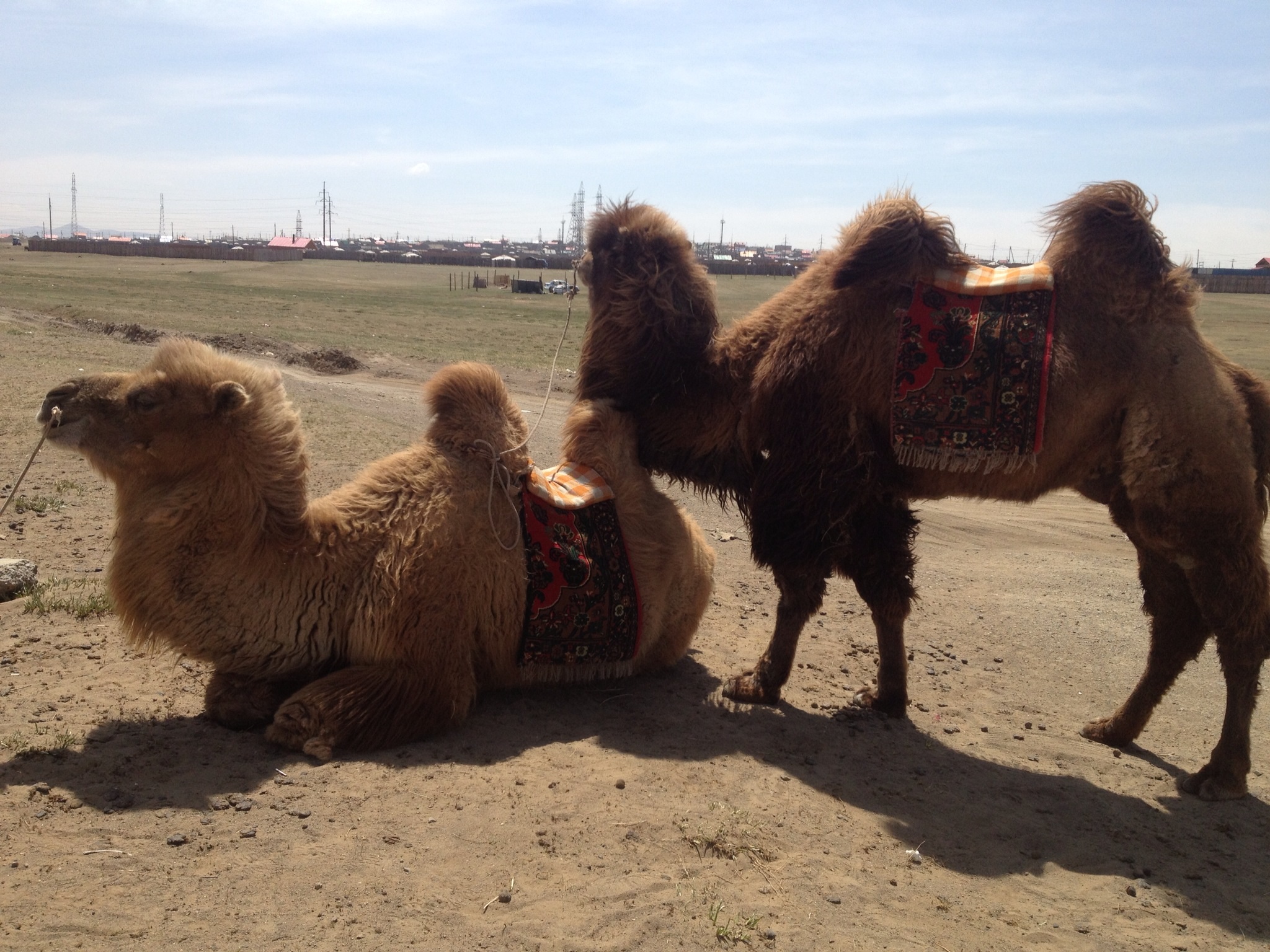
Some camels we passed on the way to the ger camp.
Some camels we passed on the way to the ger camp.

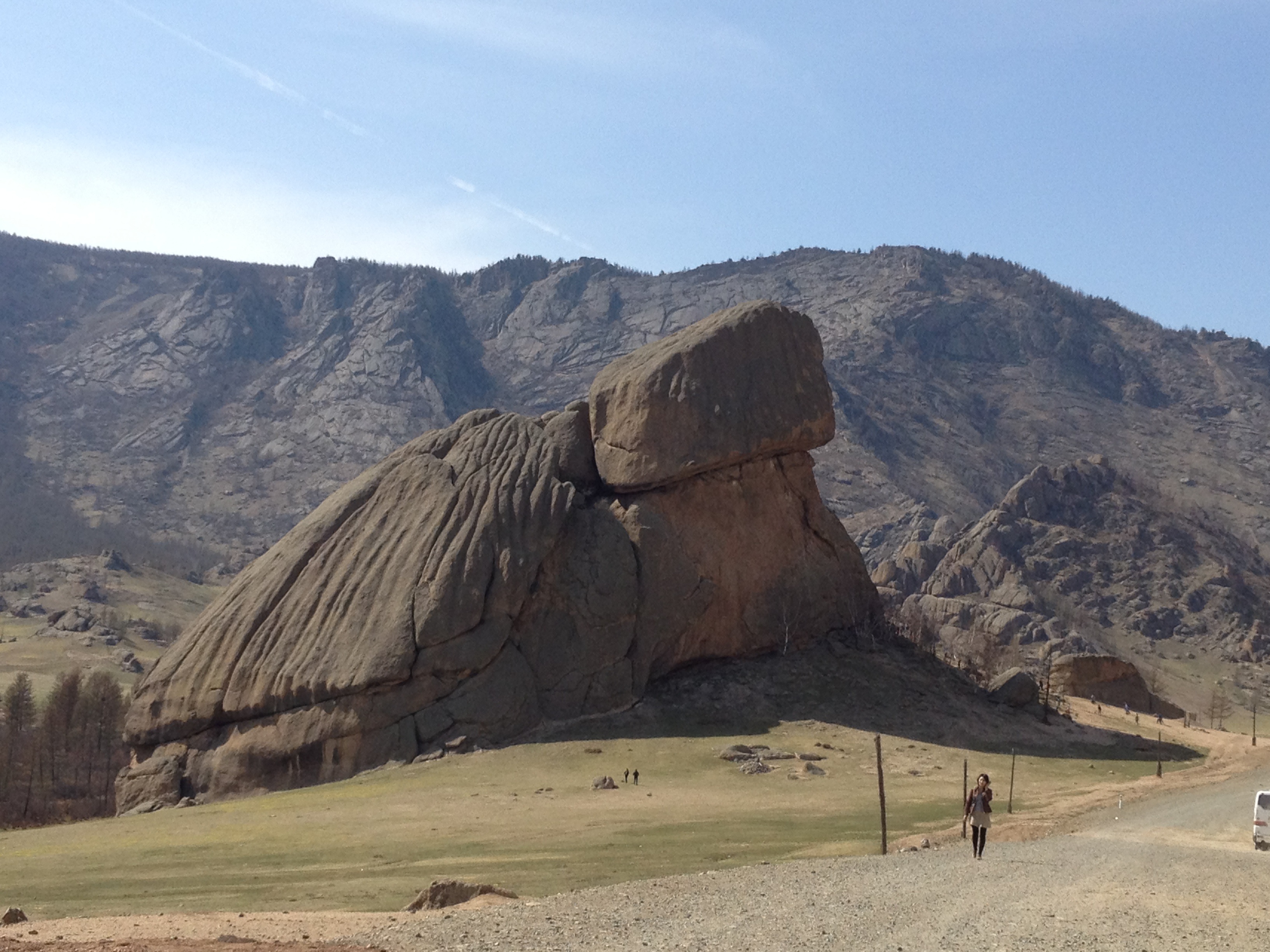
Turtle Rock.

Turtle Rock.

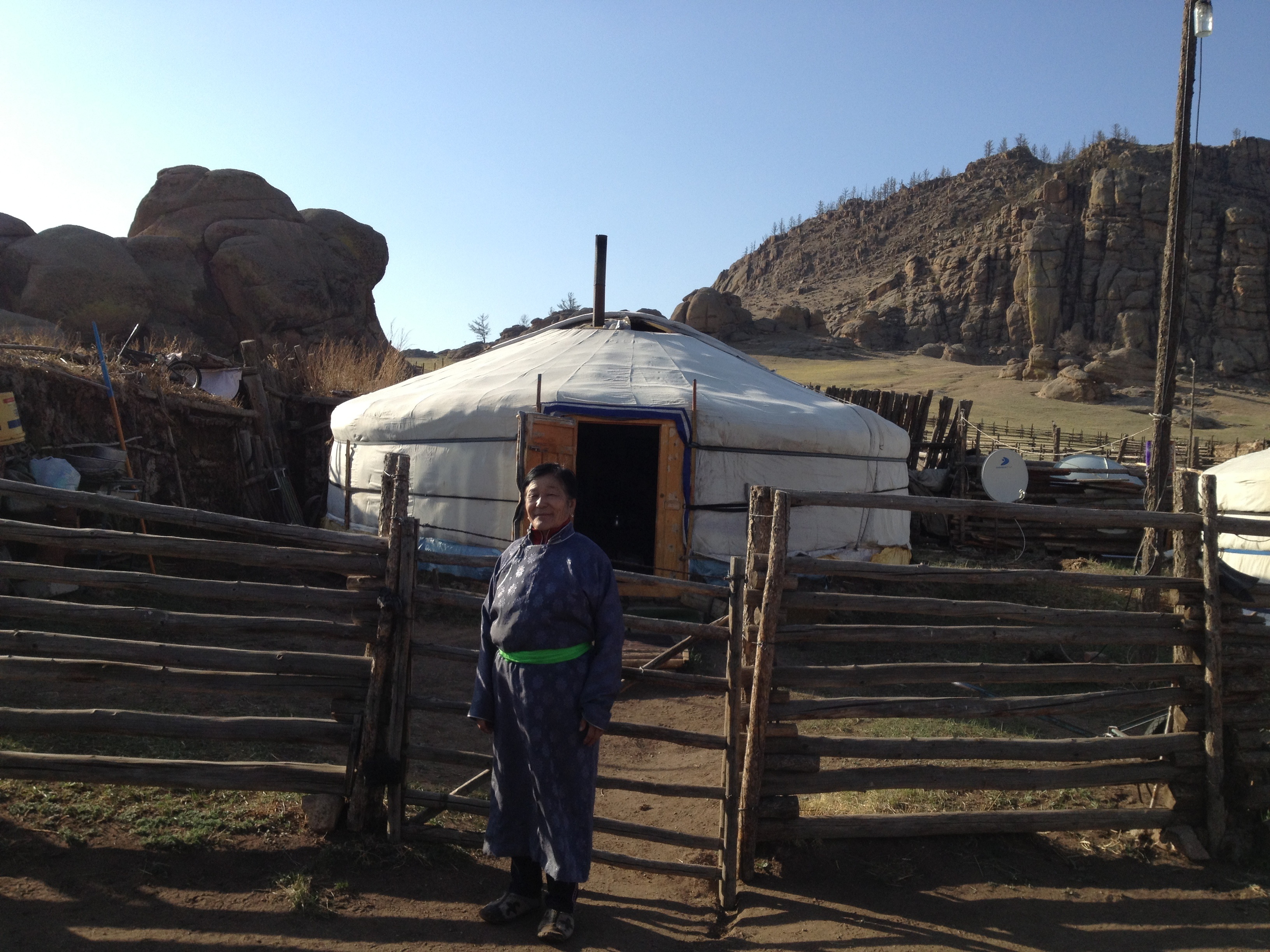
We climbed to the top of the rock to appreciate the view. The Mongolian countryside really is beautiful. I spent a lot of time with my family in the Snowy Mountains as a child, and it was a familiar feeling of watching the virtually untouched landscape stretch out for what seemed like forever. Such sights always remind me of my fathers words about cities being similar from country to country, and I was even more pleased that we’d escaped Ulaanbaatar to explore the rest of Mongolia. After Turtle Rock, we visited the ger of a real nomadic Mongol, and got to see what the inside of a truly inhabited ger looked like. The walls were lined with rugs to retain the warmth and heat, there was a TV and a fridge and a whole kitchen set up, and it felt like an actual home compared to our gers, which were essentially the hotel versions of the traditional Mongol dwelling. There was only one woman who lived in this ger, and she had prepared some food for us, so we asked her questions about Mongolian nomadic life, with Oko as translator, while we nibbled on homemade cheese and bread, dried yoghurt, and sipped on warm milk tea. I didn’t care much for the tea, and the dried yogurt was so hard I thought I was chewing bone, but after spending so long in South-East Asia it was quite a treat to have some hearty, homemade cheese.

The view from the top of Turtle Rock.
The view from the top of Turtle Rock.

The ger of the Mongolian woman who we paid a visit to.

The ger of the Mongolian woman who we paid a visit to.

It was definitely surprising how permanent the set up looked – apparently when they move, the nomads travel anywhere from a few kilometres down the road to hundreds of kilometres to a new region, usually for reasons of weather and climate or the availability of grass for their herds of cows, horses, goats, sheep or camels. It only takes 8 hours to completely dismantle the ger, which was deemed an impressive feat by our group. “It took me 8 hours just to pack for this trip!” Alyson exclaimed. We all had a bit of a laugh, but I suppose it was a reminder to all of us just how content people can be with so little in their lives. It feels like I have one of those epiphanies every time I visit a non-Western country, but I do think its important to retain that perspective throughout life, so I never end up taking for granted all the things I do have in life.

***

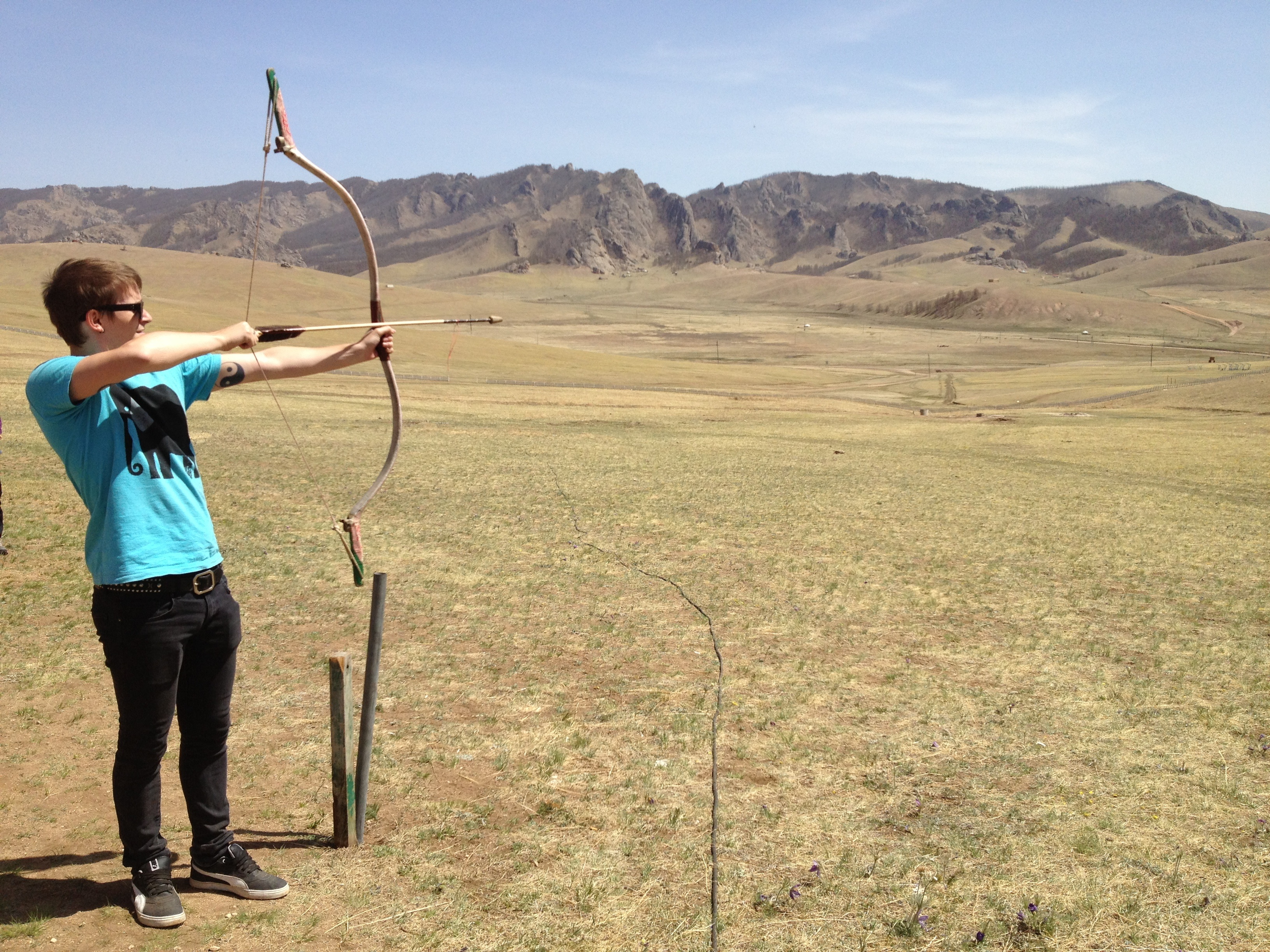
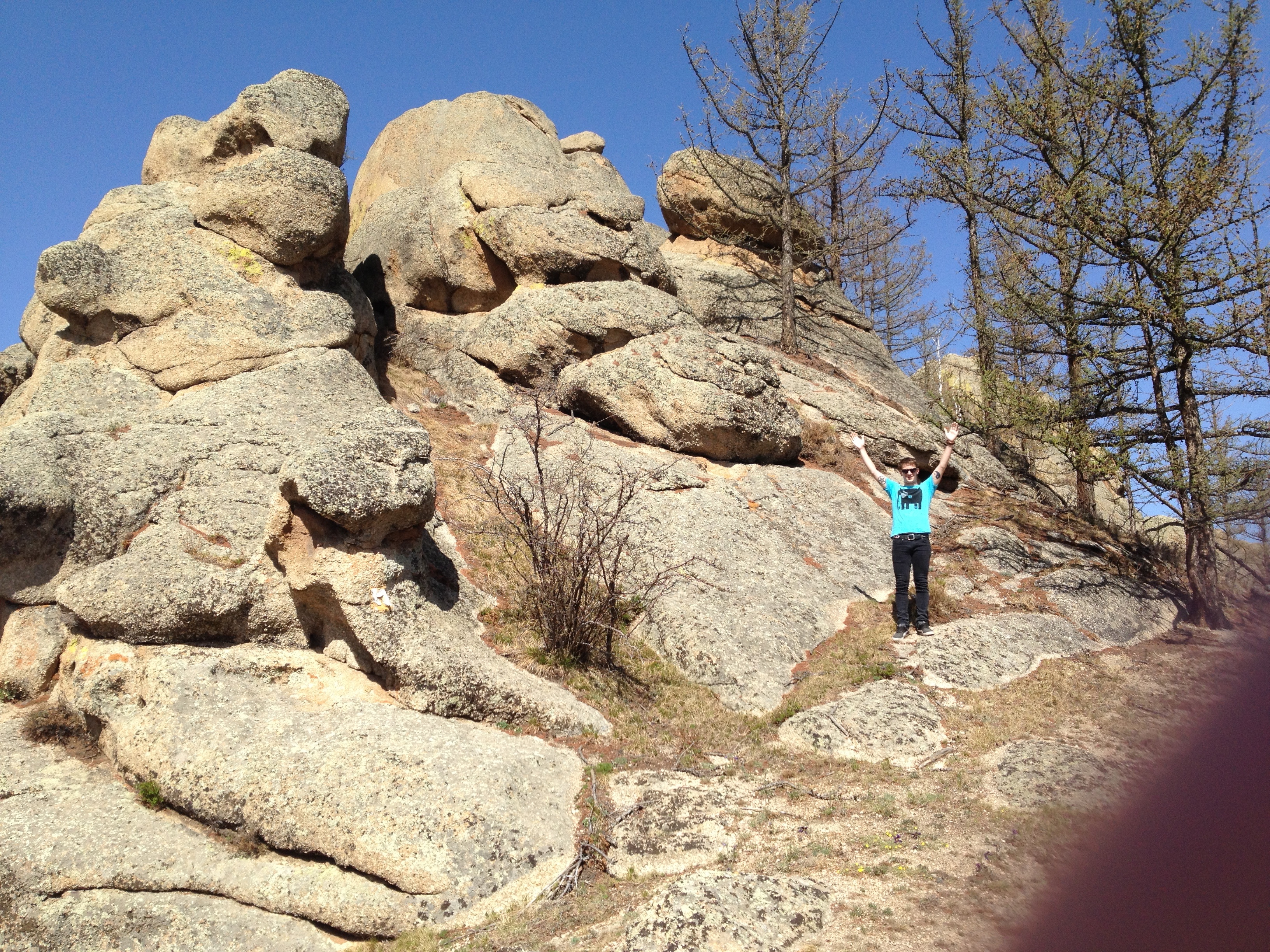
Our days at the ger camp were mostly spent outside, doing things like horse riding and archery. The warriors of the fearsome Mongolian Empire did both of those things are the same time, though horseback archery isn’t an easy skill to master in a few days, so we kept our attempts separate. We also made several small hikes up the hills and rocks that created the valley that our ger camp was in, and admired the awesome views. The hills rolled on in every direction, and in the neighbouring valleys we could see more clusters of gers, demonstrating just how common this nomadic way of life really is in Mongolia. The food in the ger camp was also amazing. Traditional Mongolian soups, salads and meat dishes, broths full of mutton and meat that melted in your mouth right off the bone, and hearty fillets of steak served with rice and potato. I wasn’t sure if there were any Mongolian restaurants around where I live, but I made a mental note to find out when I go back home – the cuisine is absolutely delicious, and I didn’t go to bed hungry once.

Oko tending to my horse just after I dismounted.
Oko tending to my horse just after I dismounted.

Trying out my archery skills - there's a reason there's no photos of the target...

Trying out my archery skills – there’s a reason there’s no photos of the target…

However, on one of the nights I did go to bed a little tipsy. As a group we’d decided we might get on the piss and have a little bit of a party in one of the gers. Some brought vodka, some brought beer or wine. I myself brought a semi-dry red that was made in Bulgaria, surprisingly delicious for the price that I paid for it. The conversation flowed freely, as is always the case when alcohol is involved, and I chatted a little more to some of the Australian girls who I hadn’t seen much of during the course of the trip. It was incredibly warm and toasty with the fire going inside the ger, and we frequently had to prop the door open for a little bit of relief, sometimes even stepping outside to cool off a little. The wine went to my head pretty quickly, but I remember standing outside with Dan and marvelling at the stars that were spread out across the dark blue night sky, thinking back to my night of stargazing on Koh Rong Samleon in Cambodia and still being a little bit excited that the constellations were all different in this hemisphere – and I don’t even think that was the wine talking.

***

While the Mongolian countryside is breathtakingly beautiful, there are a few things about it that are a little upsetting. When you’re gazing out from the peaks of a rocky outcrop the land looks untouched, but the reality is that the life of the nomadic people takes a toll on the land. Some people burn or bury their rubbish, but there is still an incredible amount of pollution. You’re just as likely to see a plastic bag take flight into the wind as you are a native bird, and at regular intervals there are huge mounds of trash that are most likely the remnants of a ger camp that has since packed up and moved on. I remember as a kid going out on Clean Up Australia Day and picking up all the trash in my local area – I think realistically this country would need a Clean Up Mongolia Year. I absolutely loved my time in Mongolia and out in the ger camp, but it was always a little bit disheartening to walk past what appeared to be a small forest of plastic bag trees, the skeleton of what was once lively greenery smothered with black and blue and translucent plastic.

The ger camp where we slept and lived for two days.
The ger camp where we slept and lived for two days.

On top of some rocks after one of our many short hikes through the hills.

On top of some rocks after one of our many short hikes through the hills.

***

When we finally returned to Ulaanbaatar, we had an afternoon to kill before jumping on a train to Siberia that evening. We had lunch at a buffet style Mongolian barbecue, which was amazing – I ate so much I felt sick – and then spent some time at the National Museum. The more I learnt about the native Mongolian people and the mighty empire of warriors they had once been, the more I suspect that they as a people were the inspiration for the Dothraki tribes in Game of Thrones. Fierce warriors with highly revered leaders and a lifestyle that revolves largely around their horses, they were nomads that travelled across their vast country and were constantly at war to expand their territory. Modern Mongolia is a different story though, but I still got a little kick out of my geeky comparison. I also saw some exhibits about musical instruments – the name of the Mongolian instruments I’d seen in the show last time we were in Ulaanbaatar was morin khuur, a name that translates to ‘fiddle with a horses head’. The end of each instrument is finished of with a carved wooden horse head, and the morin khuur is considered something of a national treasure for Mongolia.

As I wandered through the museum, I realised that most of the signs and information boards were in Mongolian, with no English translation. I hate being one of those tourists who just expects everyone to be able to speak English, and get angry when they can’t – I frequently struggle silently through awkward language barriers rather than go on a “Can anyone speak English?” spree – but I have to admit I was taken aback. Almost everywhere in South-East Asia had had signs in English, which I suppose I completely took for granted while I was there. English is a common and widespread language, but it’s by no means global or universal, and I think it took being in an official building like a museum, yet there still being very little English, for that fact to truly sink in.

***

Overall, my time in Mongolia was incredibly interesting and unique. Combined with the fact that I wasn’t scammed, tricked, injured or molested, I think I can safely say its been my favourite place on my journey so far, and my only regret is that I couldn’t stay for longer. But the tour schedule was pretty set when it came to transport, and we were due to catch our next train into the heart of Siberia.

One Night In Ulaanbaatar

The sky was bleak and overcast as we disembarked from our 36 hour journey and found ourselves on the platform at Ulaanbaatar train station. Most of us were still dressed in our pajamas and our comfortable clothes from the train, so the lack of sunshine was particularly chilling. “Spot the people from the Southern Hemisphere”, Tim joked as we stood around shivering, waiting for our tour guide to make themselves known. It didn’t take long before we found Oko, a stylish looking Mongol woman who did a quick head count before ushering us out of the station and into the car park. As we climbed onto the minibus that would take us to our hotel, Oko started the round of introductions, and it was refreshing to hear her voice ring through the entire vehicle. Snow’s rather timid nature meant that anyone sitting at the back of the bus generally had absolutely no idea what she was saying, as she was just so soft-spoken. We arrived at the hotel and all rushed upstairs to take our much needed showers. I was sharing a room with Tim, and I let him shower first. “Just a warning,” he said as he emerged from the bathroom, “the hot and cold water symbols on the tap are the wrong way around, and it took probably that whole five minutes for the water to get slightly lukewarm.” He looked refreshed, to say the least. However, I was lucky enough to find that Tim had been heating the water up for me, and consequentially enjoyed a nice hot shower. So much that when I decided to get dressed, I thought shorts might be a suitable choice. I looked out the window to discover the sun had come out, so anticipated it might get a little warmer. On the way down the hotel stairs, I ran into Tracy, one of the Australian women. “Oko just told us its gonna get to about two degrees,” she warned me, while doubtfully eyeing my attire. “Ah.” I turned on the spot and marched straight back up the stairs to change into my jeans.

***

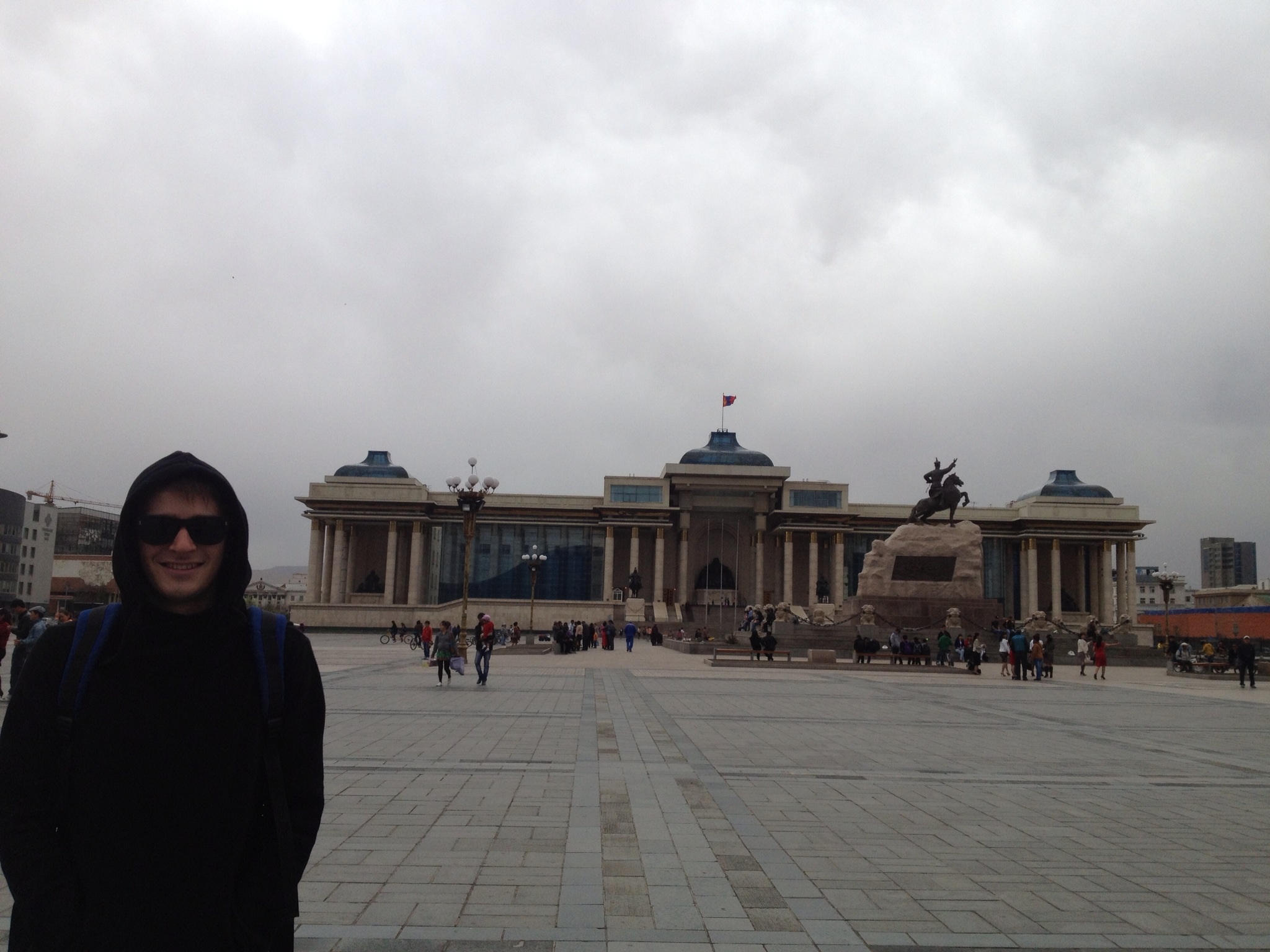
Despite opting for the warmer clothes, it was still an absolutely freezing afternoon in Ulaanbaatar, yet we still trekked it out to do a little bit of sightseeing. Even Lonely Planet books describe it as an “ugly cityscape”, and I don’t feel as though I’m one to challenge that description. There are a few cool looking skyscrapers, but on the whole it’s a fairly dull and plain looking city. We trudged through the windy streets until we reached Sukhbaatar Square, probably one of the few pleasant looking places in the city. It was the main city square, and despite it being dark and gloomy, the space was full of children riding bikes and roller skates, as well as family groups and other pedestrians. However, because it was an open square the wind chill was absolutely horrendous, and there more jokes about the obvious Australians in our group. I myself could not stand still, overcome with involuntary shivers and shudders, cursing the fact I’d left my thermal shirt back at the hotel.

The "ugly cityscape" of Ulaanabaatar.

The “ugly cityscape” of Ulaanabaatar.

In Sukhbaatar Square, with the Mongolian Parliament House in the background.

In Sukhbaatar Square, with the Mongolian Parliament House in the background.

Statue of Chinggis Khan in front of Parliament House.

Statue of Chinggis Khan in front of Parliament House.

Statue of a horseback archer the Mongolian Empire was infamous for - this sculpture also depicts Chinggis Khan's son.

Statue of a horseback archer the Mongolian Empire was infamous for – this sculpture also depicts Chinggis Khan’s son.

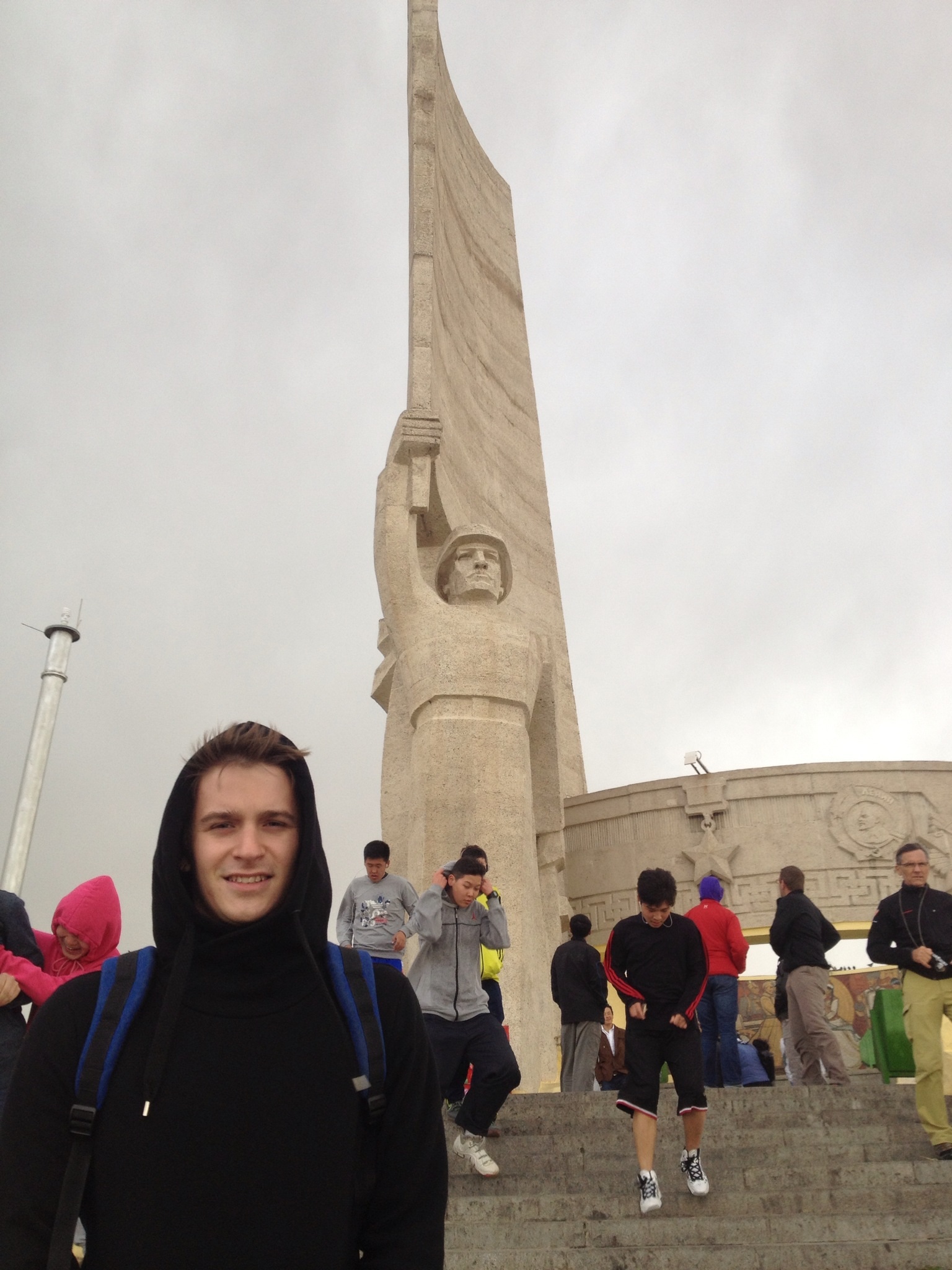
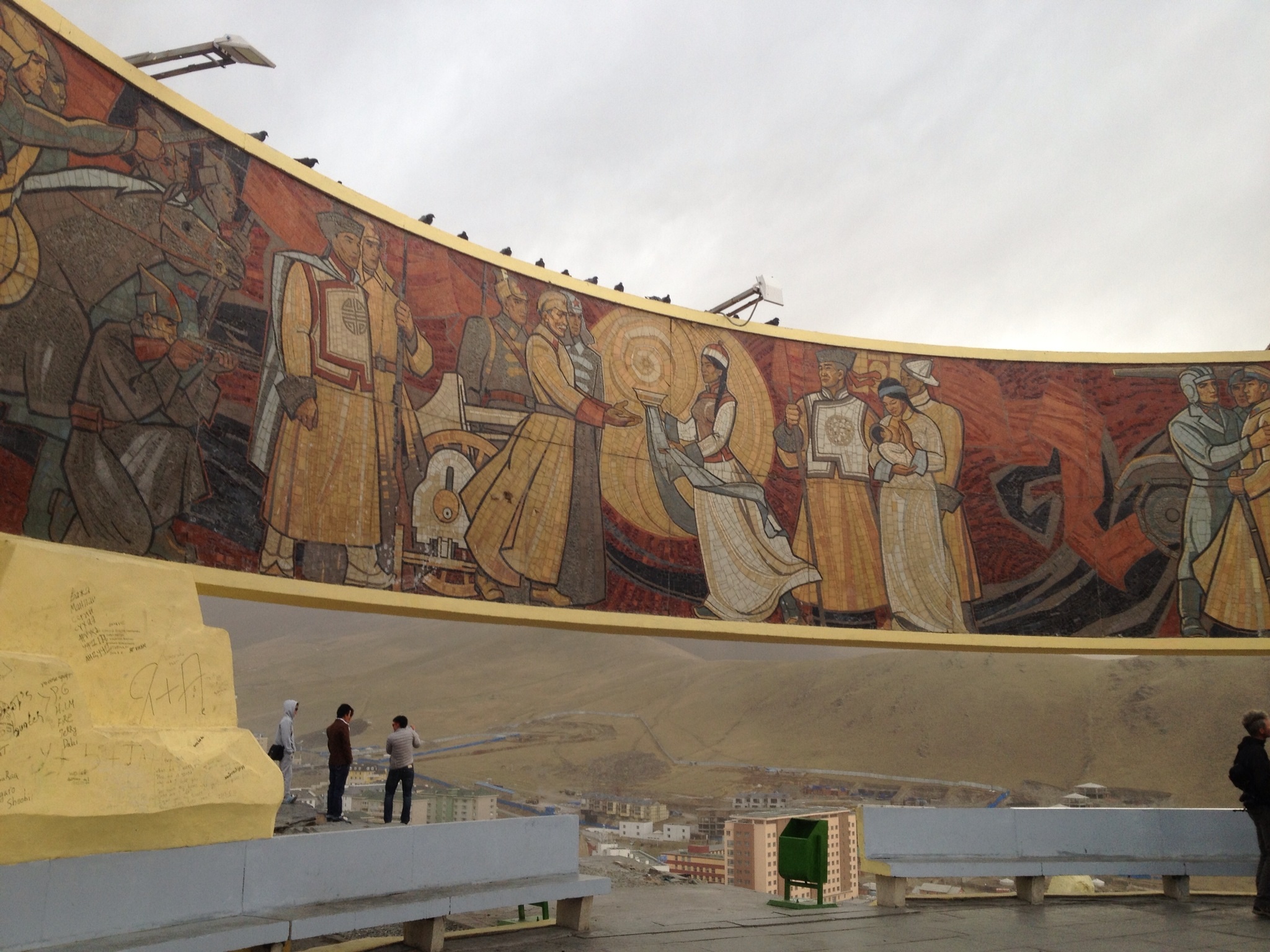
We crossed Sukhbaatar Square to the Mongolian Parliament House, the outside of which is adorned with statues of Genghis Khan, the famous Mongolian leader, and his sons and grandsons. It was interesting to learn that his Mongolian name is actually Chinggis Khan, and that the English translation that the Western world is more familiar with is completely non-existent in Mongolia. We went through a short tour of the small building, but there wasn’t a great deal to do or see, other than a few small facts about the history of Mongolia that Oko shared with us. After that we got in some taxis and went to a nearby monument called Zaisan Monument. It was a structure that, like many buildings and cities in this country, was built for the the Mongolians by the Russians. We had to climb up quite a few stairs to get to the top, which was rather unpleasant in the wind, but despite being quite a dull city the vantage point provided a good view of Mongolia’a capital city.

View of Ulaanbaatar from Zaisan Monument.

View of Ulaanbaatar from Zaisan Monument.

Standing with the actual monument.

Standing with the actual monument.

Detailed mural that ran around the main platform of the monument.

Detailed mural that ran around the main platform of the monument.

At the base of the stairs to the monument was a man with a huge trained eagle perched next to him. I was reminded of the leader of the Huns from the Disney movie Mulan – it seemed that the reliving the films from my childhood wouldn’t end in China. For a small fee you could wear the heavy protective glove and hold the eagle on your hand. I was captivated by the powerful bird of prey, and wanted to give it a try. The eagle was remarkably heavy – it took most of my strength just to hold it up. The birds owners began waving his hands up and down and saying something to me in Mongolian. Oko translated: “He is saying to move your arms up and down, to make bird fly.” Using the remaining strength in my arm, I dropped it down and raised it back up as best I could under the weight of the eagle. It’s wings flew out to catch the air, and it flapped them a few times, as though it was about to take flight at any second. Luckily it was well trained, so it didn’t, and I handed back the eagle and removed the glove. My forearm still felt sore from the grip of its talons – I couldn’t imagine how painful it would be to feel those claws on unprotected skin.
Making the eagle fly.

Making the eagle fly.

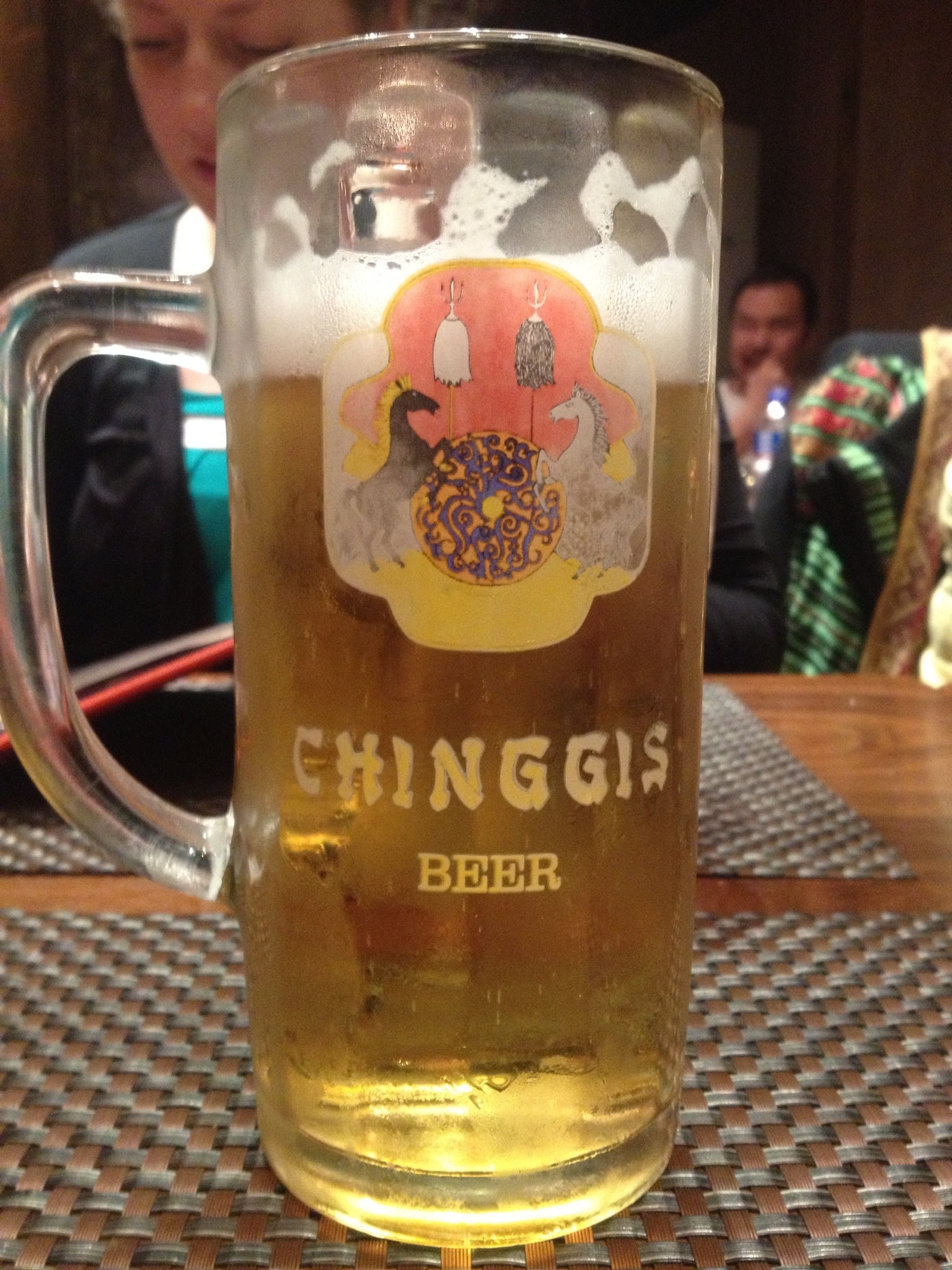
The last attraction we saw that evening was a performance of traditional Mongolian music and dancing. I was unable to take any pictures, but many of the dancers wore elaborate costumes, though it was the music in the show that I enjoyed the most. The Mongolian folk music was created from an orchestra of drums, horns, and what appeared to be their cultures versions of string instruments such as harps, violins and cellos. The songs were actually quite beautiful, but the most remarkable and culturally diverse part of the performance was the singers. Throat singing, where vocalists are able to create and sing two notes at the same time, and quite literally play their throats like instruments, is a common feature in traditional Mongolian music. I wouldn’t exactly say that the sound was beautiful… but it was definitely interesting. After the show came dinner, which I was extremely excited for. Let’s just say I have an enthusiasm for meat, and Mongolia would be a difficult, or at the very least boring, place to be a vegetarian. We sampled the local draft beer, named after the one and only Chinggis, and I probably ate my weight in different traditional Mongolians foods. I didn’t try the horse meat though – it wasn’t offered in very many dishes, so I figured it must be quite a delicacy.

When we ordered a draught beer, the waiter asked "Big Chinggis?" We nodded enthusiastically.

When we ordered a draught beer, the waiter asked “Big Chinggis?” We nodded enthusiastically.

***

As we were walking home it began to snow a little bit. It was exciting for the first few moments, as we saw the white flecks flutter down to land on our clothes – then it sunk in just how absolutely freezing it was. We scurried back to the hotel to warm ourselves up. Once Tim and I were up in our room, I cracked open the Chinese ‘good health’ alcohol – that became its official name, since the entire label was in indecipherable Chinese characters – and mixed it up with with some Coke. “I think it might be a kind of whiskey, maybe?” I said as I took a few tentative sips. It had an herbal aroma to it. “Kind of like the Vietnamese make Mekong whiskey?” I took a swig from the bottle to get the full force of the flavour. I must have made a face, because Tim laughed and asked for a taste. He sniffed the bottle at first, and scrunched up his face as the aroma filled his nostrils. “Wow, okay…” He poured a small amount into cup and threw it back. After a moment of contemplation, he said “It almost tastes a bit like echinacea, doesn’t it?” I had to laugh – he was right, but the taste was growing on me. Tim and I sat up a bit later into the night, chatting about travelling and our lives back home. During a few group conversations back in China, we’d both casually revealed that we were gay, although this was one of the first times we had really gotten to talk one on one. It hadn’t really occurred to me before now, but now I was thankful that I wasn’t the only token gay person on the tour. We talked about our travels, about turning Grindr on in foreign cities, and I shared some fears and concerns about the official Russian stance on homosexuality. We even talked about home in Australia – Tim was from Melbourne – and discovered we had a few mutual friends, as is the small world that is the gay scene. After initially holding myself back a little bit for the beginning of the tour, it felt good to open up a little more and really be myself during the whole ‘getting to know you’ process, something that would only get easier from here on in.

All Aboard

So far in my journey, the only train travel I had done was the overnight train from Bangkok to Surat Thani – the rest of South-East Asia had been traversed via bus, boat and plane. When it came time to board our first train of the Trans-Siberian adventure – the Trans-Mongolian leg of the trip fro, Beijing to Ulaanbaatar – I was quite excited, unsure if it would be similar to my experience in Thailand or something completely different. Snow met us at our hotel at 6:30am, and we piled into a minibus that would take us to the station. After a few security checks and little bit of waiting, she showed us to the platform and talked to the train attendants who took us to our cabins. We would be getting a new guide in every city of the tour, so we said our goodbyes to Snow as we climbed aboard. She had been a peculiar little woman, soft-spoken and shy but very polite, and had been quite helpful during our stay in Beijing.

Beijing Railway Station the morning of our departure.

Beijing Railway Station the morning of our departure.

***

As a group, most of our time had been spent sightseeing, wandering around streets and temples and other attractions, and eating together at meals. However, we would be departing Beijing at around 8 o’clock on a Sunday morning, and wouldn’t be arriving in Ulaanbaatar, the capital of Mongolia, until about 2 o’clock in the afternoon on the Monday. If ever there was going to be a time to properly get to know my fellow travelling companions, it was going to be during the periods of transit where there was not much else to do other than talk to each other. It was interesting to get to know a little more about everyone: where home was, what they did there, where they were going after this tour, how long they had been travelling for, and how long they still had to go in their travels. I also discovered that I was the youngest of our group – the tour was for 18 to 35 year olds, but majority of the group was at or around the 30 mark, with a few in their mid-twenties. Most of them were also seasoned travellers, and listening to their stories made me realise that despite my travels extending right around the globe, there would still so much more of the world left to see once I finally arrived home.

I’d also been wondering who I would be sharing a room with, after having spent my nights in the Beijing hotel alone. Yet as Snow gave us our tickets for the train, she said to me, “I think you will be on your own. Each cabin has 4 people, but there are 13 people. Your name is last on ticket, so you might be with strangers.” She had seemed concerned, but I had assured her that I would be fine. I’d been sleeping in dorms with strangers for most of the past 6 weeks – another night on a train wasn’t going to kill me. The cabin set up was quite differently from the Thai train though – instead of single seats that lined the carriage and transformed into beds, the Chinese train was divided into cabins, each one equipped with two sets of bunks, which served as seats during the day and beds at night. I spent most of my time during the day in the next cabin over, with Kaylah and Alyson, the American girls, and Claire and Dan, a British couple who had been temporarily living in Australia and were returning home to the UK.

Mountains in the Chinese countryside on our way out of Beijing.

Mountains in the Chinese countryside on our way out of Beijing.

***

While I loved getting to know my tour companions, acquainting myself with the fellow travellers in my cabin was a different matter. When I’d first been shown into my room, I found a couple sitting on the end of my bed. Snow said something to them in Chinese, but they stared back at her with blank, uncomprehending faces. After a moment of uncomfortable silence, Snow ventured out and asked “English?” The woman of the pair slowly shook her head and said, “No… not well.” Snow turned to me, a little frustrated.
“They are Mongolian, so I cannot speak with them…” She peered out of the carriage and down the corridor, looking for assistance from the attendants, but I assured her that as long as I had a bed in the cabin, I really wasn’t too concerned with where I slept. After a short while another older man joined us, and placed his things on the bunk above mine. Shortly after departing the station, he climbed up into his bed and settled down, and the couple seemingly disappeared. It was a 13 carriage train with a dining car at the end, so I figured that that’s where they had relocated to.

A few hours later, when I decided to do a little bit of exploring myself, I wandered down to the dining car, where my suspicions were confirmed. The Mongol couple was sitting at one of the tables, with about six or seven cans of beer sitting in front of them. The woman had her back towards me, but her boyfriend must have recognised me and said something, because she whirled around in her seat to face me, her beehive of hair flying all over the place, and shouted “Hi!” in a long, drawn out way that made me sure she was at least extremely tipsy. I said hello and waved back, but I had only come for a quick investigation, and didn’t stick around long enough for any other kind of exchange. It was still fairly early in the afternoon at that point, and we would be crossing the Mongolian border later during the night. I silently hoped that they wouldn’t cause too much trouble for our cabin during the border crossing and customs procedures.

***

Fast forward to about 8:30 that evening, and we had finally reached the Chinese side of the border crossing. I had been moving around freely at that point, but now we were required to return to our cabins to clear Chinese immigration and customs. Gramps and I sat patiently on our side of the cabin. The young Mongol man sat on his bunk, stumbling through a hangover after an afternoon nap and frantically trying to fill in his departure card. The Amy Winehouse look alike was no where to be seen – I would later discover that she was sleeping in the neighbouring cabin, which had thus far remained empty. An austere Chinese man came and collected passports, and we were ordered to stand up so that the under-seat luggage compartments could be checked for stowaways. However, he was speaking in English, which my Mongol companions failed to understand, and he must have started yelling in Chinese after that, because what followed was a lot of exasperated sighs from the border personal as they snatched up passports and shouted orders at the travellers. It must have been more of a nuisance than an actual problem, because they eventually moved on to inspect the rest of the train.

After that ordeal came the time for changing the trains bogies. The railway tracks in Mongolia have a different gauge of thickness to those China. Travellers were given a choice – get off the train and wait for three hours while this happened, or stay on the train for three hours while this happened. Whatever your choice, you had to stick with it, as you couldn’t come and go during the procedure. While most travellers chose to get off the train, everyone in our group decided the stay – there didn’t appear to be a lot to do so far out in the Chinese countryside on a Sunday night, and I was curious to see the bogie changing process. It just involved each carriage being jacked up and sliding out the old ones and slipping in new ones – though some other more interesting things occurred during that time…

Another carriage in the process of having bogies changed, as seen from our carriage.

Another carriage in the process of having bogies changed, as seen from our carriage.

I had been sitting in one of our other group cabins when I heard Alyson call out to me. “Robert, I think you’re locked out of your cabin.” I stuck my head out into the hallway to see at my cabin door was indeed shut, and they were the kind that could only be opened from the outside with a staff key. At first I thought it had accidentally shut, but after a while we heard noises coming from inside the cabin.
“I think your Mongols are having a bit of couple time, Rob”, Dan said with a slight chuckle that was sympathetic but still quite amused.
“Really? Eww, no they’re not… They can’t be, surely? Right?” I didn’t know whether I should be laughing or crying. There were a few muffled shrieks, and from inside Alyson, Kaylah, Dan and Clair’s cabin, we heard banging against the wall.
“Oh yeah,” Alyson said, her eyes widening in horror, not wanting to believe what she was hearing, but unable to unhear it now it was happening.”Definitely some serious couple time going on in there.” I was just hoping that Gramps had actually left the train for the bogie changing.
“Oh my God, can’t they just wait?” someone else had said, perhaps Claire. “It’s just one night!”
The entire group, all thirteen of us, stood around in our cabins and the corridor, half laughing and half standing around in a stunned silence. I was almost at a loss of words, but I tried to remain optimistic.
“Well… as long as they’re not on my bed, right?”

***

The Mongol couple hadn’t been on my bed – but it turns out they had been on someone else’s. After the bogies had been changed it was well past midnight, and after we went through the Mongolian side of the border and had our passports collected, most of our group began to fall asleep one by one. In the end it was only Dan and I left in the corridor, watching the hallways as the train acquired more passengers. A train attendant came to my cabin and started having a very heated discussion with the couple, though it was all in Mongolian so I have no idea what was actually said. Then, rather abruptly, they gathered their things and stumbled out of the room. I exchanged a look with Gramps – he obviously knew what going on, but his expression gave nothing away about how he felt about the situation. Like me, he was probably just waiting for everyone to settle down so he could go to bed. But the couple had obviously been in the wrong cabin for the first leg of the journey and had to be shifted, because the space that Amy and her lover had vacated was quickly filled with some new Mongolians.

Our two new roommates were a peculiar duo – I nicknamed them the Real Housewives of Ulaanbaatar. They had luggage that looked like it weighed about 30kg, or at least sounded like it when they clunked the bags down onto the floor, and they tapped away on their touchscreen smartphones with their flashy acrylic nails while the shiny metallic decorations on their t-shirts caught the light like a disco ball, sending flecks of glare all around the cabin. They exchanged a few words with Gramps – I may as well not have existed to the , so after the official business had been conducted I slipped out of the cabin to rejoin Dan in the hallway. It would appear that the Real Housewives were not the only new passengers in our cabin – Dan and I had to duck out of the hallway and back into our cabins to make room for a group of six men, all of whom were incredibly filthy. You could see the dirt that lined their clothes and caked their faces, but the worst thing was the smell. The pungent aroma of raw fish wafted down the corridor, sending the cabin attendants running down the hallway, shrieking, covering their faces and spraying air deodoriser every time they had to open one of the two cabins which these men occupied. It was quite amusing, but would have been more hilarious if it weren’t for the fact that our carriage was now stained with the unpleasant stench.

However, the cabin doors appeared to be fairly airtight, and managed to either block out or, more importantly, contain the smell. So long as the doors to their cabins stayed shut, the smell didn’t bother us too much. I had to chuckle to myself though, as I realised that the Mongolian lovers who had soiled my cabin had been relocated to one of the two rooms occupied by two of the dirty fisherman. To me it was fitting, almost as though the universe had matched and raised them on their attempt to get down and dirty. As I bid my group goodnight and headed back to my cabin, I made another discovery. In the space of about half an hour, the Real Housewives of Ulaanbaatar had also been relocated – I’m still not sure to where – and in their place was a single Mongolian woman, sitting on the bottom bunk and quietly arranging her things. She looked up as I walked in and gave me a small smile, which I returned before going about setting my bed up. I had laid out the bottom sheet and was about to climb into bed with just the top sheet to cover me, when the woman motioned to the blankets that were piled onto the top bunk above her, which now appeared to be empty.

“It will be very cold,” she said to me as she pointed. Pleasantly surprised to learn to spoke English, I thanked her and pulled one of the blankets down, making sure my actual body came into contact with it as little as possible – I still wasn’t entirely sure what had happened in this cabin earlier. I laid the blanket down, climbed under the sheet, and waited until the woman was ready for bed. Gramps had already been waiting patiently above me. When she finally moved to turn off the night, she turned to me with a smile and said goodnight.
“Goodnight,” I replied as the lights went out and we were thrown into darkness. After the confusing game of musical chairs that my day in this cabin had been, I was quite happy with how the evening had turned out, and I drifted off to sleep to the gentle rocking motions of the train.

***

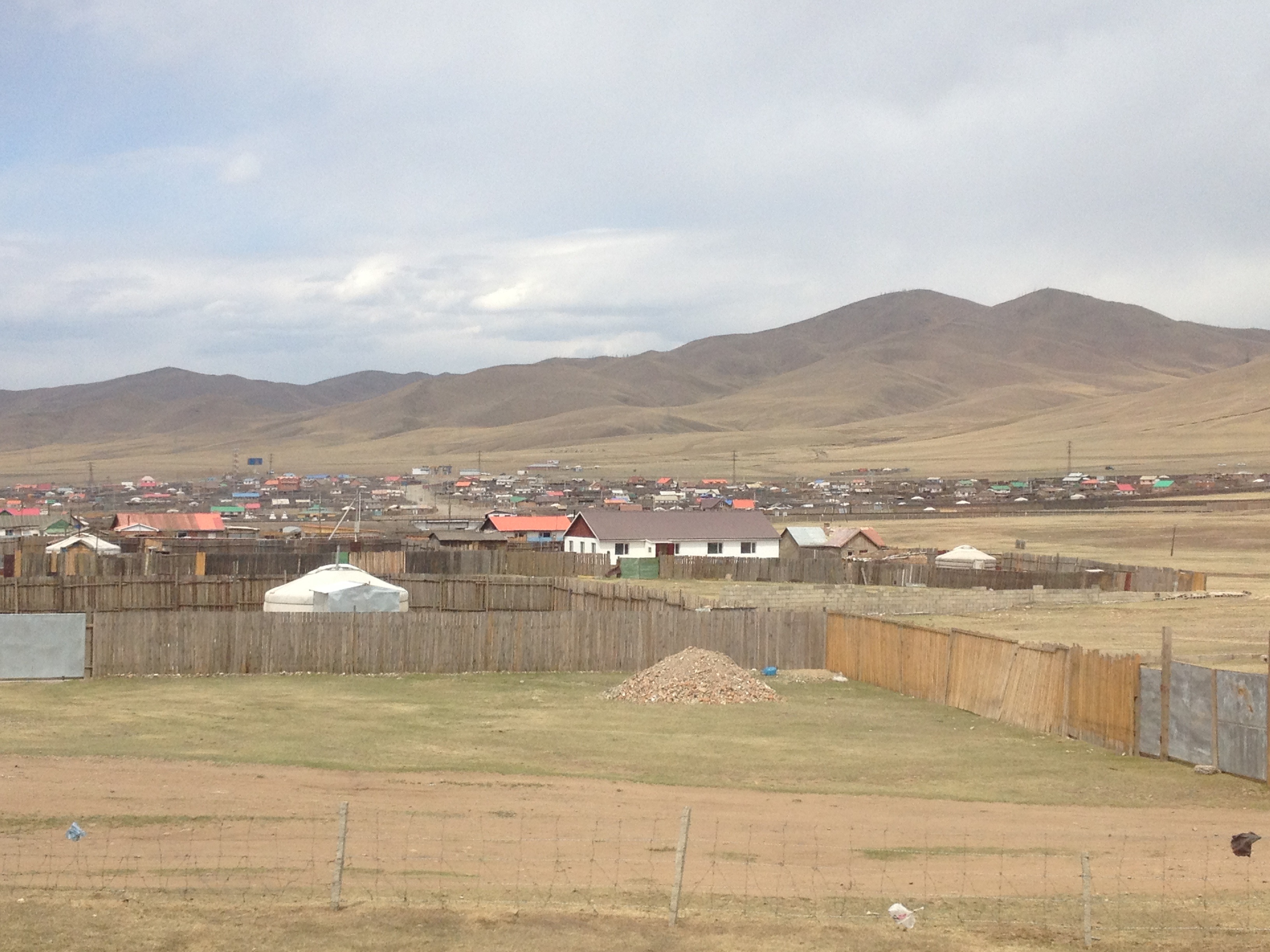
Mongolian countryside as we approach Ulaanbaatar.

Mongolian countryside as we approach Ulaanbaatar.

The following day went by rather uneventfully, watching the Gobi desert and the surrounding landscapes pass us by. It had felt like quite a long time, but it was a little daunting to think that the Trans-Mongolian leg of our journey was actually the shortest trip of all, with the exception of the train between Moscow and St Petersburg. Having well and truly left China behind us – other than a bottle of alcohol the shopkeeper had described as “good for health” – we climbed off the train Ulaanbaatar, eager to see what Mongolia had in store for us.

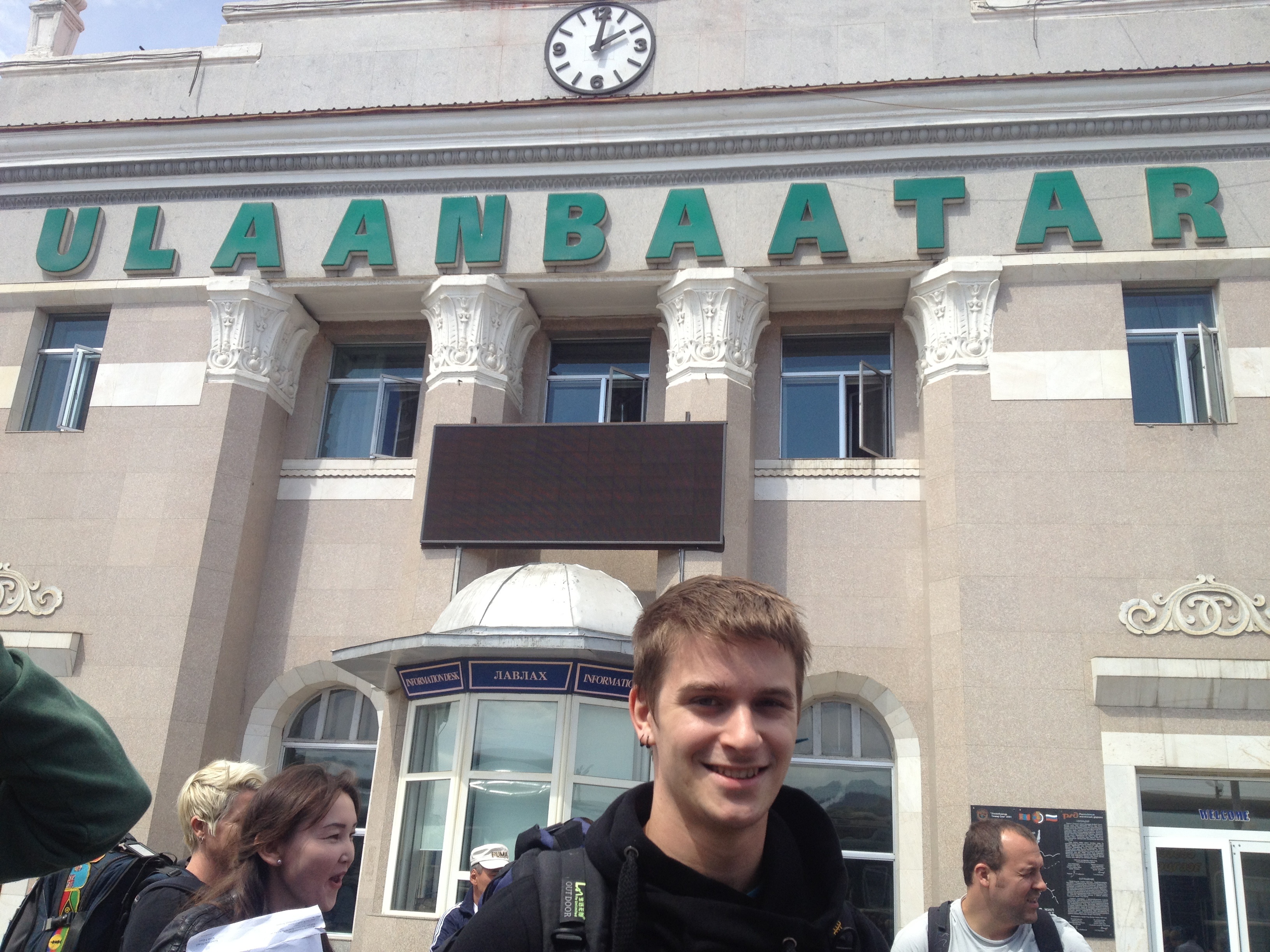
At Ulaanbaatar station, after journeying across the Trans-Mongolian Railway.

At Ulaanbaatar station, after journeying across the Trans-Mongolian Railway.

Bird Flu and Beer – Chicken in China

While my days in China were spent doing typical tourist activities, at night Snow took us out to eat at some authentic Chinese restaurants. Most of the waiters at the places we went to had fairly limited English, so we had to rely on Snow to do all the ordering. We ended up getting a range of dishes and splitting between the group – it was amazing how much food you can order for a group of thirteen and still only end up paying approximately $7 each. Needless to say, nobody went hungry, and I feel I can safely say that some of the best Chinese food I’ve ever had, I had in China.

One thing that made me uneasy at first, however, was that Snow ordered a chicken dish. Alarm bells went off in my head immediately – all throughout my travels in South East Asia I had been following the news and tracking the progression of the new strain of bird flu. At the time I arrived in China, I knew there had been the most cases in the city of Shanghai, and even a few confirmed reports in Taiwan. Some people had suggested I not go to China – others, including my mother, had just strictly warned me to stay away from live poultry and to not eat any chicken. At this point in my trip, I can safely say that I am yet to handle any living poultry. As for eating chicken… well, to be honest, I completely forgot. The alarm bells didn’t go off until after we’d finished our meal, at which point I had eaten a substantial amount of chicken.

But so had everyone else in the group, and no one seemed to give the danger of bird flu the slightest thought, and if they had then they certainly hadn’t mentioned it. Snow hadn’t seemed too concerned, so I took that as a good sign – I figured the local people tend to know more about what’s going on in their areas then CNN, although with China you never really do know…

Tim, one of the Australian guys, had been travelling throughout China for the last three weeks on a different tour before joining our group. He was telling us a few stories about his travels and some of the places he had been, and at one point mentioned something about Shanghai. Alarm bells did instantly go off this time, and when he finished his stories, I leaned over to have a one on one conversation with him.

“Did you say you were in Shanghai?” I asked, trying to sound casual.
“Yeah, probably about a week or so ago.”
“For how long?” I continued to quiz him, with the nonchalant façade probably failing miserably.
“Just three nights,” Tim replied, quite matter-of-factly. I thought maybe the direction I was going might have been apparent, but he didn’t appear to have any idea where I was taking the interrogation. I leaned over further and spoke a little quieter, suddenly feeling a little silly about my paranoia.
“What about bird flu?” I asked in a low, hushed voice.
“Bird flu?” Tim repeated. “What about it?”
“Wasn’t it a problem? Like, weren’t you kinda scared going through Shanghai?”
He looked genuinely surprised, or at the very least confused. “Umm… No, not really. I mean, it might be around, but… no, I wasn’t worried. It’s mostly fine, really.” His tone carried the nonchalance I’d tried to attain in my original question, and I very much believed what he was saying.

So between Tim having survived a visit to Shanghai and our entire group eating chicken seemingly without a second thougth, I decided that perhaps bird flu wasn’t as much of a serious concern in Beijing as my loved ones would have me believe. I know most of them will be reading this either sighing, face palming, or rolling their eyes, but in my opinion it just really shows how a little bit of media hysteria can go a long way, and terrify the on-lookers more than the people actually living the experience.

***

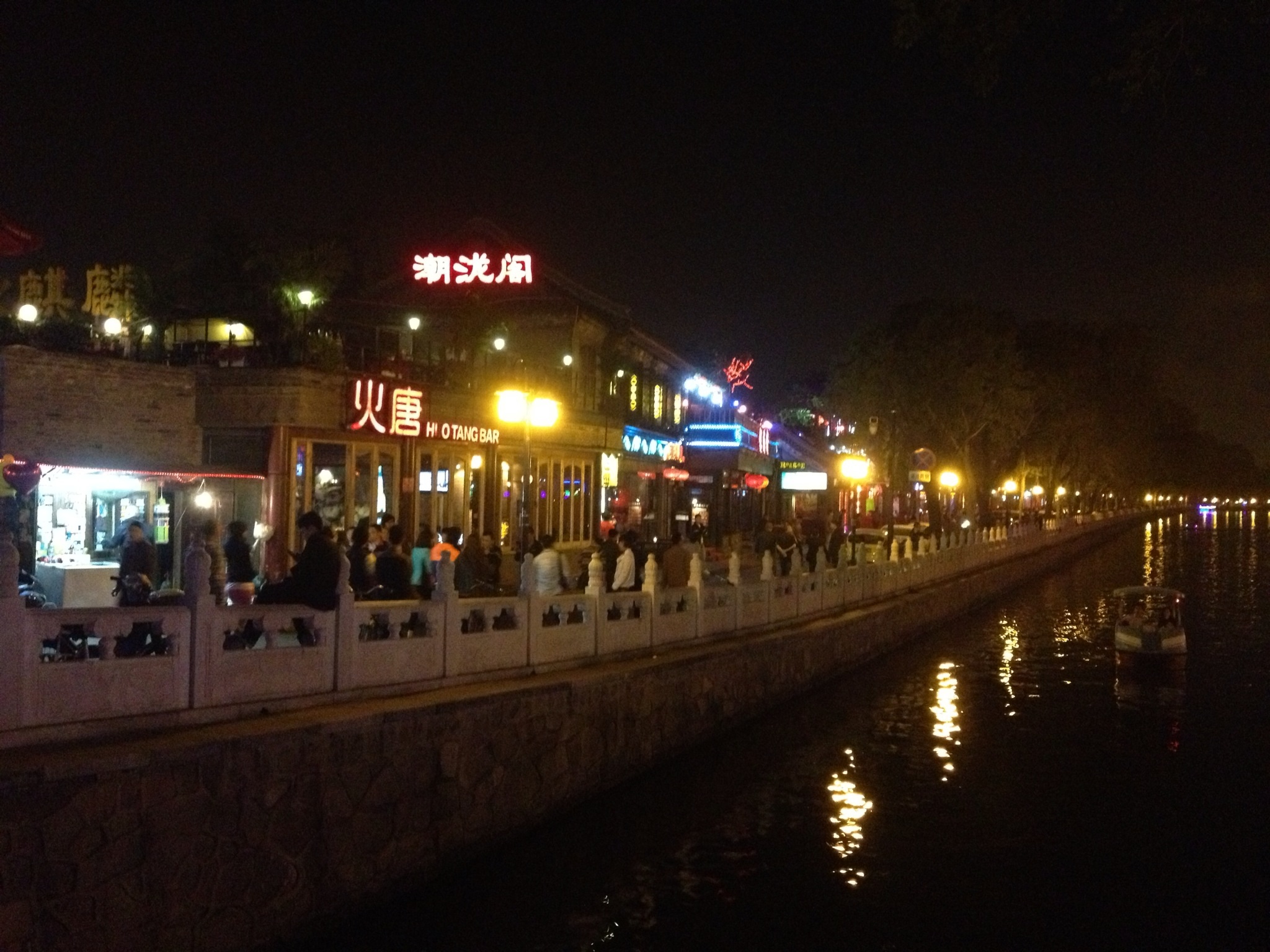
The other part of Chinese night life I experienced was the Hou Hai Bar Street, where a bunch of different small bars lined a riverside street. I visited the street after dinner on our last night in Beijing with Tim and Alyson, the other American in our group. As we strolled down the street trying to decide on a place to have a drink, Tim made a comment on how unlike the rest of China this street was, or more precisely, how much American influence there was. Almost every bar had live music and karaoke, with many of them butchering Western music with their limited English vocabularies. Most bars had people outside trying to beckon you into their venue, but we kept walking until we found a place that lacked the hecklers. We ended up taking a seat at a Jamaican bar, sitting outside so that we could hear each other talking over the live music inside, and sampled some of the local draught beer. It was nice to get to know some more members of our travel group, though we didn’t end up staying out too late, as we had to get up early to get the train to Mongolia the next morning. But it was nice to catch a glimpse into the Chinese nightlife.

Beijing's riverside bar street.

Beijing’s riverside bar street.

China’s Greatest Hits: Sightseeing in Beijing

My overland trip through Central Asia was going to have one major difference from the rest of my travelling – I was going to be on a tour, travelling with a bunch of other people. After travelling solo for so long, I was actually quite excited to be returning to some sort of a schedule where there was a little less uncertainty at the beginning of each day. I was also going to be going through some countries where English is not as common as it is in places like Thailand and Vietnam – in that sense, they’re not places I’d be able to visit at all unless I was under some sort of guidance.

When I arrived back at the hotel after my trip to Beijing Zoo, I was greeted by our guide, a Chinese woman whose English name was Snow. She led me into another room where some of the other travellers were waiting, so I took a seat and waited for everyone to arrive. There were thirteen people in our tour group – two girls from America, two couples from the UK, and then four girls and two guys who were Australians. Snow briefed us all about the Chinese part of our trip, and talked to us about what we wanted to do. The tour I was on was a little different to most – there was no strict set itinerary, and each individual was allowed to chose whatever they wanted to do, and decide how they wanted to fill their time in between the train journeys between cities. However, there was a unanimous vote to see China’s most popular tourist attractions: Tiananmen Square, the Forbidden City, and the Great Wall of China.

***

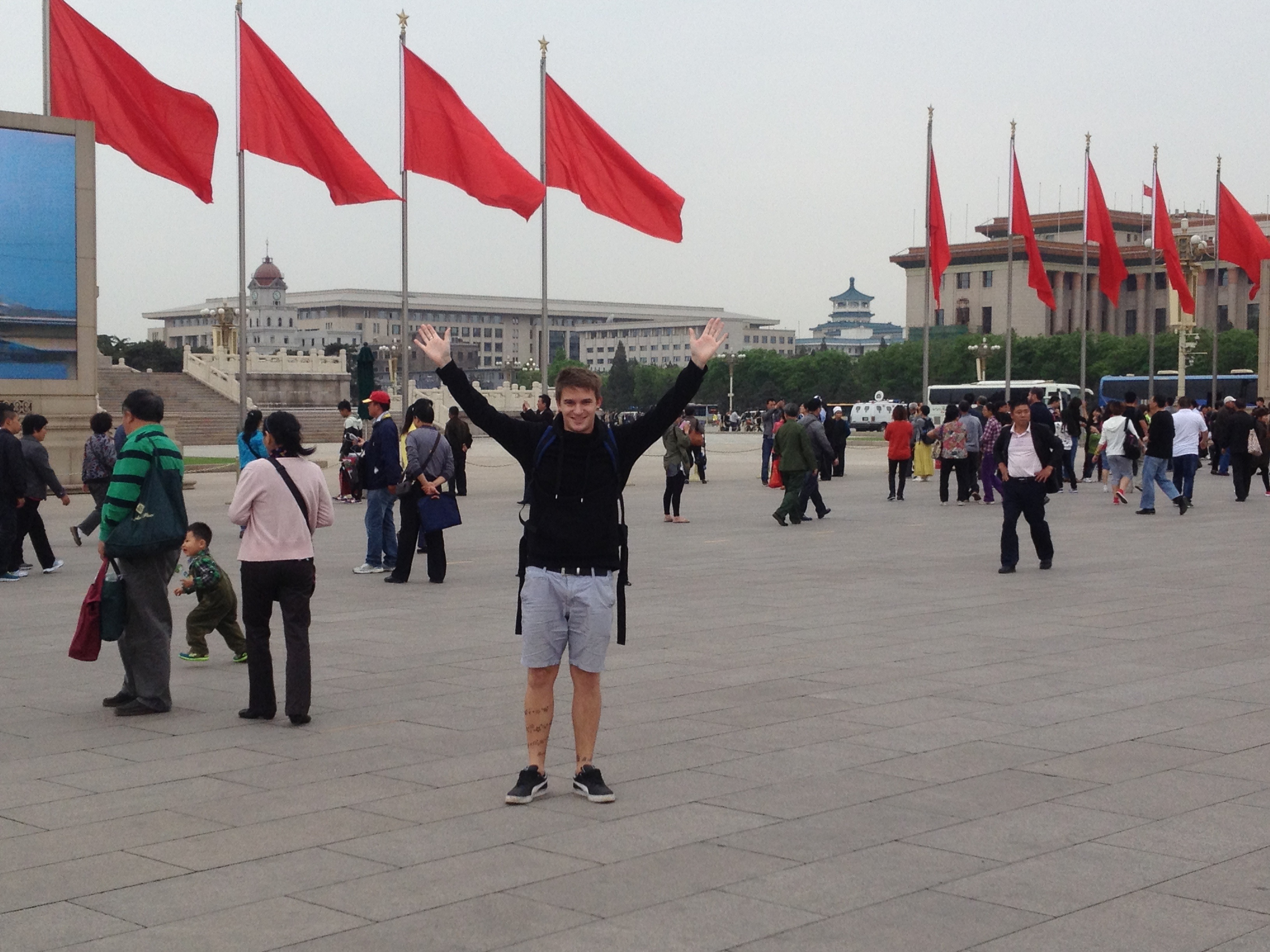
The following day was supposed to be quite cool and overcast, so we decided to hold off on our journey to the Great Wall until we had better weather. So on our first morning as a group, we met Snow at the hotel and then walked to Tiananmen Square. We were told it was the largest city square in the world, and could hold at least one million people. There’s also a flag pole where a flag raising ceremony is held at sunrise every morning – Snow told us we could attend it tomorrow morning if we wanted, but I decided that after Angkor Wat I had already played my “awake at sunrise” card for this month. The square itself was an interesting space though, not dissimilar to places like Martin Place back home in Sydney, although exponentially bigger – I was informed that the vast space in front of us was only half the square, and that it continued on the other side of the central monument, a memorial dedicated to the people who died in the Chinese Peoples Revolution, and the mausoleum of Chairman Mao, which has thousands of visitors every day, coming to pay respects to the former leader. However, I was surprised to find that many Chinese people still don’t know about the fatal student protests that happened in that very square in 1989. For me, it was a shocking example of just how much censorship the Chinese government imposes on its population – and here I was thinking how terrible it is that they block Facebook!

Myself in Tiananmen Square.

Myself in Tiananmen Square.

The Forbidden City.

The Forbidden City.

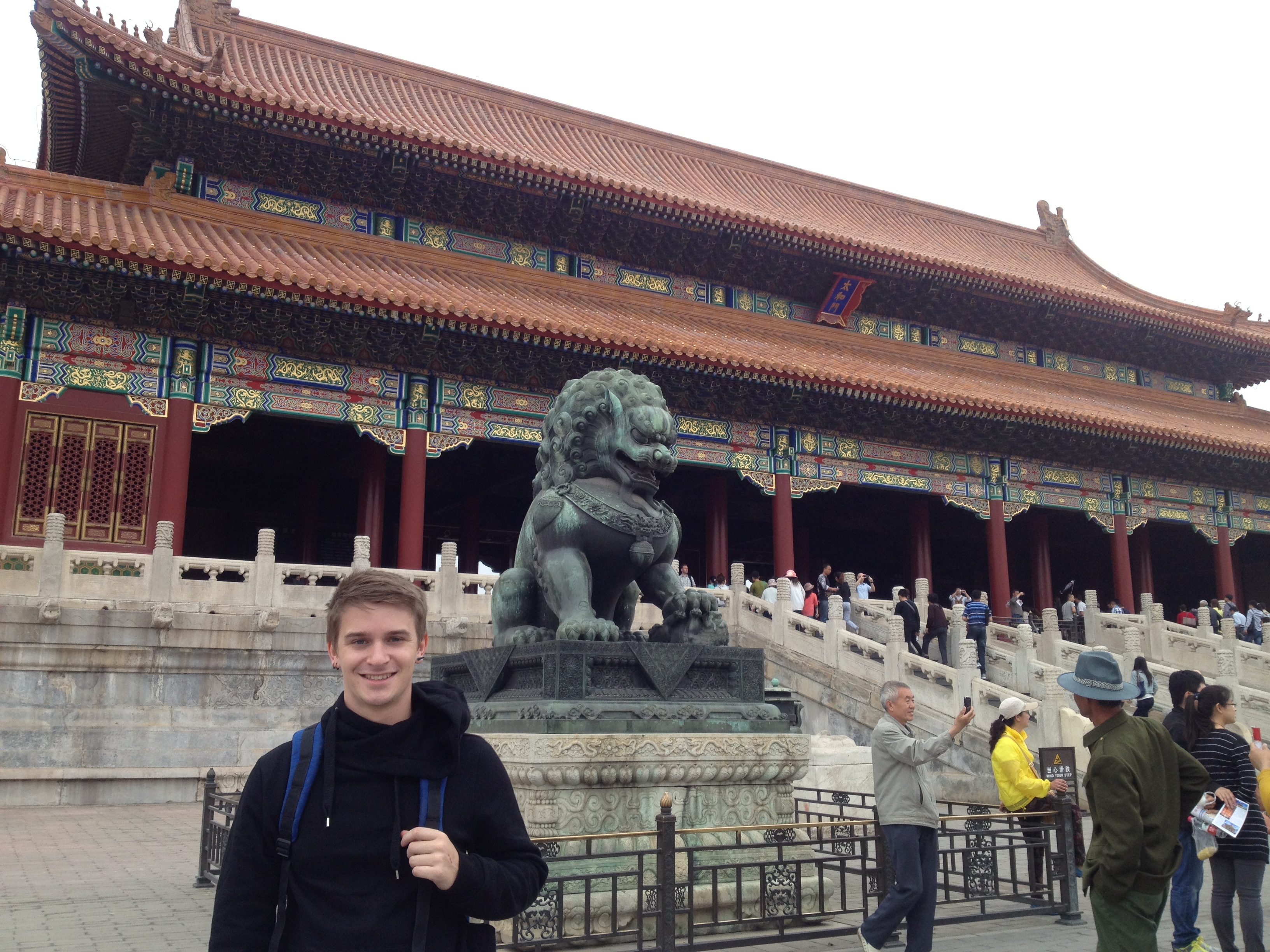
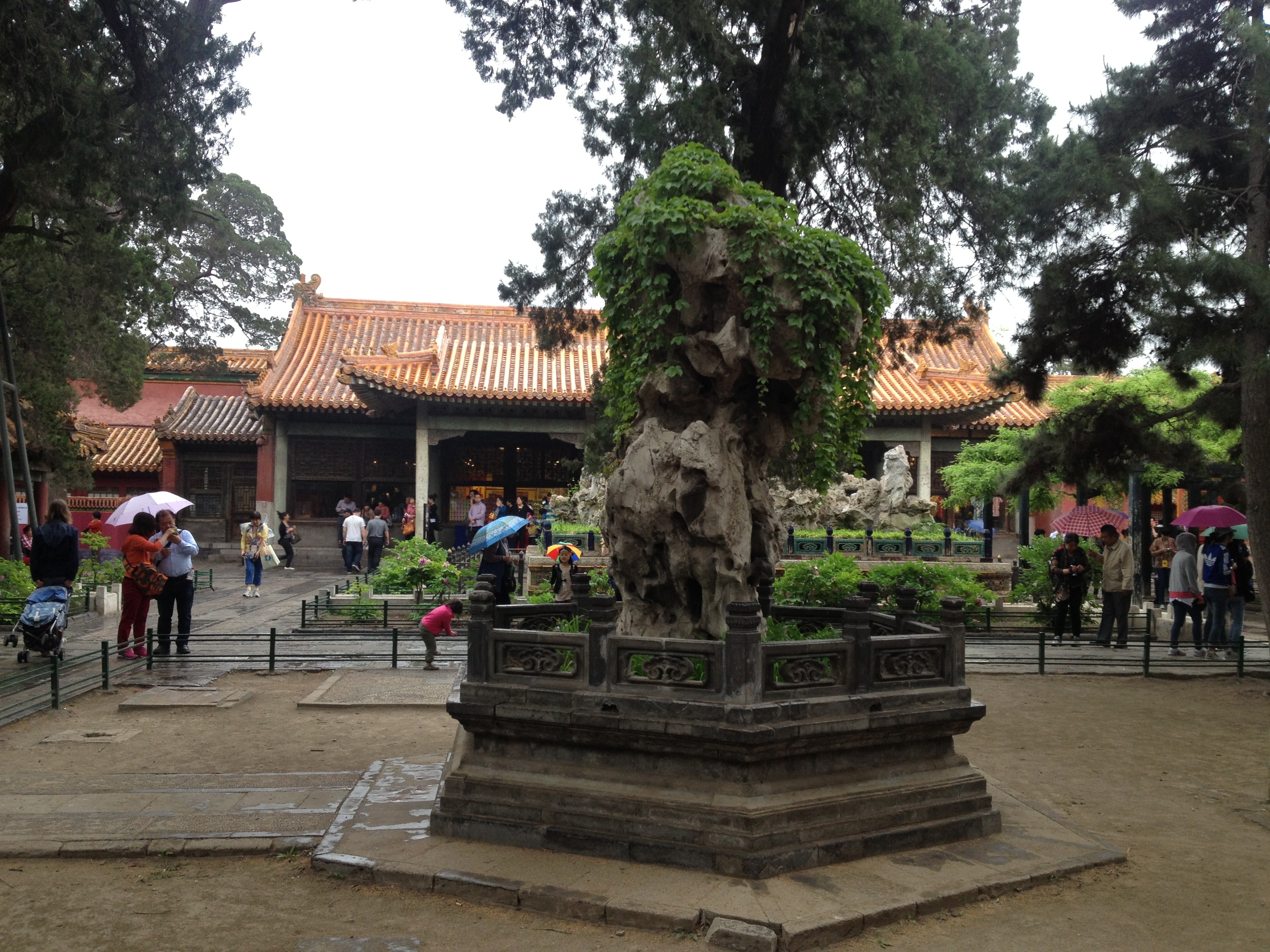
After having a wander through Tiananmen Square, we crossed the road to the Forbidden City. The name sounds more intimidating than it really is – it simply comes from the fact that the Forbidden City was former the home of the Chinese Emperor, and therefore the common people were forbidden from entering. Snow took us through the City, pointing out some of the finer details in the architecture and design, and telling us stories about the history of the buildings and the people who once resided in them. The Chinese royalty haven’t lived in the Forbidden City since 1912, and it was opened to the public about a decade later. I also noticed that many of the buildings had scaffolding around them, indicative of reconstruction and repairs that were underway. It reminded me of places like the palaces in Bangkok and Phnom Penh, and the temples at Angkor Wat. When you see pictures of them, they look like impressive buildings that have withstood the test of time, but in reality they are in a constant state of upkeep and conditioning, something that you can only really see if you visit the places for yourself – or see amateur photographs that don’t make it into the advertisements or guidebooks.

Standing with a lion statue inside the Forbidden City.

Standing with a lion statue inside the Forbidden City.

The Imperial Garden inside the Forbidden City.

The Imperial Garden inside the Forbidden City.

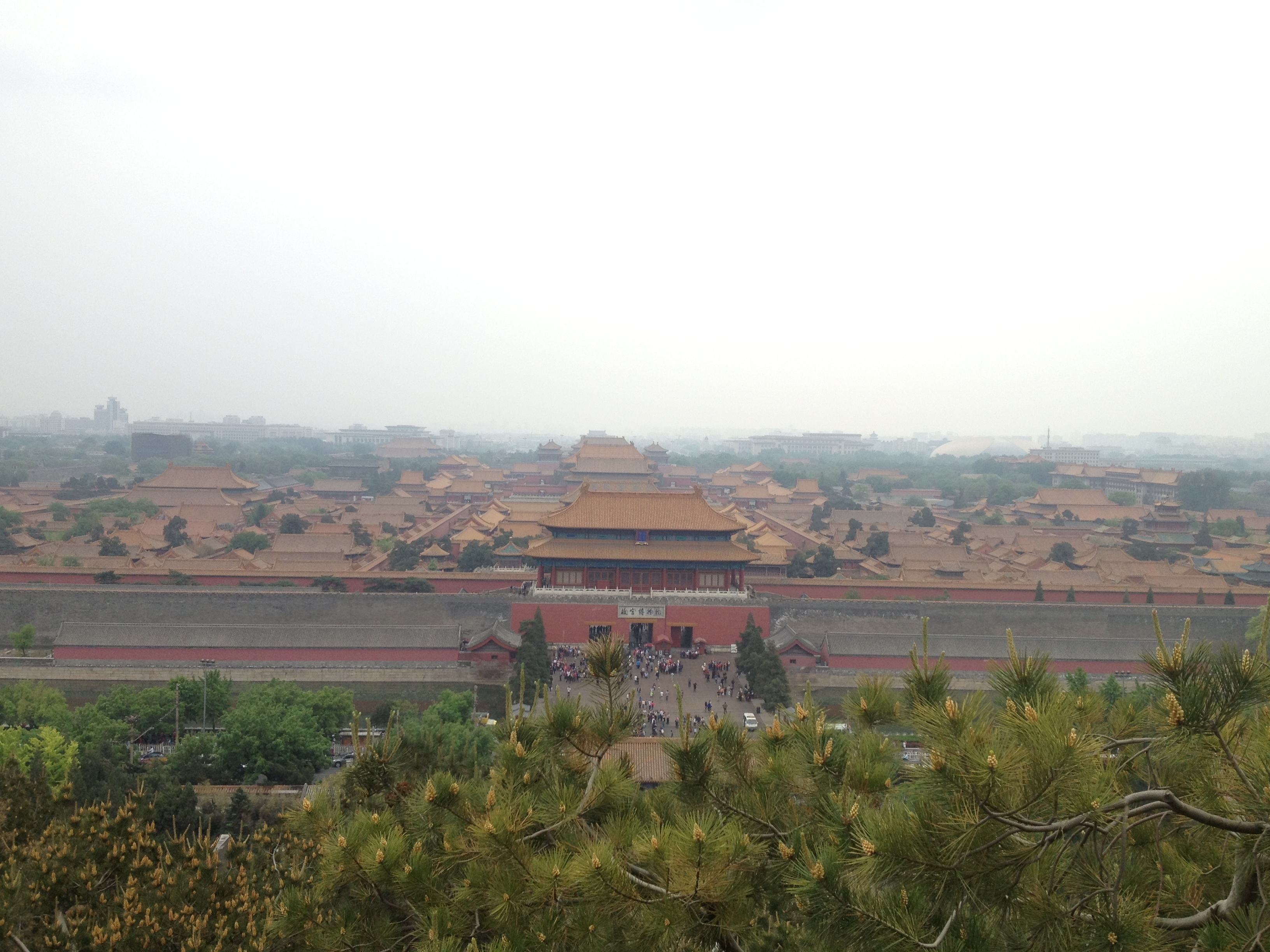
After spending a couple of hours wandering through the Forbidden City, Snow took us to a garden behind the city called Jingshan Park, where there was a tower from which you could have a wide, panoramic view of the Forbidden City and the surrounding areas of Beijing. From that vantage point we could see just how bad the city’s pollution really is. Part of it may have been due to the overcast weather, but there was still an undeniable thick smog that clogged the horizon. It was still an interesting view in its own weird way, and didn’t diminish the enormity of the city – buildings and civilisation stretched on in every direction, as far the eye could see.

The view of the Forbidden City from Jingshan Park tower.

The view of the Forbidden City from Jingshan Park tower.

***

After lunch, we caught the delightfully efficient subway system out west to visit the Summer Palace, another ancient building that housed different members of Chinese royalty throughout history. We walked along the banks of the artificial lake while Snow told us stories and explained different aspects of the landscape and buildings. Within the Summer Palace was a building called the Tower of Buddhist Incense, a large tower which also provided us with spectacular views of another area of Beijing. Even though the air was thick with clouds and smog, we could still see quite far into the distance over the lake, and the weather gave the whole place a sacred and mystical feeling.

Inside the ground of the Summer Palace - an area about 4 times the size of the Forbidden City.

Inside the ground of the Summer Palace – an area about 4 times the size of the Forbidden City.

View from the Tower of Insence.

View from the Tower of Insence.

One thing I began to notice, after having it pointed out by some of my other companions, was that Chinese people just love to get photos with white people – whether or not they have your consent isn’t really even an issue. As I stood at the top of the tower, looking down at the scene beneath me, a noticed someone standing a couple of steps below me. She was a Chinese woman who had been standing next to me just moments ago – she had repositioned herself and was now holding her camera up to take a photo of herself, clearly angled to have me in the background. My reaction was one of both amusement and annoyance, and I rolled my eyes as I side-stepped out of the picture. It wasn’t the first time it had happened – sometimes they’re even quite direct and simply approach you and ask if they can have their picture taken with you. Sometimes I oblige, other times I can’t be bothered, but I found it kind of rude to try and take pictures like that without even having the decency to be discreet about it. The local Chinese tourists love to pose and have their photo taken in front of everything – from the biggest landmarks to the most basic and insignificant details. I just wondered how they would react to one of us coming up and shoving a camera in their faces and calling it a holiday snap.

***

Our second day in Beijing would see us headed to the Great Wall of China, which is about a two hour drive out of the city. There are a lot of different locations where you can visit and climb the wall, but Snow had suggested we go to an area called Mutianyu, which was a little further than the other more popular tourist section of the wall, but was supposed to be one of the most beautiful spots. All I can say is if Mutianyu wasn’t the most popular section, I’d hate to see how many people were at the bigger tourist area. There were lots of groups of Westerners, but there was also huge amounts of domestic tour groups from other parts of China, including a massive group of school children.

There were two options for getting to the top of the Great Wall – riding a cable car or climbing the steps all the way to the top. Most of the group wanted to get the cable car, but I kind of wanted to walk. “I want to be able to say ‘I climbed the Great Wall of China’, not ‘Yeah I took a cable car to the top ’cause it seemed like a lot of stairs'”, I had said, and luckily Kaylah, one of the American girls, had shared a similar sentiment. So the two of us set off to climb the stairs while the rest of the group piled into the cable car. I quite enjoyed the walk up with Kaylah, because it was the first time I’d really gotten to get to know someone from the group one on one. Since we had an uneven number of people in our group, I had ended up being by myself in my room at the hotel. While I loved the little bit of privacy, it meant that I’d only really interacted with my group members in group situations. I hadn’t really made new friends or gotten to know anyone since meeting Laura back in Cambodia, so it was fun to talk to Kaylah and get to know a little more about each other, making jokes here and there and motivating each other as we made the steep ascent up the hill to the Great Wall.

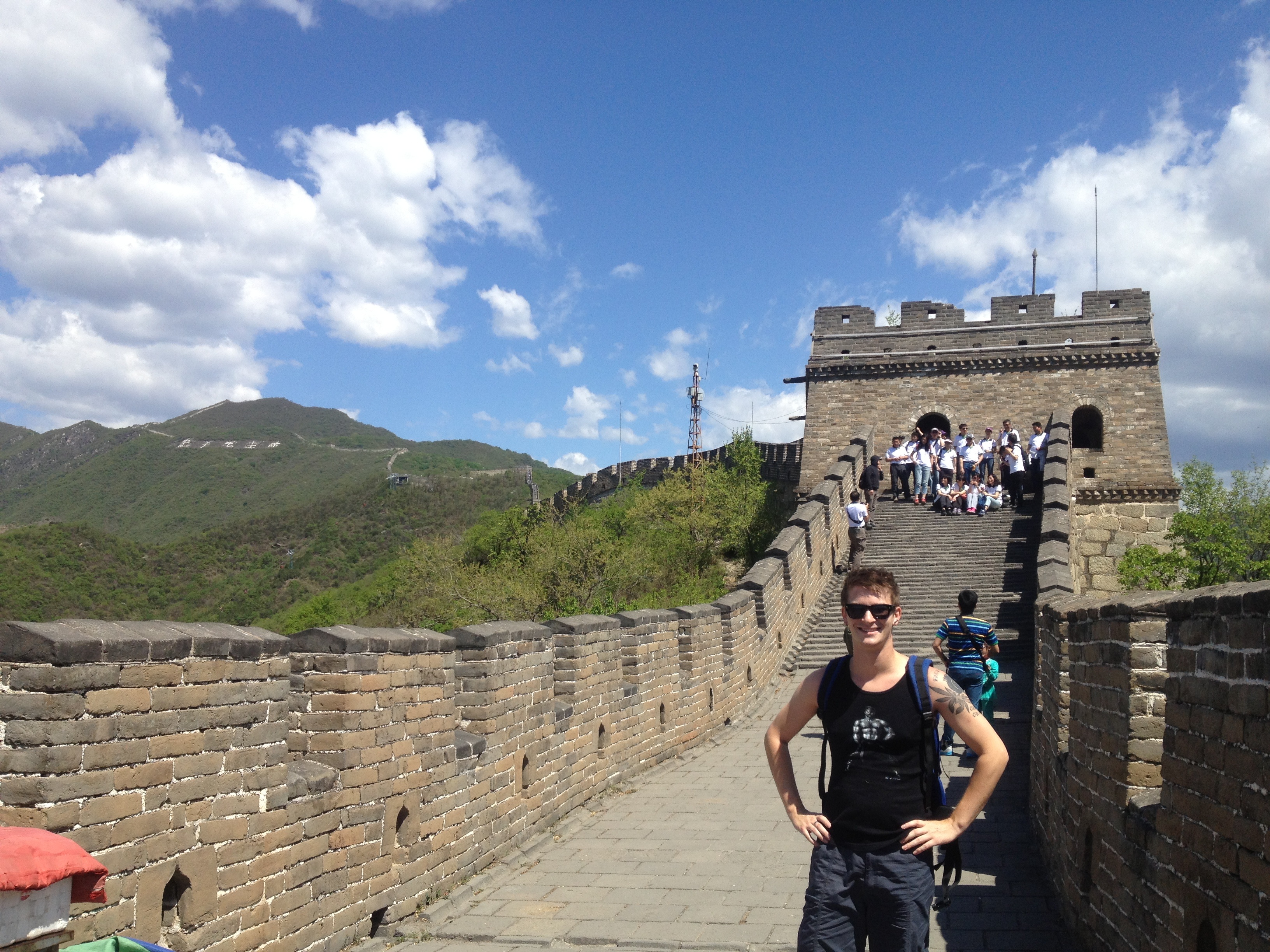
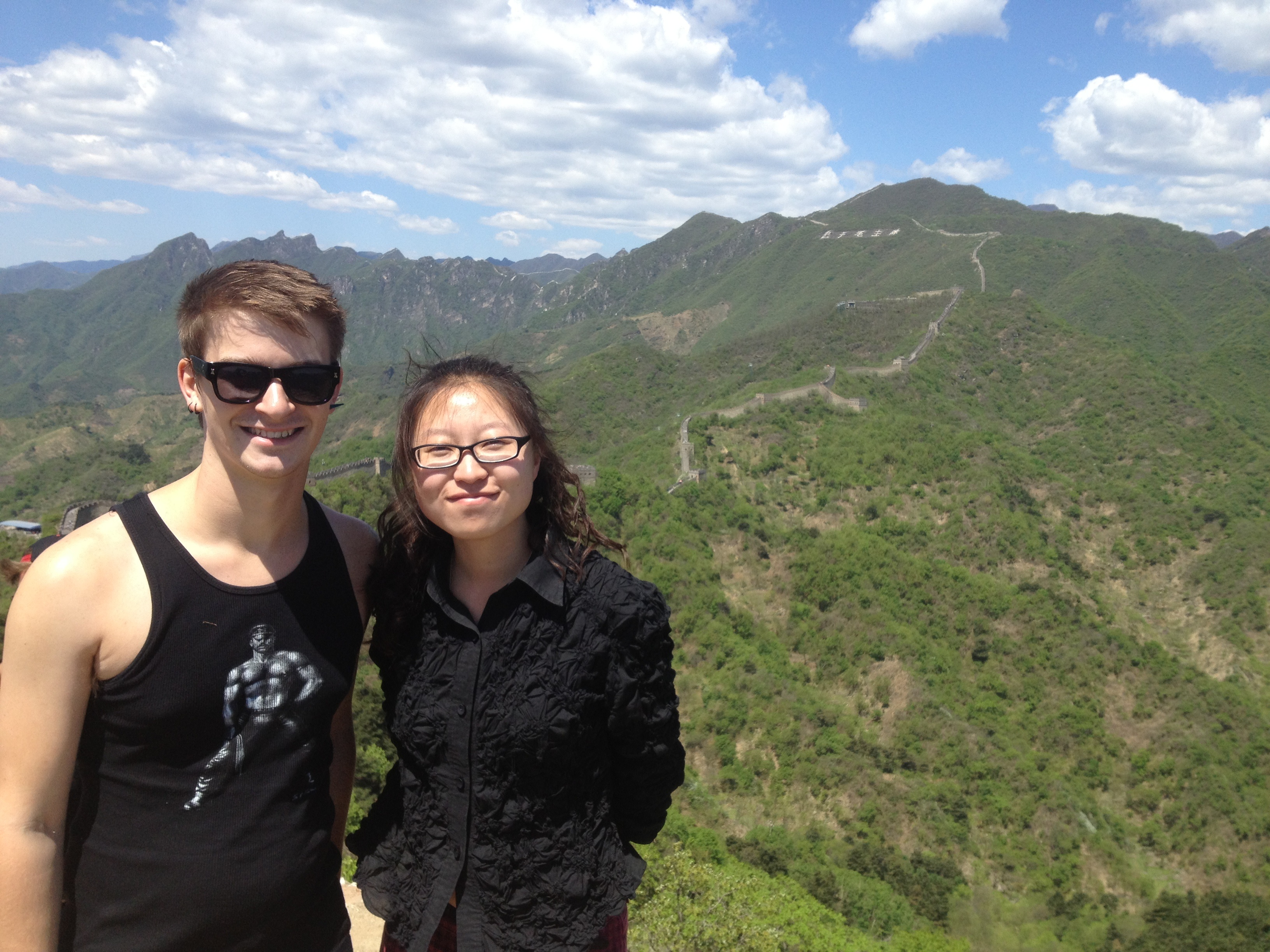
Snow had said it would take about half and hour, but together Kaylah and I managed to conquer the steps in just under twenty minutes. We thought it was an impressive achievement, regardless of how out of breath we may have been once we reached the top. We stopped for a moment to catch our breath, and take some photos of the magnificent view. It was completely different from the kind of views we’d had back in Beijing – the sun was shining brightly in a clear blue sky, and you could see the Chinese mountains and countryside stretch on in all directions. The wall itself was an interesting structure – after the trek from the ground level up to the top, I hadn’t expected there to be more stairs. But as the wall snaked up and down the contours of the hill, there were old flights of stairs going up and down, made even more peculiar by the fact that many of the flights tilted either left or right, as well as having vast variations in steepness from flight to flight. It made for an interesting and somewhat challenging walk along the wall, though the real challenge was trying to take a photo without a horde of other tourists in the picture.

Feeling very proud of myself after claiming the Great Wall of China.

Feeling very proud of myself after claiming the Great Wall of China.

At the highest point of the wall with our guide, Snow.

At the highest point of the wall with our guide, Snow.

We walked along a section of the wall, enjoying the views and taking photos, until we caught up with the rest of the group who were on their way back down. Kaylah and I continued on until we reached the highest major outpost that was accessible to tourists, and then made our way back to the bottom of the wall. However, instead of walking down, we decided to take the fun option and ride the toboggan down. It was a similar set up to theme parks in Australia like Jamberoo – a metal half-pipe tube that snaked down the mountain, which you rode down on a toboggan with a single lever to control acceleration and breaking. It was a fun way to reward ourselves after all the walking we’d done on the way up, even though we were slightly stifled by the Chinese tourists who weren’t as enthusiastic about gathering speed as Kaylah and myself. We just laughed it off and puttered along behind them, enjoying the fresh air, amazing views, and the fact that we’d just walked along one of the great wonders of the world.

***

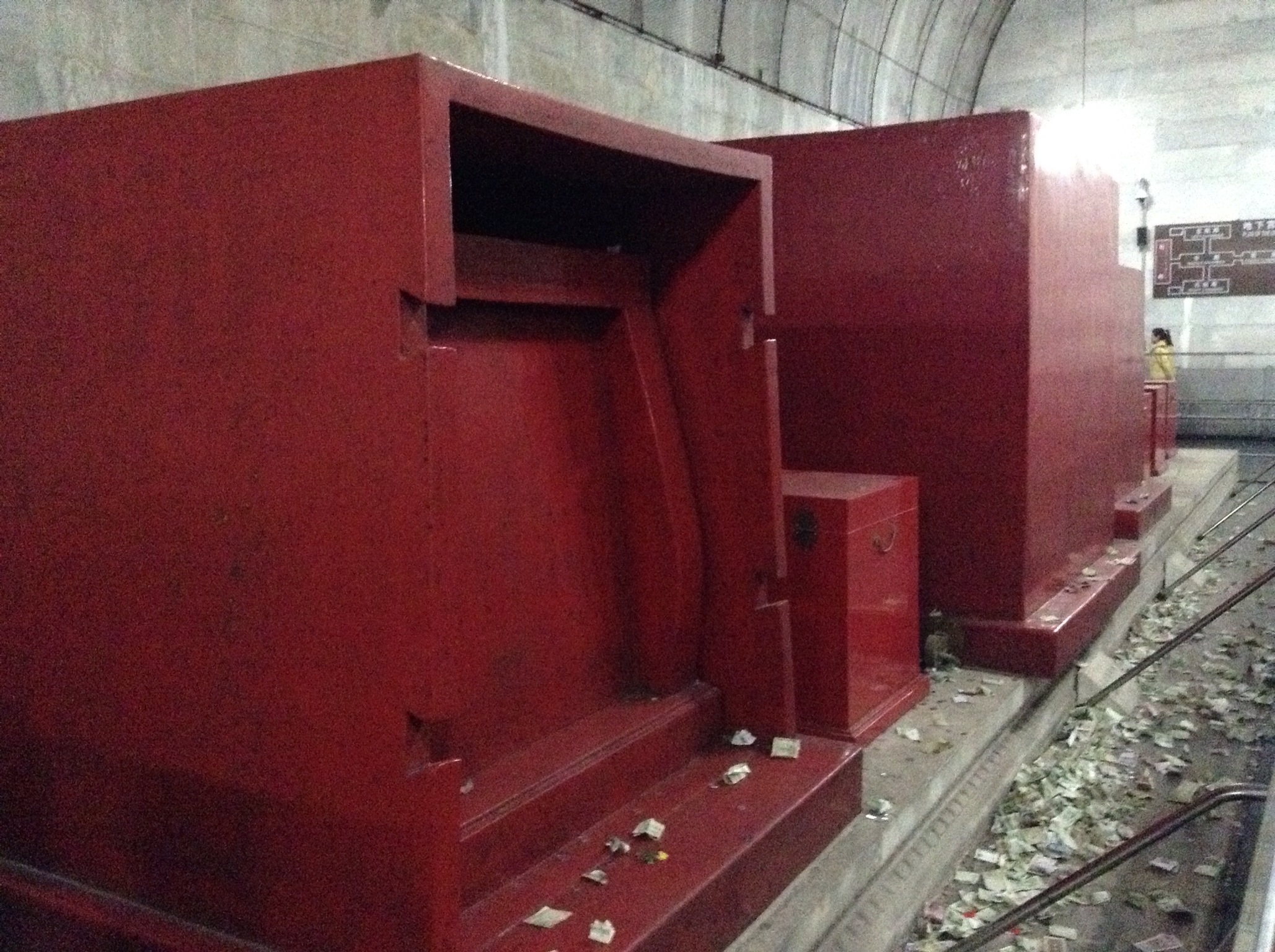
The last stop of the day was the Ming Tombs, a huge mausoleum complex where thirteen of the sixteen emperors of the Ming dynasty were buried. We went down into the tombs to see the coffins, and visited the several exhibitions and museums, before piling back onto the bus and heading home. While we’d had two full days of sightseeing in Beijing, looking at maps and guidebooks and seeing all the other things we didn’t see made me realise just how huge a city Beijing is, let alone the enormity of the country of China. I’d had a couple of unpleasant experiences, but on the whole my visit to Beijing was interesting and enjoyable. Despite that, I definitely felt I was ready to get up early the next morning and begin our trek to Mongolia.

Huge coffins in the Ming Tombs.

Huge coffins in the Ming Tombs.

Hello Panda: Beijing Zoo

After my first night in Beijing, I still had a full day before meeting my tour group at the hotel in the afternoon. I knew that once I met up with them, most of us would want to do the major things in Beijing such as the Forbidden City and Tiananmen Square, so I decided to find something else to do that might not as be as popular among the group. After collecting a city map from hotel reception and studying a guide to the Beijing subway system, I discovered that there was a station not too far from the hotel, and also one located right next to the Beijing Zoo. Figuring it would be a quick and easy expedition to manage by myself, I set out into the streets again to tackle Beijing in the daylight.

***

Getting to the first station was a mission in itself. I thought I was going the right way, following the major roads, but I ended up at Wangfujing Station, which was in the complete opposite direction from my desired destination of Tiananmen East Station. It was only one stop difference, so I just considered myself lucky I’d found a station at all and descended into the underground subway system. Every entrance point has a security check and bag scanning conveyor belt, just like going through customs at an airport. When I finally made it down into the station, I tried to buy a ticket to Beijing Zoo Station. It took my a while to realise the fare for the subway was just 2 yuan – less than a dollar – no matter where you were going. The train system was also clean, fast and efficient, much like the public transport I’d used in Bangkok and Singapore, and I found myself internally cursing Sydney for still not lifting its game. I had one stop to transfer to a different line, but soon enough I had arrived at the zoo.

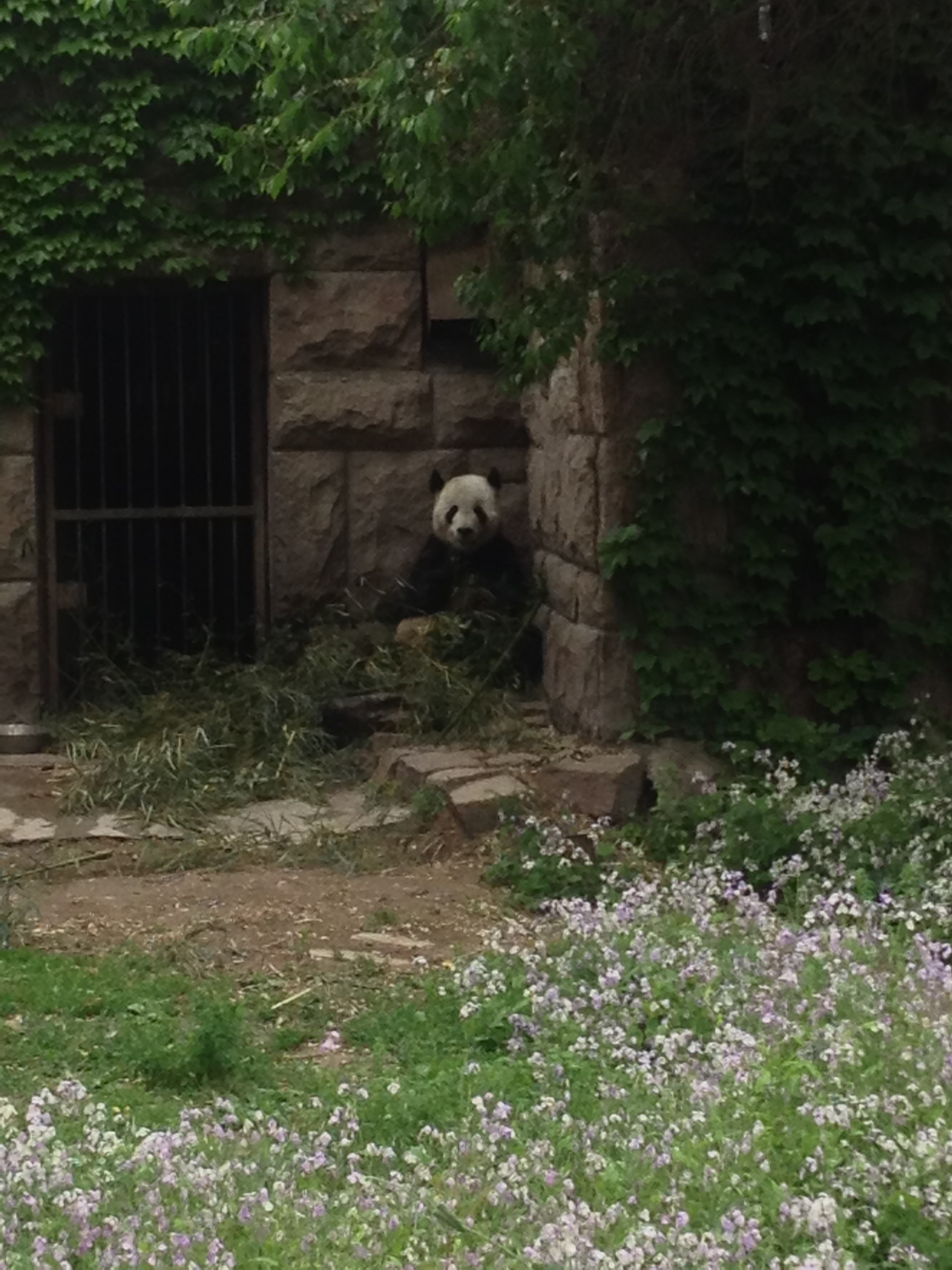
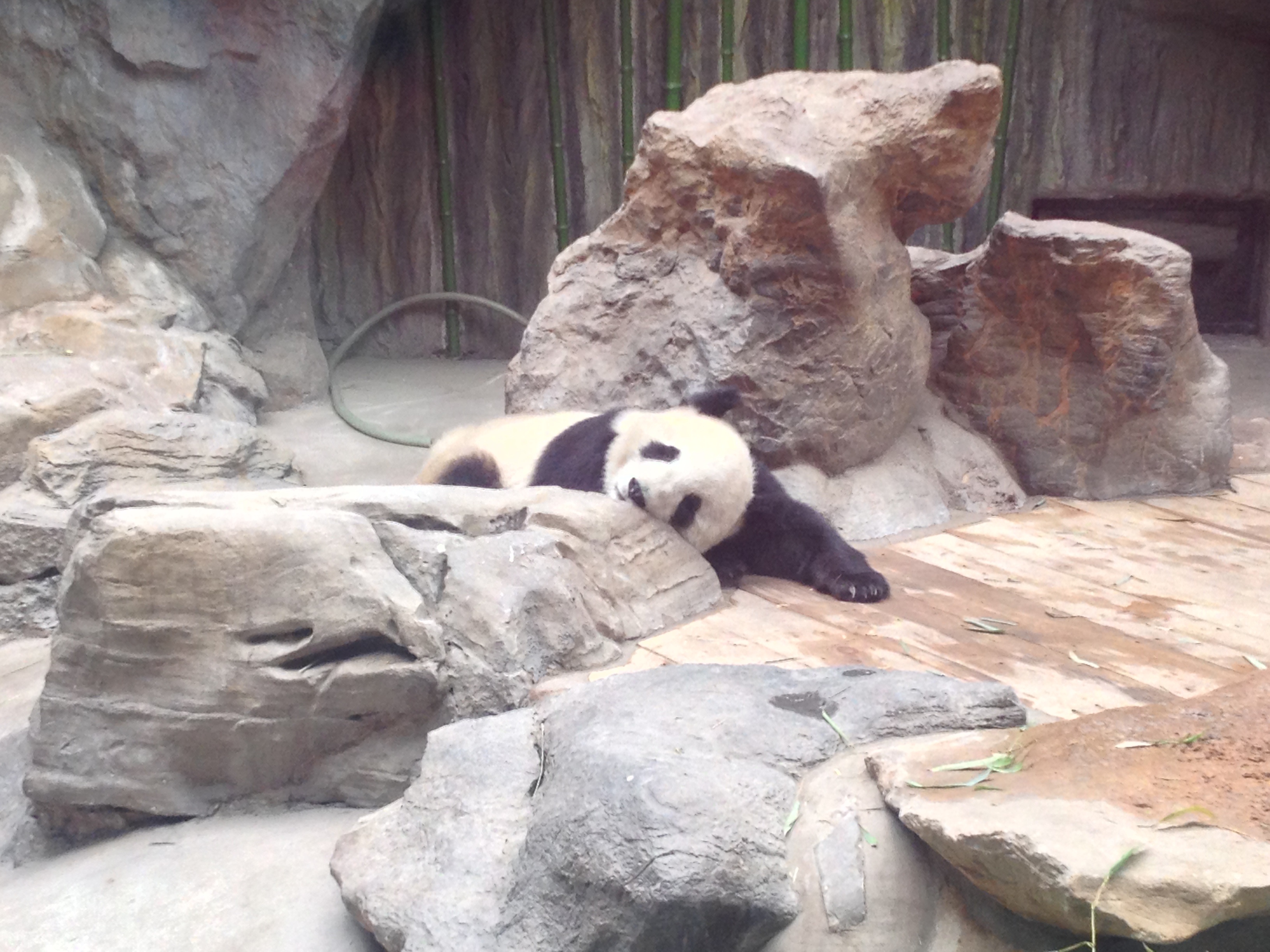
Given that I was in China, it was very clear as to what was the major attraction at the Beijing Zoo. On top the entrance fee into the zoo, there is an additional charge for admittance into the Panda House – the exhibit that in home to the zoos five panda bears. Once you make your way past the billboards of panda history – of which the English translation was almost too painful to read – and the scores of iconic panda merchandise, you can actually get a glimpse of the animals. I have to admit they are cute, and their colouring definitely lends them a cuter appearance and reputation that almost all other bears lack. Yet like most animals in zoos, they didn’t do a great deal. Even wild pandas are known for being particularly lazy, so I wasn’t surprised to find that all the pandas were either sitting by themselves, chewing away on bamboo, or sleeping. All around me were crowds of Chinese tourists, squealing with excitement and posing for photos with the pandas in the background, and while I appreciated the rare sight, I didn’t exactly share their enthusiasm. After all, for all that the bear was doing, it could have easily swapped places with me in a day in my life back home, and I don’t think anyone would have really noticed.

Eating panda.

Eating panda.

Sleeping panda.

Sleeping panda.

***

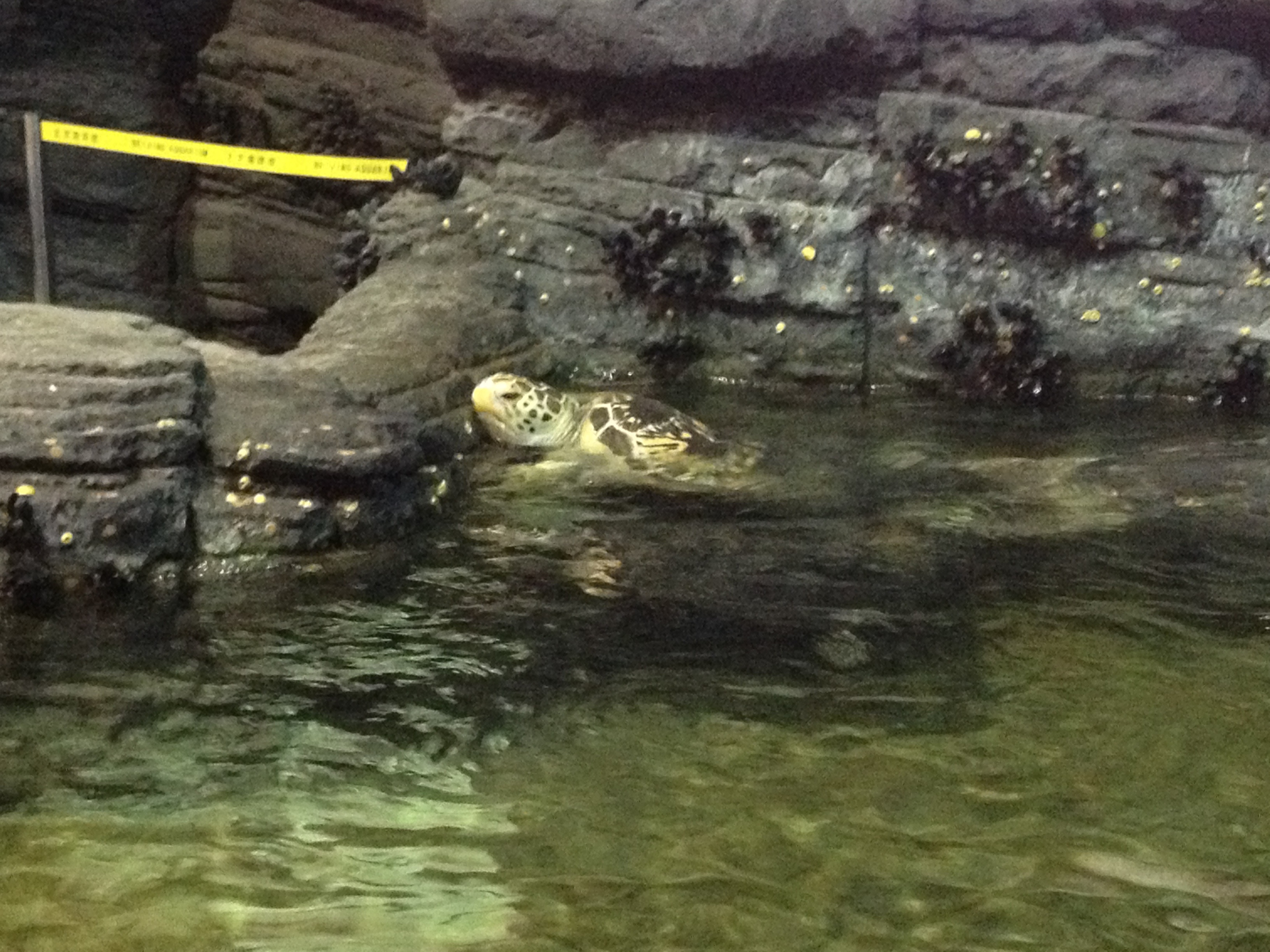
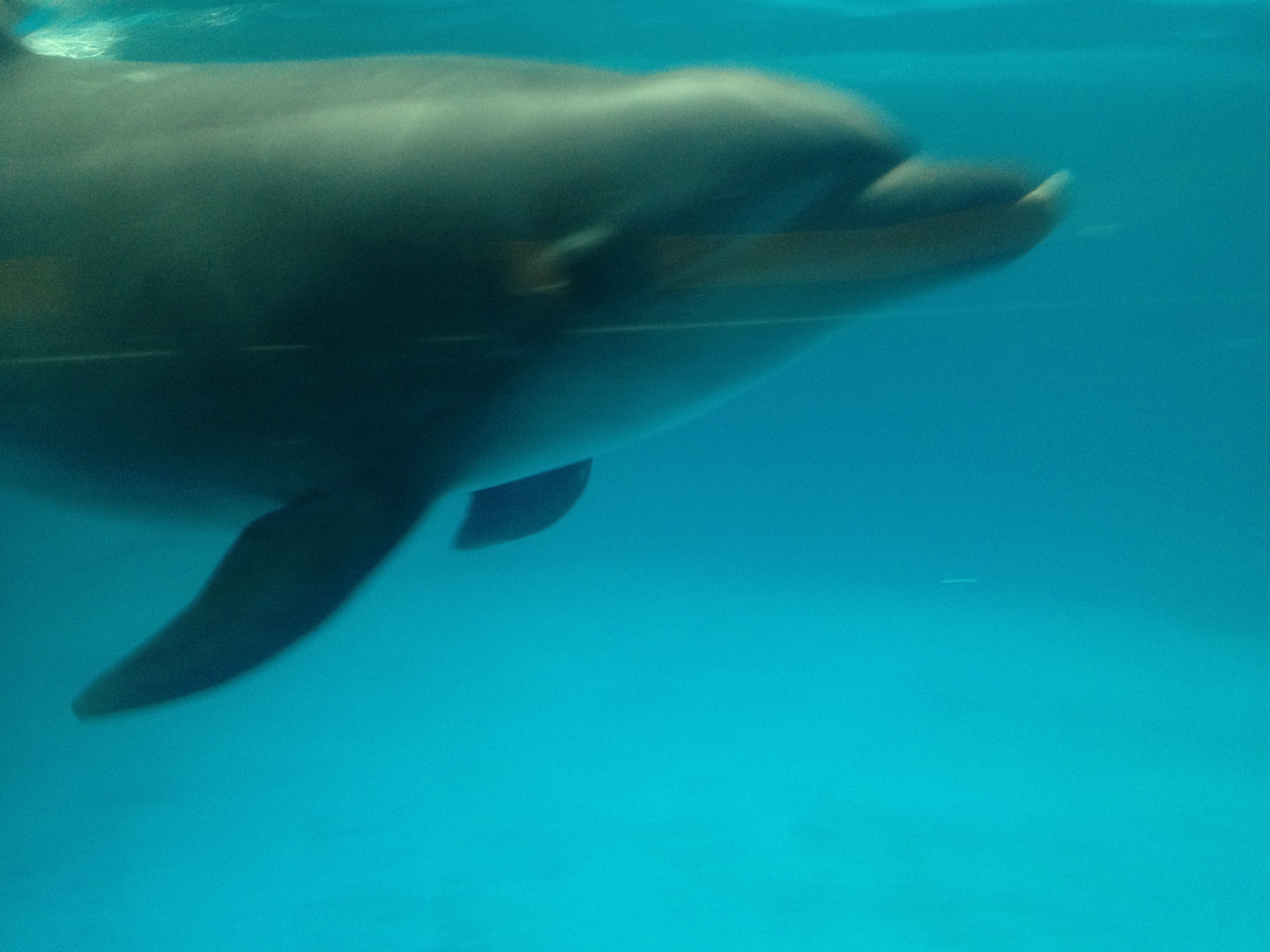
The rest of the zoo was, to be completely honest, quite depressing. There were some nice sculptures and some beautiful scenery, but on the whole the zoo was quite dirty. A lot of the animals exhibits looked quite inadequate too. While the pandas were treated to luscious floral fields, I found wolves who were living in no more than a red dirt landscape with a few burrow holes, and no real space to run around. One on the two pools in the polar bear exhibit was a foul green colour, though one of the bears did put on a bit of a show swimming around in the other, less filthy body of water. The highlight of the whole complex was probably the aquarium – obviously newly built, and incurring another entrance fee of its own. It provided the chance to get particularly close to some of the marine animals, though again I wondered if there was adequate space for some of them – four turtles circled around a small, shallow rock pool, seemingly trying to mount the rocky walls and escape. There was also a show with the beluga whales and bottle nose dolphins, and though I couldn’t understand any of the commentary, I watched and enjoyed the tricks that they performed, including synchronised jumping, and one of the animal trainers riding a dolphin like a surfboard.

The wolves in their less than adequate exhibit.

The wolves in their less than adequate exhibit.

Polar bear swimming in the cleaner of its two pools of water.

Polar bear swimming in the cleaner of its two pools of water.

Turtle almost trying to escape from it's exhibit.

Turtle almost trying to escape from it’s exhibit.

The dolphins still seemed quite enthusiastic about life, at least.

The dolphins still seemed quite enthusiastic about life, at least.

Synchronised jumping in the dolphin show.

Synchronised jumping in the dolphin show.

***

I’ve never known how I really feel about zoos. I know they play important roles in the conversation of endangered species, but I sometimes feel great sympathy for the poor animals locked away inside less than adequate exhibits. When I visited the Western Plains Zoo in Dubbo last year, I learnt that some of the animals that won’t breed are castrated to keep them under control. I was horrified – I pictured some science fiction scenario in which humans were the animals in a zoo, and myself being castrated because I refused to mate with the other female “animals”. I found it a little disturbing, and have ever since found it hard to pinpoint where zoos stand on my moral compass. Pandas might be content to sit around and eat and sleep, but my heart goes out to those captive wolves, locked in a glass box when they should be running free in the wild.

Back to Square One: Life Lessons in Beijing

As the captain announced our descent into Beijing, I peered out the window and down at the thick layers of cloud that the plane was heading into. As we emerged from the other side of those clouds… well, it’s hard to be sure if we ever did. I’d heard about the high levels of pollution in Beijing, and as I stepped off the plane and looked out onto the smoggy runway, it was clear – unlike the air – that these tales had been no exaggeration. It took me a while to get out of Beijing airport, considering you have to take a short train trip to get from customs and passport check to the baggage claim area, but after about an hour I was on my way in a taxi. As we drove along the highways and into the heart of the city, I sat staring out the window in something close to a state of shock.

The sky was a distant memory, hidden behind a thick layer of cloud and pollution. It could simply have been overcast, except there was no chill in the weather, nor did the air feel particularly humid. But it was a different kind of heaviness, a weight that hung in the air unlike anything I’d ever felt before, and something that I have great difficulty trying to explain. But every now and then the blanket of smog would ease up a little, and the glowing disc of the sun would be visible through the haze, burning a deep, demonic orange and bleeding into the sky around it. Buildings and warehouses and construction sites whizzed past me on the roadside, and even the regular clusters of trees and other greenery didn’t help to diminish the feeling that I had landed in some kind of post-apocalyptic industrial realm. Even with a population of some 18 million people, all I could see was the gridlock vehicles on the highway, feeling slightly alone in the big grey smog. As far as first impressions go, I guess Beijing was living up to its intimidating reputation.

The view of the smoggy streets from my taxi.

The view of the smoggy streets from my taxi.

***

The next leg of my gap year was going to be a tour – the bucket list-worthy Trans-Siberian Railway trek, starting in Beijing and ending in St Petersburg, Russia. I had flown into China a day early, and had a full 24 hours to spend in the city before meeting my guide and the rest of my tour companions the following afternoon. After settling into the hotel room and taking a quick rest, I decided to go for a wander and see what I could discover, and make my comparisons between Northern and South-East Asia.

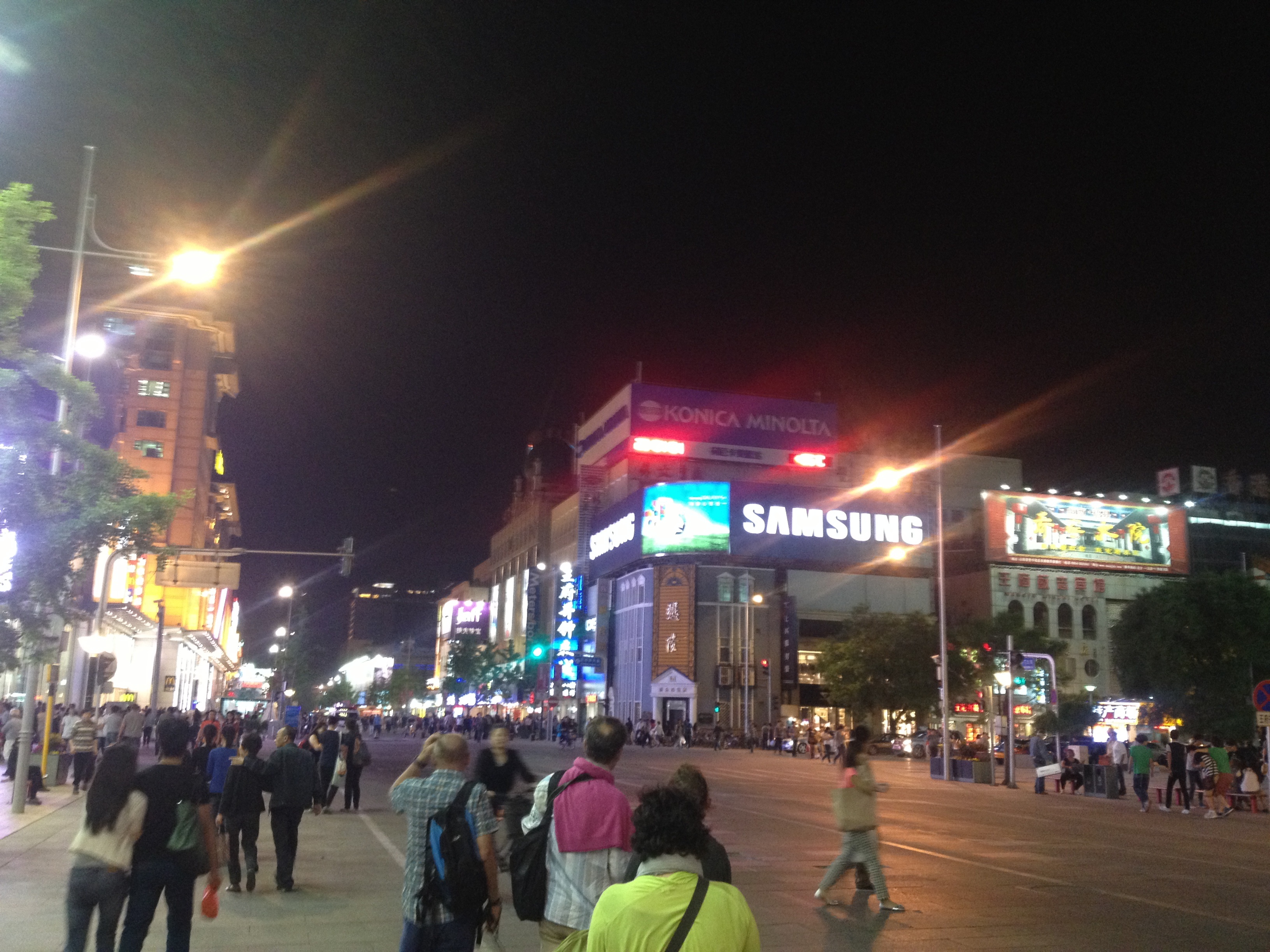
A short walk from where I was staying found me at the beginning to Wangfujing Street – one of the most famous and busiest areas in Beijing. Though of course, I had set out into the streets with nothing more than my trusted sense of direction and definitely without a map, and had stumbled across the strip by accident. I have to admit, it didn’t look much like what I expected from China. There was obviously a huge Western and/or American cultural influence on this particular street, with an Apple Store, Forever 21, and the Beijing Foreign Language Book Store. It kind of reminded me of the main strip of Pitt St back in Sydney, except it was four times as wide and probably at least ten times as long – I can’t say for sure, since I never made it to the end. There was the occasional car or bicycle nudging its way through the crowds, but for the most part it was a street heavy with pedestrian traffic.

The corner of the main crossing at the start on Wangfujing Street.

The corner of the main crossing at the start on Wangfujing Street.

Wangfujing Street.

Wangfujing Street.

After a short time I was approached by a small Asian woman, probably in her mid-twenties, asking me where I was from. The cautious, mistrusting nature I had developed in South-East Asia suddenly kicked in. Until now, I had just been thinking how less geared towards tourists this place had seemed. There were a few souvenir shops and English speaking shops and restaurants, but there wasn’t someone on every street corner trying to sell you things or screaming at you to get into their taxis. I’d also read that Chinese people are often just naturally curious about Western people, so as she asked a few more questions about myself, I began to slowly warm up to her. She told me her name was Charlie, and offered little bits of information about herself in return to all her questions. I let her walk along with me as wandered down the street.

“What are you doing? Are you shopping?” Charlie asked me as I gazed at the buildings round me, the neon lights developing their own glowing aura within the clouds of low-hanging pollution.
“I’m just looking for something to eat, actually.”
“Ahh… You want to try the night markets? They have some very good street food.”
“Umm…” I hesitated for a moment, but so far Charlie had seemed relatively genuine. Surely there was no harm in going for a little walk, right? “Sure, okay.”

Wangfujing is a busy street full of lights and colours.

Wangfujing is a busy street full of lights and colours.

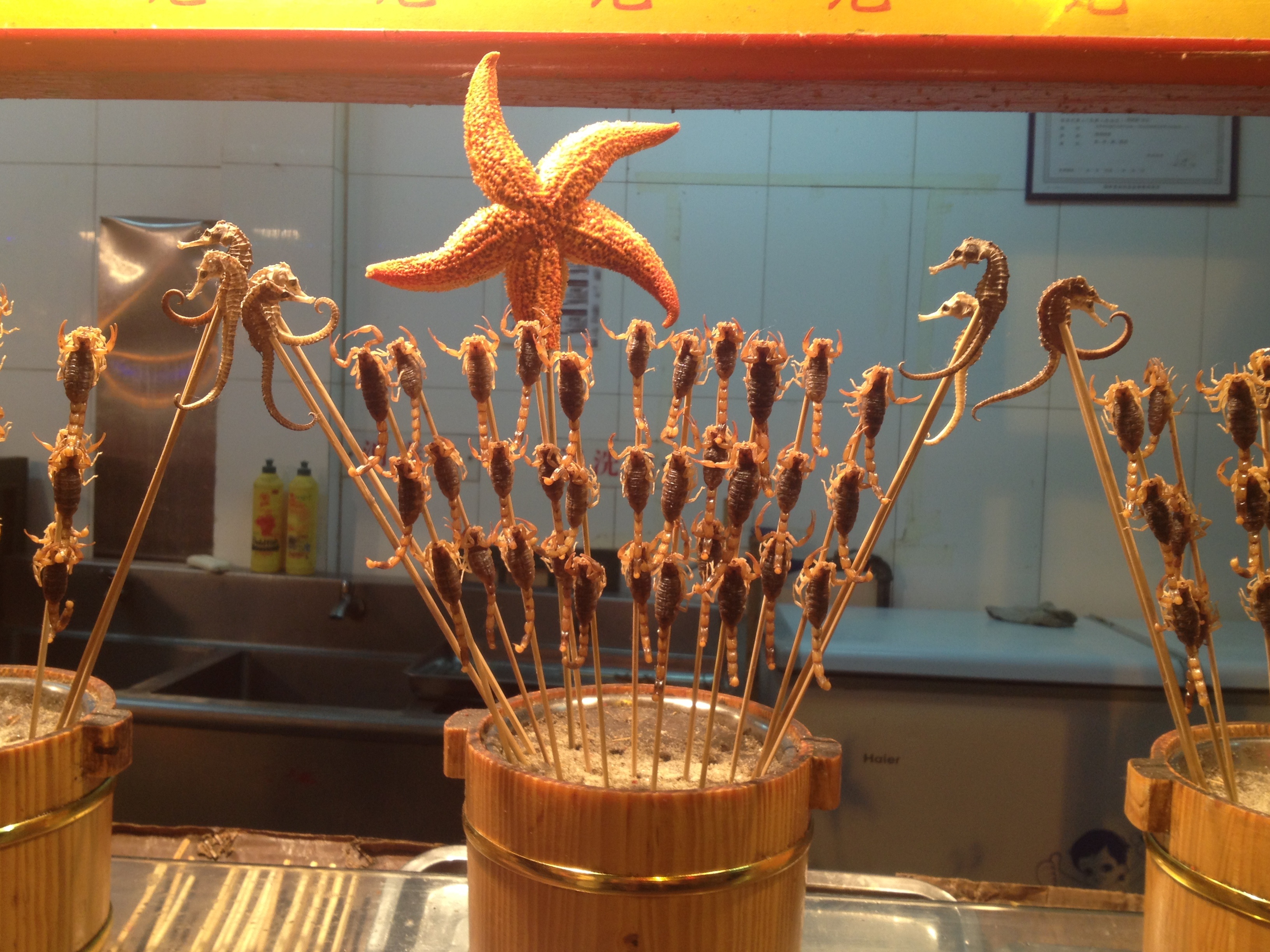
Charlie lead me a short way to a street joining onto Wangfujing, lined with market food stalls on their side. The delicacies were like Khao San Road on crack – there were starfish, dried seahorses on skewers, and even scorpions that were so raw that their legs continued to wriggle and twitch. While I’d been game to try tarantulas served in a Cambodian restaurant, the street food is just one step too far for me, so I settled for a cob of corn. We wandered for a little bit longer, and Charlie suggested finding a place to sit down for a cup of tea or coffee. By this stage I was starting to feel a little more comfortable, so I followed her through another street and into a small tea house. There we sat and chatted for quite some time – we talked about ourselves, the kind of music we like and our different hobbies, about travelling and where we’ve been, and where we want to go, about China and the differences in our cultures. We had two pots of tea, and Charlie explained to me the subtle differences in the flavours, and the Chinese delicacy that is a good brew. Afterwards we also had a glass each of Chinese wine.

The street markets felt a little more touristy than the rest of what I'd seen of Beijing.

The street markets felt a little more touristy than the rest of what I’d seen of Beijing.

They have some bizarre street food in Beijing.

They have some bizarre street food in Beijing.

I was just thinking about how I hadn’t had wine in a little while, since the beer had been so much cheaper in South-East Asia, when our bill finally arrived. The waitress handed it to Charlie.”Oh, it’s not too much. Do you want to grab this?”
I have to take some of the blame – I wasn’t looking at the menu, so I failed to look the prices as Charlie had ordered. I was a little taken aback by the way Charlie just assumed I was going to pay, and when I looked at the bill and did a rough conversation from Chinese yuan to Australian dollars in my head, I nearly spat out my mouthful of wine.
“What the hell, Charlie? This isn’t cheap!”
She looked surprised, and stammered through her words for a moment. “This isn’t too much, this is what it usually costs for two people.”
I was skeptical. The total amount could have got two people blind drunk in a moderately priced bar in Sydney – it was a lot more than I was prepared, or willing, to pay for two pots of tea in China.

“Can we split it?” I’d asked her. Not for the first time on this trip, I cursed myself for going along with a girl on what could easily be interpreted as a date. I was not going to foot the whole bill for another night out, and especially not this one.
“Oh, I only have 100 yuan,” Charlie said as she offered me a few notes from her wallet. It was approximately $15, and only about a tenth of the total bill.
“That’s a start,” I mumbled to myself as I snatched the notes up, abandoning any pleasantries or niceties. The whole thing had gone pear-shaped, and only now – obviously too late – but my suspicions started to kick in. I even considered just walking out without paying, but I didn’t want to risk causing any more trouble for myself.

So I paid and stormed out of the tea house, Charlie hot on my heels.
“I’m sorry, I didn’t know,” she said as she shuffled along beside me.
“Know what? How much if would be?”
“I’m sorry, I just thought that Australian are wealthy, I just wanted to show you some nice tea and Chinese culture.”
“I’m a traveller, Charlie. I’m on a budget. I don’t have that kind of money to waste on tea.” She almost seemed offended, as though I was devaluing her culture or tradition, but I refused to believe that Chinese tea should have costed so much in China.
“But, you can just ask your father to send you more money, can’t you?”
I was shocked. “Ahh, no? My dad doesn’t give me free handouts to waste on expen-”
“But you’re his only son!” Again, I was almost shocked into silence. Almost.
“Well I hate to break it to you but that’s not how it works in Australia!”
“I’m sorry, I don’t know Australia! I only know China!”

It was a slightly profound moment. Here we were, voices raised and arguing in the middle of Wangfujing Street, and suddenly I was the one who felt bad for Charlie. I was getting quite rude and annoyed, but I hadn’t even considered that maybe she was just acting on the limited knowledge that local Chinese people seem to have of Western culture and customs. Maybe all abroad Australians are very wealthy compared to her. The bill had been paid for, yet I suddenly felt guilty for berating her in an attempt to take out my anger to feel better about the situation.

I let out a long sigh. “Okay. It’s fine, just forget it.”
“I’m really sorry, Robert. I had a really good time chatting to you. Maybe we can go to karaoke, I can buy you a beer?”
I still couldn’t figure her out, but I wasn’t going to risk my wallet taking another beating. “I should really get back to my hotel now, I’m feeling pretty tired.”
We awkwardly bid each other farewell after our argument, and I quickly paced home through the backstreets of Beijing, the sense of excitement I’d had from being in a new city replaced with the awful feeling of having another country and currency get the better of me.

***

The following afternoon I met with the tour group I would be travelling the Trans-Siberian with, and our guide gave us a run down on the basics of the city. As she warned us about some of the potential tourist traps and scams, I hung my head in shame as she outlined a scenario so similar to the one I had experienced last night – it was almost as though our guide had been there and was recounting the scene blow by blow. I’d been warned that there are lots of false taxi services at the airport who will try to charge you exorbitant amounts to get from the airport to the city, and I had been so proud of myself that I had managed to spot and avoid them and make my way to the hotel in a legitimate taxi. So it was rather deflating to learn I had quickly fallen into the very next scam to come along after that.

It turned out to be more than just a shallow than a culture clash, but I guess I leant something from the experience in the end. In these unfamiliar places, learn to trust your suspicious instincts. Though I can only hope that every tourist trap I do fall for will better prepare me for avoiding the next one.

Reflections on South East Asia

After my stressful trip back to Bangkok, I spent my last days in Thailand with Rathana, just chilling out and doing relatively normal things – going out for dinner, having a few drinks at a sky bar, watching a movie, doing a bit of shopping and chilling by the pool. When I think about it, it’s those little things that I really enjoyed about my time abroad. While it is fine to be a big ol’ tourist and gush over temples and beaches and resorts and all that jazz, I love the feeling of spending time just being in a foreign city and really living there, doing all the regular stuff as well as all the typical holiday things. I haven’t really figured out what I want to do with my life when, God forbid, this incredible journey comes to an end, but I must say that I’ve really developed a taste for living abroad. That issue is a can of worms in itself, though, and for now I just want to reflect on some things I’ve noticed, lessons I’ve learnt, and the life I’ve experienced during my time in South East Asia.

***

One thing that I was expecting, yet still deeply shocked by, was the prevalence of poverty in these countries. It broke my heart to see so many children in the streets, whether it was the boy in Saigon performing gruesome tricks such as breathing fire, chewing hot coals and eating razor blades, then approaching the crowds of beer-drinking tourists for a donation, or the little girl following me through the temples of Angkor Wat desperately trying to sell me five fridge magnets for a dollar, or the little girl carrying her baby brother, standing next to my table at a cafe in Siem Reap pleading, “Please, I don’t want money, I just want food.” It makes you want to run to the ATM and empty your accounts into their starving little hands, but I’ve been warned by so many about the poverty traps that evolve from giving these kids money, encouraging the very behaviour that keeps them on the streets and out of school. Back in Ho Chi Minh City, Allistair told me he sometimes gave them a little bit of money, but made them promise that they would get off the streets and use the money to go to school. Yet I wonder how many kids actually listen to his advice, and how many just see it as another reason to continue with their begging.

Other people suggest that sitting them down and actually buying them a meal is a thousand times better than giving them money could ever be. However, I had a rather unpleasant experience in restaurant in Phnom Penh when it came to offering food. I had ordered pizza and a beer, and was sitting on a table facing out into the street, catching up on some blog posts and sending a few emails home on my iPad. Cambodia is full of people selling things on the street, whether its sunglasses, books, bracelets or marijuana, but it always tugs your heart strings a little to see children working on the streets like that. So when a little girl failed to interest me in the bracelets she was selling and her eyes fell hungrily onto the pizza in front of me, I finally caved in. “Sure,” I said with a smile, “I’m probably not gonna eat the whole thing anyway.” I pushed the plate slightly in her direction, and she leant over and lifted a cheesy triangle out and took a bite. What I hadn’t anticipated, however, were her three smaller companions all wanting their own pieces of my pizza too. “Oh, ah… Sure, take two,” I mumbled mostly to myself, because the little boy hadn’t waited for my permission to take a piece. I still wanted to have some of the pizza myself, so after that I pulled the plate back towards myself and took a bite out of one of the remaining pieces. Another little boy stood staring at me expectantly.

“Can’t you guys share?” I asked, motioning to the second piece that the first little boy had taken. I realise how awful and selfish that sounded, but I was trying to strike a balance between enjoying the food I’d ordered for myself and helping these little kids out. Yet they seemed so angry when I refused to give them any more of my pizza. “Look what you have, you have so much!” they yelled, pointing at my iPad and my beer. I’d have felt a little more guilty if they hadn’t started to harass me so much, with one of the boys sneaking around into the restaurant and behind my chair. I pulled my backpack close under my legs, huddling over my table, and I felt like someone with a bag of hot chips who had just been discovered by a flock of seagulls. The boy got so bold as to reach over and touch my iPad – I’m not sure if he was hoping to achieve anything, perhaps disturb the file I was working on, or simply just annoy me. He failed in the former, but definitely succeeded in the later. I’m not proud to admit it, but after that I ended up losing my temper and swearing at them, in an attempt to scare them off. Yet the girl, who seemed to be the leader of the small group, only came back with a greater fury, spitting my curse words back at me. I was in shock – how did what I thought was a simple gesture of kindness turn so bitter so quickly? The ordeal finally ended when the restaurant owner came out and had a word with the kids in their local tongue, and I relocated to a table further inside the restaurant. It had been a prime example of biting the hand that feeds, and I hate to admit that those children ruined it for all the others – I couldn’t bring myself to donate to any more street children, be it food, money, or anything else, because I was afraid of it escalating into another nasty situation.

***

To revisit a topic from a previous blog, I found the notion of love and relationships to be quite peculiar in South East Asia. As Anna had pointed out to me earlier on in my trip, their definition of love is something very different to our Western ideals of romance.There is a huge emphasis on tradition and family, which is a whole topic worthy of analysis in itself, but in this culture it’s probably similar to what we would call “living the dream” back at home – a white picket fence, happy marriage, two point five kids and an SUV parked in the driveway. Yet in Western culture, it’s becoming increasingly more common to break from the mould and live the life you want to live, not the life that’s expected of you.

That trend hasn’t caught on in Asia. One of the conversations I had with my host while I was Couchsurfing in Vietnam was about relationships. “I really want a boyfriend,” he had told me. “I want to start a family. I know I have my studies to finish, but I really want to start my life now.” When I suggested that there was more to life than relationships and family – or rather, one didn’t need to start a family to feel complete – he practically scoffed at the idea. I told him about several of my previous boyfriends where the topic of children had been discussed – not specially about us having them, but our individual views on the idea – and how every time I had been sure that I had a lot more life to experience before I was ready to settle down, let alone have a baby or start a family. But for him, all he could hear was the ticking of his biological clock. Being gay is one thing, and I was glad that while he wasn’t out, at least my host himself accepted his homosexuality. Yet for him the idea of disappointing his family, and not doing all he could to support and foster those basic traditional values, was a worse crime than loving a man would ever be.

And as my journey continued I saw this theme continue. Any local Asian boy was never just interested in a playful flirt or casual fun. It seemed as though they were all on a similar mission as my Couchsurfing host – to find the love of their life, to cherish and treasure and protect and look after. Which is an admirable quality – God knows it’s one I struggle with – but I can’t ignore the fact that they seem to be rushing through life without appreciating being young. I scoff and roll my eyes at the Westerners I know who are married at age 20, almost exclusively for religious reasons, and I would be quick to do the same again now if it weren’t for my realisation that its so ingrained into the culture, insofar that any other way of life just seems ludicrous.

***

Which I guess is only the tip of the iceberg that is the essential difference in culture. I know it sounds obvious, and I’ve read dozens of books on the subject during my sociology degree, but it really took being and living in these places to comprehend the enormous differences in culture. ‘They do things differently in Asia’ is such an incredible understatement. It’s not just a different way of doing things, it’s a different way of thinking things – a different state of mind. You especially notice it when you run into other Westerners, and they seem just as confused as you do about some of those things.

Because the list is endless. I’ve had waiters who don’t understand the concept of tipping, and will actually refuse to take your money. I’ve bought items at a third of their original marked price, all because I didn’t seem interested at the beginning – the shopkeeper literally haggled herself down. As a white person I feel as though I’ve been both the receiver of special treatment and the target of multiple scams, all based on the idea that anyone from the Western world is insanely rich. Which, comparatively, most of us are. It’s a slightly uneasy feeling when it comes to haggling over an amount which literally converts into a couple of dollars back home. In Australia, I would have written it off as a couple of dollars, nothing major. Being in South East Asia almost had the reverse effect on me – in a place where the currency goes a lot further, we seem to want to make every cent count. Yet when we’re shaving a couple of dollars of the price that we’re paying, most of us don’t think about the money that the local seller is not getting, and how much more that money might mean to them than it means to us.

***

Cultural differences aside, I’ve had an amazing beginning to this year-long journey. I’ve been molested by monks and monkeys, run through the crowded streets of Thailand with super soakers, been moved to tears by the histories of Vietnam and Cambodia, won a game of Trivial Pursuits in the suburbs of Saigon, fallen off a motorbike in the middle of Phnom Penh, crammed myself into multiple night buses, and drunk an excessive amount of beer. Just to name a few things.

Saying farewell to South East Asia at Suvarnabhumi Airport BKK.

Saying farewell to South East Asia at Suvarnabhumi Airport BKK.

As I board my plane to Beijing, I definitely feel a sense of accomplishment. I’ve only been travelling for six weeks, and a lot of people would say that that isn’t a long time at all. Which it isn’t – perhaps about a seventh of my journey in total. But I’ve seen so many places and met so many people that it definitely feels as though its been a long time. In the monotonous routine of life, six weeks can pass in the blink of an eye, so I feel confident that I’ve made the most of every second I’ve been away, experiencing the highs and the lows, the good and the bad, the wild and the crazy and the awe-inspiring. Yet the truth is that I rushed through South East Asia. There’s still a handful of other countries I would loved to have visited had I had more time, and definitely scores of new and exciting things to see when I eventually return.

But now the next stage of my adventure is calling me, along with what I’m sure – and actually hope – are a host of crazy new stories to be told.

Borderline Insanity

This short anecdote will double as a warning for anyone who might be making a similar journey in the future: when travelling between Cambodia and Thailand, do not – I repeat, do not – book a bus ticket. Catch taxis, tuk tuks, trains, rent a car – anything but try to book a bus ticket. There are probably some services that operate smoothly and according to plan, but after the mess that I walked away from on my journey back to Bangkok from Siem Reap, it is certainly not a gamble I would ever be willing to make again.

***

So far in my journey, I had been happy fairly happy with the night bus services I’d caught. Krabi to Bangkok was a comfortable coach with reclining chairs, Saigon to Chau Doc was a little cramped but I had still had my own private space, and my Sihanoukville to Siem Reap journey had bed-seat hybrids that allowed your legs to stretch out completely flat, and even had free WIFI on the bus. I booked a ticket with that same company from Siem Reap to Bangkok, hoping to kill two birds (transport and accommodation) with one stone, and getting a similar satisfactory service. After waiting around since my check out at noon, wandering the the town and visiting the museum, I was picked up at 2am (yes, that’s a 14 hour wait) by a shuttle bus to take to me where the main bus was leaving from.

Scheduled departure time was 2:30am. No buses showed up until 3:00. Then we watched as a group of Khmer men unloaded three motorcycles from the cargo bins below. Myself and the other two tourist, a young German guy and an older man from Washington DC, shot each other uneasy looks as we were told this was our bus to Bangkok. They took our bags and I climbed on board. It was not a sleeper bus. Most of the seats were already full, and the majority of them were filled not by tourists, but rowdy local Khmer men. They had loud conversations over the top of my head while I was trying to sleep. The bus driver played music that was essentially a loop of cheesy instrumental music that belonged in a pornographic sound track. The whole bus smelt of bodily gases and other sickening scents. As I thought back to the slogan on the anti-piracy ads on my old VHS tapes, I certainly wasn’t getting what I had paid for.

***

At some point, through the stench and the racket, I suppose I managed to catch a little bit of sleep – after 15 hours of being awake it was bound to happen eventually, no matter the circumstances. It wouldn’t have been any more than half an hour though, and at around 6 o’clock, after just under three hours of transit, the bus jerked to a stop. It was dawn outside, and slowly and but surely all the Khmer men stood up and shuffled off the bus. I figured that we had reached the border, and would be required to alight so we could have our passports checked and stamped. “You get out here now”, said one of the bus company workers to me and my two other Western companions. “Another bus take you to the border.” As I climbed down the steps and out into the bus station, I watched the Khmer men who had been on my bus all climb into the back of a ute, which sped off down the road and into the dust. It was obvious that rather than put us on a chartered bus, the company had decided the throw their few clients on any old bus that was heading in the right direction, and deal with the rest once we got to the Thai-Cambodian border.

We met a bunch of British girls who had just climbed off another bus who were also heading to Bangkok. After being sent on a small wild goose chase, crossing the road several times in an attempt to find someone who knew what the hell was going on, we were ushered onto a bus – I was disgruntled, though not surprised, to find myself on the very same bus I had alighted from only moments before. We were only on board for a couple of minutes though, before the bus pulled up directly outside the border crossing. “You cross border now,” said the bus company guy, as he took our tickets and stuck little yellow stickers to the front of our shirts. “Crossing take one hour. Someone will meet you on other side. Sticker is your ticket now.” I was mortified, but there was nothing else I could do, so as a sleepy pack of tourists we climbed off the bus and made our way to the border crossing.

Only to discover that the check point itself didn’t open until 7 o’clock, which was still almost an hour away. When I had booked the ticket, I had been given an estimated time of arrival in Bangkok of about 9:30am. I had already long ago given up on that hope, but with every passing minute I became more and more unsure of how I was actually going to get to Bangkok at all. After an hour of waiting, plus another hour to go through both departures in Cambodia and arrivals in Thailand, I finally found myself on the other side of the border. It was far from a feeling of relief though – it was a terrifying moment, plagued with doubt and the endless possibilities of the next unpleasant surprise they would spring upon us.

The busy border crossing just after opening.

The busy border crossing just after opening.

As I trudged through the crowd of pilgrims, I heard a shout and saw a wave of hands. “Yellow sticker! Yellow sticker over here!” For all that had not gone accordingly to plan this morning, being greeted in Thailand was like clockwork. I had been sticking with the man from Washington, so we made our way over to the waving man, where we were asked to sit on plastic chairs and wait for the rest of the travellers with yellow stickers. Once they arrived, we were taken to a small travel agent just a few minutes away, where we were informed we would be catching a minibus all the way to Bangkok. It certainly wasn’t a sleeper, but I figured it would get us there faster than a regular bus, so I felt a little better about that. However, when the bus arrived 15 minutes later, the agents face sported a look of concern as one by one, we piled into the bus. I was at the end of the line with my American companion, and as he scanned down his line of clients, he agent called out, “Who is relaxed? You relaxed, yeah? Time is no problem?” It seemed no one had taken into account the space needed for all of our luggage, and we weren’t all going to fit on this bus. Washington and I took two for the team, with the agent assuring us it would only be a half hour wait for the next bus.

***

An hour and a half later, the tiny travel agency was beginning to fill up with people, mostly locals this time, and I grew uneasy at the thought that they would try and squeeze all of us onto the next bus. Washington and I were given priority, since we had forfeited our places on the last bus, so I can’t say for sure if there was anyone who didn’t make the cut. It was 10 o’clock by the time we finally boarded our bus and continued our journey towards Bangkok. However, we hadn’t been travelling long before our bus was pulled over by the police. All the exchanges were in Thai, and no one offered any explanation, but we were sitting there for another solid half an hour while the police made phone calls and wrote on bits of paper, which I can only assume was a ticket of some sort – perhaps our driver was speeding? In all honesty, at this point I was beyond caring. We were still hours away from Bangkok and I hadn’t had a proper sleep in about 24 hours.

The journey back to the city went up without a hitch, other than the minibus stopping every now and then and the driver having short, disjointed conversations with some of the other passengers, and dropping them at various points around the city.

However, when it came to dropping me and Washington off, things became a little more difficult. We finally reached the city of Bangkok, but I had yet to see any familiar landmarks in order to gain my bearings. “Where are we?” I called out to the driver. I got no reply, and it was only then that I realised that while the travel agent assured us we would be dropped in the middle of the city, this driver spoke hardly any English, so could not tell us where we were or where we were going. So you can imagine my frustration when, after driving through the streets of Bangkok for nearly two hours, we didn’t seem to be anywhere near the familiar the city centre. It didn’t help that it was now well into the afternoon, and we were caught in the gridlock of peak hour traffic. I even got my map out and motioned the driver to show me where we were, but he gave it a blank, vacant stare that filled me with horror – the idea that our driver didn’t even know where we were was too much to bear. I’d now been more or less awake for 27 hours, and 15 of them had been in transit. I wanted to scream, and yell and swear at the driver, at the incompetence of both him and the agent and the whole mess of an ordeal that had been my journey back to Bangkok. I was exhausted and furious, but I knew that getting mad would achieve absolutely nothing, so I resigned to my fate and crawled to the back of the minibus to lie down along the back seats, since by now Washington and I were the only passengers left.

Eventually I saw a landmark that I recognised, Victory Monument, which was actually the drop off point we had agreed upon with the travel agent in the beginning. So I guess the driver had known where he was going all along. All the same, I scrambled out of that minibus and onto the streets of Bangkok as fast as my tired little legs could carry me. I never thought I would have been so happy to be back on the streets of Bangkok, but after being at the mercy of the minibus driver for so many hours it was a glorious feeling to know exactly where I was, and have control over my own direction and movements.

***

I made it back home to Bangkok in the end, but it definitely hadn’t needed to be such an ordeal. I’m not saying that all bus trips will be like that, but when you’re booking for a route as disjointed and unpredictable as Siem Reap to Bangkok, or probably anything that involves that border crossing, there’s a lot of wiggle room for transit companies to shove you in wherever you fit and make a great profit on the sleeper ticket that you thought you were purchasing. Thankfully most of my travels for the next few months will be exclusively on trains, because the couple of weeks I spent travelling back to Bangkok from Siagon had seen me on enough buses to last me for quite some time.

The Unexpected Delights of Siem Reap

Angkor Wat is undoubtably the main tourist attraction of Siem Reap, and with very good reason – the temples are simply stunning and the sunrise will take your breath away. However, rather than spending the three whole days I had allowed myself in Siem Reap exploring the temples, I decided to take some time to wander around the town itself. It isn’t as developed and busy as Phnom Penh, but Siem Reap is far from isolated, and the proximity to the temples has turned it into a rather chilled out little community that caters well to the tourists who have been trekking through the ancient temples and require a take a break from the intensive sight seeing.

Statue in the park next to the river that flows through the town.

Statue in the park next to the river that flows through the town.

***

The first thing that I loved about Siem Reap was that it had a street called Pub Street – as if that isn’t pure brilliance, right? And it’s not just a name – the street is lined end to end with pubs, bars, restaurants, cafes and clubs. I spent all my afternoons in Siem Reap choosing a new venue, sampling the menu, and swigging on a couple of 50c mugs of draught beers.

Pub Street also comes alive with party fever during the night.

Pub Street also comes alive with party fever during the night.

To my surprise, I also passed a small venue called The Wine Station Bar, which proudly displayed a rainbow flag in its major signage. Chuckling to myself at the fact I had somehow been drawn to what I thought must surely be the only gay bar in the village on my first afternoon stroll around town, I saw on their advertising that the following evening would be one of their main nights of entertainment, so took note of the location with plans to return the next night.

It was a tiny little bar, but it was a stylishly decorated lounge with a stage in the middle of the long narrow room. I hung around for the evening watching all the performers, laughing and cheering snd having a few cheap cocktails. I’m honestly not sure whether the performers were drag queens or ladyboys, but whatever they were, they were doing it well. Their lip syncing, however, left a lot to be desired, but it was actually quite endearing to see them giving it their all, given the fact that none of them were exactly fluent in English. They put on stellar performances all the same, and I enjoyed myself immensely. Being in that kind of environment was almost like a little slice of home for me, and for a moment I imagined I was back in Sydney, drinking from a bucket at Stonewall and watching all my favourite drag queens take to the stage. When I walked past the stage to go to the toilet, one of the two drag queens on stage at the time reached down, grabbed my head, and planted a huge wet kiss on the side of my face, smearing makeup all over my chin and jaw. Yep – now I definitely felt at home.

The finest drag talent in Siem Reap.

The finest drag talent in Siem Reap.

The drag number during which I was the receiver of a very colourful kiss.

The drag number during which I was the receiver of a very colourful kiss.

***

To return to the other end of the tourism spectrum, I also visited the Angkor National Museum on my last day in Siem Reap. It’s a nice building with some gorgeous interior architecture, though unfortunately photography of any kind inside the museum is strictly forbidden. The museum has several large galleries that contain a range of different statues and structures that have been lifted out of the ruins of Angkor Wat and brought here for preservation and display. You can learn all about the history of the temples and the meanings behind their details and designs, as well the strong religious connections that exist in many of the structures. In retrospect, it’s probably a good idea to visit the museum before you explore the temples of Angkor Wat, allowing you appreciate the knowledge while experiencing the temples first hand, but it was still an enlightening experience that I definitely recommend to anyone who is visiting the temples while in Siem Reap (although if you’re not visiting the temples, you’re doing Siem Reap wrong).

Outside the Angkor National Museum.

Outside the Angkor National Museum.

***

The one other thing that seemed like a major attraction in Siem Reap were the fish foot massage tanks that littered the streets. I supposed there is quite a good market for them, with many tourists spending hours and hours and even days upon days on their feet, exploring the vast temple complexes – what better to cleanse and relax your feet than have dozens of tiny little fish come and give you a tickling massage? The fish don’t actually bite you – they simply nibble on the surface of the skin, eating any dead skin calls and leaving your feet feeling smooth and fresh. The feel of their tiny mouths was so bizarre at first that I’m fairly sure I let out a little squeal and wrenched my feet from the tank, but I forced my feet back in until I finally became used to the sensation. I had my fish foot massage after visiting the Angkor National Museum, which takes a good three of four hours to see everything and absorb all the knowledge, so after being on my feet so long it turned out to be quite an enjoyable experience.

Fish foot massages are a great little treat after a long day on your feet.

Fish foot massages are a great little treat after a long day on your feet.

***

Nothing too wild or crazy happened in Siem Reap. If truth be told, I spent a lot of time at the hostel enjoying the private room I had gotten. I was unsure as to when I might have such a luxury again, so I intended to make the most of it. However, I enjoyed my time in Siem Reap a great deal more than I ever would have expected. The quaint little town is full of fun treats and surprises, and I implore anyone who passes through to take the time to see what the town has to offer, and not spend all of your time at the temples. I guarantee that you won’t regret it.