Swiss Secrets

After a long day of trains and transfers, from Ancona to Bologna, then Bologna to Milan and from Milan to Zürich, I finally arrived in one of the biggest cities in Switzerland, which in reality felt more like a large town than a small city. It was an exhausting day though – one of the most tiresome things about travelling is actually being in transit, and I was usually pretty shocked at how tired I would feel after simply sitting down on a train all day, although by now I was starting to get used to it with all the trains I had been catching around Europe. When I finally stepped off the train at Zürich, I was greeted by my next Couchsurfing host, Umer. Much like Ike had sent me the invitation to visit Ancona, Umer had seen my profile among the people who had listed that they were travelling in Europe, and had messaged me offering a place to stay with him should I ever find myself in his city. Such offers ended up shaping my trip quite a bit, since I had no set or definite plans myself, and I had had no success in finding hosts in any other Italian cities I might have been interested in seeing. I was also acutely aware of the approaching expiry date of my Eurail pass, so I had to make sure I had completed my circuit around Europe before that time arrived.

From the moment we met, Umer displayed a bright and bubbly personality. He helped me find an ATM to withdraw some money, since Switzerland doesn’t use euros like most of its neighbouring countries, but instead has held onto its original currency, the Swiss franc. As we made our way out of the train station, Umer reached into his satchel bag and brought out a bottle of light brown liquid. “Now, you have to try this. This is Rivella. It’s a Swiss soft drink, made right here in Switzerland, and it’s pretty popular. It’s one thing that you just have to try.” It looked like the colour of ginger beer, but it was made from milk whey, but I couldn’t really tell you exactly what it tasted like. It was fizzy, but it wasn’t entirely sweet either, and had a odd aftertaste. I could only manage half the bottle before I handed it back to Umer, but I still hadn’t made up my mind as to whether or not I actually liked Rivella.
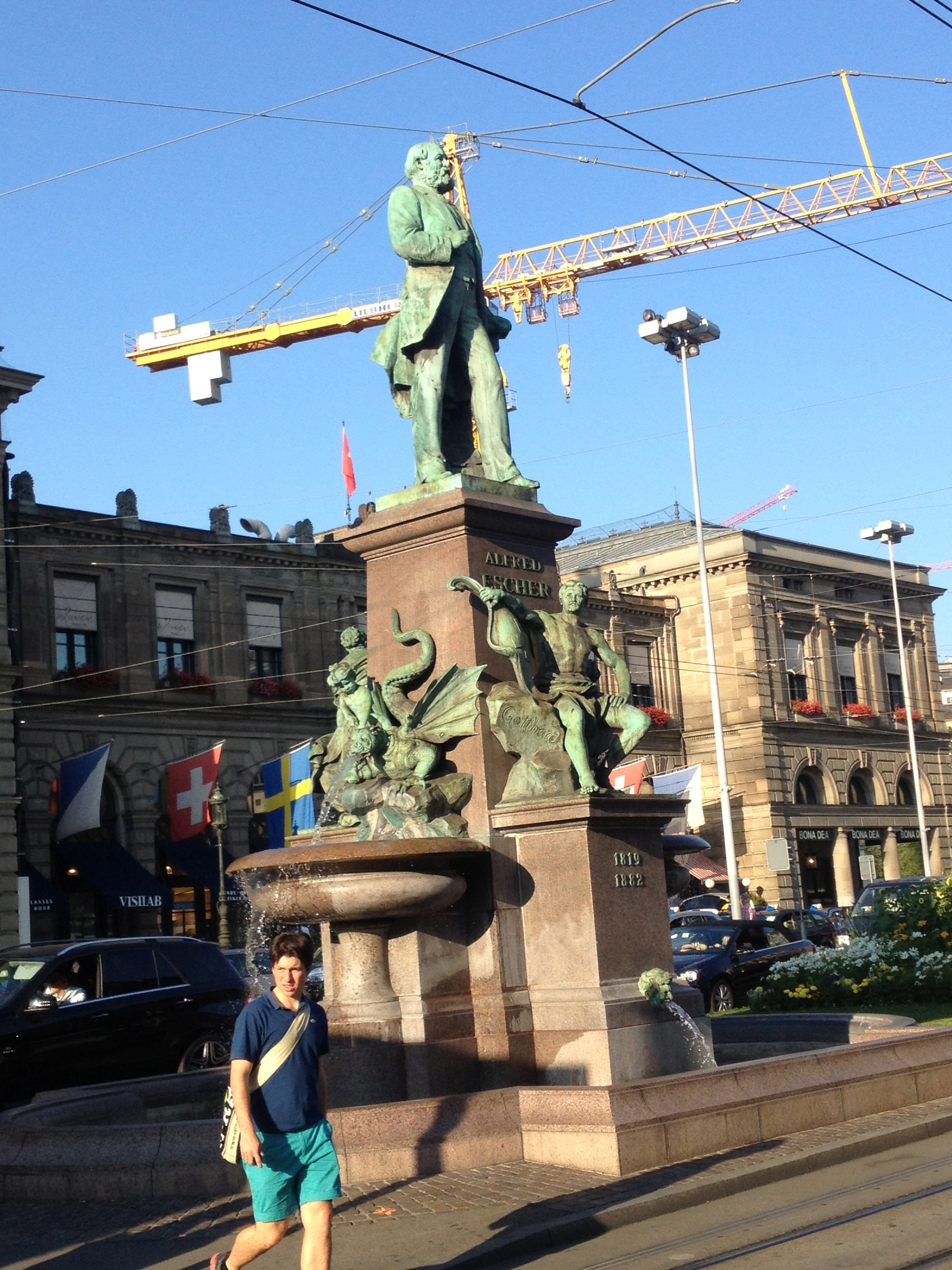
Statue of Richard Kissling, a Swiss sculptor, outside the train station.

Statue of Richard Kissling, a Swiss sculptor, outside the train station.

We hopped onto one of the numerous trams that made up Zürich’s impressive public transport system. The system is comprised of trains, overground trams, buses, electric buses, a cable car and regular ferries across Lake Zürich, and the system was so comprehensive that I couldn’t imagine why anyone would bother driving anywhere in the city, when public transport could literally take you everywhere. As we travelled through the city centre, Umer pointed out various attractions that I should come back and visit and photograph later, when I wasn’t carrying my large bag. Umer wouldn’t be able to return with me, though. The following morning Umer had to fly out of Switzerland for a work trip. However, he’d agreed to let me stay at his place for one more night without him, since he lived with his parents who would be home for that time. I had had another host lined up for that next night, but they had cancelled on me last minute. Umer also gave me a very serious warning about tickets on public transport. “If you don’t have a valid ticket, its an on-the-spot 100 franc fine. If you don’t have it on you, police accompany you to an ATM so you can get it, and if  you can’t pay it then they put you in gaol.” He told me a couple of horror stories about previous Couchsurfers of his who had been hit with the whopping fine, and even though I had been happy to risk it several times while travelling on the U-Bahn in Berlin, I decided the risk probably wasn’t worth 100 francs, and definitely not worth spending time in a Swiss gaol. Luckily, Umer had brought along his dad’s monthly public transport pass for me to use, so I didn’t have to buy a ticket that afternoon.
The Swiss flag (although this one isn't in the traditional square shape).

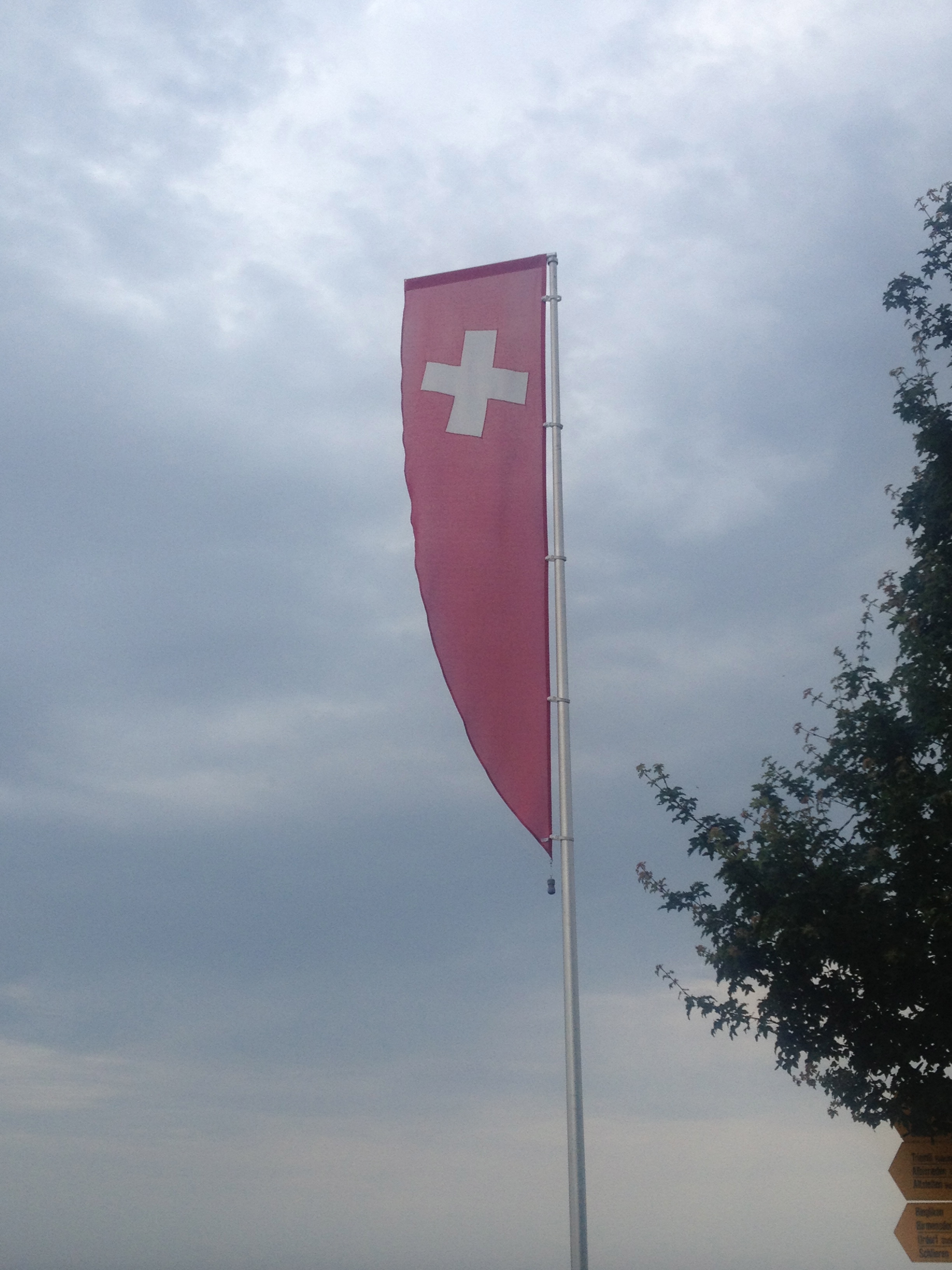
The Swiss flag (although this one isn’t in the traditional square shape).

***

Umer was a fantastic guide, even from the confines of the train, teaching me random bits and pieces about the history of Switzerland, and other interesting facts. After I confessed to him that I originally thought that Zürich was the capital of Switzerland, not Bern, he told me that the city only serves as the capital for international purposes, and that most of the regions within the country are pretty autonomous. “Switzerland really is all about being neutral,” he elaborated. “None of the other cities really have sovereignty over any other – it’s all quite self-sufficient. It’s also one of the few countries that has a square shaped flag, and not a rectangle. The equal sides represent equality in all parts, and that idea of remaining neutral.” Who knew there could be so much history behind a flag? We also got off and had a wander through the downtown area, and passed the Limmat River, which flows out of Lake Zürich. “The water quality in the river is so high that it’s practically drinking quality. It’s mostly freshly melted ice from out of the Alps, so it’s so clean,” Umer said as we strolled by the water that was a bright shade of blue. “We don’t really have beaches around here, but in the summer time you can always find people swimming in the river and hanging out by the bars along the waters edge.” I made a note of it, since my good luck streak with the European summer weather was forecast to continue.

But our stops along the way were all really brief. “I’ll let you take your time with the sightseeing when you come back tomorrow,” Umer said. “For now, I want to show you one of my favourite things in Zürich that you probably wouldn’t see as an ordinary backpacker.” And so we eventually arrived that Thermalbad & Spa Zürich, a thermal bath and spa house whose design still held remnants of the ancient Irish-Roman bathhouse that had once stood in its place. “I love coming here”, Umer told me. “Just wait until you get inside.” We paid, entered, and got changed into our swimwear before entering the complex. The whole place felt like a Buddhist temple in that it was extremely calm and relaxing, but when you looked up the roof was old and arching domes made of ancient bricks and stones. We relaxed in the warm bubbling water, which was apparently drawn straight from natural springs that existed under Zürich, and was full of revitalising and rejuvenating minerals. It was actually the perfect relaxing experience after the long, exhausting day of train travel. There was also a mediation pool, where you could lie face up in a shallow body of water, and when you put your ears in the water you could hear soft, tranquil music playing. The whole place had quite a mystical feel about it.

However, the best was yet to come, Umer assured me. Once we were done on the lower levels, we got into a lift that took us up to the top floor. We stepped out of the lift and straight down into a staircase that led into the bubbling water, and rounded a corner and passed through a plastic curtain… which led us out onto a rooftop spa, with panoramic views of the city. The sun was slowing setting, hanging between the mountains, and the view was absolutely breathtaking. “You should see it in the winter when its snowing, it’s pretty amazing,” Umer said, and I could only imagine that the juxtaposition of temperatures would be rather incredible. So we sat up there on the rooftop spa as twilight sank over Zürich, sharing Couchsurfing stories and telling him all about my travels, much like I would have done with any new host, but in a quite a unique setting. Umer was right – it was a pretty special place, and once again I was grateful that Couchsurfing had been able to introduce me to some experiences that I would had never have had without it. Afterwards we headed back to Umer’s house, where his mother made us some dinner and then I promptly crashed, feeling incredibly relaxed after my time in the spa that had felt like something out of a dream.

I wasn't able to take one, so I stole this photo from the Internet - but I couldn't not include a picture of the amazing rooftop spa and the view that it offered.

I wasn’t able to take one, so I stole this photo from the Internet – but I couldn’t not include a picture of the amazing rooftop spa and the view that it offered. Image courtesy of: http://www.somestepsaway.com
Recovery: From the city to the sea

I watched the Italian countryside whizz past me as the train carried me away from Rome. Eventually the train tracks became parallel with the seaside, and I gazed out into the distance over the Mediterranean. In one short trip I was going from coast to coast in Italy, from the capital city of Rome to the tiny port town of Ancona. “Ancona?” Valerio had asked me with a very confused expression, when I had informed him of my next destination. “Nobody… I mean nobody, goes to Ancona. Pass through maybe, but… well, there’s nothing there!” Ancona was a regular port for ferries that routinly carried passengers from the east coast of Italy to Croatia and Greece. It hadn’t exactly been on my high priority list of places to see, but while I had been searching desperately for a place to stay in Rome via Couchsurfing, I had received a message from Ike.

The interesting thing about Couchsurfing is that you can send requests to potential hosts, but you can also publicly post your travel itinerary so that hosts in areas where you are planning to travel are able to find you and invite you to stay with them. The majority of people who I have spoken to about this assured me that that was way too creepy for them, and that they wouldn’t just accept offers from random people they didn’t know, but my journey so far had showed me that taking a chance on the generosity of strangers can sometimes have the most rewarding results. I had been looking for other places to stay in while travelling Italy, but so far all my other searches had been unsuccessful. Meanwhile, Ike had sent me a message saying he had noticed I was travelling through Europe, and that if I ever made it to Ancona he would be happy to host me. We had stayed in correspondence during my frantic search for hosts in Rome and my breakdown in Madrid, and from what I could gather he seemed to be a nice and rather genuine guy. So when I arrived in Rome and had to make plans for my next upcoming destination, I agreed to visit Ike in his sunny little corner of Italy. Four days later, and I was stepping off the train into the blistering afternoon sun, where he was waiting to pick me up.

Ike was a fun and outgoing guy with a cheeky sense of humour, and just like when I had met Stefan – who had also stayed with Ike – we got on well straight away. I knew I had made the right decision in coming here – better to spend a couple of days in a town you’d never heard of with a fun stranger than wander around a well known city by yourself. I’d done plenty of that in Rome, so during my time in Ancona I was determined to do absolutely no sightseeing. I needed a break from all that. When we got back to his place, Ike showed me a map of the area and a bunch of information pamphlets about things to see and do. “There’s a short historical walk through the main centre,” he said, pointing at the map to a spot in the centre of town – Ike lived a little further up one of the many rolling hills that surrounded the port, about a 10 minute drive from the train station. “Stefan was very into that kind of thing, but I’m not sure what you want to do while you’re here.” I told Ike that I would be happy to find a spot on the beach and just chill out, so he gave me a few options for the nearby beaches that I could try, most of which were pretty easily accessible by bus. “I’d love to come with you if I had the time, but unfortunately I’ve got to work.” Ike even had to go back to work that afternoon, so he left me at his place to do some laundry and get some rest. When he got home, Ike cooked dinner and we had a night of great conversation over a bottle of wine. We talked about travelling, our Couchsurfing experiences, and he even taught me a couple of phrases in Italian. It was a fun and carefree evening, and I was already very pleased with my decision to stop by Ancona and take some time out in this Italian hideaway.

***

The next day Ike had to go to work again, so after a bit of a sleep in and a lazy morning, I caught a bus down the hill to the city centre and then transferred to another bus that would take me to the nearby beach of Portonovo. The bus was crowded with lots children and teenagers, and it was only then that I realised it was the height of summer and that school was probably out, and everyone in town would be heading for the beach. It also took a little longer to get there than I had anticipated – I was on the bus for over half an hour, going up and down the twisting and winding hills of the outskirts of Ancona before we finally arrived at Portonovo. I wandered through some of the shrubbery around the bus stop and down through a small woodland area before emerging onto the beach. The area had a handful of restaurants and other overpriced-looking places where you could hire beach chairs, but I bypassed all that and went straight to the waters edge.

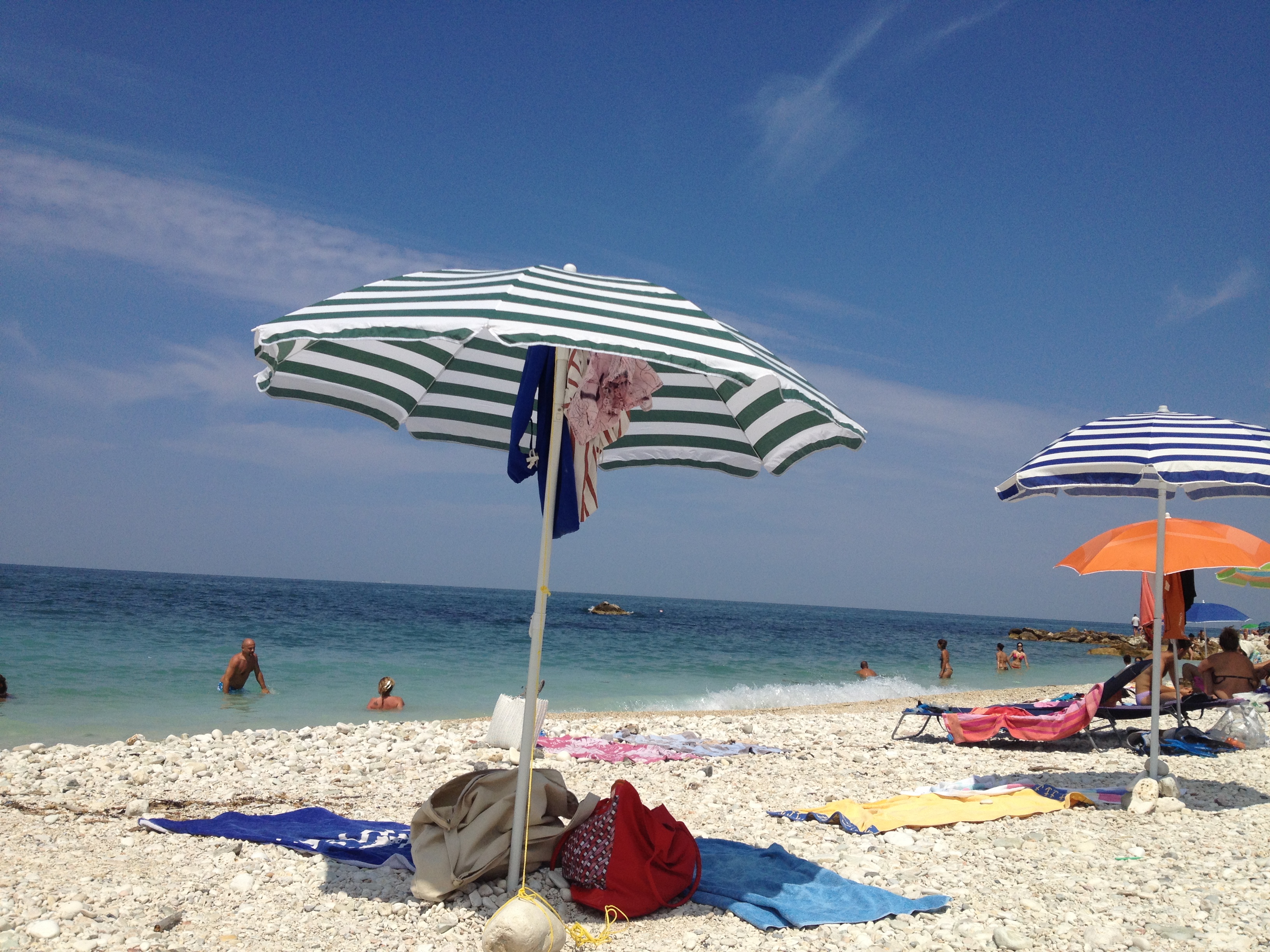
There, I faced a problem that I hadn’t really faced since I’d been in Thailand – I was alone on a beach with a backpack containing valuables such as my phone and wallet, and I had no way of properly securing them. Even if I was to put a lock on my bag, there was nothing stoping someone from simply running away with it. The beach was fairly crowded, but not so much that I wouldn’t be able to see my things if I left them in plain sight from the water, and it was too hot to not go swimming. In the end I just had to take a chance and leave my backpack while I went into the water. I never swam too far from where I’d left it, but I was a little more relaxed than I had been on the beach at Ao Nang. And it was worth it – with the hot sun beating down on the crowds of beach goers, the cool blue water felt absolutely amazing to dive into. When I’d had enough of that, I crawled back onto the beach, lathered myself in sunscreen, and laid down to soak up some rays. I think it was something I’d first noticed lying in the park in Christiana during my time in Copenhagen, but the sun in Europe just doesn’t seem to be as strong as it does down in Australia. Obviously Italy has a lot stronger sunshine than Denmark – Ike told me he regularly uses 50+ SPF sunscreen – but compared to the sun in Australia it felt like a casual warm day. I was very conscious of my sunscreen use though, which allowed me to relax enough to actually doze off into a state of semi-sleep more than a couple of times. It was the perfect temperature, and I stayed there on the beach for as long as I dared before I thought there really was a chance of me getting significantly burnt.

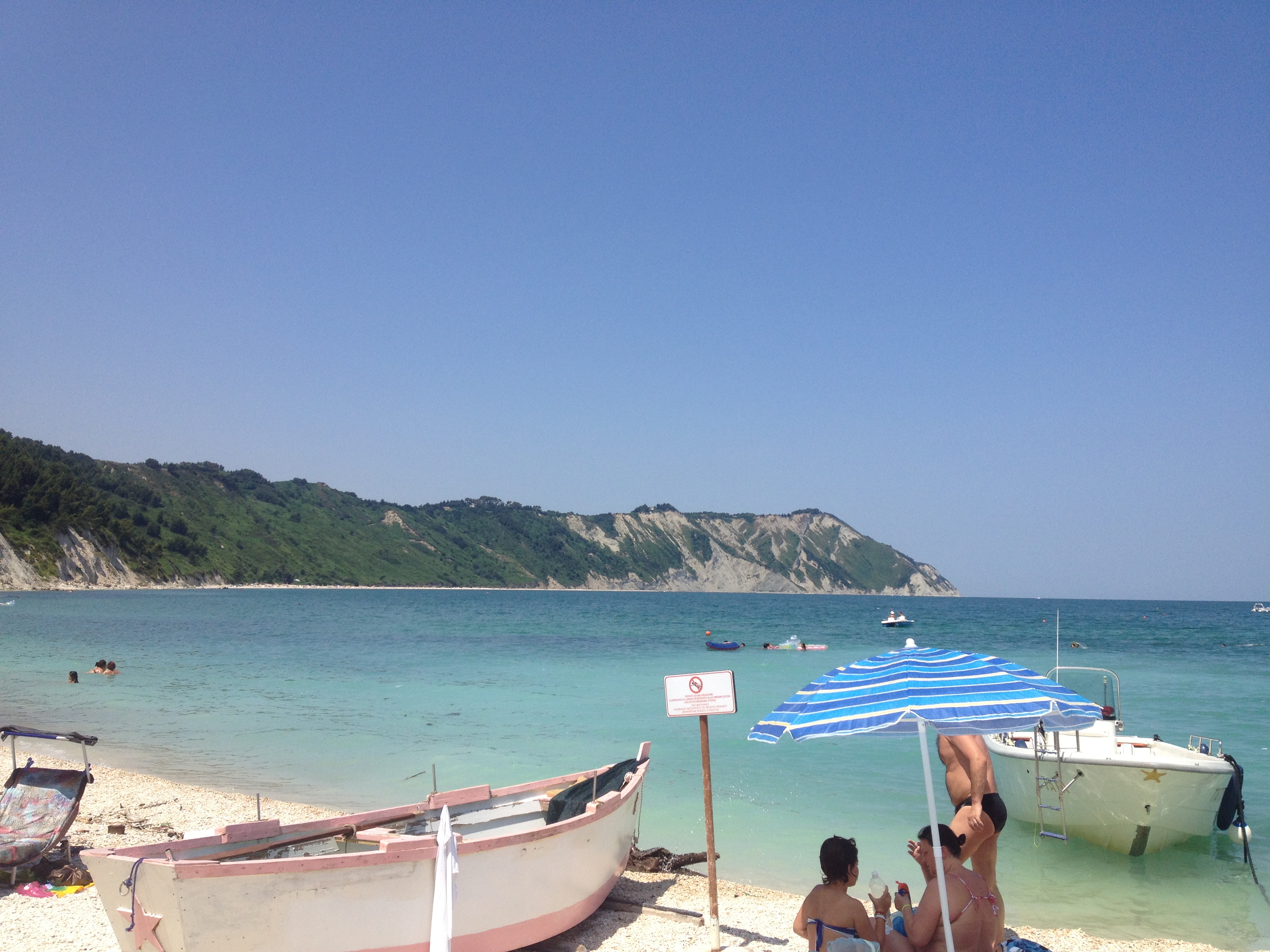
The refreshing blue waters of Portonovo Beach.

The refreshing blue waters of Portonovo Beach.

Lots of people set up camp for a day on the beach in the gorgeous sunshine.

Lots of people set up camp for a day on the beach in the gorgeous sunshine.

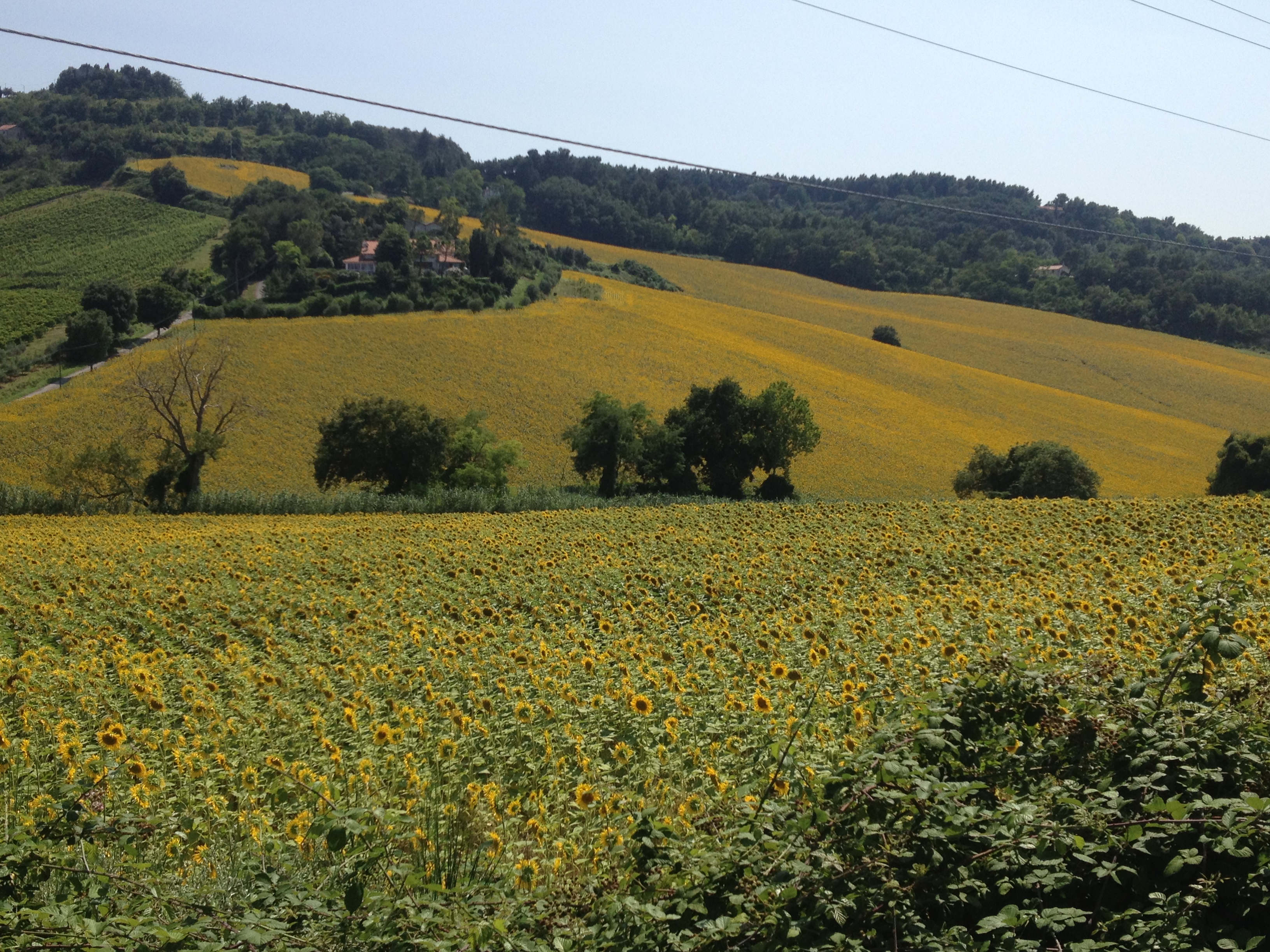
I took one final dip in the ocean before heading back to the bus stop, and indulging in some amazing Italian gelato while I waited for the bus. When the bus finally arrived, slowly making its way down the hill from the highway, I hopped on board, thinking it would take me back to the centre of Ancona. I was surprised to find that its final stop was simply at the top of the hill. “Last stop – everyone off,” the bus driver called out to me. It was definitely up there in my travel nightmare scenarios – being forced off the bus but having absolutely no idea where I was or how I was going to get back. However, when I hopped off the bus I was momentarily distracted by the field of sunflowers that spread out in front of me in the paddock beside the road. I took the opportunity to take a few photos, and just sit back and marvel at the Italian countryside and the picture perfect landscape I had laid my eyes on.

The sunflower fields just next to the bus stop by the beach.

The sunflower fields just next to the bus stop by the beach.

But then it was back to panicking. Another bus with the right number came along, so I hopped on. It took me… back down to the beach. What the Hell was going on? I decided to swallow my pride, realising I needed help, and approached the bus driver, crossing my fingers and praying he spoke some English. I explained where I wanted to go, and he knew enough to understand and give me a reply: “Ahh – next bus!” I sighed, knowing it was about as much help as I was going to get, and stepped off the bus. It wasn’t too long before the next bus came trundling down the hill, and when it finally did I was relieved to feel it make the turn onto the main road that led back to Ancona. I had given up trying to understand how public transport timetables – or indeed, any kind of timed service – operated in Italy. I’m not one for generalising stereotypes, but I can honestly say that chronic lateness was something that I experienced in pretty much all public services in Italy. Countries like Italy and Spain are currently suffering from unbelievably high levels of youth unemployment, but I can’t help but wonder if the people who were actually employed were doing any more work than the people who weren’t.

***

That evening was my second and final night staying in Ancona, so when Ike got back from work we decided to go for a little drive to see some of the other parts around the area that I hadn’t been able to see by myself. We headed south down the coast, admiring the countryside in the dying daylight. At the small town of Sirolo, we stopped the car and got out to watch the sunset behind one of the cliffs. It was nice to be outside of the huge cities for a change, and to experience some very natural beauty such as this. I took a few photos before we continued on to the next small town of Numana. There we got out and walked around the town. It was a little more tourist-orientated than the centre port of Ancona had been, and the streets were quite well preserved in an older, historical style, with uneven tiling and cobblestones lining the streets. We walked down to the docks and looked out over the water as twilight settled in. It wasn’t quite as prominent as the white nights in St Petersburg, but even in southern Europe it still took a very long time for nighttime to actually become dark – often there was still a lot of natural light and visibility as late as 10pm. It was a strange phenomenon that I was only now getting used to.

Overlooking the beach at Sirolo at sunset.

Overlooking the beach at Sirolo at sunset.

The ocean view from our vantage point near Sirolo.

The ocean view from our vantage point near Sirolo.

Overlooking the town of Numana.

Overlooking the town of Numana.

Ocean views as dusk settles over the province of Ancona.

Ocean views as dusk settles over the province of Ancona.

After wandering through the old, steep streets, we headed back to the car and went home. I didn’t ask, but in a small town like Ancona I assumed that there wasn’t much of a nightlife scene, gay or otherwise. Even if there was, I don’t think I would have bothered going. My time in Ancona had been all about relaxing and taking the down time that I had been unable to take in the past couple of weeks. I helped Ike make some dinner and we had some more wine before retiring to bed. He was leaving for a work trip the following day, and I had several trains to catch. But I’d had a fun and memorable few days with Ike in Ancona. He’d told me that it was often just a passing through town for so many people, and that people rarely discovered the little gems of beauty it contained. At that moment, I was eternally grateful that I’d decided to travel the way I was travelling: solo, using Couchsurfing, and meeting all kinds of interesting locals along the way. It assured me that not only was I having an amazing once in a lifetime trip, but that I was seeing parts of the world that many other travels might breeze over without a second glance.

Rome Wasn’t Built in a Day

After a decent nights sleep at Valerio’s house, I woke up feeling remarkably refreshed and ready to take on Rome. I had been told by almost everyone who had visited Rome that the city was enormous, and that if you didn’t have a plan of attack you could easily waste all your valuable sightseeing time trying to find your way around the maze of combined modern and ancient history. Lucky for me, I had met Selma in Barcelona, who had seemed more excited than I was at the fact that I was going to Rome. We had exchanged contact details, and at some point during my stay in Madrid she had sent me a huge message that had included a list of all the famous sights, monuments and neighbourhoods, as well as a detailed itinerary of how to make the most of all these things and visit as many as possible in the three days that I had to explore Rome. I felt a mix of overwhelming gratitude and guilt – I hoped she had already had this itinerary written down and had just forwarded it on to me, because what I got had been so much more than I had expected when I’d asked for “a few tips”. Nevertheless, she had saved me a great deal of planning when it came to all that touristic stuff that I’d never really been any good at.

As convenient as getting to Valerio’s house from the airport had been, getting from Valerio’s house to central Rome was somewhat more of a challenge. I had to get a bus to the closest metro station, and then from there catch the metro into the heart of the city. The whole trip should have only taken me half an hour if the public transport ran on time, but I was about to learn very quickly that literally nothing in Italy runs on time. So it took a little longer. Given the size of the city, I was also surprised that Rome only had two metro lines that ran diagonally across the city and intersected only once or twice in the middle. Cities like Moscow, Berlin, Paris, Madrid and even Barcelona all had upwards of around fifteen metro lines, so it was puzzling as to why Rome was so far behind. Valerio would later tell me that the city was working on a third line. It’s completion was scheduled for approximately somewhere in the next several years – Rome wasn’t built in a day, I guess?

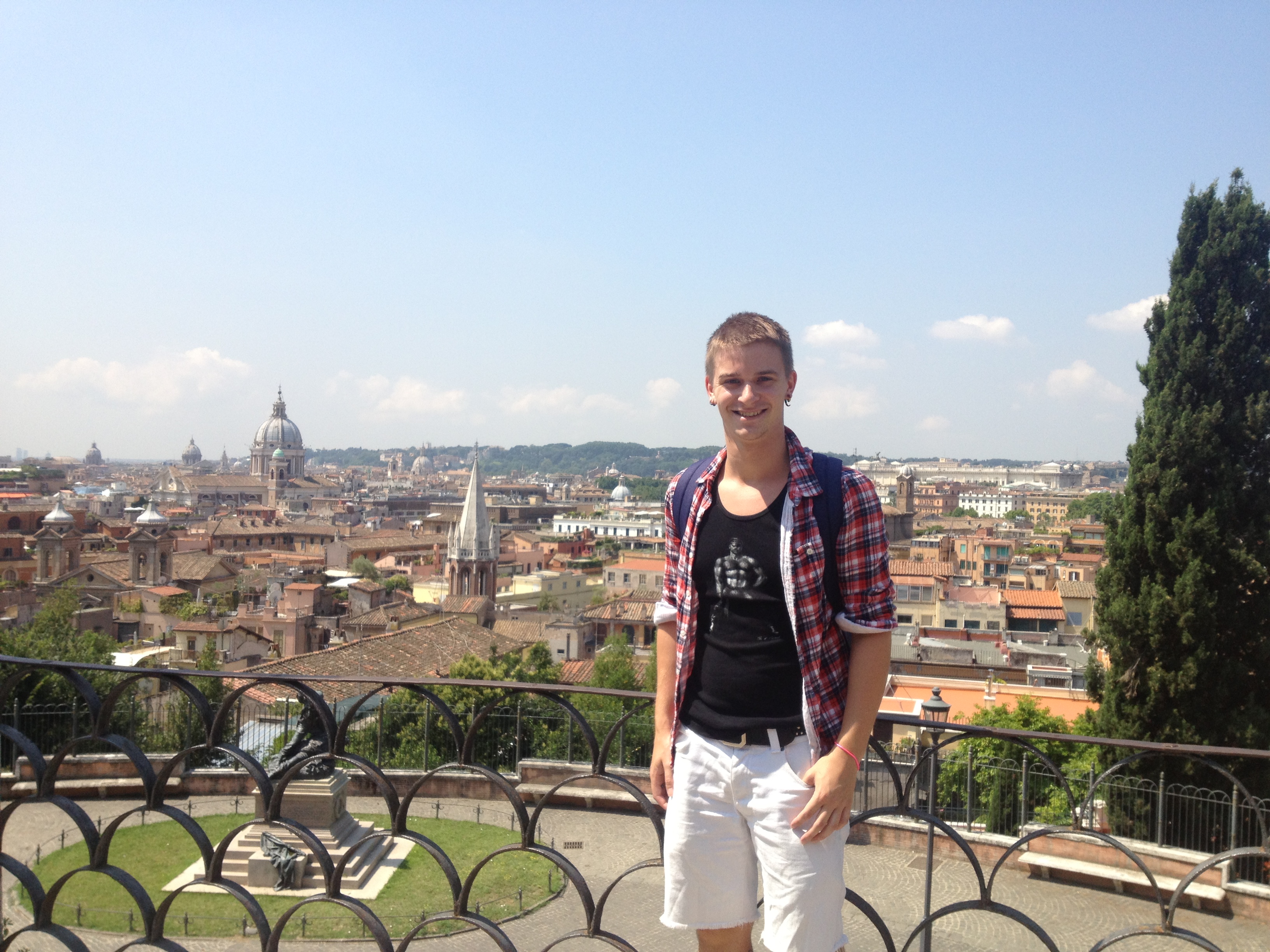
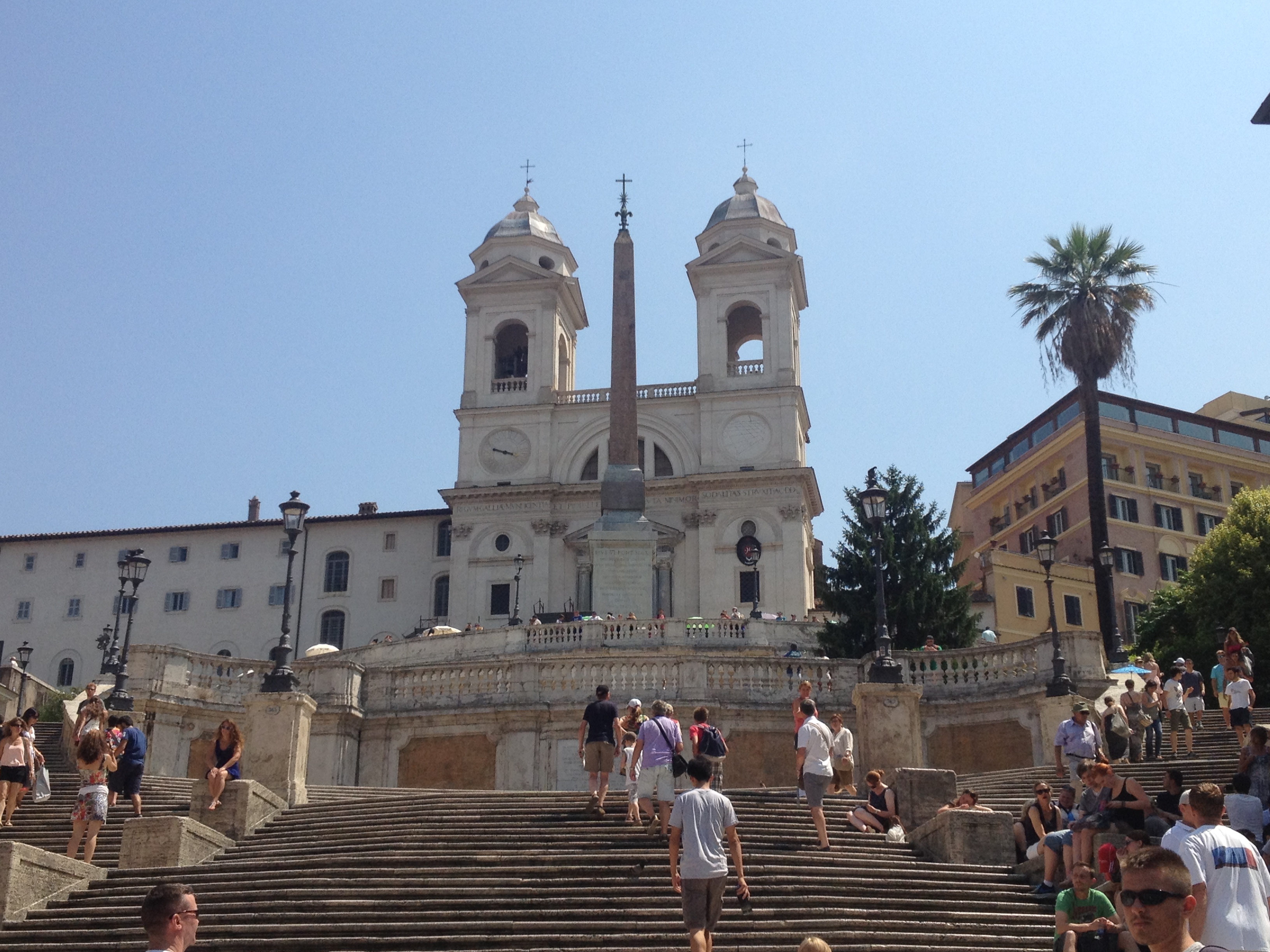
When I finally reached central Rome, my first stop was Piazza del Popolo, a large public square with a huge obelisk towering over the tourists crossing the plaza. From there I following Selma’s directions and climbed the stairs up to Pincio Hill. The top of the hill was a beautiful and quite peaceful garden, a stark contrast to the hustle and bustle of the lower streets of Rome that I had been in so far. It was also a spot that afforded excellent panoramic views of Rome, so I stopped to take a couple of photos before wandering through the greenery. I followed the edge of Pincio Hill until I rather unwittingly walked down the next attraction, Scalinata della Trinità dei Monti: the Spanish Steps. It wasn’t until I reached the bottom and arrived at Piazza di Spagna, thought to be the most famous square in Rome, that I turned around and took in my surroundings. The square is a common rest stop for tourists wandering the city, so it was quite crowded, and at the top of the steps sat the French church Chiesa della Trinità dei Monti.

The obelisk in Piazza del Popolo.

The obelisk in Piazza del Popolo.

The view of Piazza del Popolo from the top of Pincio Hill.

The view of Piazza del Popolo from the top of Pincio Hill.

View of Rome from the top of Pincio Hill.

View of Rome from the top of Pincio Hill.

The garden on top of Pincio Hill.

The garden on top of Pincio Hill.

At the foot of the Spanish Steps I came across my first Roman fountain, the Barcaccia, sculpted in 1627 in the style of a sinking boat. Valerio had told me that the water in all of the fountains around Rome was safe to drink. I hadn’t understood at the time, but I would soon learn that similar fountains were scattered all around the city, and thirsty tourists and locals alike could be seen stealing a sip from the flowing water, or filling up their water bottles. The water all comes from clean underground springs and is completely safe to drink as it pours out of the fountain. It was a cute little feature of the city, and particularly convenient given how hot it was that day, and all the walking I still had left to do. From Piazza di Spagna I walked down Via dei Condotti, the posh shopping strip of Rome that was lined with expensive designer and luxury brands. It was an amusing juxtaposition, to see such expensive and modern designer brands in the shop fronts that were situated in some of the oldest streets in the world. Though the entire city of Rome was full of such contrasts – modern stores that were built a few months ago stood side by side in the street with structures that had been standing in place for over 3000 years. For someone who comes from a country as young as Australia, it was a strange concept to fathom.

The Spanish Steps and the church at the top, as seen from Piazza di Spagna.

The Spanish Steps and the church at the top, as seen from Piazza di Spagna.

The Barcaccia fountain at Piazza di Spagna.

The Barcaccia fountain at Piazza di Spagna.

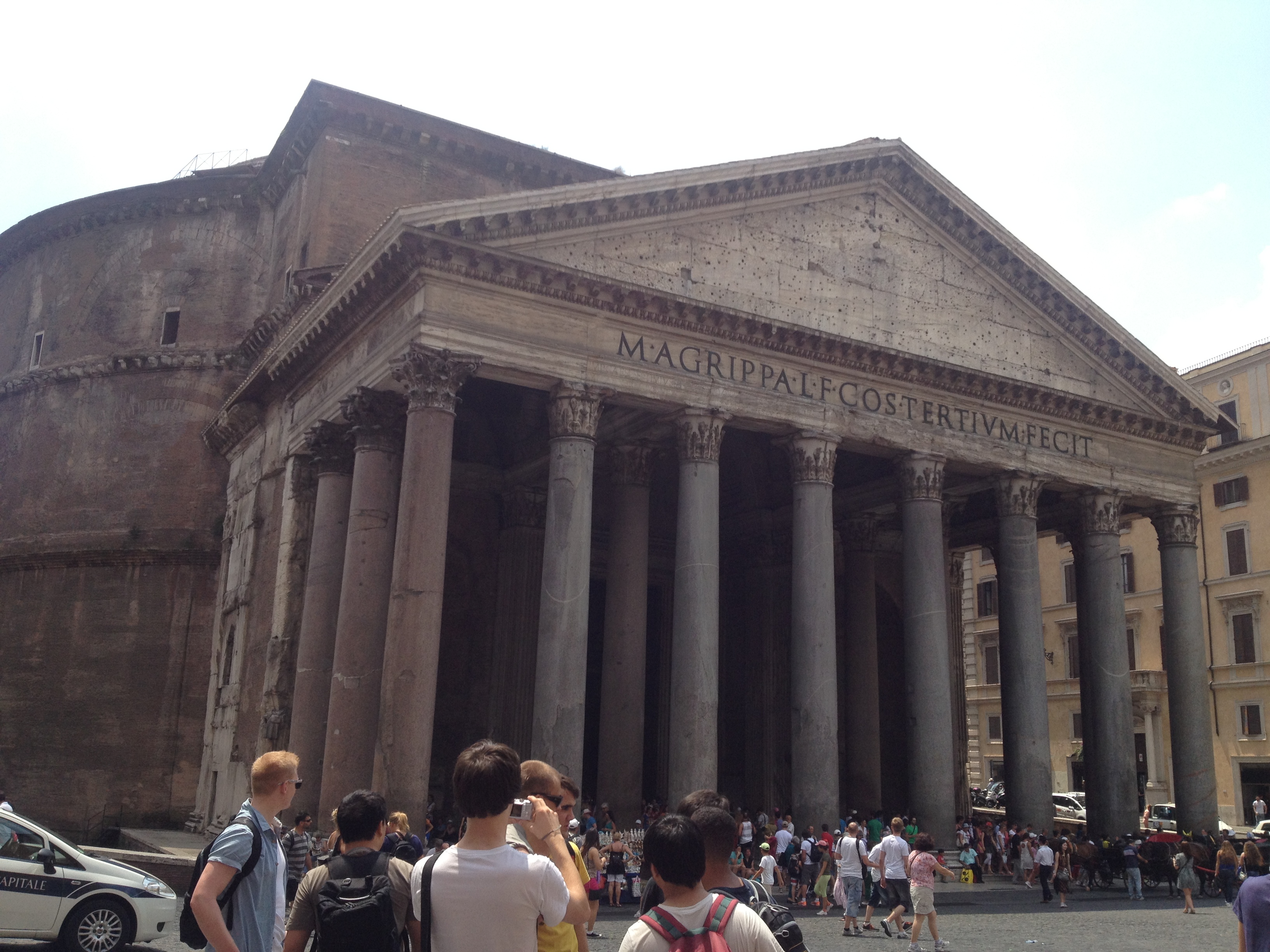
At the end of that street came the Trevi Fountain, one of the more well-known and more highly anticipated sights of Rome. The crowds around the fountain were unbelievable – it was almost impossible to get a photo without someone else being the photo. I actually saw a couple of fights break out between groups who were trying to take photos while other groups were getting in the way. It was actually quite frightening, and at that point I decided I wasn’t going to stay in any areas heavily populated by tourists for any longer than necessary. It was at that point that I broke away from Selma’s itinerary, although not entirely intentionally. I thought I was following her directions to another plaza, but after a while I emerged into a clearing to behold the Pantheon, another instantly recognisable sight. The 2000-year-old temple is now a church, and one of the best preserved monuments in Rome. It was beautiful, both inside and out, and the dome in the roof that is considered to be the ancient Romans greatest architectural achievement allowed a cylinder of sunlight to pour in from the sky. It was a little eerie, but also gave a rather holy feel to the aesthetic of the huge old room. I wandered around the inner chambers and admired some of the artworks and decorations before taking leave back out into the midday sun.

Trevi Fountain.

Trevi Fountain.

In front of (or as close as I could get to) Trevi Fountain.

In front of (or as close as I could get to) Trevi Fountain.

The Pantheon.

The Pantheon.

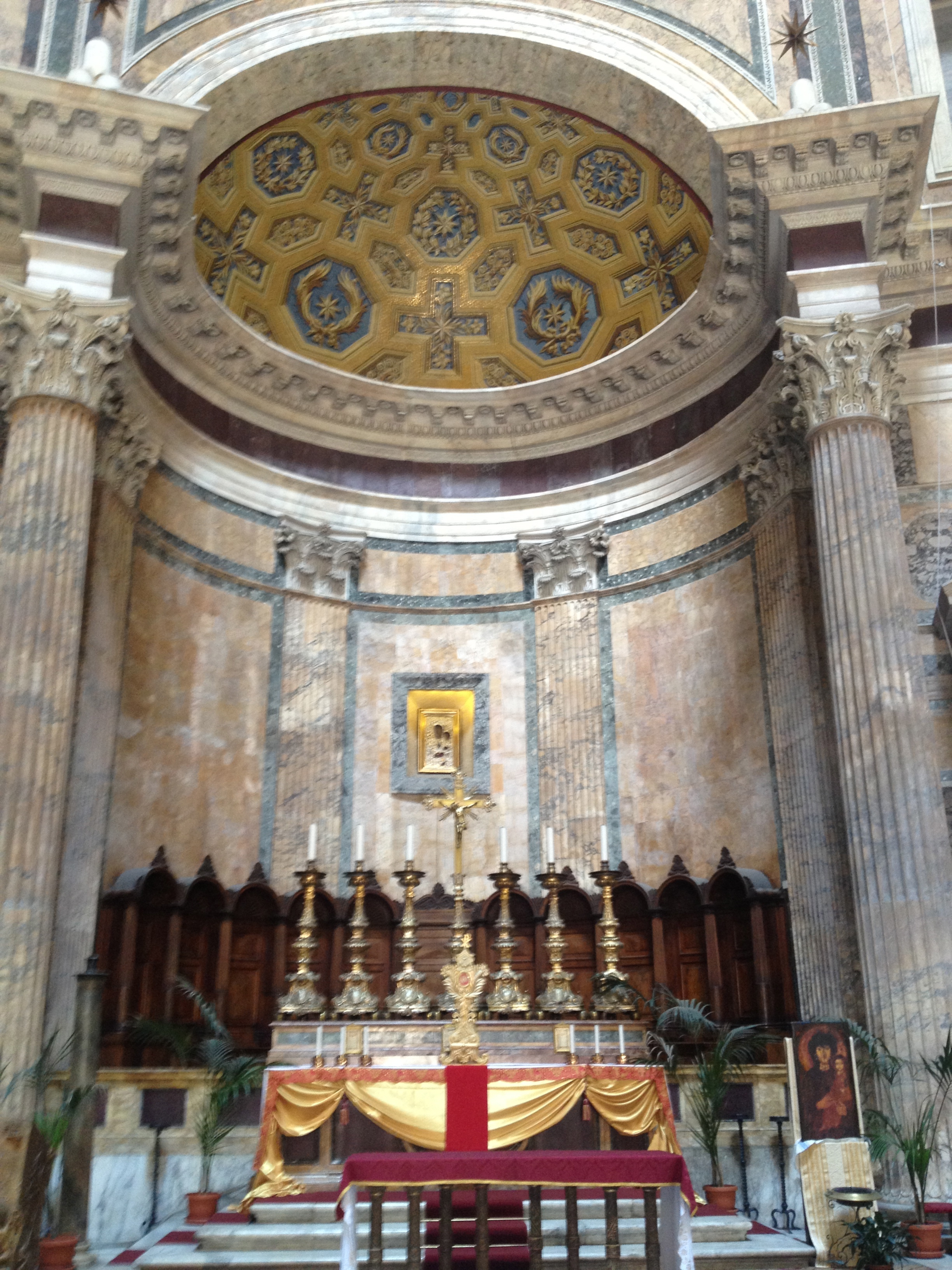
Alter inside the Pantheon.

Alter inside the Pantheon.

Sunlight pouring through the dome in the roof of the Pantheon.

Sunlight pouring through the dome in the roof of the Pantheon.

A few short streets later and I found myself at Piazza Navona, a long plaza that is home to several fountains, the most famous of which is Fontana dei Quattro Fiumi, the Fountain of Four Rivers. The plaza was full on tourists, but it also seemed to be a popular place for buskers, street performers, artists drawing both realistic sketches and caricatures, and peddlers selling all kinds of souvenirs and trinkets. It reminded me a lot of some of the heavily touristic areas in Paris, and I stayed for long enough to observe some of the interesting things going on, and take a few photos of course, before heading off and moving on.

The Fountain of the Four Rivers, the centrepoint of Piazza Navona.

The Fountain of the Four Rivers, the centrepoint of Piazza Navona.

The Neptune Fountain in Piazza Navona.

The Neptune Fountain in Piazza Navona.

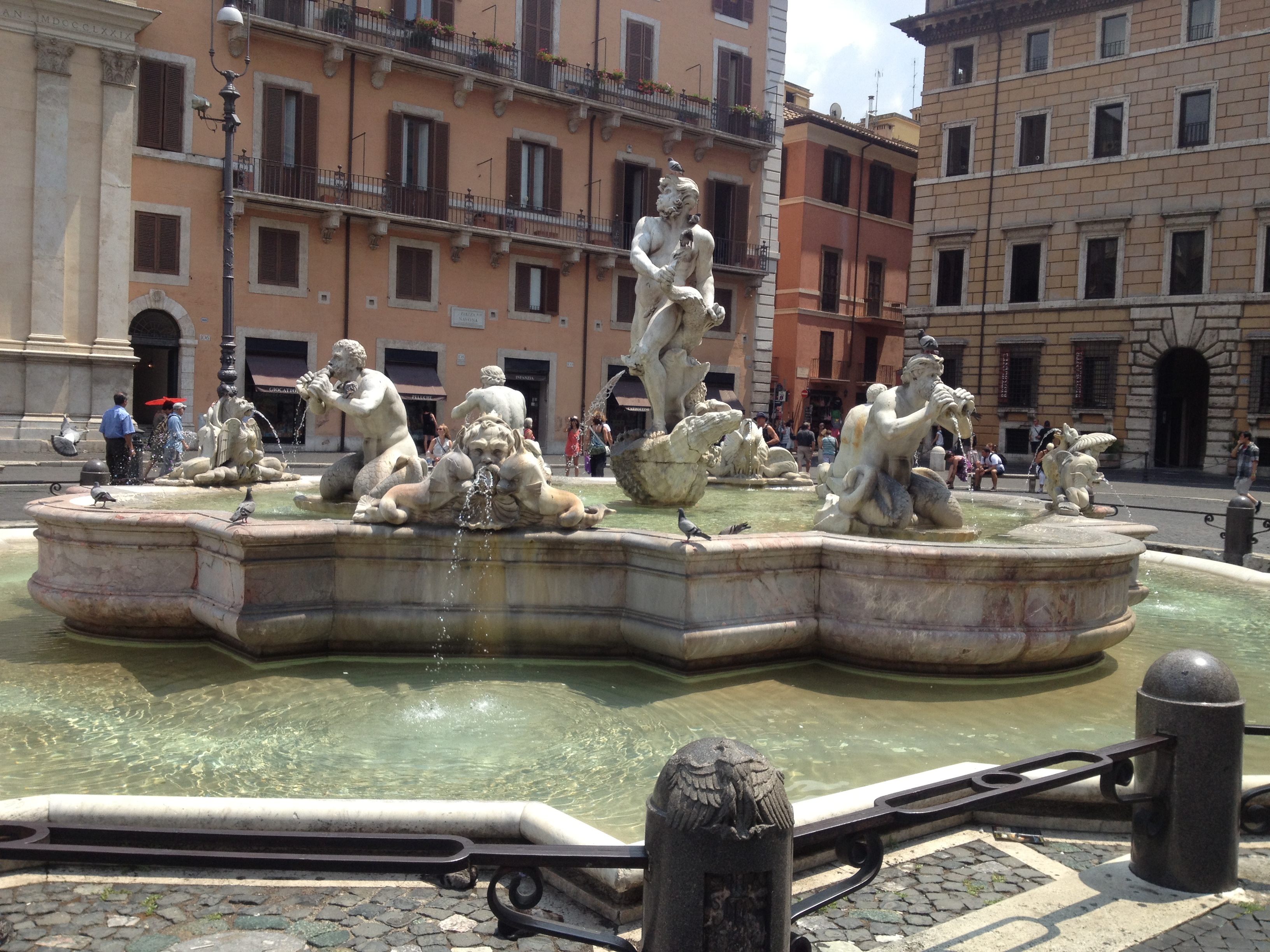
La Fontana del Moro, the Moor Fountain, in Piazza Navona.

La Fontana del Moro, the Moor Fountain, in Piazza Navona.

There were a few other things on Selma’s itinerary for the first day, but they were more missable things such as places to eat or where to get some good gelato. I would have followed through and investigated, but by that point I was completely exhausted. My body still hadn’t fully recovered from the breakdown in Madrid, so I ended up grabbing some quick take away food before heading back to Valerio’s to rest and recover for the remainder of the afternoon. I know, it seems sacrilegious in a city and country known for some amazing cuisine, but the last thing I felt like doing was sitting down at an overpriced tourist restaurant by myself. However, I did swing by the Termini train station on my way home, so that I could book my tickets out of Rome for a few days time. On my way there I passed a building which I later learned to be Monumento Nazionale a Vittorio Emanuele II, the Alter of the Fatherland, the National Monument for Victor Emmanuel II, which had also been on Selma’s itinerary. It’s a controversial monument that was built in honour of the first king of unified Italy, and also holds the home of Italy’s Tomb of the Unknown Soldier and the accompanying eternal flame.

The National Monument for Victor Emmanuel II.

The National Monument for Victor Emmanuel II.

After waiting an hour to be served and book my train tickets (again, this is Italy, so no surprise there), I took the metro and the bus back home to Valerio’s. Considering I was far from my peak physical condition, I felt I had done a decent job of sightseeing for the day. Rome wasn’t built in a day, and you certainly can’t see it in one either, so I had a quiet and early night, making sure I got plenty of sleep to continue the exploring tomorrow.

From Tourist to Traveller: Berlin Sightseeing

After an exhausting weekend that nearly destroyed me, I decided to take some time out of the crazy Berlin party scene and do a couple of touristy things. Of course, I needed at least a full day just to receiver from the messed up sleeping patterns and diet that consisted almost solely of booze and currywurst. But on Tuesday, when I finally felt human again, I set off in the morning to do a self-guided Trip Advisor walking tour of Mitte, the central district of Berlin, also known as the Government Quarter.

But before I begin that recount, I need to do my obligatory rant, or rave, on the public transport situation for a new city. And I have to say, notwithstanding the train delays on my journey to actually get into Berlin, I am in love with their local train services. There are two kinds: the S-Bahn, which runs above ground and are actually integrated into the national rail system, and the U-Bahn, the underground trains that are essentially the German version of a metro. Trains on all lines come frequently at regular intervals, and between these two highly integrated networks, it’s possible to get almost anywhere in Berlin with relative ease, although there are so many different lines and interchanges that it can be a little difficult to wrap your head around at first. The only real issue I had with the U-Bahn and S-Bahn was the price of a ticket: €2.80 for a single trip seemed a little steep in my opinion, but then I guess I had still be paying student fares in Sydney right up until I left – welcome to the real world, kid. Although there’s one tip I can offer that you won’t read in any Lonely Planet book – there’s no barriers at the stations for which you need a ticket to pass through, and checking for tickets on board the train is very infrequent. Now I’m definitely not condoning fare evasion, but… there a few short trips I make where I felt it was worth the gamble. So for a system that is well-established, efficient, and if you can’t get away with it, free, Berlin public transport gets a general tick of approval.

***

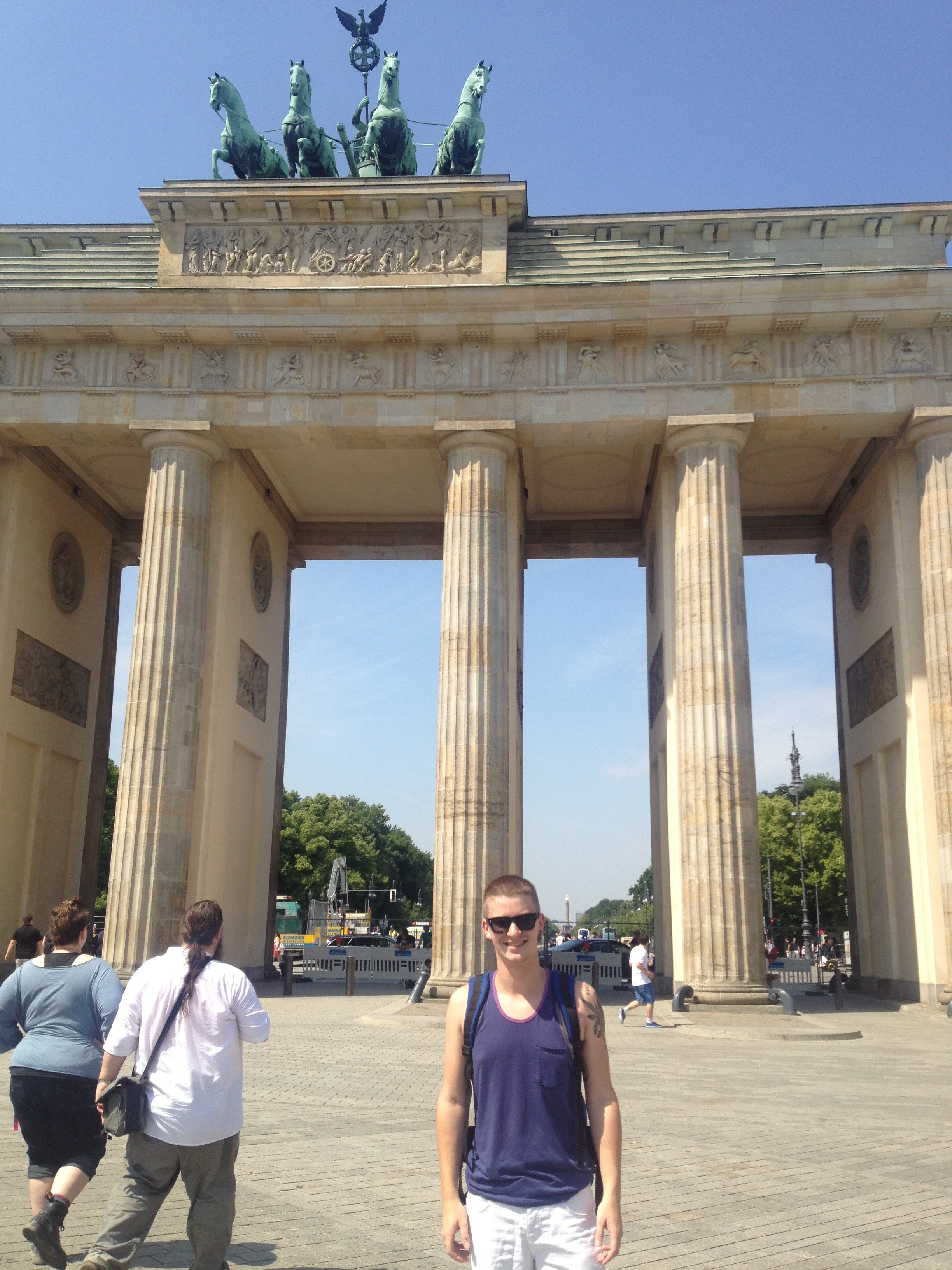
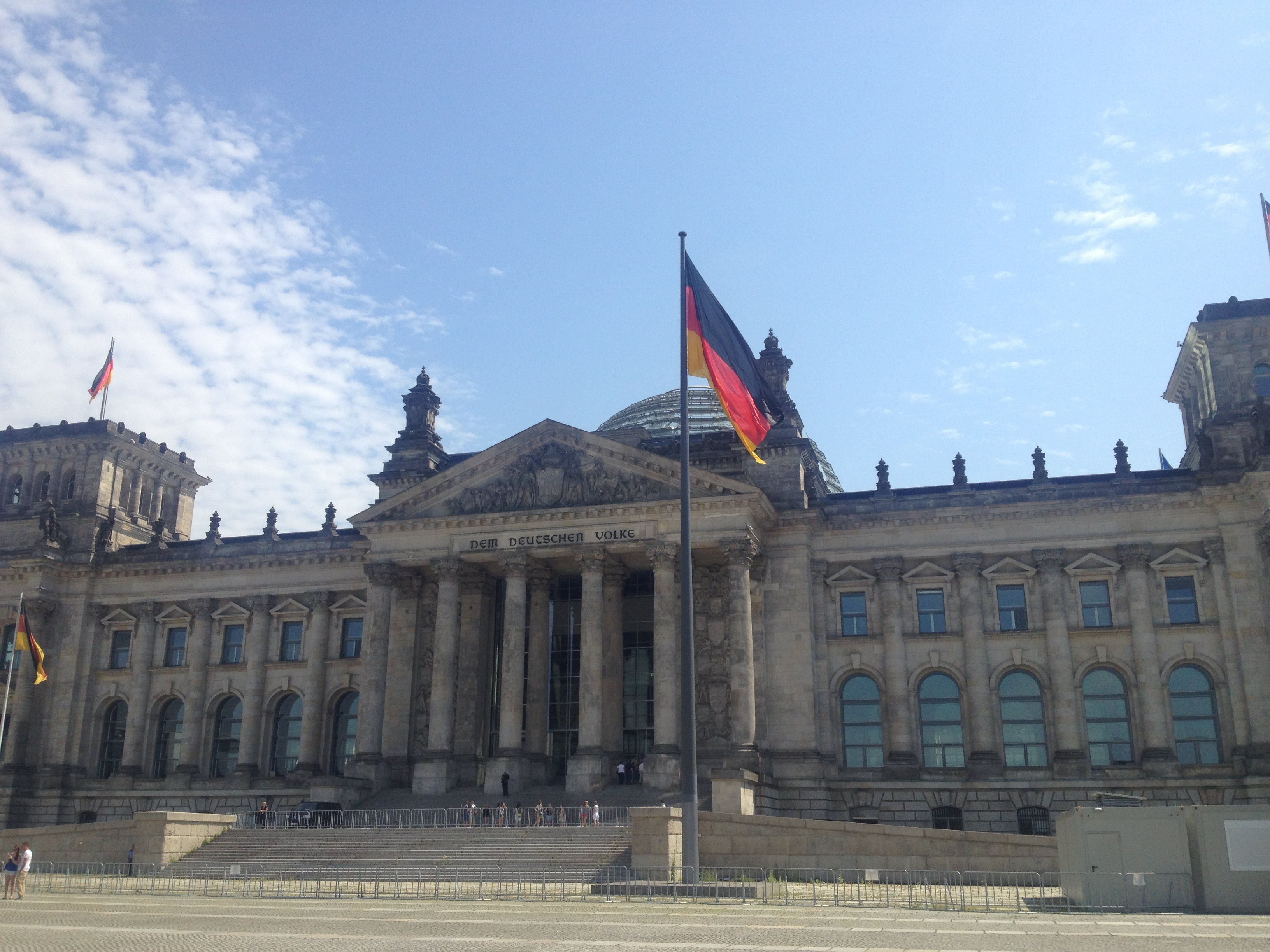
The first stop on my walking tour was the Brandenburg Gate. The most famous of all the east-west crossings of the Berlin Wall, it’s a symbol of the division that once ran through the city, though during my time in Berlin I’d learn that while the wall came down in 1989, distinctions and differences between East and West Berlin are not unrecognisable. Visually, the gate is probably the most iconic feature of Berlin, so I posed for a photo before continuing through. The time I was in Berlin also coincided with a visit from the US president Barack Obama, and so Pariser Platz, the square in front of the Brandenburg Gate, was full of security guards and scaffolding, as some type of arena seating was erected in the clearing. I passed through the arches of the gate from east to west to find the Tiergarten stretched out before me, and turned right to head towards the Reichstag, the German parliamentary building. According to my Lonely Planet guide book, there was a popular and impressive view of central Berlin from the glass dome ceiling of the Reichstag, and that it was free to go and see. What the guide book failed to tell me was that you needed to make a booking prior to your visit in order to secure your spot on the viewing platform. Slightly disgruntled but not really that bothered, I left the bustling tourists to their lining up and headed back towards the Tiergarten.

Gate

The Brandenburg Gate, with just a suggestion of scaffolding.

In front of the Brandenburg Gate.

In front of the Brandenburg Gate.

The Reichstag, the parliamentary building which I unfortunately didn't get to enter.

The Reichstag, the parliamentary building which I unfortunately didn’t get to enter.

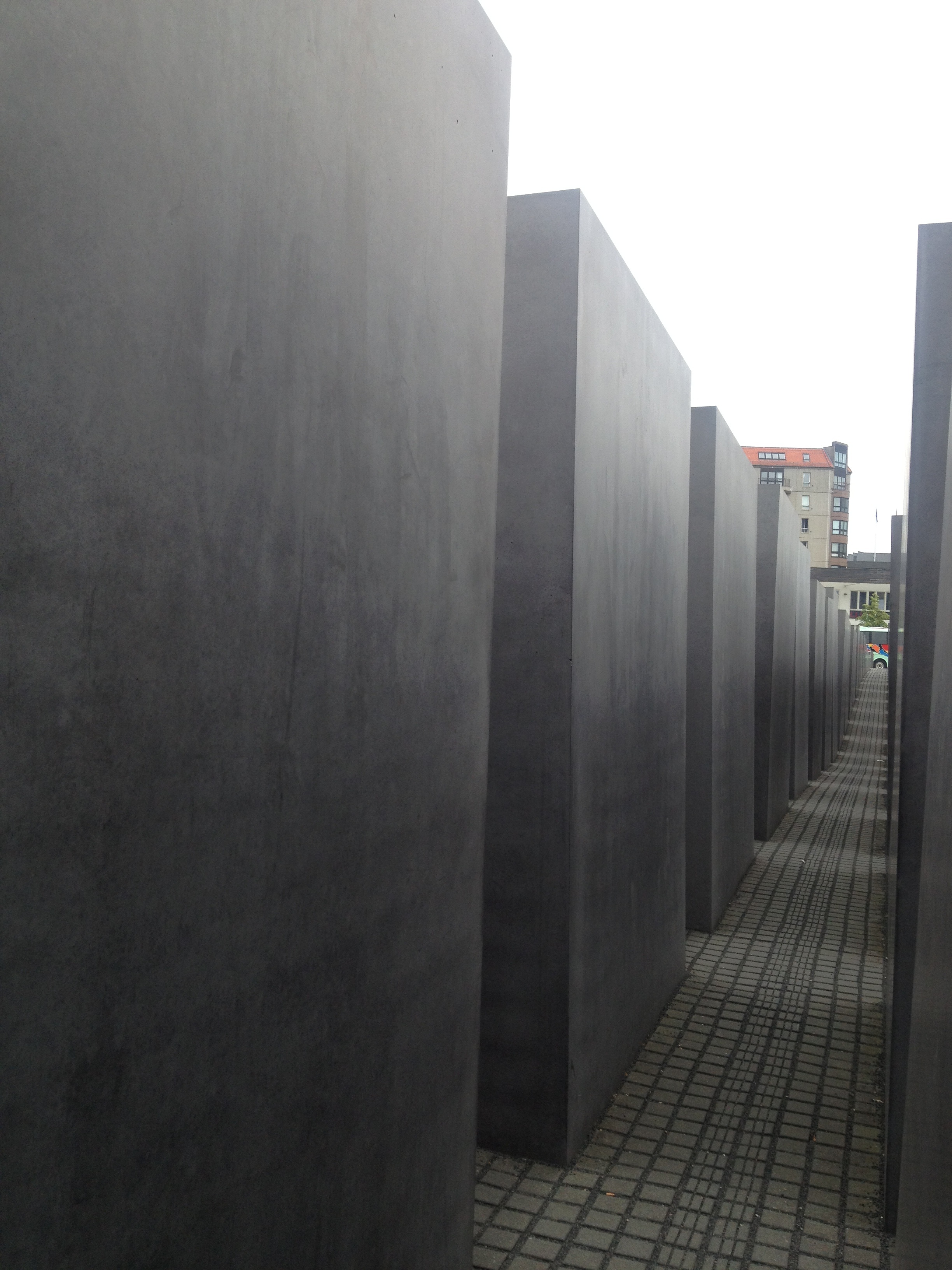
The Tiergarten is a huge expanse of greenery right in the centre of Berlin. I don’t know much about it historically, other than it being the name of a Rufus Wainwright song, but it was beautiful place to stroll through a park and lose yourself in the gardens. I made an arching route in and out of the Tiergarten, admiring some statues along the way, before emerging at the haunting piece of artwork that is the Holocaust Memorial. The memorial is a collection of 2711 pillars, all evenly spaced apart across 19,000 square metres, and which appear to be of a roughly similar height. However, as you walk into the grid you begin an unexpected descent, and discover that the ground is uneven and awash with hills. When you enter the grid, the pillars come up to your knees. After a few moments, they’re towering above you, and the only thing you can see in all for directions are long corridors created by the towering monoliths, and the occasional other person who crosses your path along the way. As I emerged from the memorial, I took a seat for a moment and reflected on the reason it was there, and who all the pillars represented: the victims of the Holocaust. Each one was the same essential structure, a homogenous collective, yet each pillar was also individual in its unique height. I’m not sure if that’s the actual rationale behind the memorial, but it struck me as somewhat symbolic. Afterwards I took a photo with the memorial, as a tourist souvenir – only afterwards was I told about a website that makes fun of men who use such photos taken at the memorial as their profile pictures on online dating sites – there happens to be quite a lot of them! That was a little embarrassing, but I just made sure to never upload the picture to my Grindr profile.

Lion statue in the Tiergarten.

Lion statue in the Tiergarten.

Holocaust Memorial: view from above...

Holocaust Memorial: view from above…

... and the view from below.

… and the view from below.

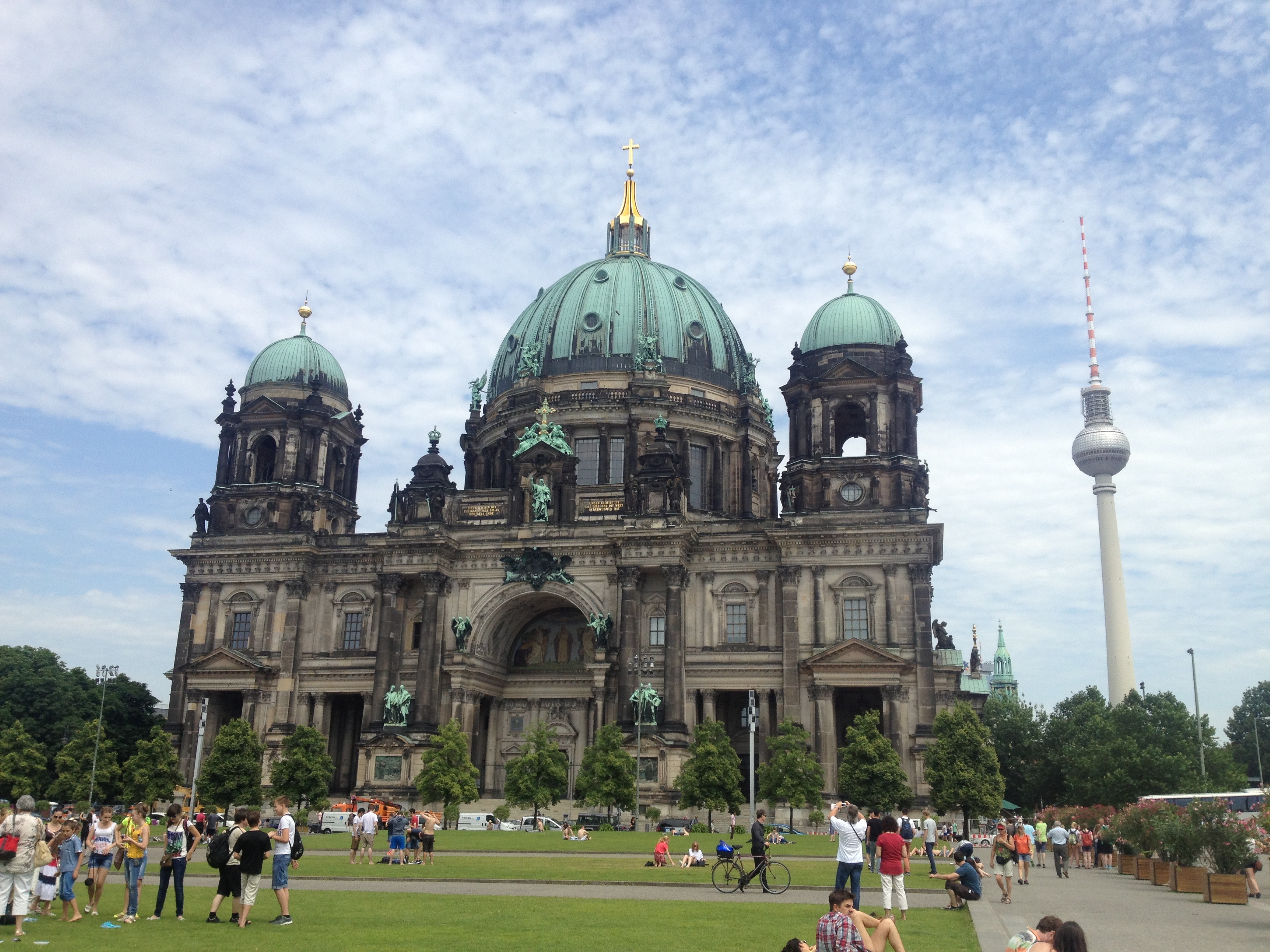
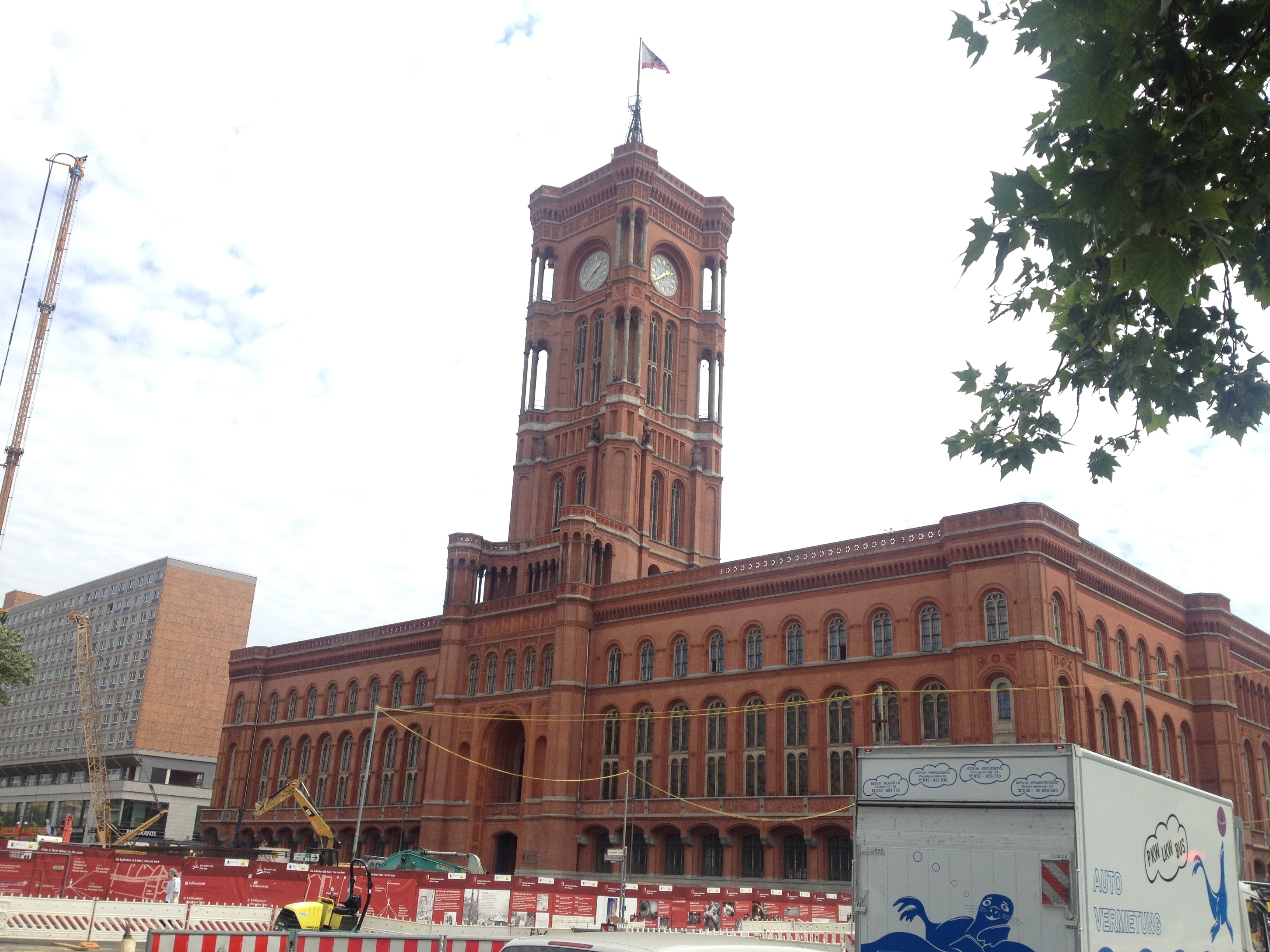
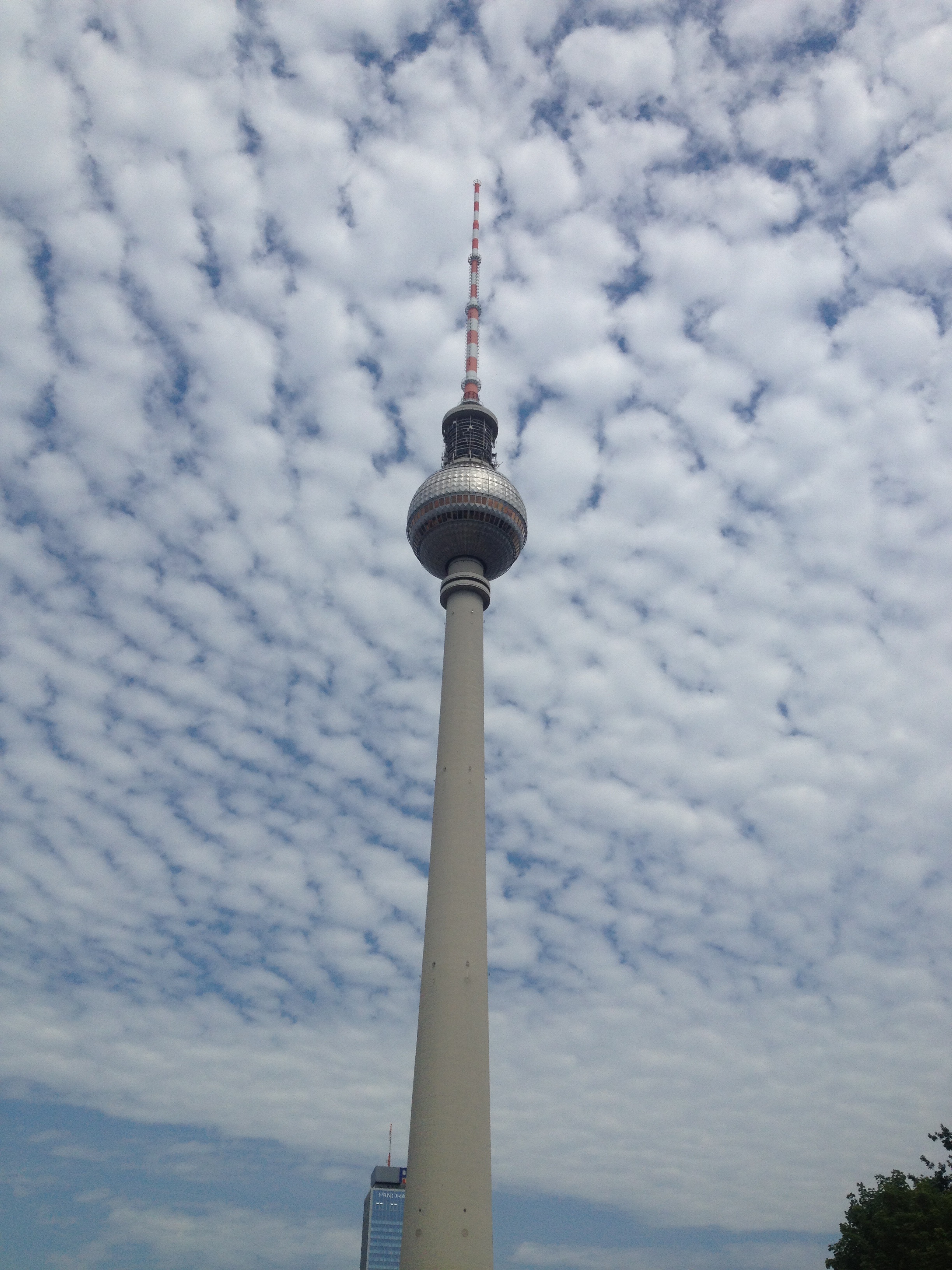
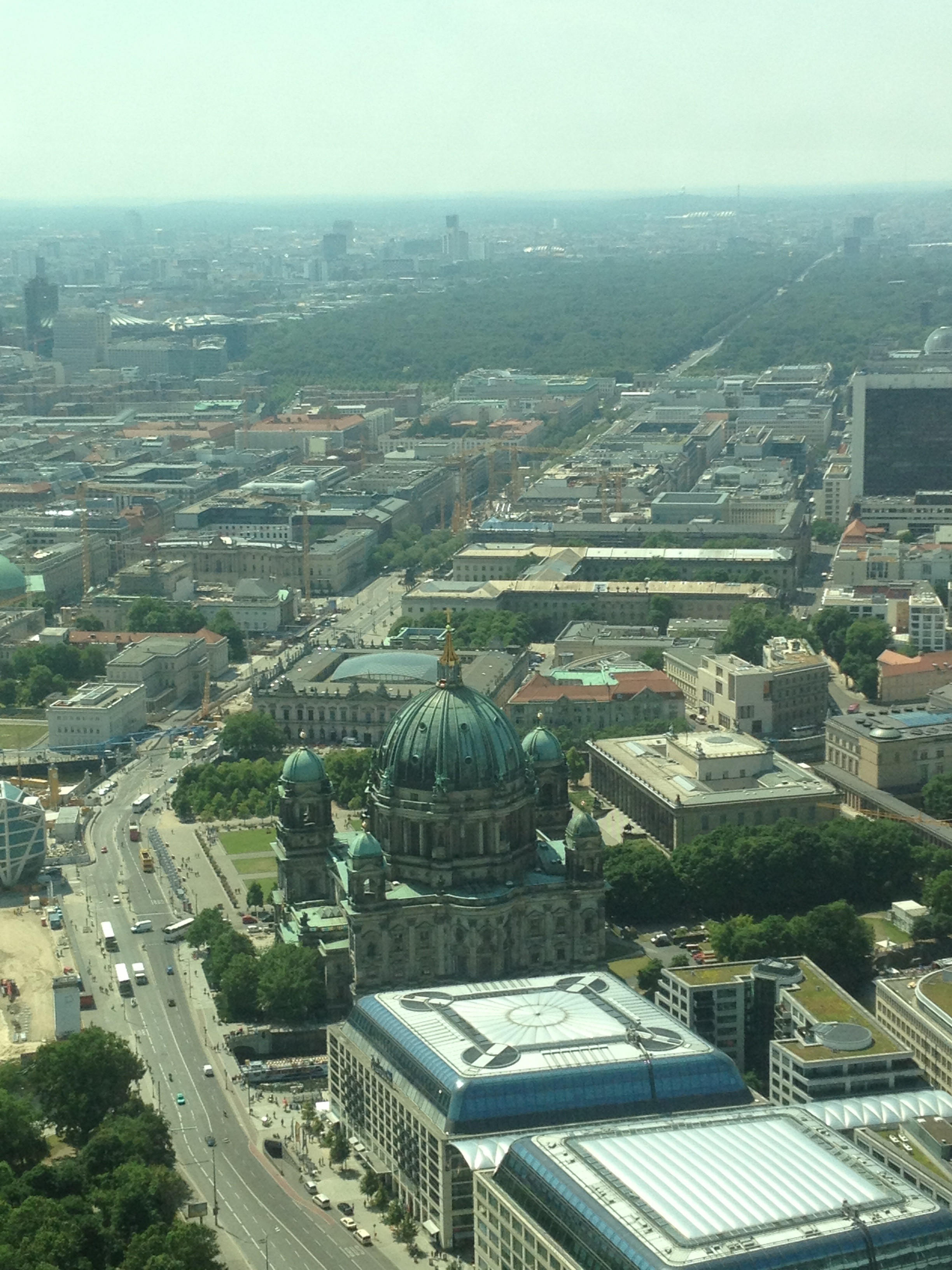
After the memorial I headed back east and eventually reached Museums Island, a block of land that is surrounded by canals, so technically an “island”, and is home to a cluster of art museums. I had a wander around, admiring some of the beautiful buildings, but decided I wasn’t really in the mood for museums. I continued along the path, looking at a few churches and stopping for a photo with the Karl Marx stature – the sociologist in me just couldn’t resist. Eventually I arrived at Alexanderplatz and the TV Tower. It’s not a particularly pretty building, but it is tall, so I went inside and took the elevator to the top. The TV Tower is one of the few sky scrapers in Berlin, and by far the tallest building, so it provided a complete panoramic view of the city, although it was so high up that so many of the sights were minuscule and almost unrecognisable – even the Brandenburg Gate looked no higher than a couple of centimetres from up there. There was a fancy rotating restaurant at the top of the tower, but I decided to save my euros and eat at Hackescher Markt, a nearby market down on the ground. I think there might have been more of the Trip Advisor tour, but the day had involved a lot of walking and I’d found myself rather exhausted. For something that’s isn’t really extremely exciting, sightseeing can be exhausting. I finished my lunch and jumped on the U-Bahn to head back home.

Berliner Dom, the cathedral on Museums Island.

Berliner Dom, the cathedral on Museums Island.

The Karl Marx statue.

The Karl Marx statue.

The Rotes Rathaus, or Red Town Hall, near Alexanderplatz.

The Rotes Rathaus, or Red Town Hall, near Alexanderplatz.

TV Tower.

TV Tower.

View of Berlin at the top of TV Tower, from the Tiergarten to Museums Island - essentially, what I'd just walked.

View of Berlin at the top of TV Tower, from the Tiergarten to Museums Island – essentially, what I’d just walked.

***

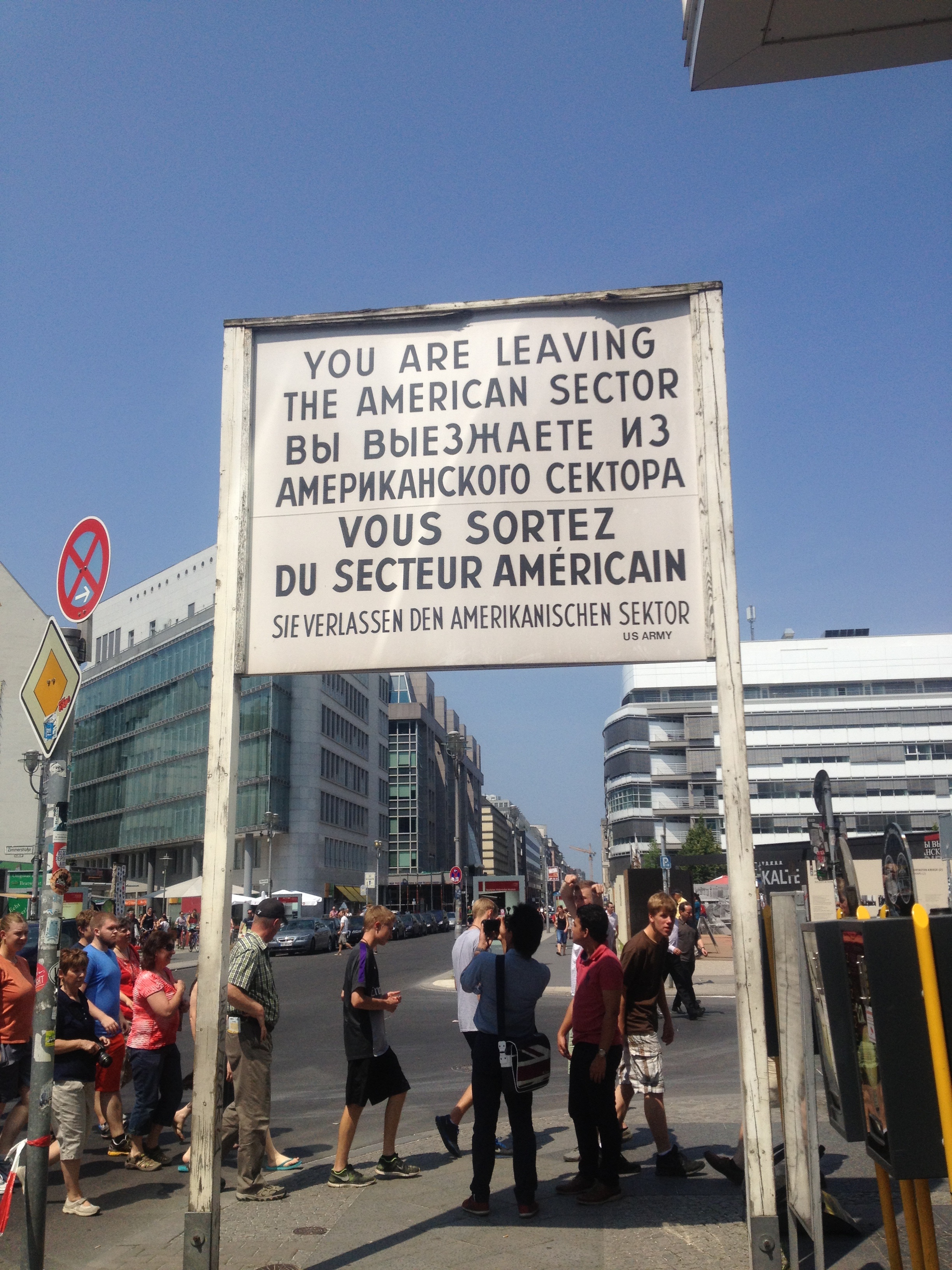
The only other touristy sightseeing I did during the week was a few days later when I visited Checkpoint Charlie, where you can still see the sign that “You are now leaving the American sector”, a remnant from the days of the war. However, with the men in uniform trying to sell you pictures with them, it’s all a little gimmicky and so full of tourists that I could only bring myself to stay for a short time. I would have visited the Jewish museum, but the weather had gotten so hot over the past few days I could bring myself to walk the rest of the way. It was there at Checkpoint Charlie, though, that I reached something of a turning point within myself: I made the conscious decision that I wanted to be a traveller, not just a tourist. I didn’t want to just check off the list of sights listed in the guidebook and take photos in front of the famous monuments – I wanted to experience what the city was really like, meet the locals and see things from their perspective, and see what Berlin was for them. Being a tourist can be exhausting, with the weird pressures you can feel from people to “do everything” and go to all the “must see” sights. For me, being a traveller is all about doing whatever you wanted to do, and going places that you actually want to be. I’d seen some of the wild and crazy sides of Berlin, and if was looking for more of that, I definitely wasn’t going to find it in a Lonely Planet book.

Checkpoint Charlie.

Checkpoint Charlie.

Stockholm Syndrome

Scandinavia as a region is not known for being cheap, and Stockholm is supposedly one of the most expensive cities in Europe. It was an unsettling thought – the progressive price increases hadn’t let up since I left Thailand. However, Susanna had assured me I’d only really need two days each per city to the see the best bits of both Stockholm and Copenhagen, so I could take small comfort in the fact my time in this expensive area would be relatively brief. Aside from being expensive, Stockholm was also renowned for being a beautiful city – both in its physical aesthetic, and the people who lived inside it. “Stockholm is such a fashionable city,” Susanna had told me in our discussion about my future travels. “Everyone there is just incredibly good-looking and so well dressed. I swear, if you lived there you would have to spend nearly your whole paycheque on clothes just to keep up with the fashion.” From what I’d seen of Swedish men during my time in Australia, I can’t deny I was more than a little excited to be entering this supposed treasure trove of eye candy.

***

Unlike the trip over from Helsinki, navigating the Stockholm upon my arrival was not such smooth sailing. From the map in my guide book I could see that the port was a fair way out from the main city. Actually, that’s only half true – I could very easily see the city and the part of Stockholm I was trying to get to. As the crow flies it would have been a relatively short walk. The problem was that it was across a huge gulf in the river that ran through the city. Later, a local would tell me that Stockholm is known as the Venice of Scandinavia – I hadn’t heard the term before, but by the end of my stay I certainly believed it. Unfamiliar with the public transport system that didn’t even really seem to come down this far in the first place, I was forced to catch a taxi. I asked for the meter – he said there was traffic, and offered me a price that would supposedly be better. He asked for it Swedish Krona – I only had Euros. It was a complicated exchange that didn’t even seem to be helped by the fact he spoke English, but in the end I think the price was fairly decent. I tried not to think about it to much – You’re in Stockholm now, I said to myself. It’s not going to get any cheaper than that.

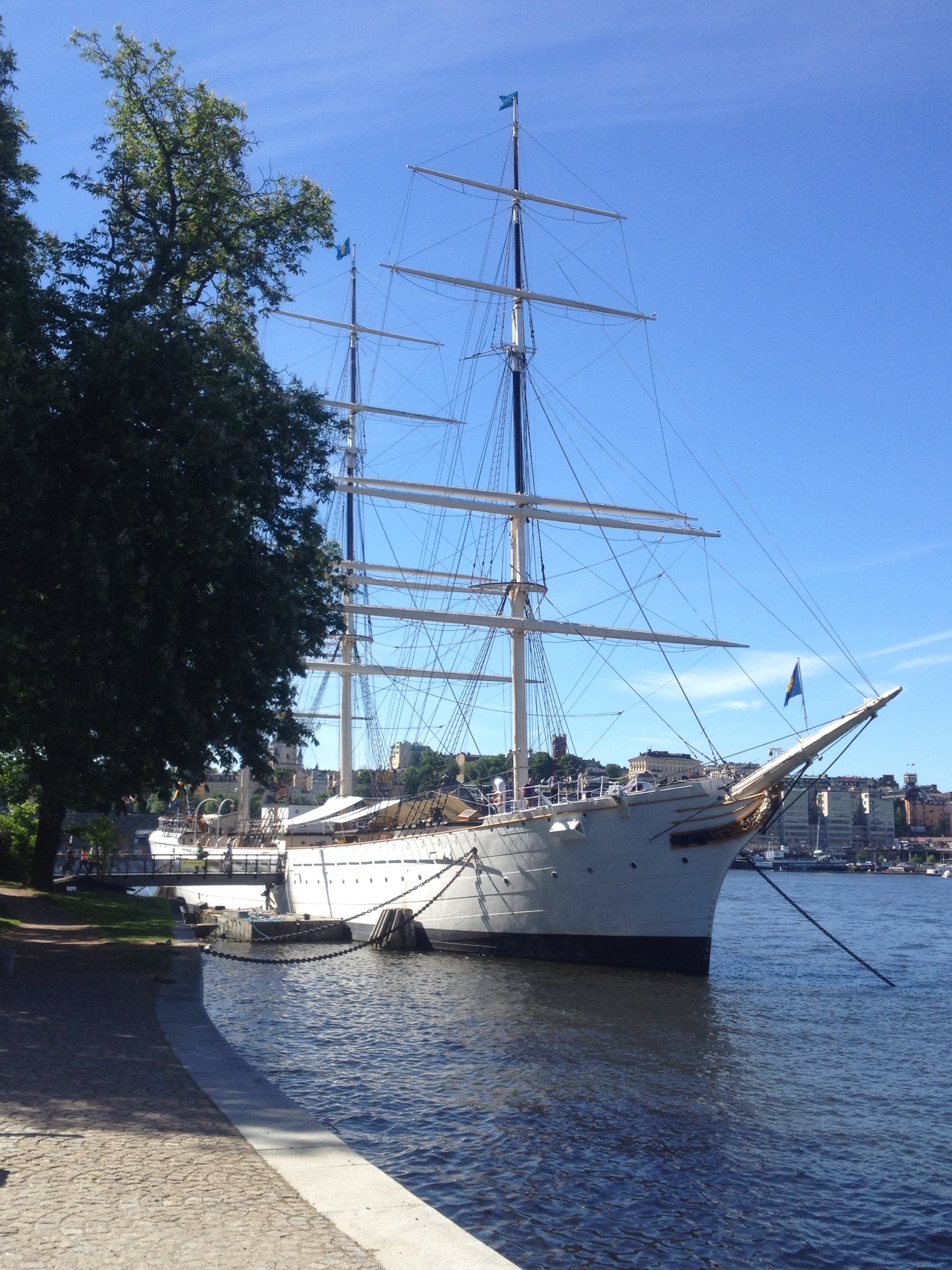
During my time in Helsinki, I had attempted to search for Scandinavian hosts in Sweden and Denmark, so far to no avail. While I was still desperately clinging to the hope of finding a host in Copenhagen, I resigned to the fact that I would also be paying for accommodation in this beautiful, expensive city. I arrived at the hostel without a reservation, hoping for the best. The hostel had a nautical theme, and a large number of the beds were located in cabin dorms, inside a renovated ship docked out the front in the river. Lucky, they still had room in the 17 bed dorm, located on solid ground and considerably cheaper. Check in wasn’t until 3pm though, so I used the shower, dropped off my bags in luggage storage and set out to explore the city. Stockholm lived up the expectations. Everyone just looked so good. Even people who weren’t conventionally attractive were so well dressed that walking down the streets felt like being an extra on a TV show or movie where the detail in every single background character had been so meticulously planned. The fact that I had been wearing the same tired clothes and repeated outfits for nearly two months didn’t do wonders for my self esteem, and a mild paranoia kicked in where I felt as though just being there was letting the city down, and lowering its standards.

The ship that was actually part of my hostel.

The ship that was actually part of my hostel.

***

Like most cities in Europe, Stockholm had a travellers pass, the ‘Stockholm card’, that you could buy which provided you with either free or discounted entry to many of the city’s attractions, and free unlimited use of the citywide public transport. At first this excited me – regular readers will know how excited I get about good public transport – but further investigation revealed that Stockholm as a city didn’t really have that much public transport. In fact, it just wasn’t a very big city. There were also other passes that gave you access to public bike stands around the city – you swipe the card, the bike rack unlocks a bike, and you can ride it anywhere so long as you return it to another stand somewhere in the city within three hours. However, all these options were only really of any value if you were there for at least 3 or 4 days – the bike pass itself came for a minimum of three days. Given I was only staying for a maximum of two nights, it hardly seemed worth it. I wasn’t planning on visiting a huge number of museums, and I wouldn’t be straying too far from the city centre, which was near enough to my hostel. And so began my extensive walking tour of Stockholm.

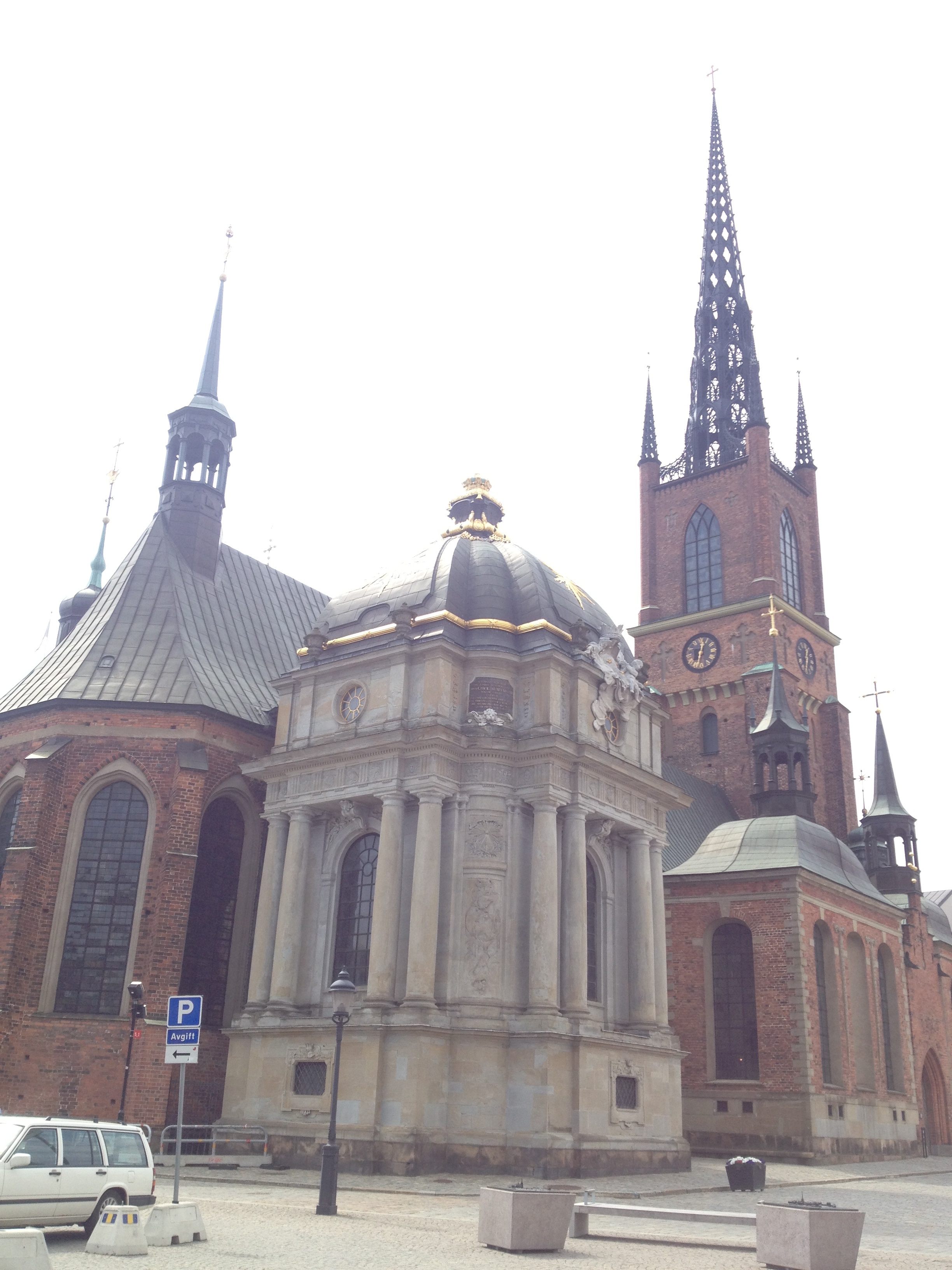
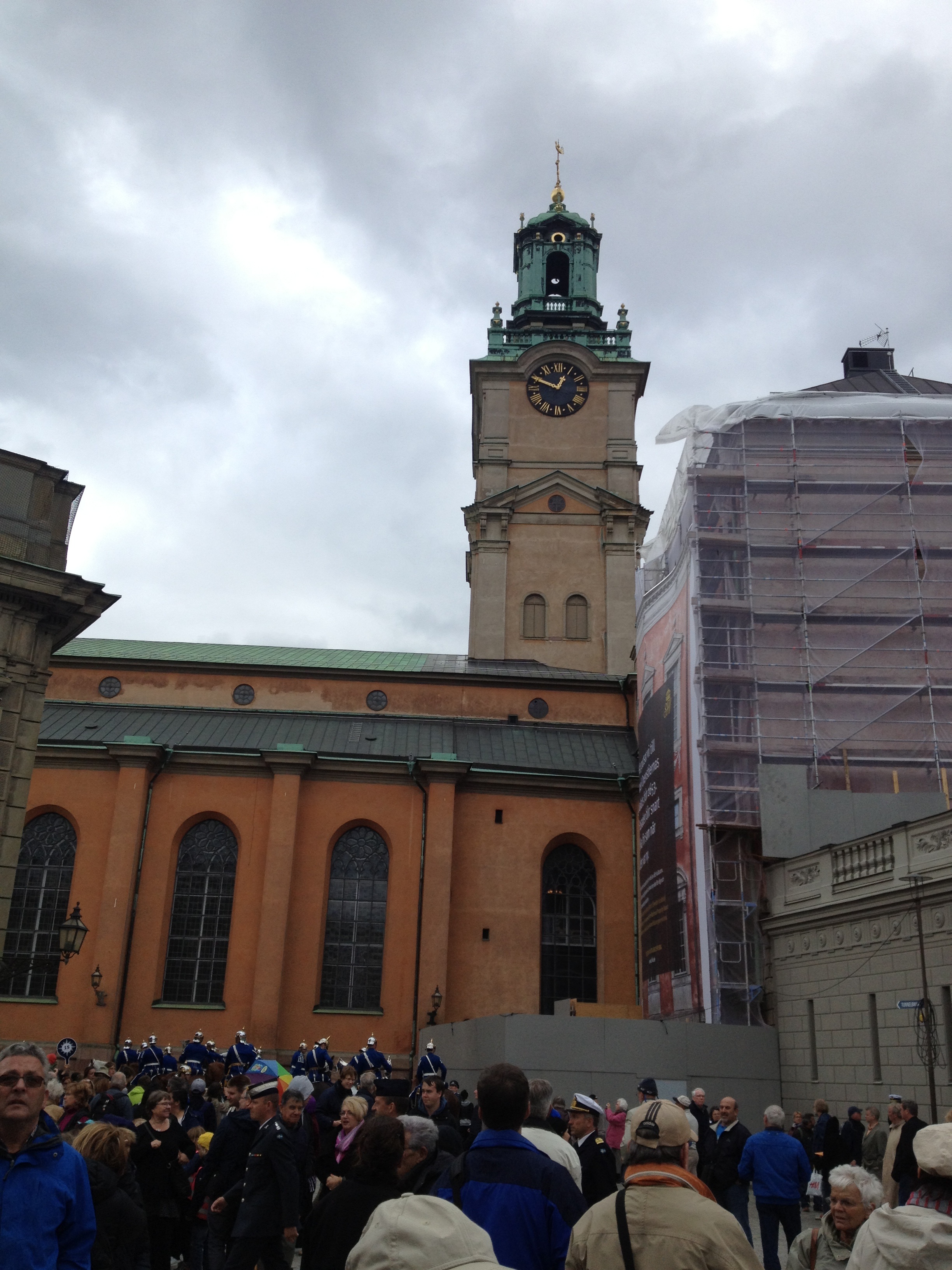
Traversing the city by foot was actually a great way to see the city, in my opinion. With the exception of the Gamla Stan area, whose streets mirrored olden days of the 12th Century, there was a quaint, modern beauty to the streets of Stockholm. Clean, refined and operating like a well-oiled machine, it fit the model of typical Scandinavian efficiency that they were generally well known for. Crossing the road was easy because the cars drove slow and steady, but once again locals seemed reluctant to even contemplate jaywalking. I visited a few of what appeared to be the major sights – I honestly didn’t know that much about Stockholm, and had never heard of any ‘must see’ attractions. There was the Riddarholmen Church, a beautiful old building that was home to a large number of tombs, mostly containing nobility from Swedish royal houses. After that was the City Hall, which included a huge tower that provided 360 degree views of the surrounding city. When I went to buy a ticket to go up, the attendant gave me a warning. “The elevator is broken today, so you’ll have to climb the stairs the whole way.” I couldn’t help but laugh – the building looked so old I hadn’t even expected it to even have an elevator. I’d been climbing up the steps of every attraction from the Great Wall of China to St Isaacs Cathedral, and a took a moment to think of Kaylah as I assured the woman that I would be fine with the stairs. It would have been she had wanted.

Riddarholmen Church

Riddarholmen Church

The interior of Riddarholmen church - complete with token scaffolding.

The interior of Riddarholmen church – complete with token scaffolding.

City Hall and the tower that I climbed.

City Hall and the tower that I climbed.

There were a lot of stairs though – the upper reaches of the tower, where the elevator didn’t go, was a narrow red brick hallway with a pointed ceiling, which went around and around and around and around and around and around and around and around to the point where I thought that I was trapped in some kind of magicians trick and I was going to end up at the bottom of the tower without ever having emerged at the top. I finally reached the summit though, and it was definitely worth the hike. The panoramic view gave me a better understanding of the city’s layout: the different islands and peninsulas it was composed of; the wide river and multiple canals that divided them up; the obvious architectural distinctions between the old city and the newer parts of Stockholm. It was a cold and windy day, but I stayed up there for quite a while drinking in the sight. Unlike St Petersburg, Stockholm was a city that was quite beautiful from both the street level and from an aerial perspective.

The narrow, never ending staircase.

The narrow, never ending staircase.

The view from the top provided sweeping panoramic views of the city.

The view from the top provided sweeping panoramic views of the city.

***

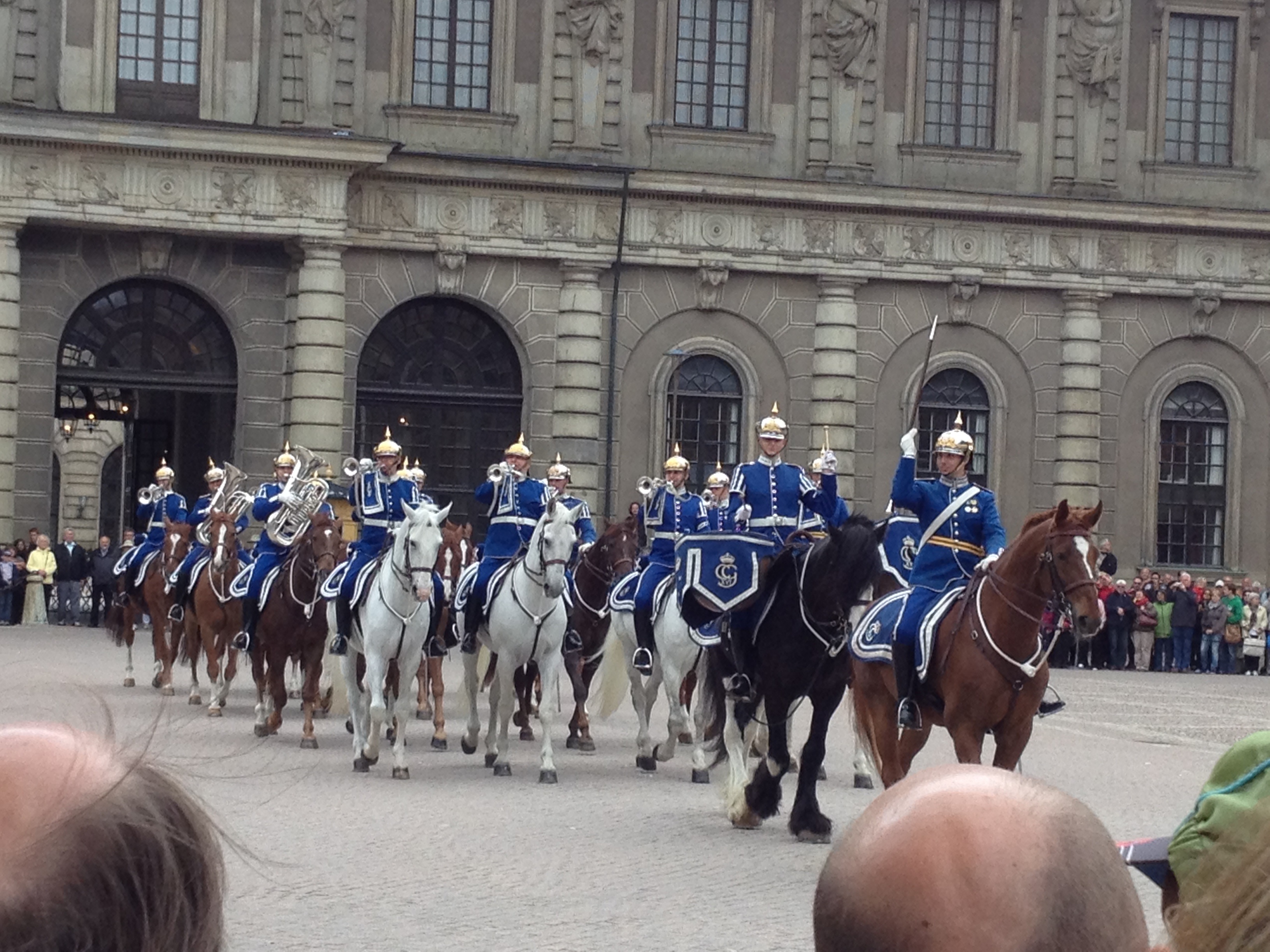
My second day in Stockholm had substantially better weather, clear blue skies and wam, invigorating sunshine. I set out into the bright morning to explore Gamla Stan, the Old Town of Stockholm. It was a tiny, charming area of the city, with narrow cobbled streets that were sloping in all directions, with some so steep I was actually a little out of breath after climbing them. This was the picturesque Stockholm that looked like it could have been lifted out of a fairy tale, or a children’s storybook. I wandered around the narrow roads until I got to the palace, where I had arrived just in time for the changing of the guard. A whole bunch of Swedish soldiers marched out of the main courtyard, half of them comprising a marching band on horseback, while another set of guards moved in to take their place. I joined the throng of tourists that had gathered to watch, thoroughly impressed by the ability to play their instruments on horseback, more than anything else.

The main palace in Gamla Stan.

The main palace in Gamla Stan.

The horseback band at the Changing of the Guard.

The horseback band at the Changing of the Guard.

The charming little streets of Gamla Stan.

The charming little streets of Gamla Stan.

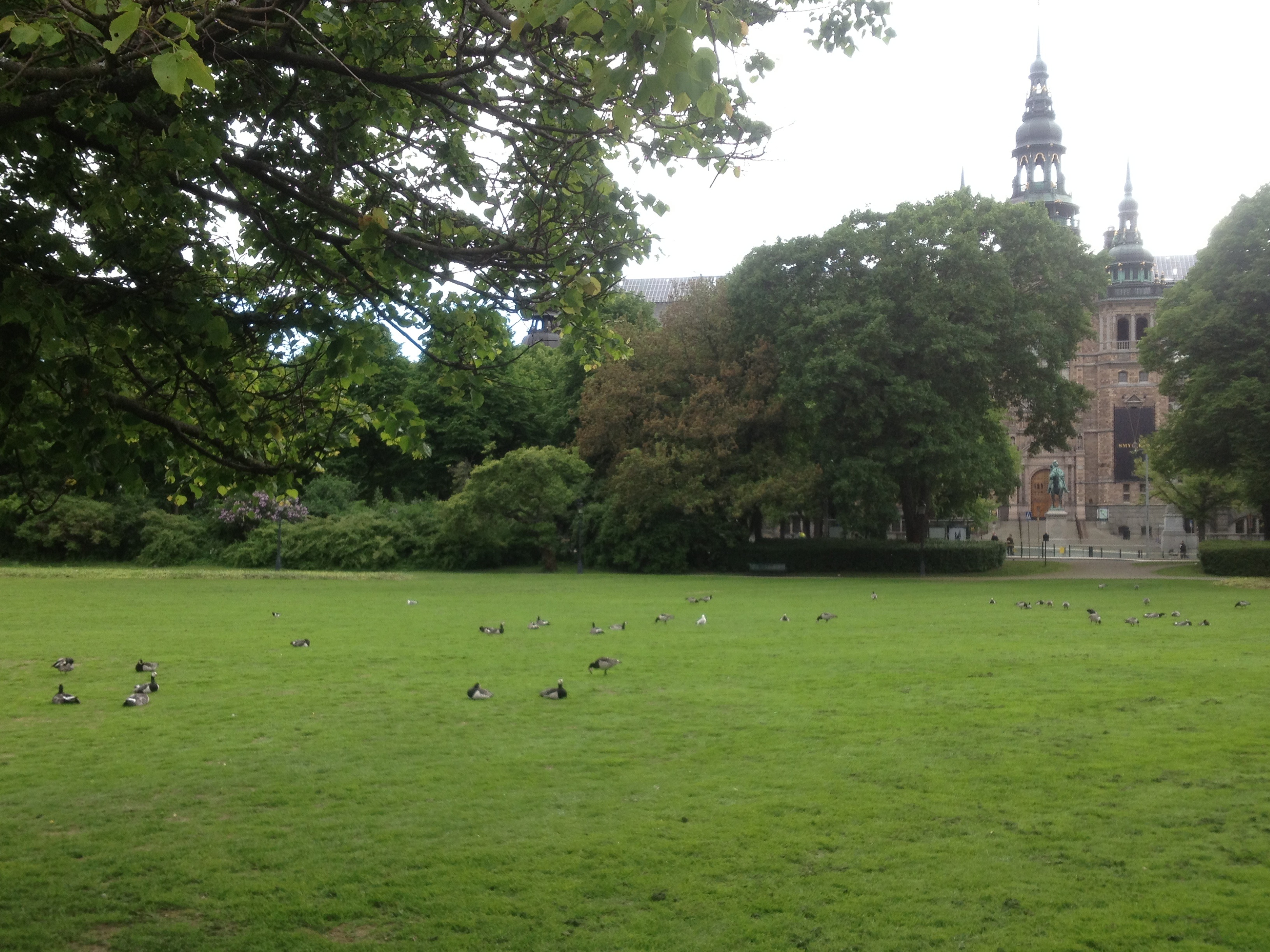
There were lots of sightseeing tours in Stockholm, most of them by boat. It seemed like the most obvious and easiest way to see the city, dissected as it was over and over again by the multiple canals, but as I examined the list of tours and respective prices, I couldn’t help but feel it was such a grossly touristic thing to do, not to mention they seemed far too overpriced. So instead I spent my afternoon on an island called Skansen. All the islands of Stockholm are joined by bridges, so I strolled through the more modern streets of the city until I reached Skansen, an island almost completely made up of greenery: forests and parks and grassy clearings and trails through the woods. There was even a theme park with a few rides, but I had a more leisurely afternoon in mind. Everywhere there were people exercising, going for their afternoon and evening runs, and I followed along the roads that ran along the outside of the huge island, stopping to admire some of the statues along the way, before turning inland and hiking off a short way up into the hills. It was like a slice of natural heaven, completely isolated, right in the middle of the city. You would never have guessed it though – there was only the faintest sounds of the city in the distance, so quite that you really had to strain your ears to even notice them. I found a sunny clearing at the top of one the hills, and took a break to sit down and work on my blog. There’s something about that kind of natural environment that really gets the creative juices flowing. Or maybe I was just so far from any kind of distraction – it’s hard to be sure. All I know is that I spent a long time hanging out on that island. It was as though the weather was trying to make up for the unusually long and cold winter, and I was more than happy to enjoy the penance it was paying.

One of the grassy areas on Skansen.

One of the grassy areas on Skansen.

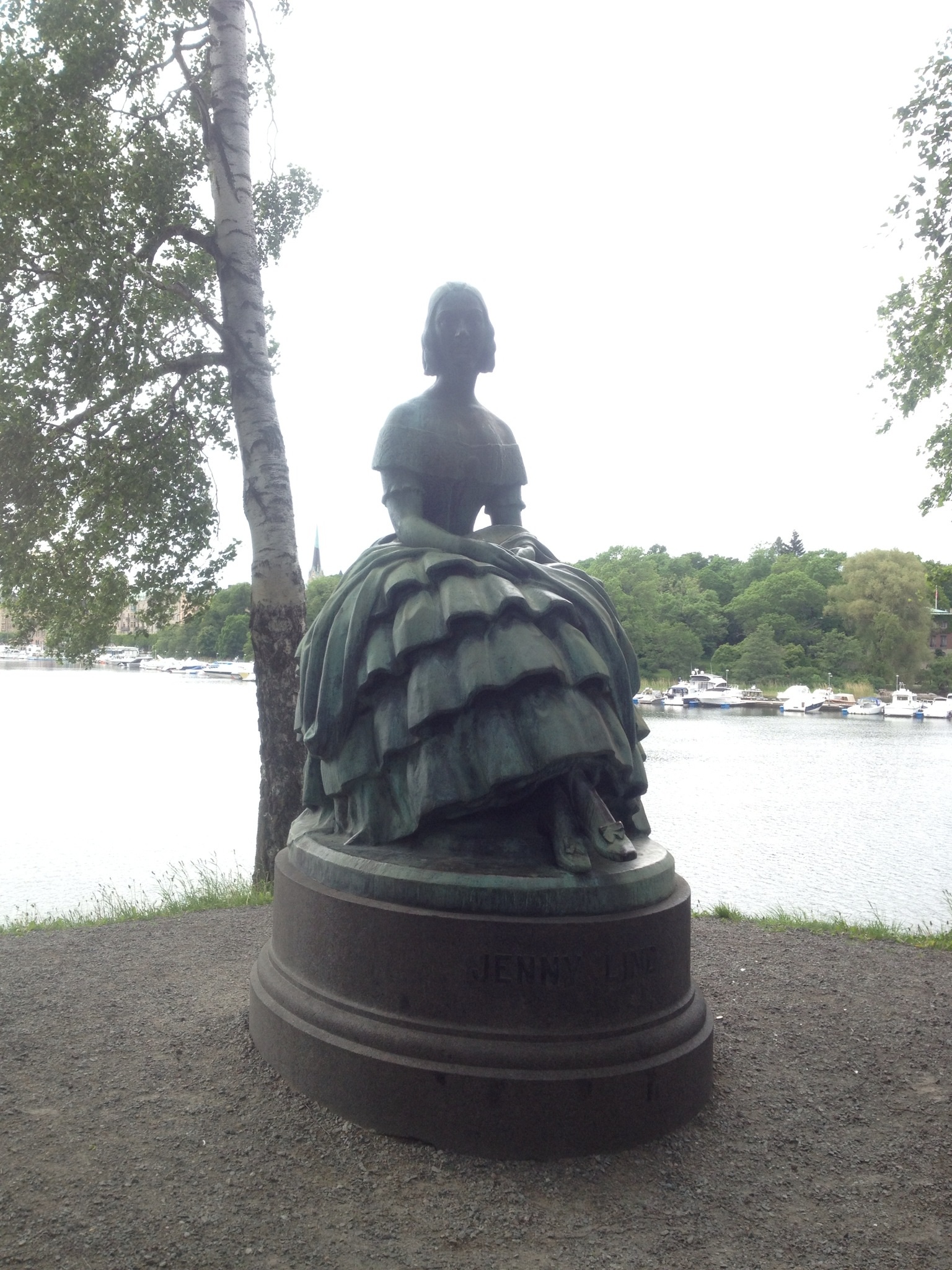
One of the Skansen statues along the river side.

One of the Skansen statues along the river side.

One of the more isolate parts of Skansen, were I took some time to myself.

One of the more isolate parts of Skansen, were I took some time to myself.

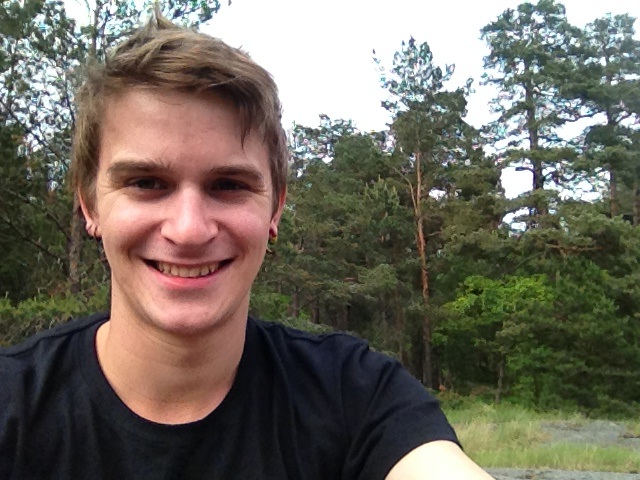
Skansen selfie.

Skansen selfie.

***

It’s hard to really say what I did with my nights in Stockholm, because there was really so little of them. I’d spent longer than I’d realised on my first night pouring over maps and timetables, trying to get a better idea of where I was going in Europe and when I would be there, to potentially avoid some of the anxieties I’d had upon arriving here. When I decided it was time to start thinking about dinner – I’d assumed it was approaching six o’clock – I was shocked to see that it was already well after nine. The days were so long that I was literally forgetting to eat. I was there during for a Monday and Tuesday evening, so I decided to give checking out the nightlife a miss – it would probably be, yet again, very expensive, and to be honest the city wasn’t really inspiring a party mood in me. I hung around the hostel and chatted to a few travellers – a few nice and friendly people, a couple of shy and quiet ones, but no one of particular note, or anyone I attempted to stay in contact with.

I guess I spent a lot of time on my own, reflecting on how far I’d come on my journey, and how it was really only a fraction of how far I still had to go. After the close confines of the Trans-Siberian the solitude still felt like something of a luxury, though I knew sooner or later I was going to get sick of being alone. But Stockholm had definitely been a suitable city for solitude and contemplation – the gentle and non-confronting beauty was the perfect background for being alone with my thoughts.

Hello Panda: Beijing Zoo

After my first night in Beijing, I still had a full day before meeting my tour group at the hotel in the afternoon. I knew that once I met up with them, most of us would want to do the major things in Beijing such as the Forbidden City and Tiananmen Square, so I decided to find something else to do that might not as be as popular among the group. After collecting a city map from hotel reception and studying a guide to the Beijing subway system, I discovered that there was a station not too far from the hotel, and also one located right next to the Beijing Zoo. Figuring it would be a quick and easy expedition to manage by myself, I set out into the streets again to tackle Beijing in the daylight.

***

Getting to the first station was a mission in itself. I thought I was going the right way, following the major roads, but I ended up at Wangfujing Station, which was in the complete opposite direction from my desired destination of Tiananmen East Station. It was only one stop difference, so I just considered myself lucky I’d found a station at all and descended into the underground subway system. Every entrance point has a security check and bag scanning conveyor belt, just like going through customs at an airport. When I finally made it down into the station, I tried to buy a ticket to Beijing Zoo Station. It took my a while to realise the fare for the subway was just 2 yuan – less than a dollar – no matter where you were going. The train system was also clean, fast and efficient, much like the public transport I’d used in Bangkok and Singapore, and I found myself internally cursing Sydney for still not lifting its game. I had one stop to transfer to a different line, but soon enough I had arrived at the zoo.

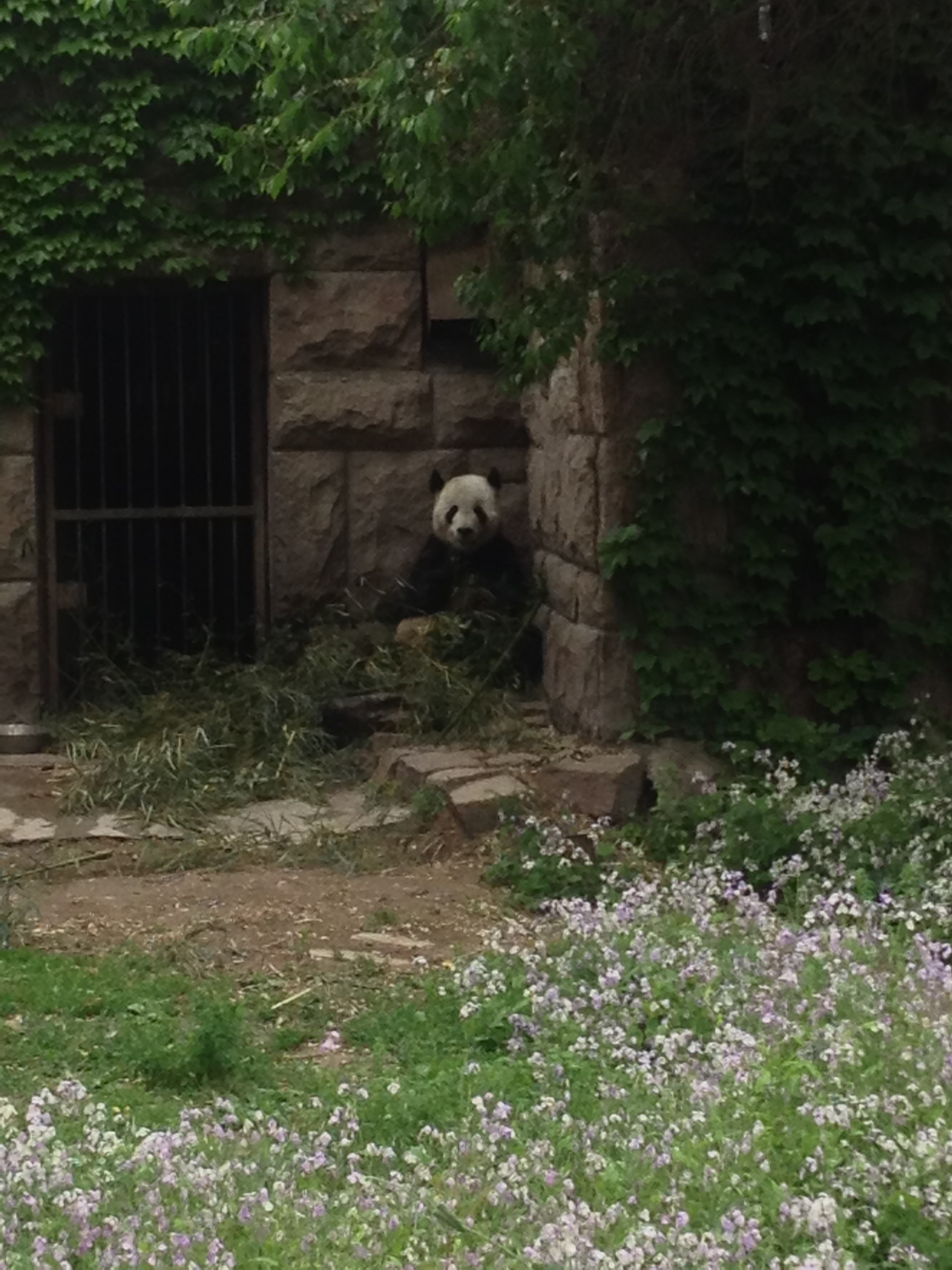
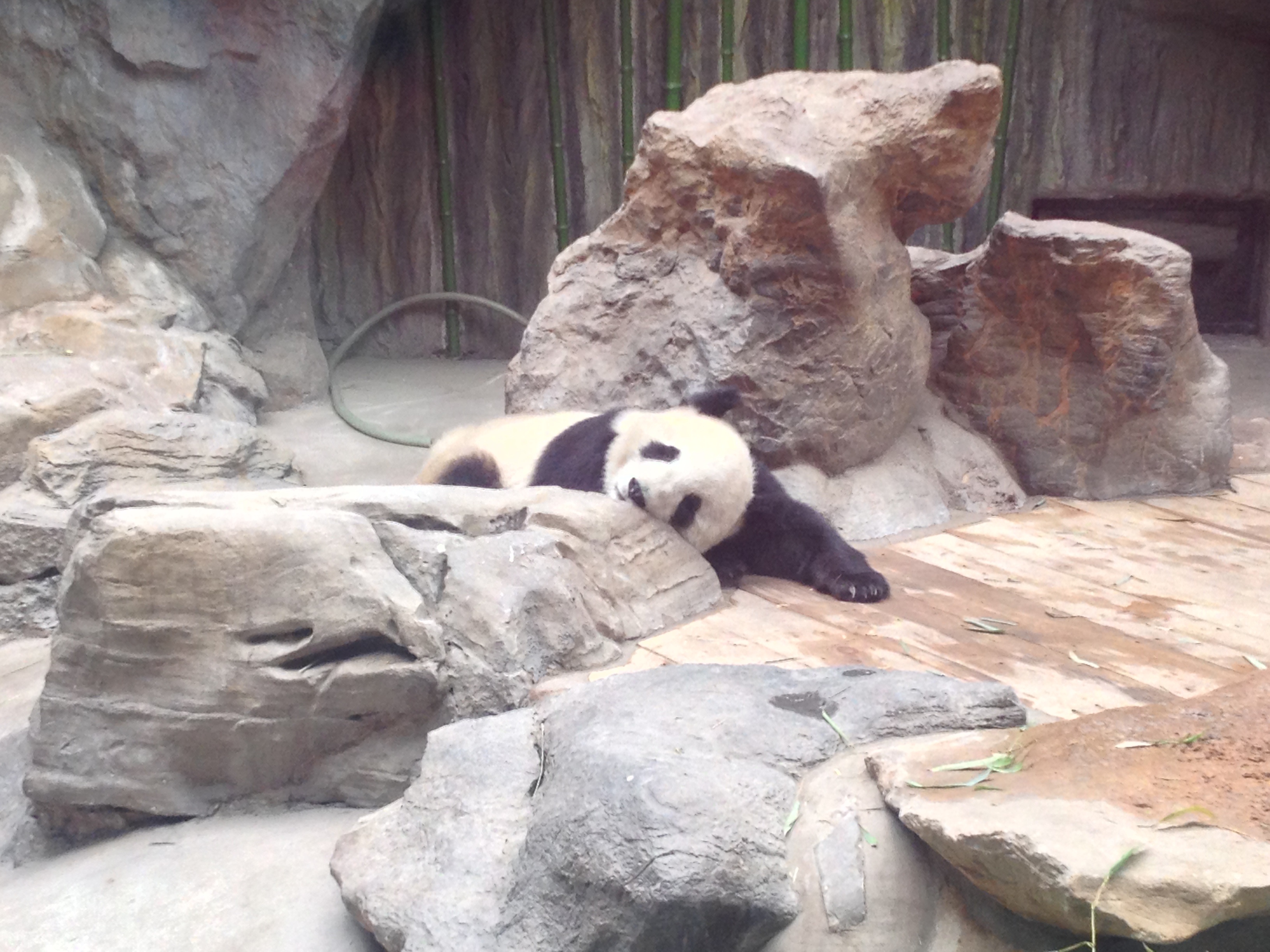
Given that I was in China, it was very clear as to what was the major attraction at the Beijing Zoo. On top the entrance fee into the zoo, there is an additional charge for admittance into the Panda House – the exhibit that in home to the zoos five panda bears. Once you make your way past the billboards of panda history – of which the English translation was almost too painful to read – and the scores of iconic panda merchandise, you can actually get a glimpse of the animals. I have to admit they are cute, and their colouring definitely lends them a cuter appearance and reputation that almost all other bears lack. Yet like most animals in zoos, they didn’t do a great deal. Even wild pandas are known for being particularly lazy, so I wasn’t surprised to find that all the pandas were either sitting by themselves, chewing away on bamboo, or sleeping. All around me were crowds of Chinese tourists, squealing with excitement and posing for photos with the pandas in the background, and while I appreciated the rare sight, I didn’t exactly share their enthusiasm. After all, for all that the bear was doing, it could have easily swapped places with me in a day in my life back home, and I don’t think anyone would have really noticed.

Eating panda.

Eating panda.

Sleeping panda.

Sleeping panda.

***

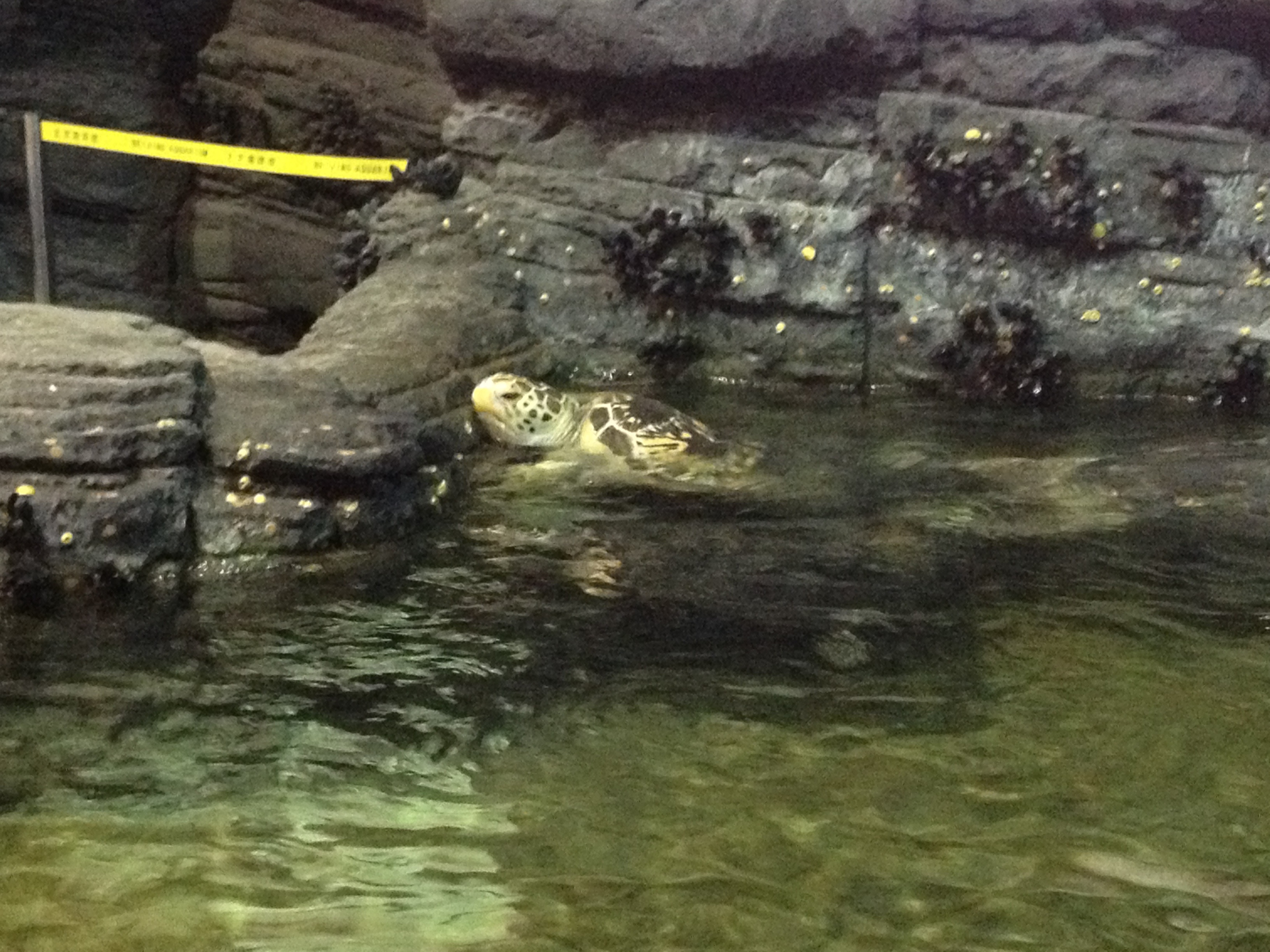
The rest of the zoo was, to be completely honest, quite depressing. There were some nice sculptures and some beautiful scenery, but on the whole the zoo was quite dirty. A lot of the animals exhibits looked quite inadequate too. While the pandas were treated to luscious floral fields, I found wolves who were living in no more than a red dirt landscape with a few burrow holes, and no real space to run around. One on the two pools in the polar bear exhibit was a foul green colour, though one of the bears did put on a bit of a show swimming around in the other, less filthy body of water. The highlight of the whole complex was probably the aquarium – obviously newly built, and incurring another entrance fee of its own. It provided the chance to get particularly close to some of the marine animals, though again I wondered if there was adequate space for some of them – four turtles circled around a small, shallow rock pool, seemingly trying to mount the rocky walls and escape. There was also a show with the beluga whales and bottle nose dolphins, and though I couldn’t understand any of the commentary, I watched and enjoyed the tricks that they performed, including synchronised jumping, and one of the animal trainers riding a dolphin like a surfboard.

The wolves in their less than adequate exhibit.

The wolves in their less than adequate exhibit.

Polar bear swimming in the cleaner of its two pools of water.

Polar bear swimming in the cleaner of its two pools of water.

Turtle almost trying to escape from it's exhibit.

Turtle almost trying to escape from it’s exhibit.

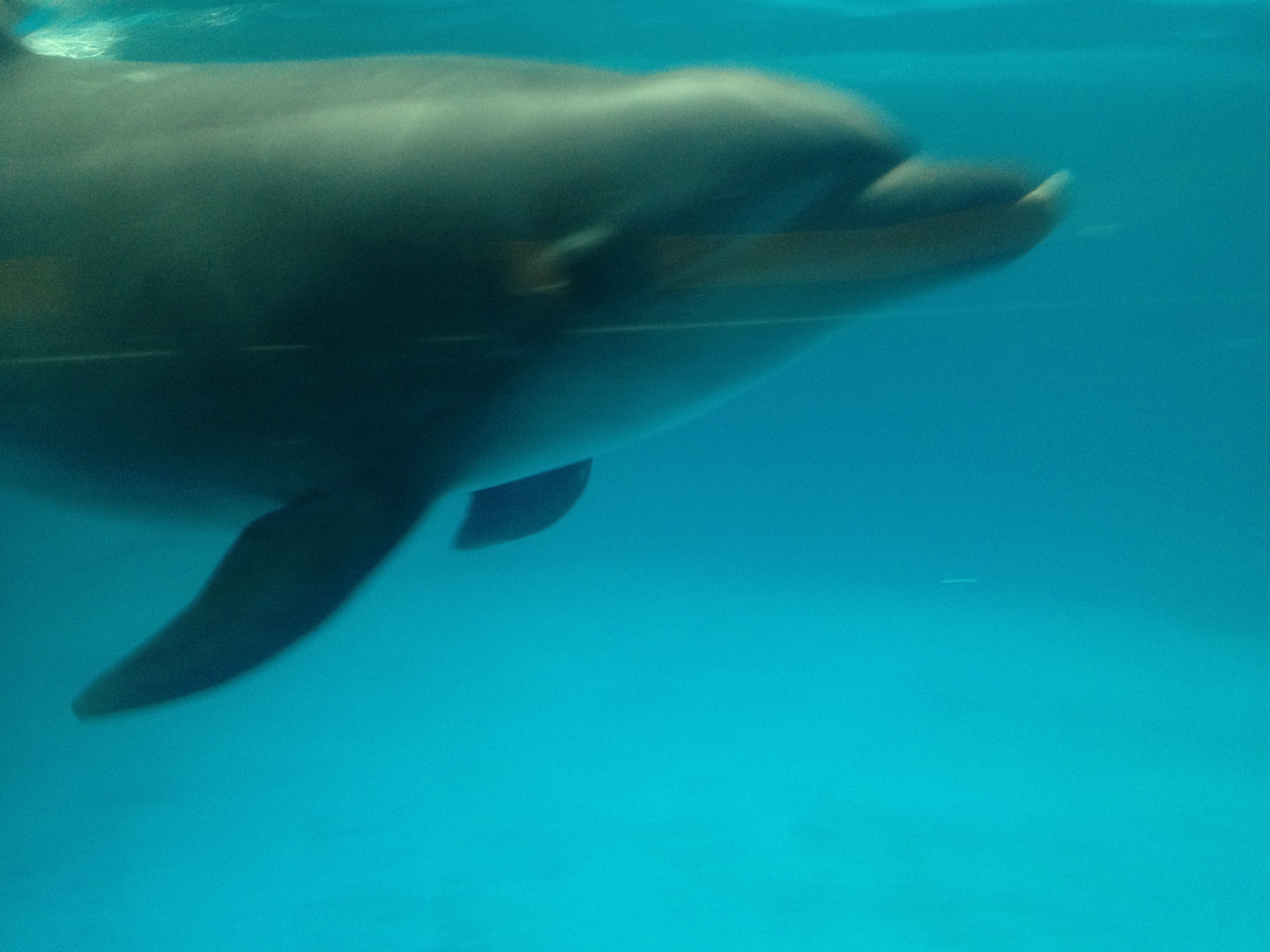
The dolphins still seemed quite enthusiastic about life, at least.

The dolphins still seemed quite enthusiastic about life, at least.

Synchronised jumping in the dolphin show.

Synchronised jumping in the dolphin show.

***

I’ve never known how I really feel about zoos. I know they play important roles in the conversation of endangered species, but I sometimes feel great sympathy for the poor animals locked away inside less than adequate exhibits. When I visited the Western Plains Zoo in Dubbo last year, I learnt that some of the animals that won’t breed are castrated to keep them under control. I was horrified – I pictured some science fiction scenario in which humans were the animals in a zoo, and myself being castrated because I refused to mate with the other female “animals”. I found it a little disturbing, and have ever since found it hard to pinpoint where zoos stand on my moral compass. Pandas might be content to sit around and eat and sleep, but my heart goes out to those captive wolves, locked in a glass box when they should be running free in the wild.