The Geometry of Genocide: Triangles and Tales from a Concentration Camp

While I was trying my best to avoid the typical tourist scenes and experience the more authentic culture of Berlin, there is one historical aspect of the city that is simply impossible to ignore. So on Wednesday I set off on the S-Bahn heading north to the Sachsenhausen Memorial Museum, located on the site of one of the “model” concentration camps where prisoners were taken in WWII. It was located approximately an hour north of central Berlin, and it took me even longer after getting lost in the surrounding suburban streets, but the trip was worth it – ‘enjoyable’ isn’t exactly a word use can use to describe a visit to an old concentration camp, but it’s definitely a moving experience that you come away from with more of an appreciation of your life, and of life in general.

The cute little suburban German streets I wandered through while getting lost on my way to the museum.

The cute little suburban German streets I wandered through while getting lost on my way to the museum.

***

The entrance to the Sachsenhausen Memorial Museum.

The entrance to the Sachsenhausen Memorial Museum.

When I visited the Killing Fields near Phnom Penh in Cambodia, Laura had described the place as “harrowing”. I still feel like it’s the best fitting adjective to describe a visit to a location tainted with a grim history of mass genocide. While the Killing Fields were particularly morbid, with broken skulls and bones depicting the barbarity of the Khmer Rouge clearly visible in their monuments, Sachsenhausen Memorial Museum was a little more refined as a tourist attraction. After passing through the main entrance and picking up an audio guide, and listened to the history of the camp as I wandered down the same path that hundreds of thousands of prisoners were brought down during the Second World War. As I waled through the wrought iron gates, I noticed there were words – a slogan, or a motto – worked into the metal: Arbeit Macht Frei. Translated into English it reads ‘work will set you free’, something that is hard to mistake as anything other than cruel irony given how things ended up for most of the prisoners who walked through these gates. In the courtyard I sat and listened on the audio guide to testimonies of people who had been hit, kicked and beaten when they were down, right at this very spot. It was almost too overwhelming to listen to, and I moved on before hearing them all, already feeling a little depressed as the scenes were visualised by my imagination.

Main gate through which prisoners were escorted.
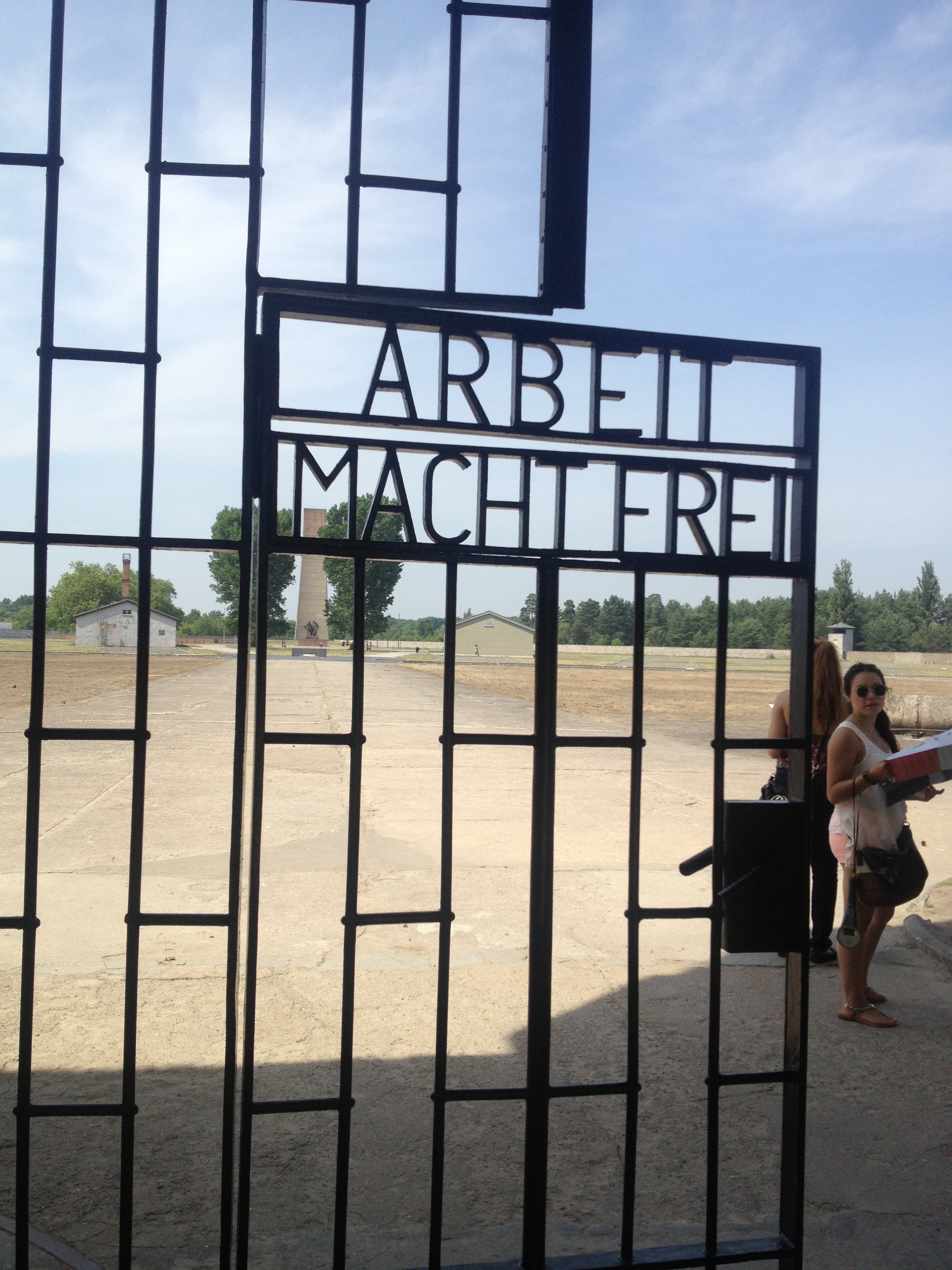
Main gate through which prisoners were escorted.

Metal inscription on the main gate.

Metal inscription on the main gate.

This concentration camp was opened in 1936 as a model design for other camps, although it ended up being much more than just an example – Sachsenhausen become a fully functioning concentration camp and prison. The architecture was designed to symbolise the subjugation of prisoners and the absolute power of the Nazi regime – the triangular design was built in a way that meant while in the grounds, prisoners were unable to escape the gaze of the guards in the watchtowers. Most of the barracks that were the prisoners quarters have been levelled, so now the area has an even eerier feeling, with so much open space between yourself and the watchtowers. There’s obviously no armed guards in there these days, but it still managed to recreate that sense of vulnerability the prisoners must have felt. Other features of the camps design included a security system which included a ‘death strip’: an electrified pathway and fence that took the lives of prisoners who made fleeting attempts to escape. Some of the barracks remain standing and have been converted into museums, showing the daily lives and conditions of the camps prisoners with a little more tangible depth, and you could also see the site of the gallows in the middle of the main triangle, where troublesome prisoners were routinely executed in front of large assemblies in order to create and example for the remaining prisoners.
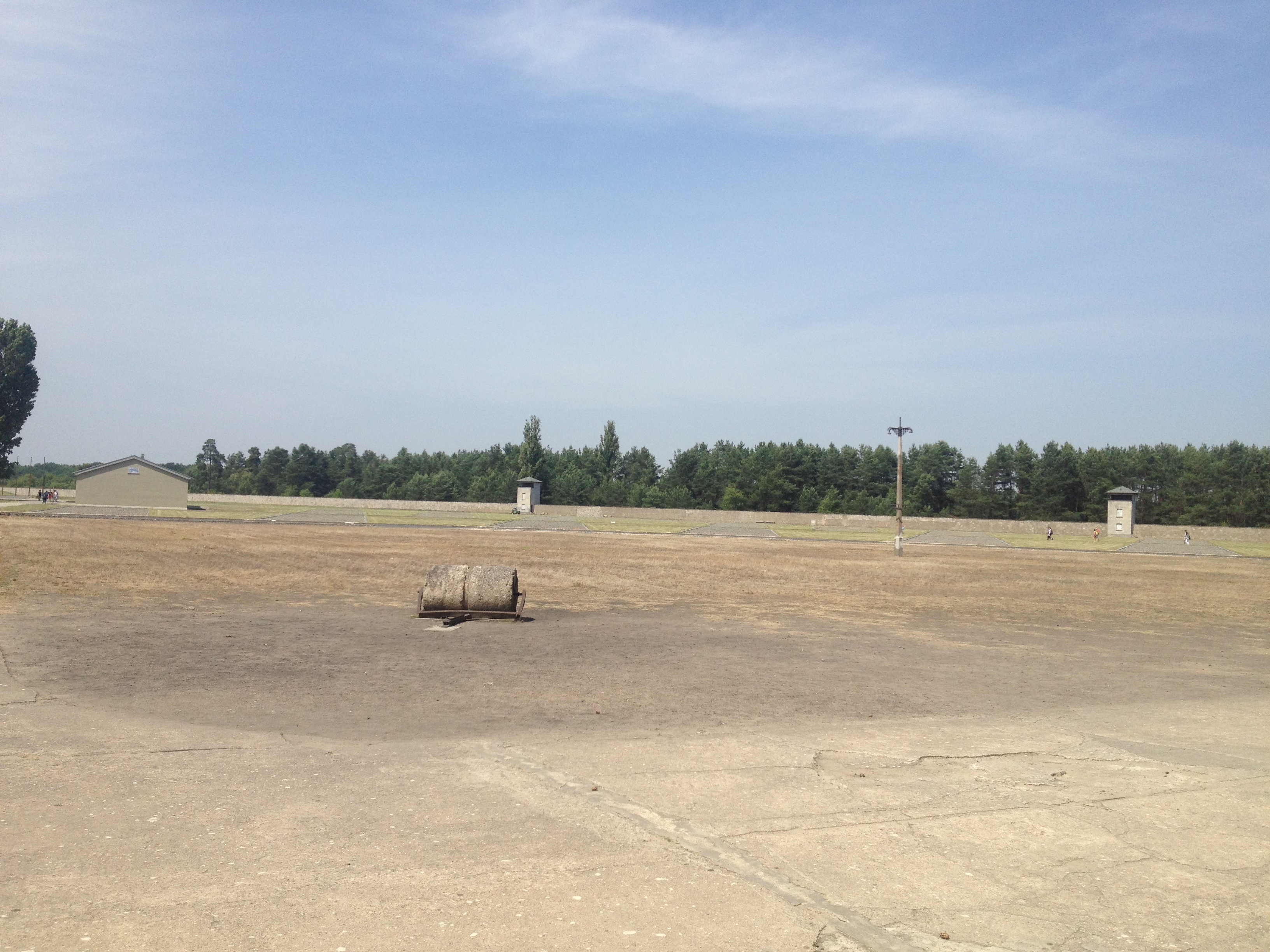
The grounds of the camp are now vast and desolate.

The grounds of the camp are now vast and desolate.

Part of the security system at Sachsenhausen.
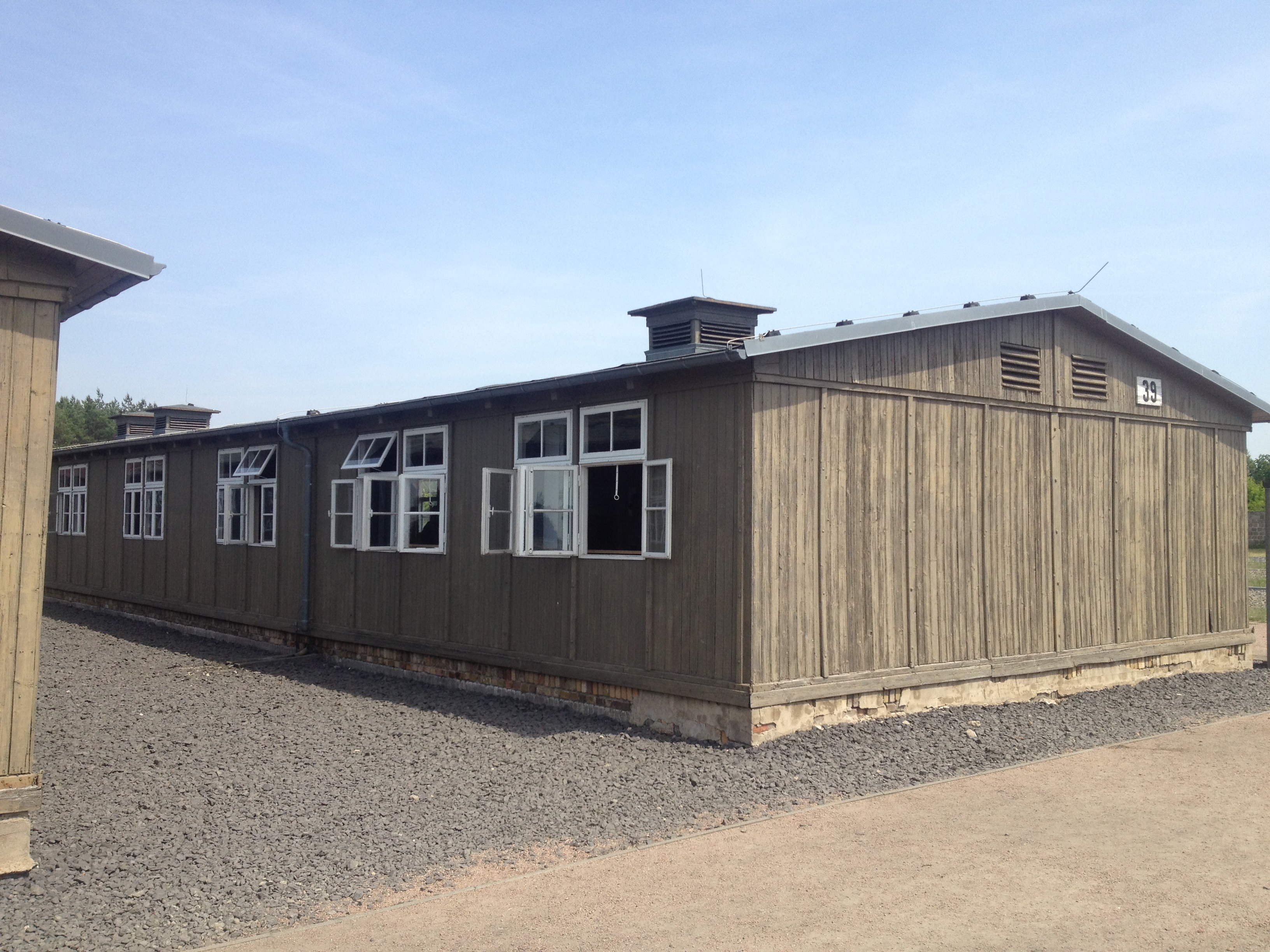
Part of the security system at Sachsenhausen.

The barracks that do remain have been transformed into smaller museums.

The barracks that do remain have been transformed into smaller museums.

Barracks 38 is one of the few that remain standing.
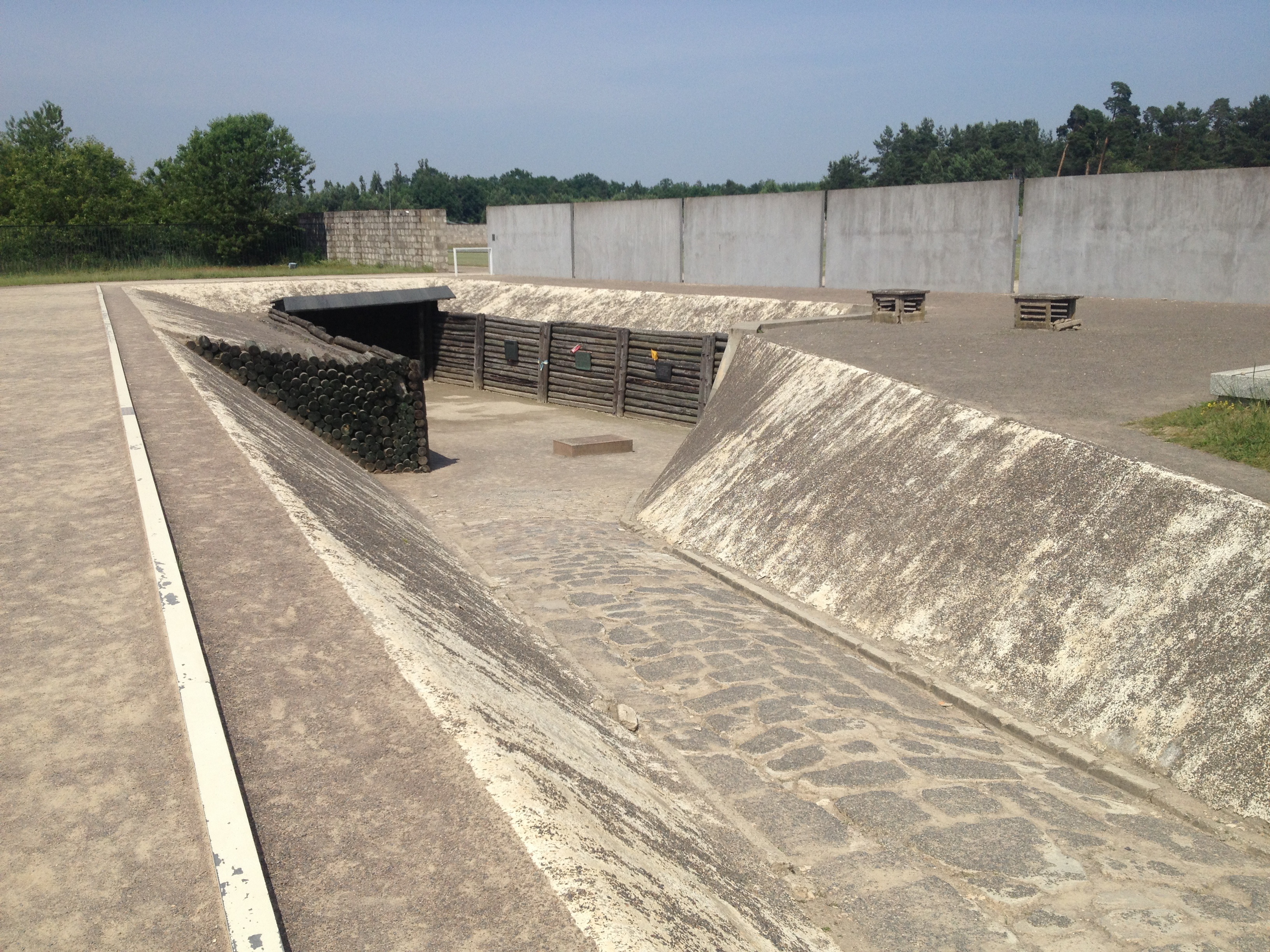
Barracks 38 is one of the few that remain standing.

The Execution Trench - the morbid name is self-explanatory.

The Execution Trench – the morbid name is self-explanatory.

In a building that used to be a garage for Nazi vehicles, there was now a museum that showed the history of the camp, and had numerous artefacts on display. Included in these was one of the uniforms that the prisoners were required to wear – the pink triangle sewn into the shoulder indicating that this particular prisoners crime was being a homosexual. The Nazis imprisoned anyone who disturbed their regime, whether they were political opponents, or those who were deemed by the National Socialist ideology as racially or biologically inferior, and were later joined in 1939 by captives from countries which Nazi Germany moved to occupy, such as Austria and Poland. Though historically famous for the persecution of people who were Jewish, the Nazi regime would happily have beaten me senseless and locked me up to starve simply because of my homosexuality – this uniform, now sitting behind a glass cabinet looking as innocent as a pair of striped pyjamas, was a chilling reminder of that. More than 200,000 people were imprisoned in the Sachsenhausen Concentration Camp between 1936 and 1945, with tens of thousands of them dying from starvation, disease, forced labour, malnutrition, and brutal, systematic murders. It’s a lot to take in as you stand upon the scene of these crimes, especially considering this is just one camp, where only a fraction of the atrocities committed during the war were committed.
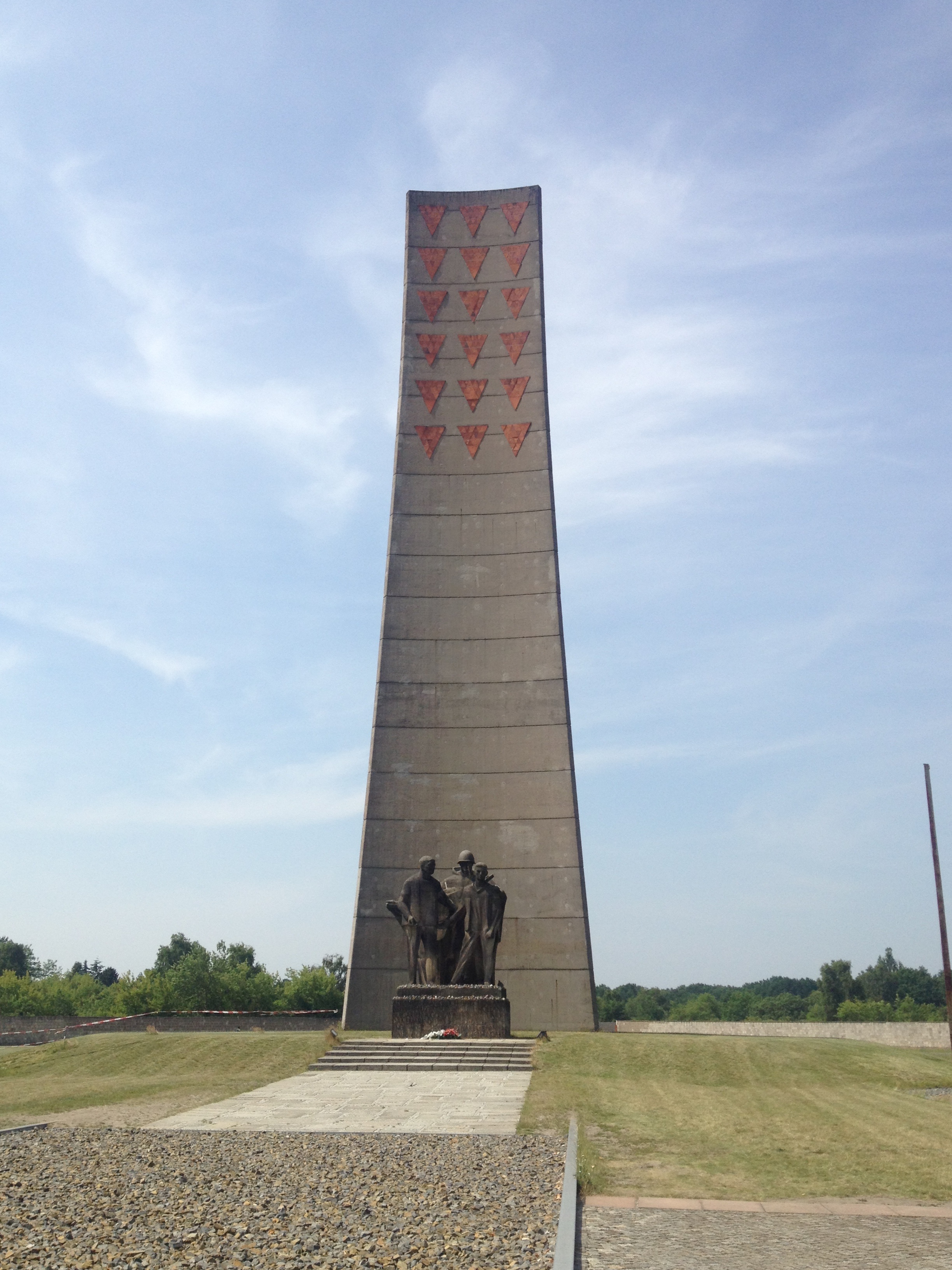
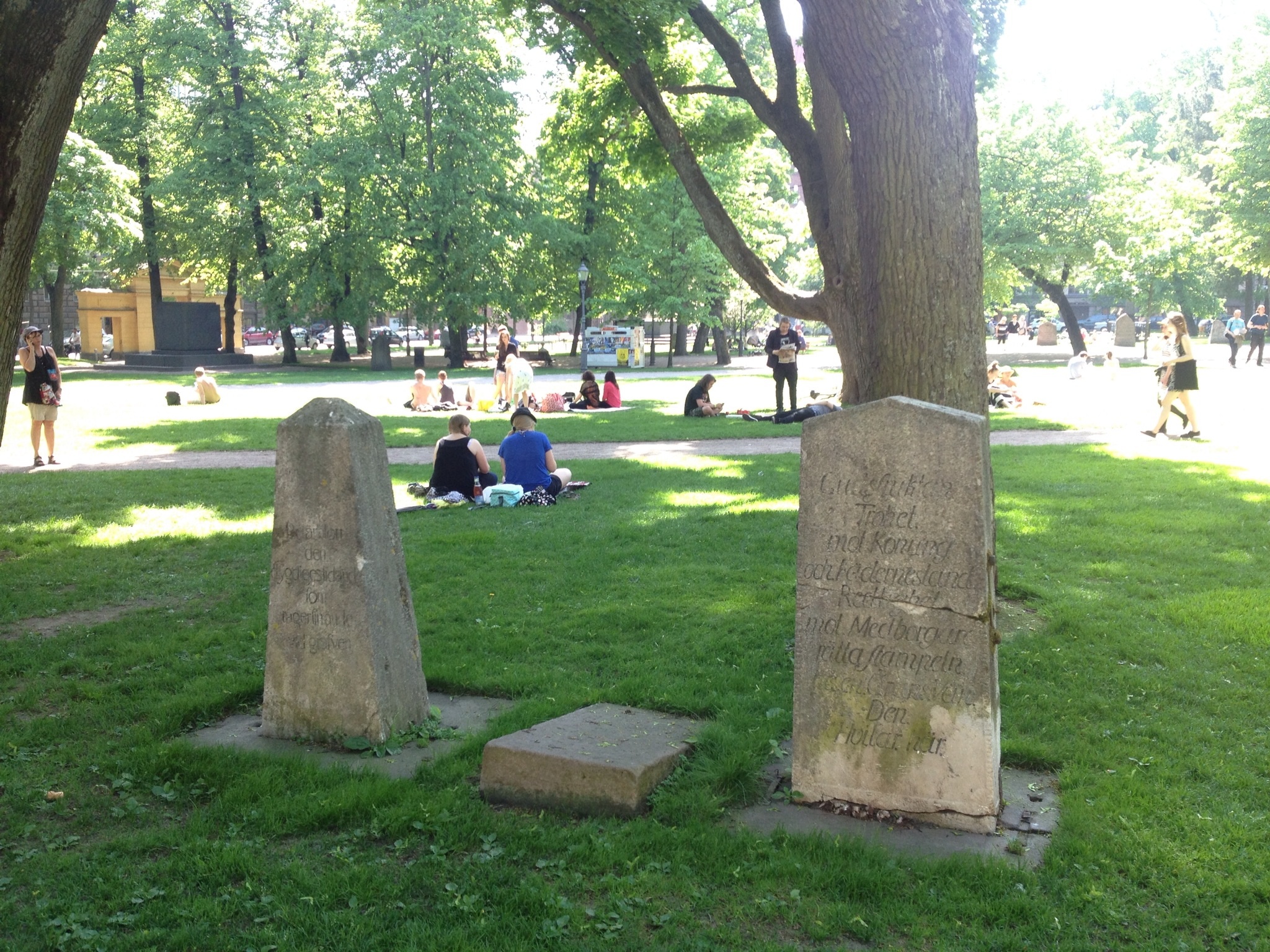
The memorial obelisk.

The memorial obelisk.

The pink triangle resonated with me strongly during the time I was at the Sachsenhausen Memorial Museum, but weeks later, at the time of writing, it’s truly terrible to realise that some parts of the world are still stuck in some of these barbaric ideologies. I’m referring, of course, to the horrific state of affairs for LGBT people in Russia. The newer, even harsher homophobic anti-propaganda laws came into place after I left Germany, but right now it’s something that I can’t just ignore. Having been to Russia and met a couple of very lovely gay men, it absolutely breaks my heart to see what is going on over there, to think that they might be suffering.
In the middle of then main triangle at Sachsenhausen, there now stands a forty metre high obelisk adorned with 18 red triangles – the symbol the Nazis gave to political prisoners – on each side, the number representing each of the European nations where prisoners at the camp came from. It’s a monument of memorial, but right now all it makes me think of is the European nations that are in such close proximity with Russia, and hoping that something might be able to be done before the persecution reaches a level of homosexual Holocaust. I never had the intention of using this blog to voice political opinions, but that was just one thing that I couldn’t let slide.

***

It had been a long hot day wandering around Sachsenhausen, and I was sweating profusely by the time I’d walked back to the station in the afternoon heat. “It’s not a heat wave”, Ruth would later tell me, fending off the claims of some other Berliners. “Thirty degrees is a normal summer day for Berlin – winter just lasted so long that most people forget about it, and are just shocked when it’s actually hot!” Nevertheless, even for an Australian I was feeling the heat. On the train home, I messaged Eva to find out what she was up to – the two of us had been sharing a key, since there weren’t enough for both of us to have one. She would be going out before I got home, but Simon would be around for a little while longer. When I was back into the heart if Berlin, I got a phone call from Simon.
“Hey, where are you?”
“I’m nearly home… Do you need to leave now?”
“Well, sort of… I’m going to the pool to meet Ruth, I was gonna ask if you wanted to come?”
Swimming sounded exactly like what I needed. Donatella had had to head out of town today for some work commitments in Munich, so she wouldn’t be joining us, but Simon said he’d grab my swim shorts and towel and pick me up from the U-Bahn station I was at.

What I didn’t realise – either because he didn’t say so or I didn’t listen – was that he was not picking me up in his car, but on his motorbike. A surge of panic ran through me – I hadn’t been on a motorbike since the horrific afternoon in Phnom Penh, and I still bore the mental and physical scars. However, I had to reassure myself that I’d since ridden quad bikes in Siberia and navigated the bicycle traffic of Copenhagen, and had come out unscathed, and I also wouldn’t even be driving this time. It would be just like catching the motorbike taxis in Bangkok, and so I put on the spare helmet, climbed on behind Simon, and we took off onto the roads of Berlin. We passed a few other bikies done up in their full leather gear, which I guess was to be expected in Berlin, and whizzed our way through the traffic until we finally reached the pool.

The place rented deck chairs from Simons vodka company, so we got to skip the queue and also got in for free. The place was really cool – the water in the Spree River and the adjoining canals is not something you’d ever want to go swimming in, so this place had designed a way around the problem. There was a large pool that was built on the river. The ground all around the edge was covered in sand so it felt as though you were really at a beach, and then off the wooden jetty the swimming pool itself sat just off the edge of the river. Of course, given that today was an extremely hot day for Germany, there was a long line to actually get in the pool. After finishing a beer from the beach cafes inside the complex, Simon and I joined the queue to go for a swim. After the long day I’d had walking around the old concentration camp in the hot sun and learning about all the horrors of history, it was definitely worth the wait – the swim was exactly what I needed. And so the end to an otherwise slightly depressing day was spent cooling off, kicking back and putting my feet up with my new Berliner friends.
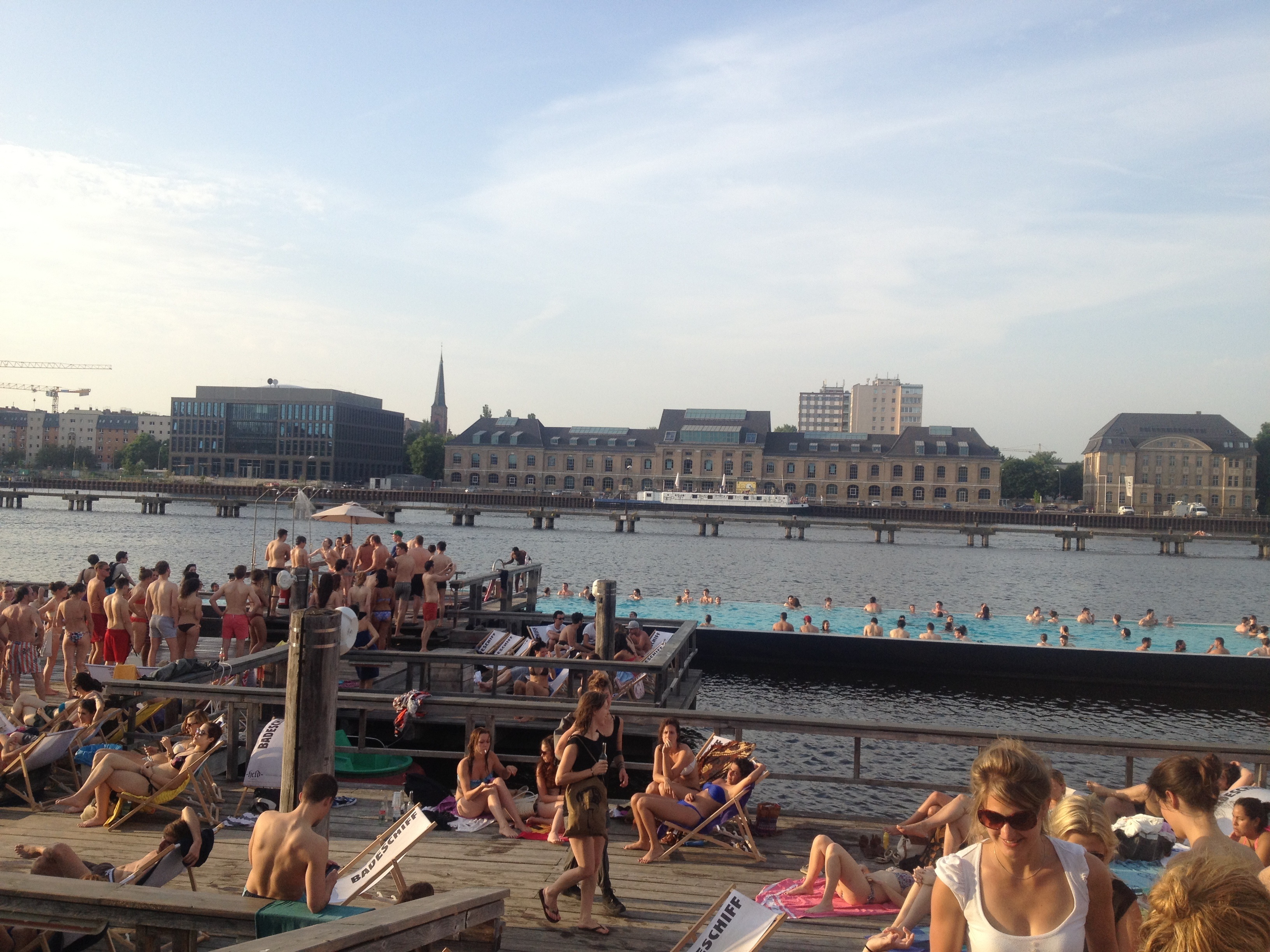
The riverside pool where I ended my day.

The riverside pool where I ended my day.
From Tourist to Traveller: Berlin Sightseeing

After an exhausting weekend that nearly destroyed me, I decided to take some time out of the crazy Berlin party scene and do a couple of touristy things. Of course, I needed at least a full day just to receiver from the messed up sleeping patterns and diet that consisted almost solely of booze and currywurst. But on Tuesday, when I finally felt human again, I set off in the morning to do a self-guided Trip Advisor walking tour of Mitte, the central district of Berlin, also known as the Government Quarter.

But before I begin that recount, I need to do my obligatory rant, or rave, on the public transport situation for a new city. And I have to say, notwithstanding the train delays on my journey to actually get into Berlin, I am in love with their local train services. There are two kinds: the S-Bahn, which runs above ground and are actually integrated into the national rail system, and the U-Bahn, the underground trains that are essentially the German version of a metro. Trains on all lines come frequently at regular intervals, and between these two highly integrated networks, it’s possible to get almost anywhere in Berlin with relative ease, although there are so many different lines and interchanges that it can be a little difficult to wrap your head around at first. The only real issue I had with the U-Bahn and S-Bahn was the price of a ticket: €2.80 for a single trip seemed a little steep in my opinion, but then I guess I had still be paying student fares in Sydney right up until I left – welcome to the real world, kid. Although there’s one tip I can offer that you won’t read in any Lonely Planet book – there’s no barriers at the stations for which you need a ticket to pass through, and checking for tickets on board the train is very infrequent. Now I’m definitely not condoning fare evasion, but… there a few short trips I make where I felt it was worth the gamble. So for a system that is well-established, efficient, and if you can’t get away with it, free, Berlin public transport gets a general tick of approval.

***

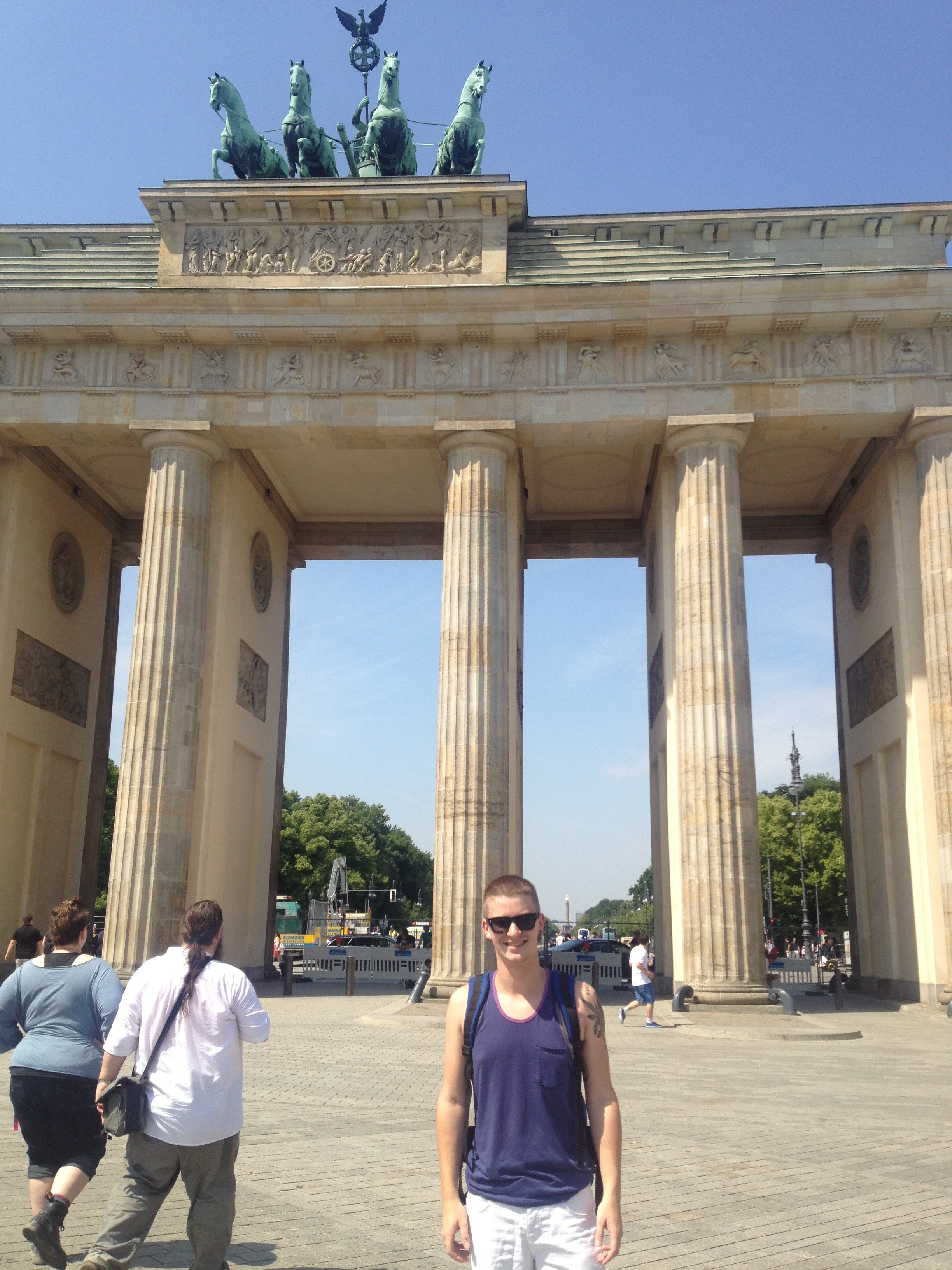
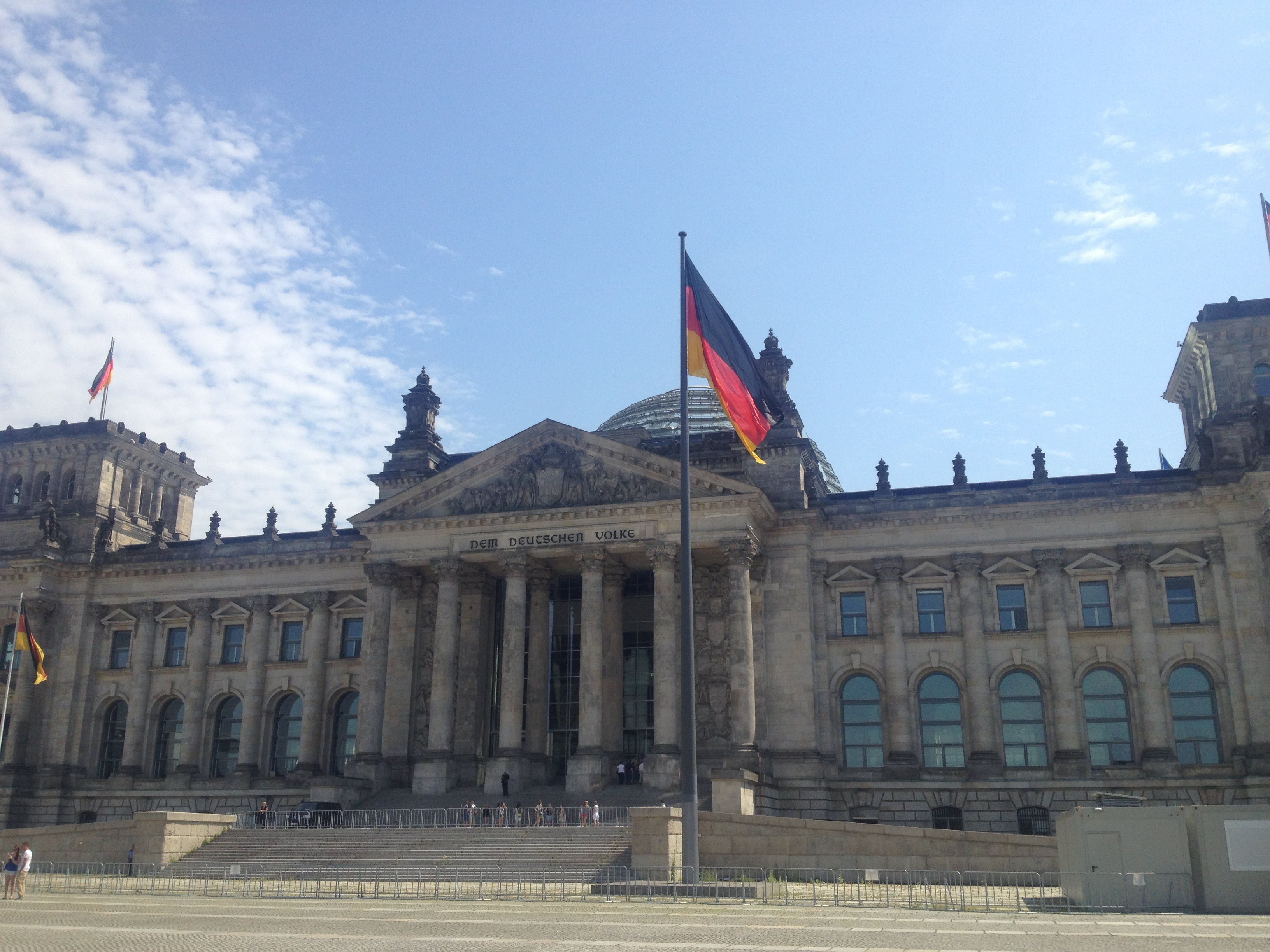
The first stop on my walking tour was the Brandenburg Gate. The most famous of all the east-west crossings of the Berlin Wall, it’s a symbol of the division that once ran through the city, though during my time in Berlin I’d learn that while the wall came down in 1989, distinctions and differences between East and West Berlin are not unrecognisable. Visually, the gate is probably the most iconic feature of Berlin, so I posed for a photo before continuing through. The time I was in Berlin also coincided with a visit from the US president Barack Obama, and so Pariser Platz, the square in front of the Brandenburg Gate, was full of security guards and scaffolding, as some type of arena seating was erected in the clearing. I passed through the arches of the gate from east to west to find the Tiergarten stretched out before me, and turned right to head towards the Reichstag, the German parliamentary building. According to my Lonely Planet guide book, there was a popular and impressive view of central Berlin from the glass dome ceiling of the Reichstag, and that it was free to go and see. What the guide book failed to tell me was that you needed to make a booking prior to your visit in order to secure your spot on the viewing platform. Slightly disgruntled but not really that bothered, I left the bustling tourists to their lining up and headed back towards the Tiergarten.

Gate

The Brandenburg Gate, with just a suggestion of scaffolding.

In front of the Brandenburg Gate.

In front of the Brandenburg Gate.

The Reichstag, the parliamentary building which I unfortunately didn't get to enter.

The Reichstag, the parliamentary building which I unfortunately didn’t get to enter.

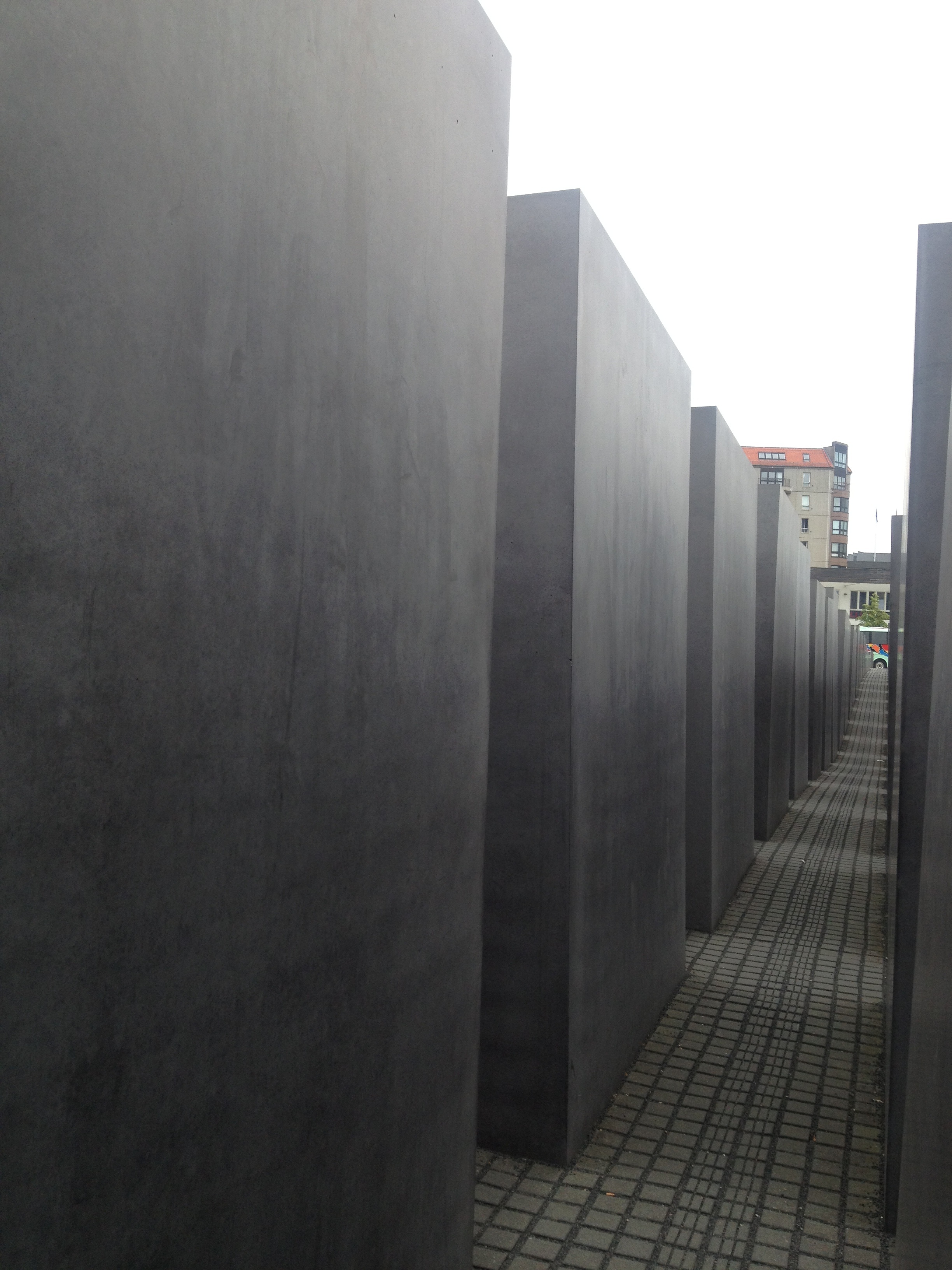
The Tiergarten is a huge expanse of greenery right in the centre of Berlin. I don’t know much about it historically, other than it being the name of a Rufus Wainwright song, but it was beautiful place to stroll through a park and lose yourself in the gardens. I made an arching route in and out of the Tiergarten, admiring some statues along the way, before emerging at the haunting piece of artwork that is the Holocaust Memorial. The memorial is a collection of 2711 pillars, all evenly spaced apart across 19,000 square metres, and which appear to be of a roughly similar height. However, as you walk into the grid you begin an unexpected descent, and discover that the ground is uneven and awash with hills. When you enter the grid, the pillars come up to your knees. After a few moments, they’re towering above you, and the only thing you can see in all for directions are long corridors created by the towering monoliths, and the occasional other person who crosses your path along the way. As I emerged from the memorial, I took a seat for a moment and reflected on the reason it was there, and who all the pillars represented: the victims of the Holocaust. Each one was the same essential structure, a homogenous collective, yet each pillar was also individual in its unique height. I’m not sure if that’s the actual rationale behind the memorial, but it struck me as somewhat symbolic. Afterwards I took a photo with the memorial, as a tourist souvenir – only afterwards was I told about a website that makes fun of men who use such photos taken at the memorial as their profile pictures on online dating sites – there happens to be quite a lot of them! That was a little embarrassing, but I just made sure to never upload the picture to my Grindr profile.

Lion statue in the Tiergarten.

Lion statue in the Tiergarten.

Holocaust Memorial: view from above...

Holocaust Memorial: view from above…

... and the view from below.

… and the view from below.

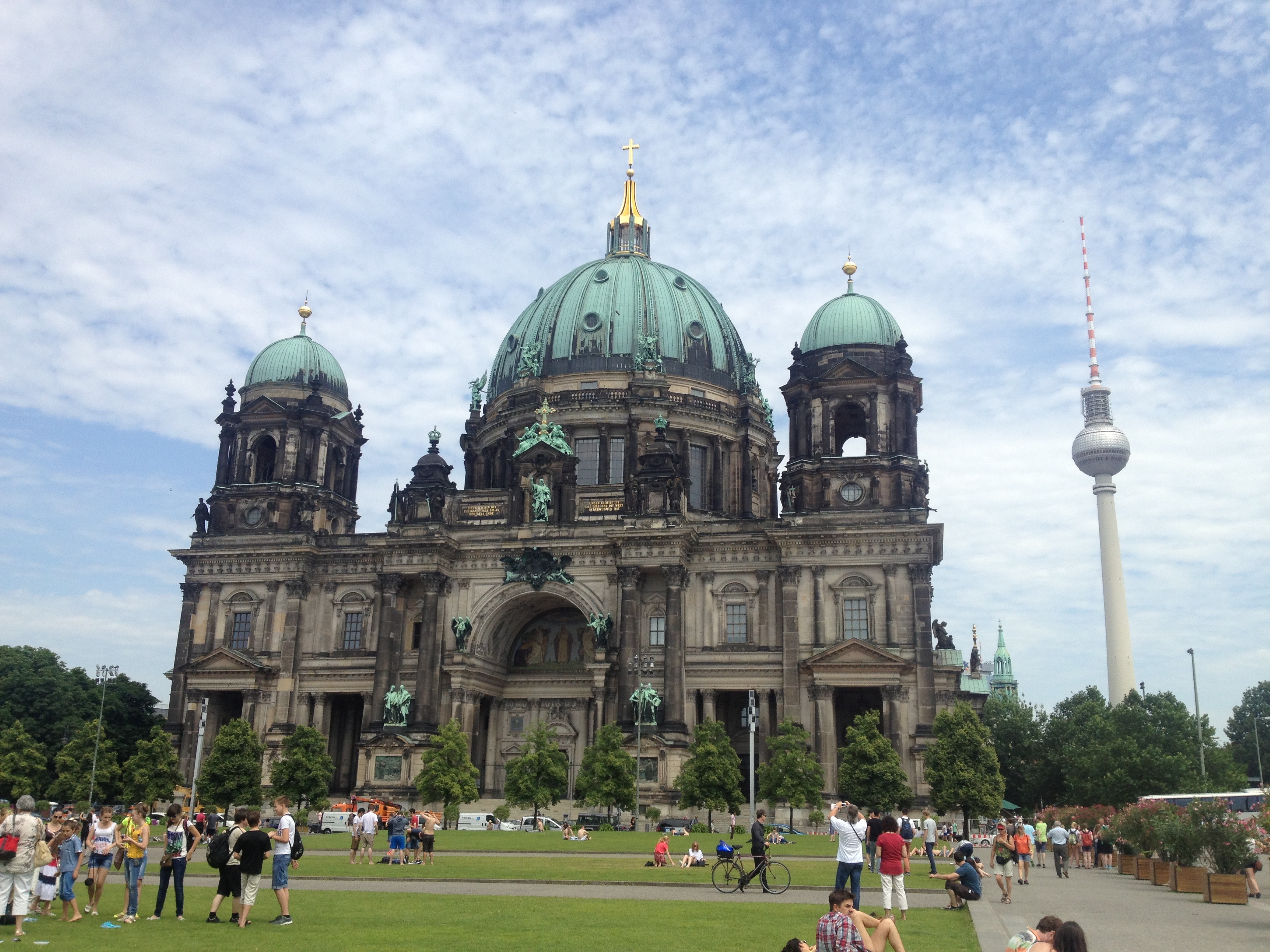
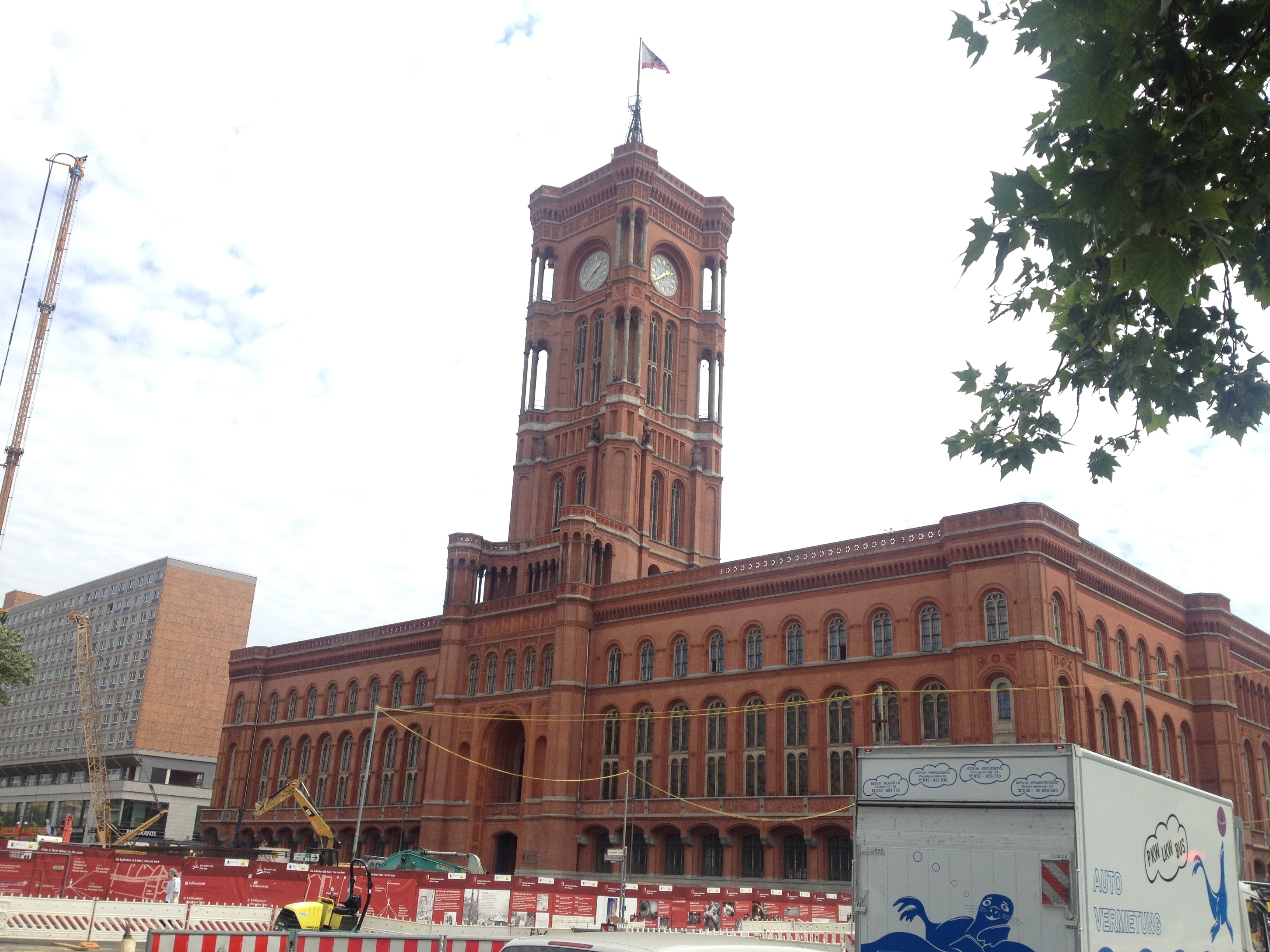
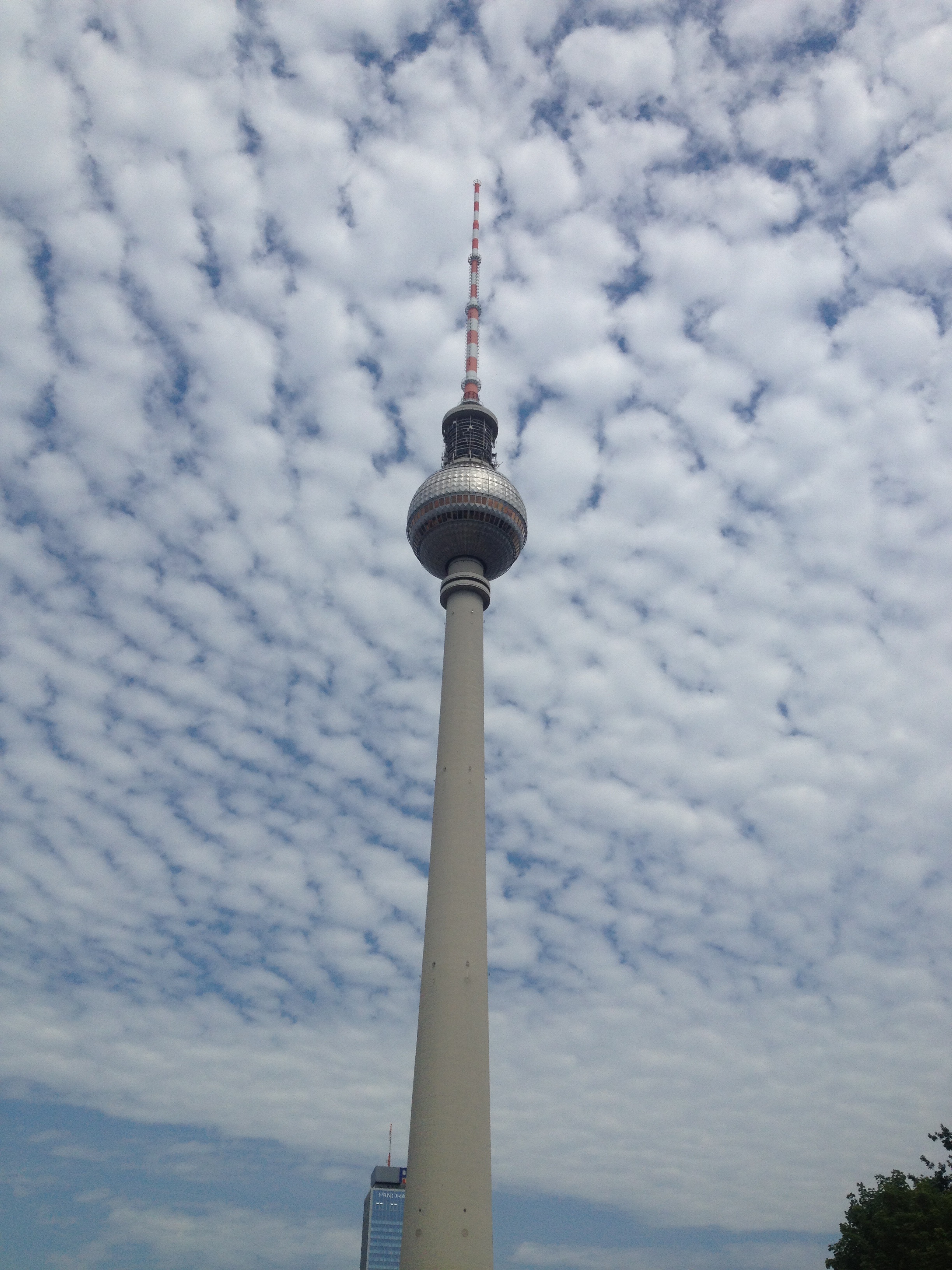
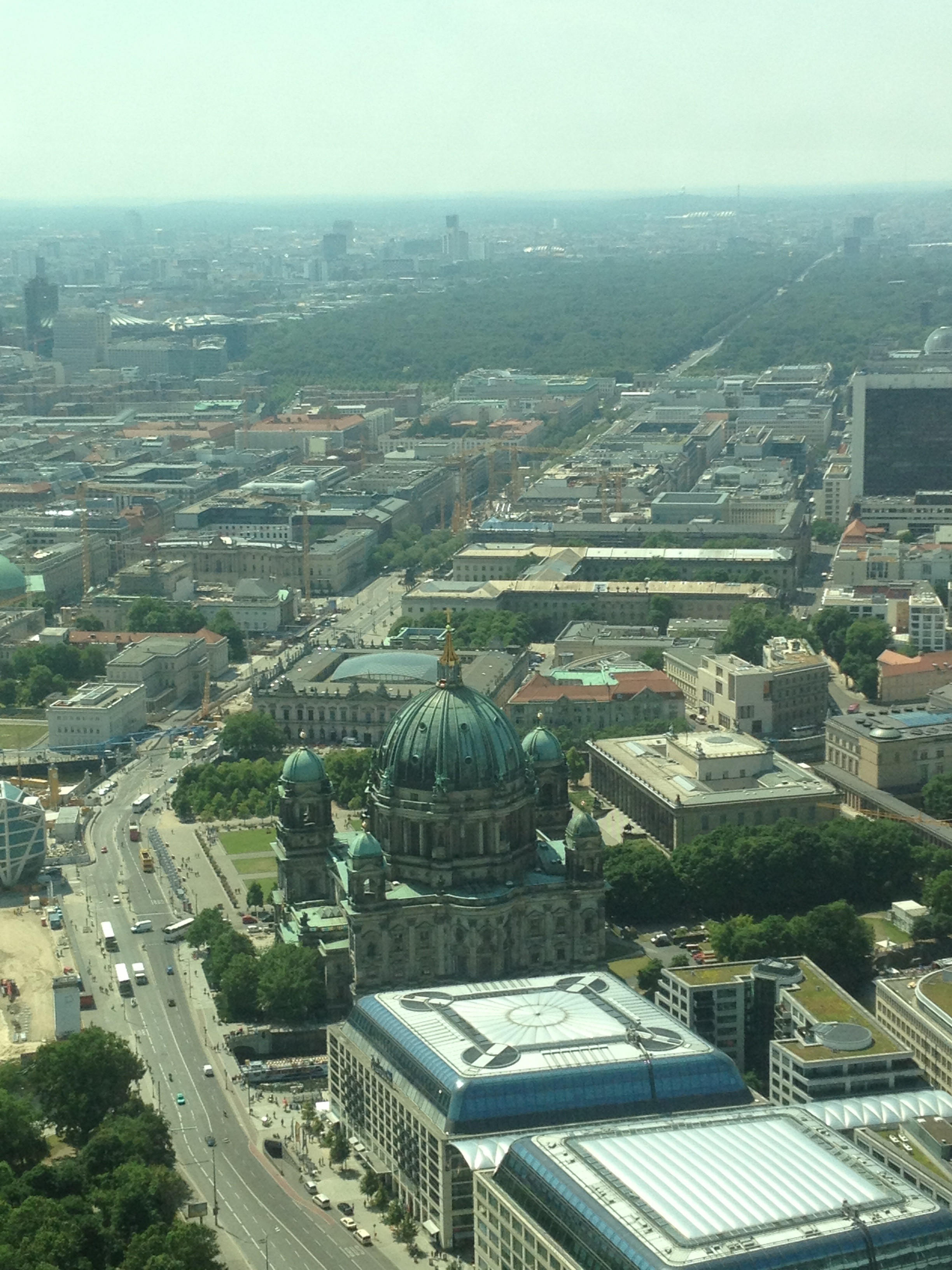
After the memorial I headed back east and eventually reached Museums Island, a block of land that is surrounded by canals, so technically an “island”, and is home to a cluster of art museums. I had a wander around, admiring some of the beautiful buildings, but decided I wasn’t really in the mood for museums. I continued along the path, looking at a few churches and stopping for a photo with the Karl Marx stature – the sociologist in me just couldn’t resist. Eventually I arrived at Alexanderplatz and the TV Tower. It’s not a particularly pretty building, but it is tall, so I went inside and took the elevator to the top. The TV Tower is one of the few sky scrapers in Berlin, and by far the tallest building, so it provided a complete panoramic view of the city, although it was so high up that so many of the sights were minuscule and almost unrecognisable – even the Brandenburg Gate looked no higher than a couple of centimetres from up there. There was a fancy rotating restaurant at the top of the tower, but I decided to save my euros and eat at Hackescher Markt, a nearby market down on the ground. I think there might have been more of the Trip Advisor tour, but the day had involved a lot of walking and I’d found myself rather exhausted. For something that’s isn’t really extremely exciting, sightseeing can be exhausting. I finished my lunch and jumped on the U-Bahn to head back home.

Berliner Dom, the cathedral on Museums Island.

Berliner Dom, the cathedral on Museums Island.

The Karl Marx statue.

The Karl Marx statue.

The Rotes Rathaus, or Red Town Hall, near Alexanderplatz.

The Rotes Rathaus, or Red Town Hall, near Alexanderplatz.

TV Tower.

TV Tower.

View of Berlin at the top of TV Tower, from the Tiergarten to Museums Island - essentially, what I'd just walked.

View of Berlin at the top of TV Tower, from the Tiergarten to Museums Island – essentially, what I’d just walked.

***

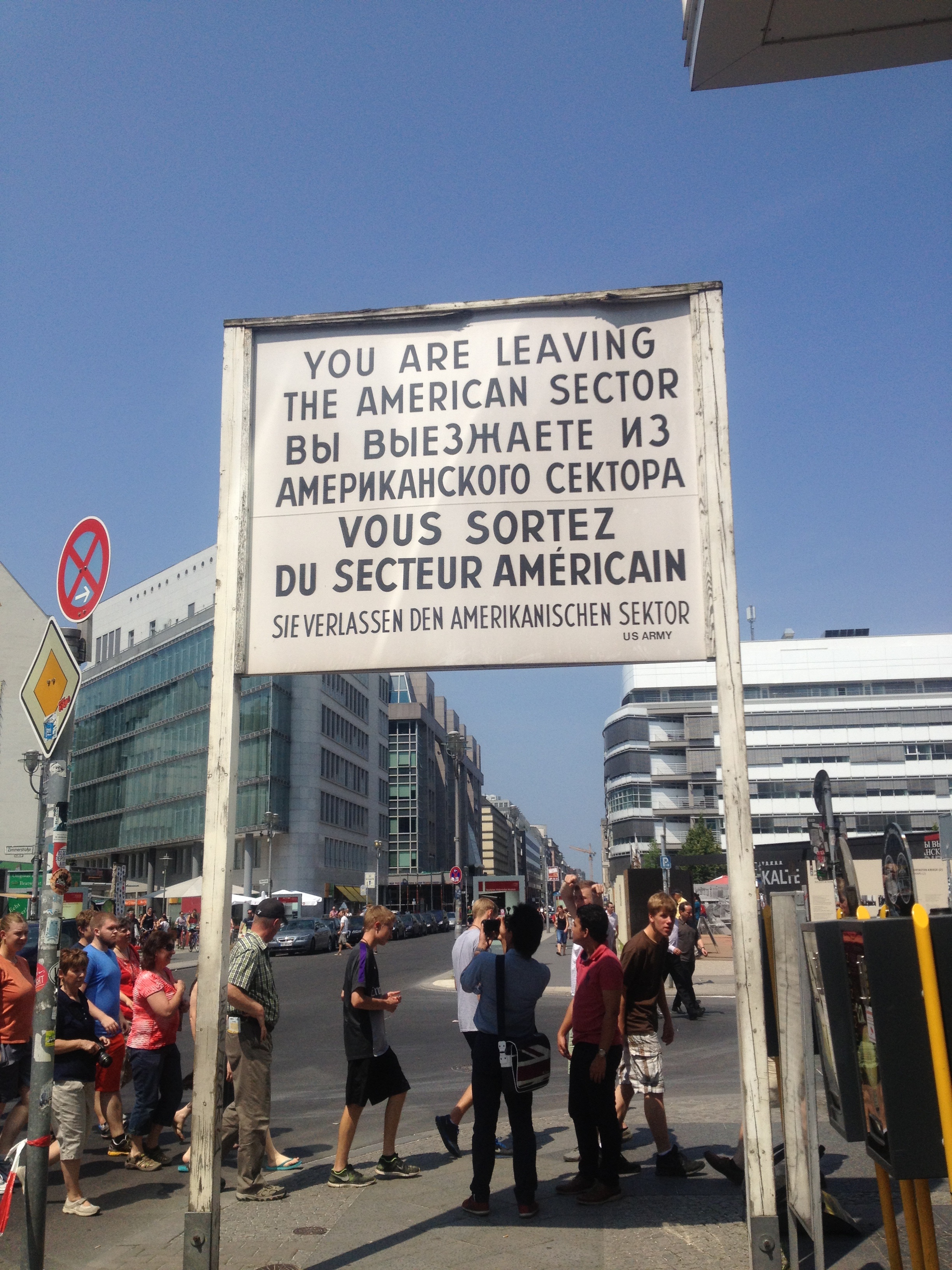
The only other touristy sightseeing I did during the week was a few days later when I visited Checkpoint Charlie, where you can still see the sign that “You are now leaving the American sector”, a remnant from the days of the war. However, with the men in uniform trying to sell you pictures with them, it’s all a little gimmicky and so full of tourists that I could only bring myself to stay for a short time. I would have visited the Jewish museum, but the weather had gotten so hot over the past few days I could bring myself to walk the rest of the way. It was there at Checkpoint Charlie, though, that I reached something of a turning point within myself: I made the conscious decision that I wanted to be a traveller, not just a tourist. I didn’t want to just check off the list of sights listed in the guidebook and take photos in front of the famous monuments – I wanted to experience what the city was really like, meet the locals and see things from their perspective, and see what Berlin was for them. Being a tourist can be exhausting, with the weird pressures you can feel from people to “do everything” and go to all the “must see” sights. For me, being a traveller is all about doing whatever you wanted to do, and going places that you actually want to be. I’d seen some of the wild and crazy sides of Berlin, and if was looking for more of that, I definitely wasn’t going to find it in a Lonely Planet book.

Checkpoint Charlie.

Checkpoint Charlie.

Welcome to the Jungle: Beginning Berlin

After another full day of travelling from Groningen, with brief changeovers in Leer and Hannover, I finally arrived in Berlin. It wasn’t without a delay of over an hour – central and eastern Germany had recently experienced a bit of flooding, which had caused lots of problems for the trains – but not even that could quell my excitement. “Spend at least a week in Berlin”, my friend Dane had told me on one of my last nights in Sydney. “We had a very tight schedule when we went. We were only there for a few days, and it was definitely not enough.” He’d let out a sigh and stared past me reminiscently, eyes glazed over with memories. “You’re gonna have such an amazing time. And the men! They’re going to eat you up, Robert.” Dane was just one of many of my friends who had expressed such sentiments about Berlin, so I was brimming with anticipation as I stepped onto the platform at Berlin Hauptbahnhof.

I was picked up at the main station by Donatella, an old family friend from Australia who, apart from a brief reunion in Sydney back in January, I hadn’t seen in at least ten years. We’d got on rather well at our most recent meeting though, and I was excited to meet up with her again here in Berlin, where she now lived. “You should stay with Donatella when you’re in Berlin,” her father had told me last year when I was telling him of my travel plans. “She’s queen of the clubs over there, she’ll look out for you and make sure you see everything you want to see.” I’d taken it easy during my week in Groningen, partly in anticipation of a crazy weekend with Donatella. And I was in no way disappointed – though I don’t think there was anything that could have prepared me for what Berlin was about to throw at me…

***

I threw my bags into the car as I greeted Donatella, and was briefly introduced to her friend and housemate Simon, who was driving, and then headed back to the apartment. It was an old style building with large towering walls, and huge rooms that seemed too big for their inhabitants, given that half the rooms only seemed half full with furnishings. “I think there’s like… five people who live here? Maybe six? I don’t know, anyway, here’s your bed.” Donatella had warned me that I wouldn’t have a room to myself – which, after all the hostels and train cabins, I assured her was no problem – so I was introduced to Eva, a Kiwi girl who had been living in Melbourne for a few years and had now just relocated to Berlin, who I was sharing a room with. “Everyone else will be back later after work, except some of the boys who are away for the weekend.” Donatella was a little quirky but very laid back – I’d only been in the city for a matter of hours but I could tell why she enjoyed living in Berlin.

Before I’d arrived in Berlin, Donatella had also issued me a slight warning. “Just so you know… Things can sometimes get a little crazy around here. Like, not all the time and not that often, but there’s always the all-nights and crazy benders where people are up for three days straight. But only ever on weekends – everyone still has jobs, so you know… It’s slightly normal.” Bring it on, was all I had to say. I was no stranger to partying, and if even Donatella was telling me that it was crazy, I could be sure it was a force to be reckoned with.

After settling in and having something to eat, I was introduced to more people as they arrived at the house. Firstly there was Ruth. “Ruth is an original Berliner – born and raised,” Donatella had informed me. “You don’t find too many of them still living here anymore.” Berlin was a city with a very cosmopolitan vibe, thanks to the artists and creative types that came from all over the country, as well as all over the globe, to be a part of what was becoming one of the big places to be within Europe. Ruth worked as a burlesque dancer – of course she did, this was Berlin – and it was during my conversation with her that I discovered why I’d had such trouble trying to find a place to stay in Hamburg the previous weekend. “Yeah, there was a big biker convention. All the leather men were there, Reeperbahn would have been very busy,” she had said. “It’s a shame you didn’t get to see Hamburg, it’s a really fun city,” though after that she shrugged her shoulders. “But hey, you’re in Berlin now,” Ruth said with a smile. It was that very logic that had drawn me straight here rather than attempting another stopover in Hamburg – I’d heard the stories and I just couldn’t wait any longer to discover them for myself.

The last person I met at the apartment that evening was actually an ex-housemate, a woman named Lola. She was also a burlesque dancer – never mind that she was older than my mother though, because she looked amazing! She arrived looking like a pin up girl who had just stepped out of a sailors shoulder tattoo, complete with her waist cinched into a corset. “You said you worked in a fetish store, right?” Donatella asked me. “Lola will be able to tell you all the places like that around here.” And she was delighted to – she rattled off the named of retailers, bars and saunas faster than I could have ever hoped to remember them after a few vodka tonics, though in retrospect I think I checked most of the boxes she listed during my time in Berlin.

Eva had already headed out to meet some other friends, and Donatella had taken leave of our company for a short while – to study, or nap, or something, I’m not sure – so I was left to converse with these three crazy Berlin personalities I had just met. “So where else have you been? What are your travel plans?” Simon asked me as he ashed a cigarette into the tray on the table. I retraced my travel steps, right back to Singapore, and then outlined the rest of my intended itinerary – the plan was to continue further into Eastern Europe: Czech Republic, Slovakia and Hungary. “Yes, you have to go to Budapest!” Simon had exclaimed. “I’ve got a friend who lives there. She is crazy, I swear will get you wasted every night! But definitely let me know when you’re going so I can set you up.” I was excited to already be making connections.
“And how long are you staying in Berlin?” Ruth had asked, almost ominously. He question hung in the air while I had to consider my answer – after all, Dane had told me at least a week.
“Well… I’m not sure yet. I don’t have any set plans, so it’s flexible… I’m thinking at least a week.”
All three of them shared a rather knowing laugh, and Lola reached over to put a hand on my knee and looked at me with a grin. “Oh darling, that’s what they all say. You’re never going to leave.”

***

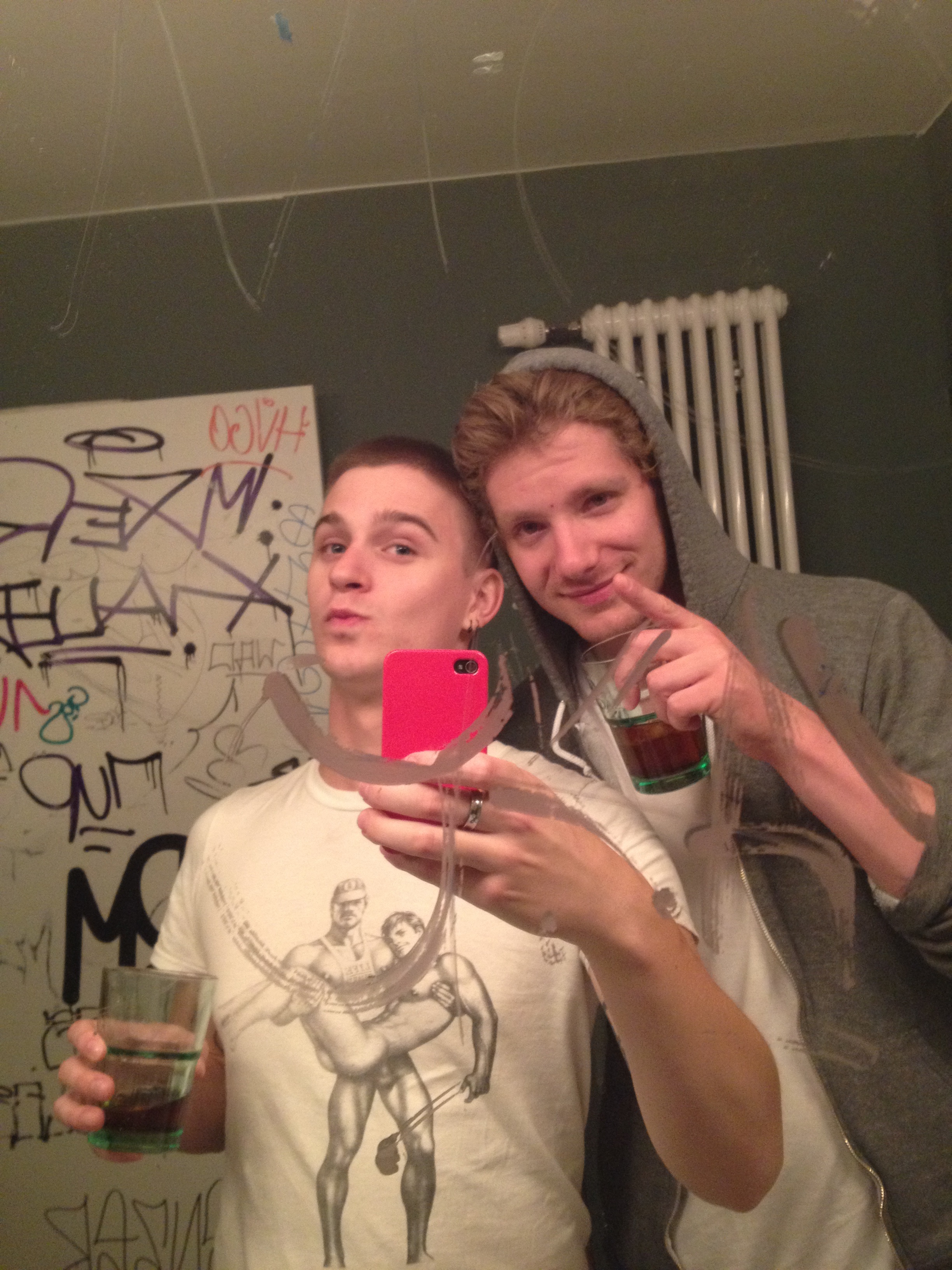
When it came to the weekend, there really had been no exaggeration – it was wild. At close to midnight I headed out with Simon and Donatella to a bar and club called Prince Charles. Donatella knew someone, so we didn’t wait in line. Once we were in, the night progressed into a blur of drinks and people and music and making friends in bathrooms, the memory of which only exists through photographs. Eventually the sun began to rise as I sat around the courtyard telling straight men how attractive I thought they were – and then getting overly excited at the simple fact that they didn’t care, and were completely indifferent to my homosexuality. “That’s so Berlin!” I remember telling one of them. “If I was pulling this shit in Sydney I’d probably be dying in a gutter somewhere.”

Making friends.

Making friends.

Eventually Donatella rounded me up and we headed home – with at least 6 other people from the club who I’m not sure anyone had even known before that night. I’d heard of the after party culture in New York, but I figured that anything was possible in Berlin. Because of the early sunrise, it was actually quite bright and well into the morning by the time we fell out of the taxis outside Donatella’s building. I might have had a few more drinks, I don’t remember. The only clear recollection I have is sitting on the floor of the bathroom with some guy I’d never met, trying to have some deep conversation while he asked me to explain all of my tattoos. At that moment, whatever buzz I was feeling died. I looked around the bathroom with… well, not sober eyes. But you know what I mean. “Ugh,” I groaned as I pulled myself off the floor. “Sorry dude, but I didn’t even know you. And I live here, so I’m going to bed.” I stumbled out of the bathroom, into mine and Eva’s room – she was no where to be seen – and crashed on my mattress on the floor.

I woke up at noon. My new friend from the bathroom was lying comfortably on the kitchen floor. Half the people who’d come back from the club with us were gone. They’d been replaced by people who I didn’t recognise, who seemed to be only meeting the permanent occupants of the house for the first time too. I have no idea where they came from, but I just rolled with it. There was a boy and girl, around my age, and I spoke to them for a while.
“You mean you’re not drunk anymore?” the guy had said when I’d recounted my night to him. “How the hell are you still dealing with us right now.” I honestly wasn’t sure if I was dealing with them, but for someone who’d been awake for 36 hours this guy was actually able to hold together a coherent conversation.
“How do you do it?” I’d asked.
“Do what?”
“These benders! People stay awake for, what, three days straight?”
“Oh,” he laughed. “Drugs.” I guess it was obvious, but I hadn’t expected him to put it so simply. We spoke a lot more though, and while I can’t recall his name or anything else about him, he seemed like an alright guy. Like Ruth, he was a born and raised Berliner – it was like discovering an endangered species.

“Berlin needs more people like you, man. Your travels, man, you’ve seen the world! You know what it’s about, what makes Berlin such a great and crazy place. Right now it’s filling up with too many just… Germans!” I laughed at that. “No, but seriously. You should stay in Berlin! It’s an international city, full of people like you from all over the world! Berlin needs you.” At the time, his words seemed like cute drunken ramblings, but by the end of my time in Berlin they would feel like a foreshadowing, the beginnings of a very persuasive argument this city was going to lay on me.

The Good Ol’ Days

After my stressful afternoon in Hamburg, and then having to catch another three trains because there was not a single hostel bed left in the city, the feeling of relief when I stepped off the train at Groningen station was almost overwhelming. It was after 11:30pm and Groningen was the final destination on the train line, but as my few fellow passengers spilled out onto the train platform, I saw a familiar face through the sparse crowd. I dropped my bags to the ground so I could give Gemma a huge hug when I finally reached her halfway up the concourse. Gemma and I went to high school together, and she had been my best friend for years, but now she lived and studied over here in the Netherlands. She’s still quite easily one of the best friends I’ve ever had though, and after the afternoon I’d had there was nothing quite so comforting as collapsing into the arms of an old friend whom I hadn’t seen in years, and discovering the embrace was just as familiar as though I’d seen her yesterday.

After the emotional greeting at the station, Gemma and I caught the bus back to her house. The main feature of Groningen is the university there, and so the city has become somewhat well known for its large population of students. Gemma’s share house can usually accommodate four people, but at that time there were only two people living there. Still, I couldn’t exactly take up an extra room without paying rent, so I would be sleeping on the couch in Gemma’s room, which was actually the spacious attic of the house. She’d added her homely touches to it, with magazine covers, letters from our friends and other decorations covering the walls, and furnished in a way that reminded me of her room back home. It’s such a strange sensation, to have such a familiar feeling in an undeniably new place.
“I hope you still like Coke Zero and Doritos,” Gemma said as she followed me up the extremely steep staircase to her room, as I tried not to overbalance with my huge bag and fall back down. Gemma had run out to do a bit of last minute shopping when I’d told her I was coming a day early, and she’d even remembered all my favourite snacks from the countless movie nights and sleepovers we’d had when we were teenagers. We sat up for a few more hours, watching Geordie Shore on TV, eating and drinking and catching up, telling Gemma all about my journey so far, and her telling me all about Groningen, what to do and what to expect, but also just hanging out, shooting the shit and talking about pointless stuff to make each other laugh. It’s a testimony to our friendship to go so long without seeing each other and still be as comfortable as though not a day had passed since we’d last been together. Sitting there on the couch with her, I think I was actually glad that things hadn’t worked out in Hamburg – right there, I couldn’t think of a better way to spend my Saturday night.

After 12 hours and 3 counties, we were finally reunited!

After 12 hours and 3 counties, we were finally reunited!

***

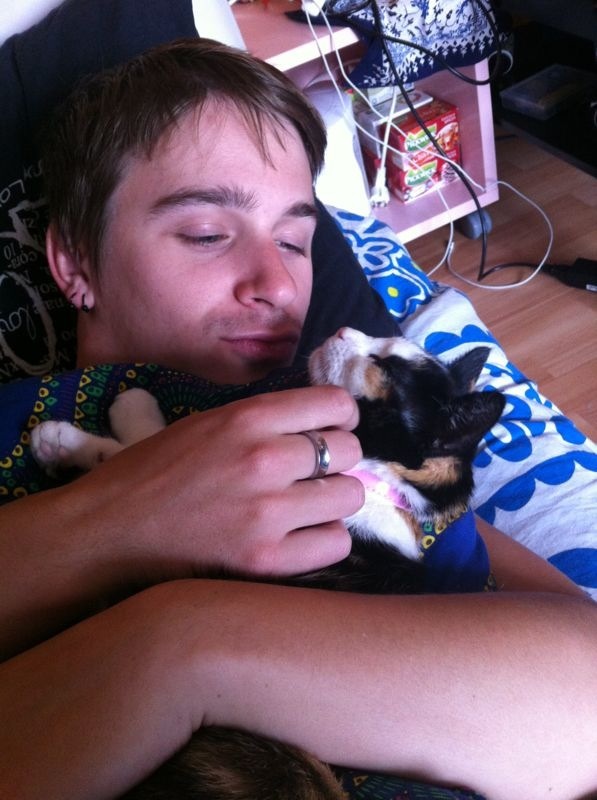
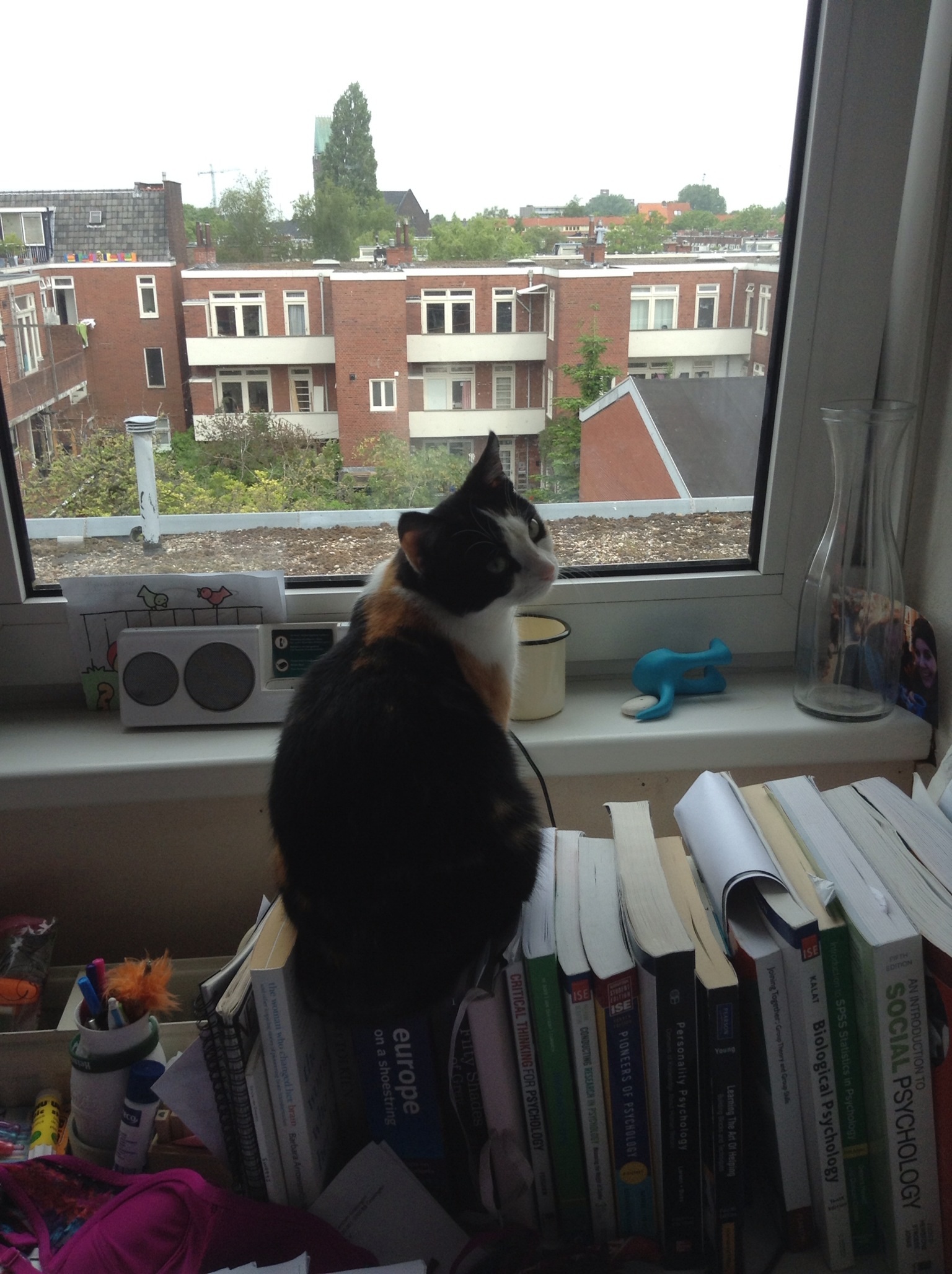
The majority of my time in Groningen was spent in a similar fashion: hanging out with Gemma, cooking tacos and pasta and all our favourite foods, watching movies and chatting and just enjoying being in the same city for the first time in almost a year. We also played a lot with Gemma’s cat Ananas (which means ‘pineapple’ in Dutch, and actually a lot of other languages too), who was a little bit crazy but incredibly cute. It was the beginning of Summer in Europe so Gemma didn’t have any classes – just one exam on the Tuesday morning – and the only times we couldn’t hang out was when she was working. However, my string of good luck with the weather suffered a lapse when I was in Groningen. It had been all smiles and sunshine in Copenhagen, but there was only one particularly sunny day out of the five full days I spent in Groningen. This worked in our favour, though – Gemma works as a waitress on the outside terrace of a bar in the city centre of Groningen, but if the weather isn’t very nice then people tend to not sit on the terrace, in which case her shift is sometimes cancelled. While that is probably really annoying somedays, it was great for this week because it meant we got to spend more time together.

Cuddling with Ananas in bed.

Cuddling with Ananas in bed.

Ananas by the window.

Ananas by the window.

I’d arrived late on a Saturday night, and would be returning to Germany for the following weekend, but Gemma had assured me that being a student town, some of the best nights to go out in Groningen were week nights. A lot of people travelled back to their hometowns and families on the weekends, and there was generally more people around during the week – though she did warn me it might not be too busy since it was currently exam time for most people. If they were anything like the students I knew in Sydney, though, there would still be plenty of people out and about. So it was a Wednesday evening when Gemma, her boyfriend Atze – whom I’d also become good friends with – and myself set out for some of the nightclubs in Groningen. First and foremost, drink prices were substantially lower than they were in Scandinavia, so the night was already set to be either much cheaper or a lot trashier. Our first stop was a pretty popular bar and club called Ocean41, which is actually the establishment that Gemma works at during the day. When we arrived we discovered that Atze was friends with one of the bartenders, and therefore we enjoyed half a dozen cocktails at an extremely competitive price. I wasn’t too sure how I felt about the nightclub itself, though. I’m generally not really a fan of straight clubs at all – too many wasted white girls who step on your feet with their heels, and guys who either can’t dance or just wait around the dance floor staring down everyone else.

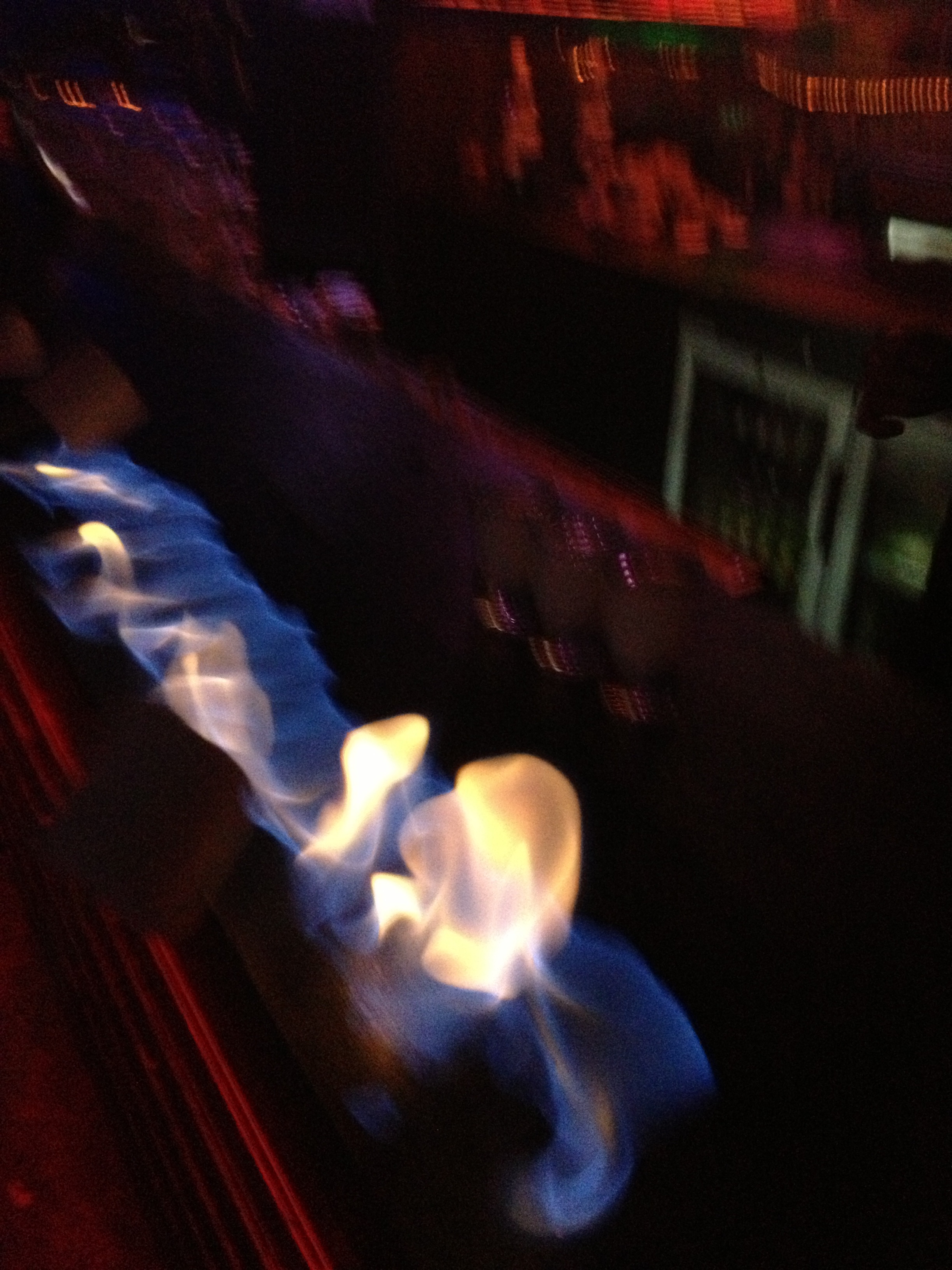
“Be careful of guys who look really young,” Gemma leaned over and said into my ear as I was scanning the room. “You can get into some clubs when you’re sixteen here, so some of them don’t look young, they are young.” I laughed, feeling confident that I wasn’t going to find anyone in the club of any age group that swung my way. After a while we took off to another bar called Chupitos, where the specialty was all kinds of fancy and gourmet mixed shots. “You have to try the marshmallow one,” Gemma had insisted, “and the one ‘Harry Potter’!” The marshmallow one was a sweet shot that you downed after you’d eaten your toasted marshmallow – yep, they actually lit a small section of the bar on fire so you can cook the marshmallow so it’s nice and gooey. The Harry Potter one was similarly spectacular – they lit the bar on fire around the full shot glasses, which had slices of orange on them, and then sprinkled the fire with cinnamon so that it flared and sparkled. It was really cool to watch, and after you downed the warm shot you sucked on the slice of orange – almost like a tequila shot with a deeper, sweeter twist. I got to pick the third shot the three of us would have – the menu board only had names, not ingredients, and I randomly selected one called the Flaming Asshole. It was a colourful layered shot that was also lit on fire, and then drunk through a straw while it was still on fire. My lack of knowledge of physics left me terrified that I would be sucking up a mouthful of fire, but it actually had a really nice taste, and Atze, Gemma and I left the bar a little more drunk and feeling pretty satisfied.

Toasting our marshmallows over the bar.

Toasting our marshmallows over the bar.

Sparks over the Harry Potter shots.

Sparks over the Harry Potter shots.

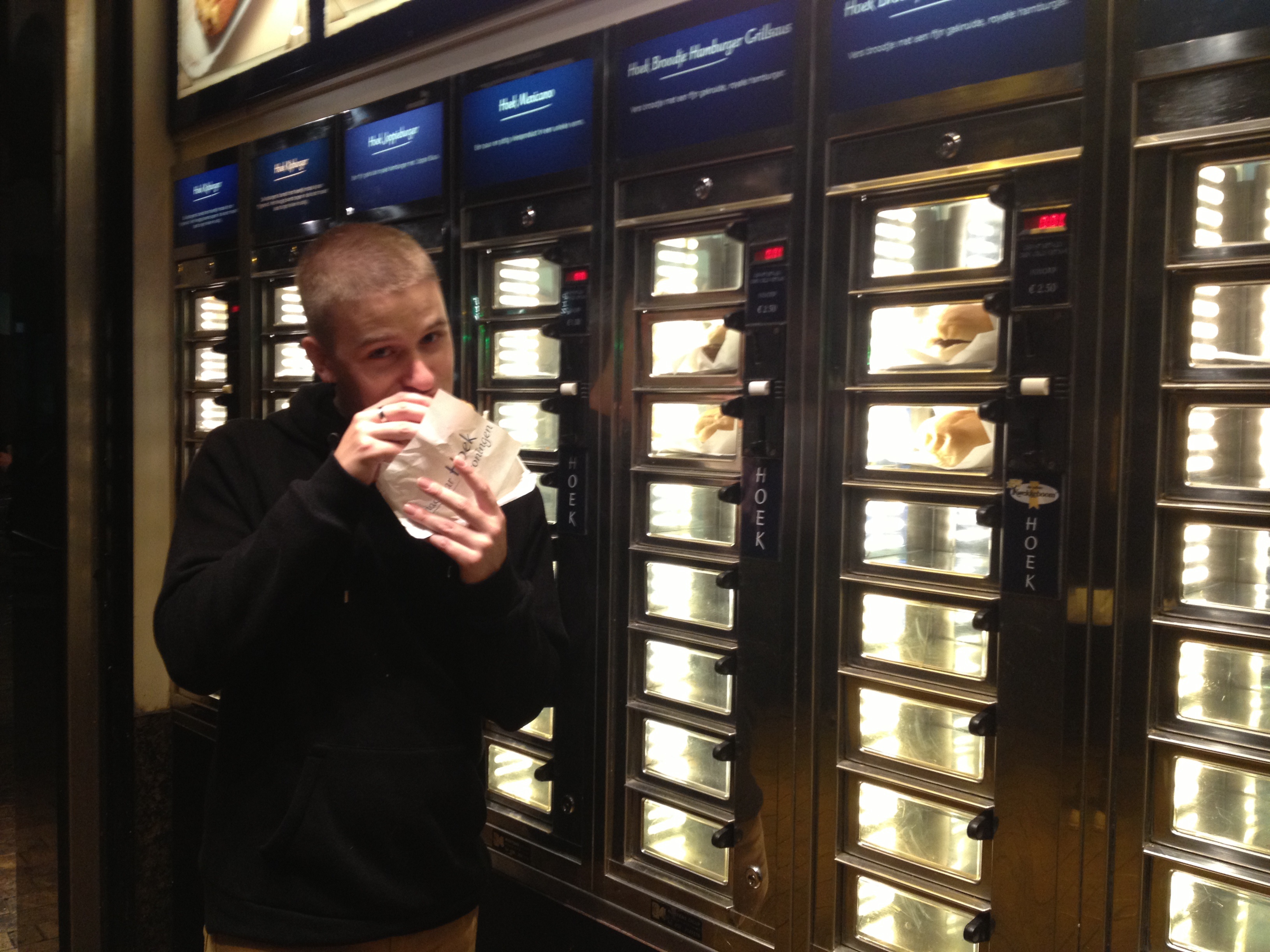
We visited a couple more bars, the next one being a place called Shooters. “I got refused entry to this place once, I was so drunk,” Gemma laughed as she narrated her personal history of the bars and streets as we hopped our way along. The air in Shooters was heavy with the smell of cigarette smoke and it was completely packed, so we didn’t stay for too long. We then visited another bar called Het Feest, which had the interesting feature of a rotating bar. I imagined that such a device would get extremely confusing the more intoxicated one became in a crowded bar, but fortunately the crowd was pretty thin that evening. We put it down partly to the exam excuse, and partly because it was also raining that night. After Gemma and Atze had shown me the bars, we headed back to the first night club to collect our jackets and head home. “But first you have to get something from the wall! You’re hungry, right?” Gemma knew me too well. I’m not sure if its a thing throughout the Netherlands or just in Groningen, but in the centre of town there is a fast food shop that makes croquettes, sausages, burgers and other greasy post-drinking snacks. However, instead of over the counter service, there is a wall that acts as a sort of vending machine. There’s rows of tiny compartments, most of them filled with some kind of snack, and all you have to do is put in a few euros and you can open it to get the food. I helped myself to a few croquettes while Atze lined up to get some chips – which we ate with mayonnaise, in true Dutch fashion – and then we walked home through the rain. It had been a fun and fairly inexpensive night, and it had been nice to see the kind of things my best friend had been getting up to on the other side of the world.

Scoffing down my snack from the wall.

Scoffing down my snack from the wall.

Gemma and I probably enjoying ourselves a little too much.

Gemma and I probably enjoying ourselves a little too much.

***

The rest of my time in Groningen was a little slice of normality in the life of travel and organised chaos I had been living. Gemma and I went to the movies and saw The Hangover: Part 3, went shopping for some cheap clothes for me at H&M, and I also got a much needed haircut. On our way back from the movies we walked down one of the few red light streets that existed in the small city. “I guess it’s a Dutch thing, but it’s not like in Amsterdam. A lot of these girls are just normal girls, probably some foreign girls, and even students.” Gemma pointed to one of the windows, where a girl dressed in her sexy outfit was sitting with a laptop, tapping away at the keys. “She’s probably studying or doing her university homework, or something.” It was an interesting thought, I suppose. The whole thing didn’t seem that sexy to me, and not because the windows were just full of women. “Wait until you see Amsterdam,” Gemma said. “The girls there are… it’s all just really different.” I wasn’t due to hit Amsterdam for nearly two months, so for now I would have to take her word for it.

After my desperately needed haircut.

After my desperately needed haircut.

On my last night in Groningen, I crawled into Gemma’s bed with her, and we stayed up late talking about our lives – hopes, fears, dreams, secrets: all those things we still talk about, but never feel the same way over WhatsApp as they do in a face to face conversation. Gemma knew me so well, knowing exactly what to say to calm any nerves or fears I might have about travelling and my uncertain future, and it made me realise just how much I had missed her while she’d been away, and probably how much more I was going to miss her now that I was leaving again. It was a little sad that night, but when we had our emotional goodbye in the morning it was actually a really positive moment. It was a little uplifting and affirming, knowing that we were still the best of friends after all this time, and that even though we weren’t sure when we’d be seeing each other next, that we could still be just as close next time our paths crossed, wherever in the world that might be.

Conversations in Copenhagen: what we have, what we want, and what we really need

After spending some time riding our bikes through Christiania and grabbing a bite to eat, Esben told me that he had another appointment that evening. He was playing billiards at a local pub with a few of his friends, a regular meeting that happened every week, and Esben said I was welcome to join him or go and do my own thing, if that was what I preferred. I had no idea what I would have done if I’d gone wandering by myself, so I accepted the invitation to join Esben and his friends – after all, the spirit of Couchsurfing was to get to know your hosts and to see how the locals live their day to day life.

So that evening I found myself in a small room that was thick with cigarette smoke in the back of a small, inconspicuous bar whose name I never took note of. There we met Esben’s friends, who had already started a game without him. As I watched them play, I discovered that billiards and pool or snooker are actually two completely different games – Esben’s friends explained the rules of billiards and the use of the tiny wooden poles in the middle of the table, and after a while I even joined in on a few of the games, though my recently acquired snooker skills were no match for a bunch of weekly practitioners. I sat down with a beer and told a few stories of my travels while they played – mentioning the Trans-Siberan always gained an amusing reaction, a combination of curiosity, amazement and disbelief. Even when I mentioned that Esben and I climbed the tower at Vor Freslers Kirke, one of the women exclaimed with a gasp. “Wow! How was it? I can’t believe I’ve lived here so long, but I have never been up there!” I assured her it was a beautiful view, and then just laughed, smiled and shrugged my shoulder. “It’s okay – if there’s one thing I’ve learned from all the people I’ve met along my trip, it’s that people usually never take the time to be tourists in their own city.” For myself, it would have been applicable to say my own country. I have a lot of international friends who have seen much more of Australia then I ever have. I guess when you grow up on the island continent, the rest of the world over the vast seas and oceans seems a little more exciting then the unfathomable expanse of nothing in the desert in the centre of the country.

Esben was in his late thirties, and most of his friends were either of a similar age or even older, so it was a slightly different crowd to my usual company – no binge drinkers or party animals – but it was a nice chance of pace. Eventually we had to clear out of the room to make way for another group who was using the game table, and most of the group went home when that happened. In the end it was just Esben, myself, and a woman named Tot. Tot was a lovely lady, as sweet and gentle as Esben – perhaps that’s why they were such good friends, but I was beginning to suspect it was a common quality among most Danes. We talked more about my travels, and I told stories about South-East Asia and some of the incredible culture clashes I’d seen. Tot listened keenly, and I could see the sincere and genuine compassion in her eyes as I described the kind of poverty I had witnessed during my stay in Thailand and Cambodia.

She voiced some of her own thoughts and concerns when I mentioned the fact that I hadn’t been able to drink the tap water all the way from Bangkok to Moscow. “It’s incredible how much we take things like that for granted, isn’t it?” Tot said as she sank back into her seat, shaking her head with a solemn look on her face. “Things like just going to the tap and being able to get a glass of water.”
“Yeah, but even in a lot of those places I was still able to walk to a corner store and buy two litres of water, you know?” I added.
Tot nodded in agreement. “But then there’s places in Africa where they can’t even do that! Even the most basic things that we take for granted would be such a luxury to them. It really makes you appreciate the things you have. Not enough people really see that.” There was a strained sadness in her voice, a beautiful soul that sounded so desperate to see a change in the world, yet unsure how to go about it. It reminded me of myself in a lot of ways, and the way I’d lived my life up until very recently: ideas without action, or goals without a plan. I told Tot that even the water in St Petersburg was undrinkable – that was quite a shock for her, I think, to bring what seemed like such a foreign problem to the European First World – but we remained on the topic of quality of life and the appreciation of ones own circumstances for quite a long time, and the conversation turned into quite a profound moment for me. For the first time I was beginning to consciously appreciate not just the amazing opportunities and experiences I’d had in the places I’ve travelled to, but also what I’d had in the life I’d left behind, and after this journey is eventually over, in the life I’ll be able to return to.

***

There’s only so much world philosophising one can do in an evening before the whole thing just becomes overwhelmingly depressing, and eventually Tot had to go home. “If you like, we can ride home past some of the gay bars so I can point them out to you,” Esben had offered after we had bid farewell to Tot. He had to work the following evening, but it would be a Friday night and I had expressed an interest in checking out some of what the nightlife in Copenhagen had to offer. So off we went on our bikes, until we reached what could be considered the ‘gay area’ – a stretch of several blocks where some of the most popular gay venues were located. Esben stopped outside one called Jailhouse CPH. “This one is more of a bar then a nightclub,” he said.
“Is it any good?” I asked.
Esben just shrugged his shoulders, and made a short noise that was the definition of impartiality made audible. “It’s okay. Depends of what you want to do, I guess.” I wasn’t sure if he meant it, or if his Danish nature meant he didn’t enjoy being too critical of even a simple bar, but then he said, “We can go in for a drink now, if you like?” Wary of the beers I’d already consumed, and the fact I had ridden a bike into town, I accepted the offer, deciding that familiarising myself with the setting could only be a useful thing to do.

Once inside, Esben and I sat at the bar and ordered some drinks. We’d been so busy riding around and sightseeing during the day that it was the first time we’d really been able to sit down and have a decent discussion. Something I’ve found about most naturally quiet people is that they often have the most thoughtful and interesting things to say, and Esben was no exception. We talked a lot about travelling – me about the Trans-Siberian trek, him about his smaller journeys throughout Europe, as well as his experiences at Burning Man in the USA – and our lives in general, with an overall more upbeat tone then the conversation with Tot. Throughout the night one of the guys who worked at Jailhouse, who was also an acquaintance of Esben, came over to us and told us he was taking photos for the bars Facebook page. They had an offer where if you tagged yourself in the photo on Facebook, you received a free shot. Needless to say, I had connected to the free WiFi in moments, and Esben and I were throwing back tequila shots. Following that, I decided it was time to head home, given that I still had to get there via bicycle.

“I think I might have to get the bus into town tomorrow night”, I said to Esben as we left the bar and headed for our bikes. “I won’t be able to ride my bike after I’ve been out drinking.” Even now I was stumbling a little as I mounted my bike – thank God I still had Esben there to lead the way home.
“Oh, you can still ride your bike home,” he’d said rather simply. “I’ve done it many times… some times very drunk. It’s not really a big deal.”
“No,” I said with a chuckle, “it’s not that I won’t be allowed. It’s that I physically can’t ride a bike after I’ve been drinking. Or at least as much as I will probably be drinking tomorrow.” Although I somehow managed to follow Esben’s lead and make it home that evening in one piece. On the way back I tried to make mental notes in my mind, in the event that I was brave enough to take my bike out the following evening – I was still unsure, but I would cross that bridge when I got to it.

***

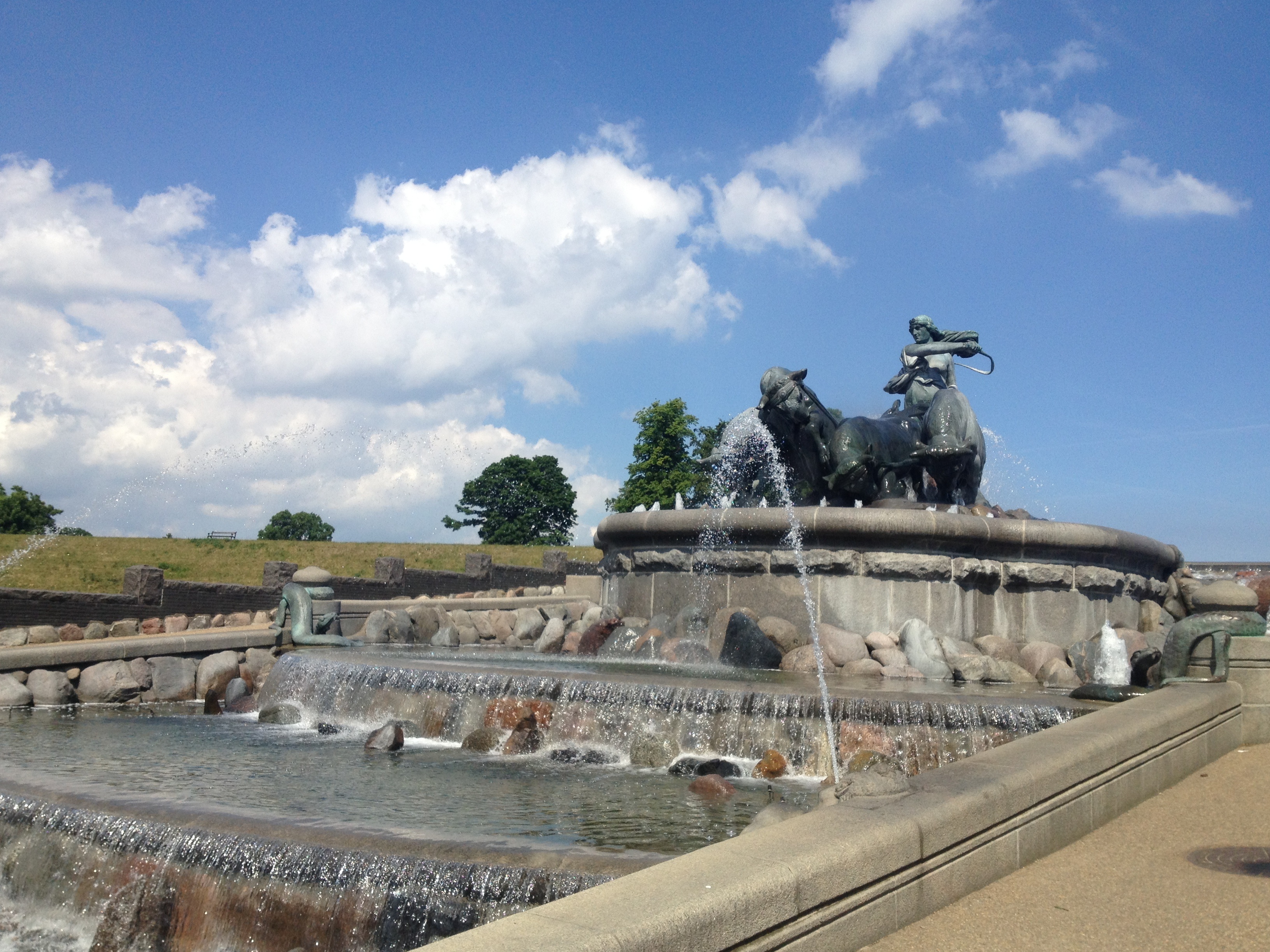
Esben had a funeral to attend the following morning, and then work in the afternoon, so I said I would do some more sightseeing in the morning and swing past Christiania in the afternoon to say hello. So after consulting my Lonely Planet book and studying a few maps, I set out to see some of the other more well known sights of Copenhagen. I rode through the city centre, past another sightseeing boat trip that I had decided to forego, and up along the bank of the canals until I reached the strip that was scattered with a range of statues both great and small. There were some impressive fountains, some smaller depictions of angels and fairytale creatures, and of course the famous Little Mermaid. The statue itself seems rather underwhelming when seen up close in the flesh… or… in the bronze? Whatever, despite that I still played my tourist card for the city and climbed down on the rocks to get a photo with it, managing to get my own photo without the throngs of other tourists in the way, something that even impressed Esben. The other highlight was the impressive Gefion Fountain, a sprawling masterpiece that really makes yiu wonder what the hell is so special about the Little Mermaid at all. A Disney reference? It’s all a bit strange, but nevertheless, it made for an pleasant bike ride in the warm Copenhagen sun.

The Danish flag.

The Danish flag.

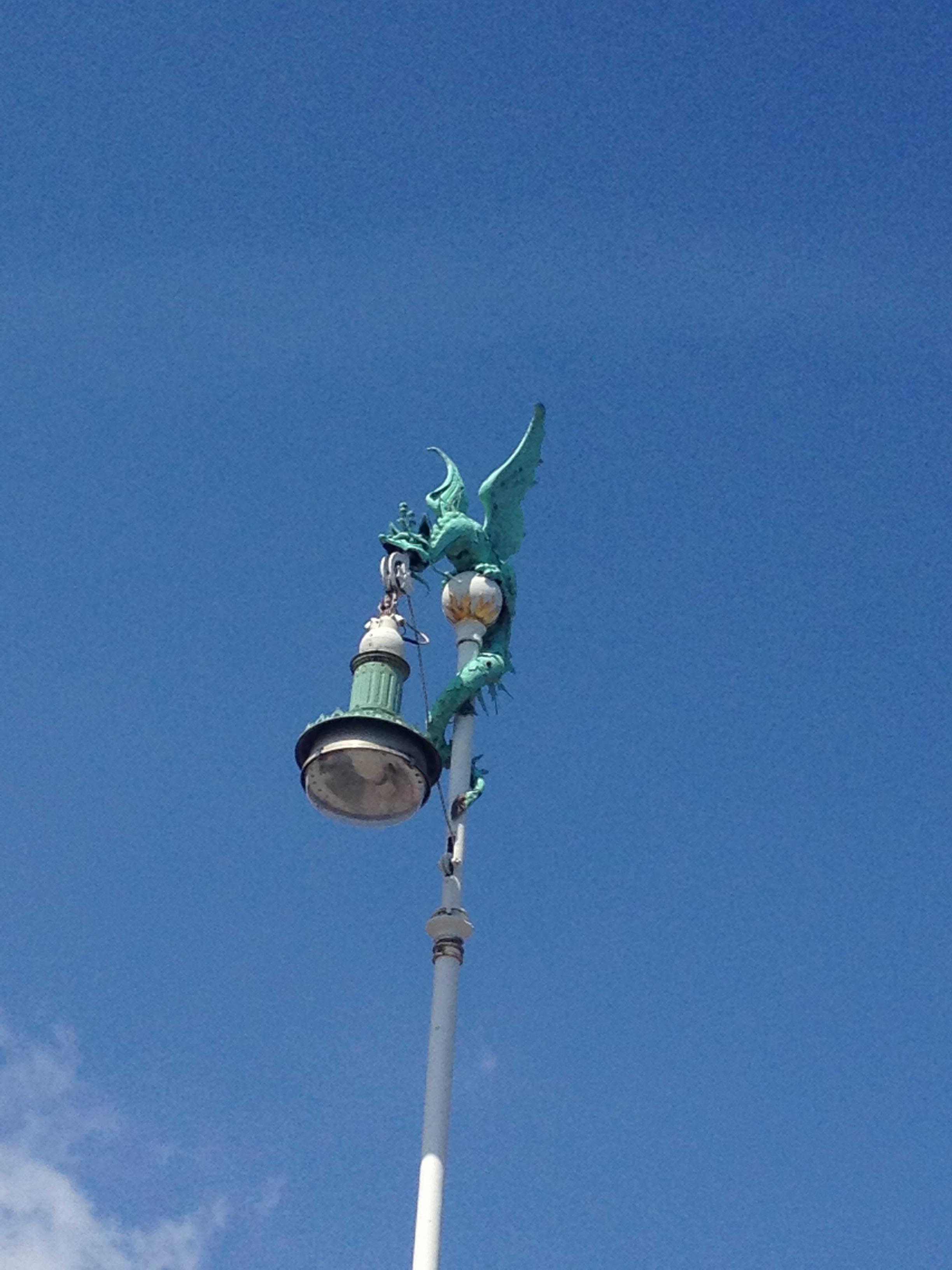
Lamp post ornaments.

Lamp post ornaments.

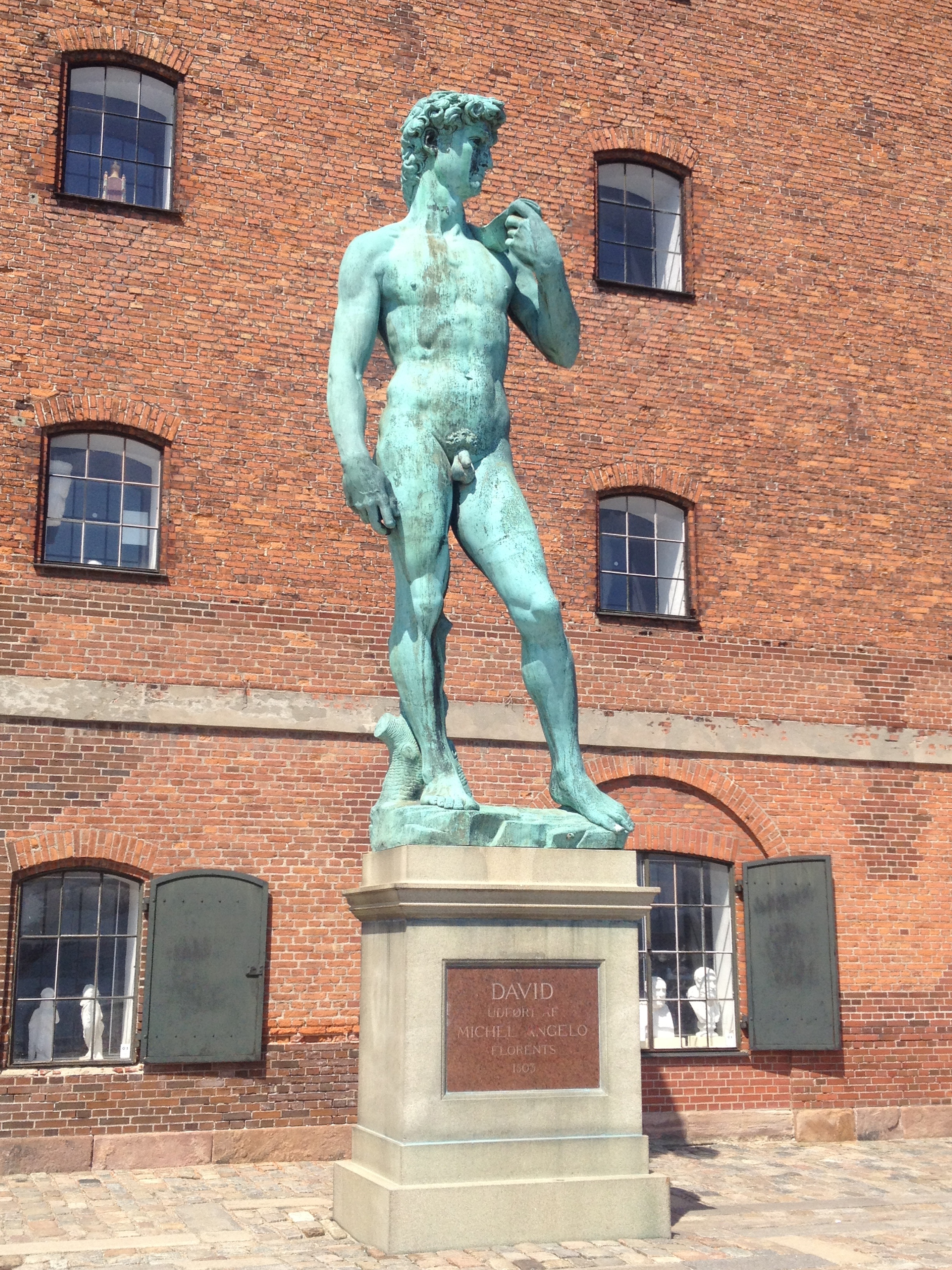
A bronze replica of Michaelangelo'a David.

A bronze replica of Michaelangelo’a David.

Gefion Fountain, which depicts the goddess Gefion ploughing the Danish island of Zealand with her four sons... Yes, her sons are oxen.

Gefion Fountain, which depicts the goddess Gefion ploughing the Danish island of Zealand with her four sons… Yes, her sons are oxen.

Close up of Gefion and her sons.

Close up of Gefion and her sons.

Angel statue called Søfartsmonumentet, or 'Shipping Monument', a tribute to fallen sailors of WWI.

Angel statue called Søfartsmonumentet, or ‘Shipping Monument’, a tribute to fallen sailors of WWI.

With the most famous of all the statues, the Little Mermaid.

With the most famous of all the statues, the Little Mermaid.

I biked around the city for the rest of the afternoon, exploring the streets and just really taking it all in. With all the canals, it felt like a more spacious version of Stockholm, although maybe that’s because I ended up seeing far more of Copenhagen than I ever did of Stockholm thanks to the bike I had access to. Later in the afternoon I visited Christiania again for a beer in the sunshine, but I’d decided that I was going to head back home to change and maybe have a nap before heading out again. I’d started to get the sniffles, and what looked like the beginnings of a cold, so I figured a little extra rest would be necessary if I was going to explore the nightlife later.

I was half right – the nap was definitely necessary. However, I never made it back to Jailhouse CPH, or any other bar for that matter. I’d told Esben I was heading home for a little while – I managed to pass out on my blow up mattress and only wake up when he arrived home just after 10:30pm. It seemed like the excessive amounts of beer and vodka over the last couple of weeks and the constant travelling and most likely not enough sleep were all finally catching up to me, and my body gave out. So I spent the Friday evening at home with Esben which, I can honestly say, was probably a lot more enjoyable than heading out to any bar would have been. I remembered back to my time with Allistair in Vietnam, telling him how I was looking for more in my life than just partying, and the mindless nights of purposeless drinking weekend after weekend. Esben made some dinner and we shared a bottle of wine, and we talked more about our lives, the world, and the future. I went to bed with a richer soul, and a body that was (hopefully) less likely to bail out on me during a period where I needed to be healthy for my travels. Cutting back on some (but definitely not all) of the partying wasn’t just a desire – if I was going to survive this long haul journey, it would almost be a necessity.

The next morning I packed my things, bid Esben farewell and thanked him for his generous hospitality, and hit the train tracks towards my next destination. I was leaving Copenhagen with new friends, new perspectives, and terribly sore muscles in my butt from all that bike riding! It must have been several years since I’d last ridden a push-bike – the charming little city knows how to leave a lasting impression.

Snoozers and Losers: A Rant on Snoring

At this point in my journey, I feel it’s appropriate to take a break from the linear narrative and focus on some of the smaller details. Actually, one detail in particular – something that not even the thickest of guide books can adequately prepare you for, yet something that almost every traveller will encounter at some point in their journey. This detail is the dreaded and infamous act of snoring.

I have a long and troubled history with this bizarre bodily function, with the cruel twist being that I don’t snore, and never have. I’ve shared rooms and beds with enough people to know this. I’ve also shared beds with boyfriends who have snored. I don’t mean heavy breathing, or that kind of muffled wheezing that people make when they have a blocked nose. Real snoring is loud and consistent, and doesn’t just show up some nights and disappear on others. For me it can be a deal breaker in relationships – how am I supposed to sleep with you if I’m unlikely to ever have a good nights sleep again? To be sure, there are varying degrees of severity. Sometimes it’s a solution as simple as a pair of ear plugs. Other times its a little more dire and requires moving to another room – generally not an option in the middle of the night when you’re in a hostel. But there are some people who snore so badly that no amount of soft foam wedged into your ears is going to help, and in some cases even a dividing wall can’t cut out the vibrations rattling from their distorted windpipes.

***

During my time in South-East Asia, I miraculously avoided this problem. Either I was extremely lucky that I never shared a dorm room with someone who snored, or I drank so many 50c beers every single night that I passed out too hard to notice – which is the only real foolproof way I’ve discovered to overcome a snoring roommate. Though that was all about to change once I reached China and began the Trans-Siberian tour. In Beijing I’d had the luck of being placed in my own room, so I’d asked Tim what the situation had been like with the rest of the group. “I’m in a room with Don,” he’d told me. “Which is fine, except he snores pretty bad.”
“Really? Ah man, that really sucks.”
“Yeah. Like, last night I’d already gone to bed, and he came back late from some sightseeing or something… When he went to bed, his snoring actually woke me up.” There’s a common tactic of trying to fall asleep before the snorer in order to not be kept awake – the fact that Don’s snoring was loud enough to rouse people from their own slumber filled me with grave concern.

The following nights had been on the train to Ulaanbaatar, and the night in the hotel in which I’d shared a room with Tim. He’d also shared a cabin with Don on the train, so I quickly suggested that we should share one of the double rooms, and I’m sure Tim was grateful for a solid nights rest. It wasn’t until the ger camp when I became due to experience it for myself, when the three guys who weren’t one half of a couple were all put into one ger together – that’s Don, Tim and myself. And boy, Tim had not been exaggerating – Don snored. It was almost funny, like some kind of awful joke, but that sentiment faded extremely quickly when I realised we were actually supposed to sleep with the racket going on in the next bed. Luckily I had been prescribed some sleeping pills before I left Sydney, for a blocked ear that may have caused discomfort during my flights. Yet even washed down with vodka and wine on the night we had a party in the gers, sleep still didn’t come so easily.

***

It was a similar story at Lake Baikal as well. I would never have expected my best nights sleep to be had on the Trans-Siberian trains, while having to drink and medicate myself to sleep at each of our stops. Tim had been sharing a room with him ever since the ger camp, including all of the trains – I felt so bad for him, though not bad enough to offer to trade places, since I’d had my own share of restless nights with Don’s snoring. When we got to Moscow, however, there was a rush and a scurry as our group was divided into two rooms – a larger dorm for nine of our people, and a smaller room for the other four. I’d secured a bed in the larger room, but when I looked back out into the lobby I saw Tim standing amongst the chaos, a lost, slightly dejected look on his face. And I instantly knew why – the larger room was full, and Don had claimed a bed in the other one.

So I stepped out and offered Tim my bed. He seemed genuinely shocked, but I didn’t have to offer twice. He was extremely grateful as he moved his stuff in, while I dropped my bag off into the smaller room. After four nights on from Irkutsk to Moscow, I was concerned Tim might not make it through the next day without a decent night of sleep. If you can cast your thoughts back to my blogs about Moscow, you’ll remember I lamented about having a terrible nights sleep. This is the reason why. Between the room that became ridiculously humid during the nights and the snoring that rattled the bunk beneath me, I think I managed maybe a couple of hours sleep each night, at the very most.

Come St Petersburg, I was once again in a dorm with Don. Now it may be a little more clear as to why I did my best to keep with the Russians when it came to our evenings of drinking – a solid sleep with a resulting hangover, in my experience, is infinitely better than a frustrated and sleepless night of tossing and turning. But on my last evening in St Petersburg, I had decided it would be better to have a decent nights sleep and a clear head in the morning, to make sure I didn’t miss my train to Finland. I went to bed at a decent hour – unfortunately, Don had beaten me there. He was in one of the bunks underneath me, and I swear sometimes I felt the vibrations through the bed frame. That’s how bad it was. It was a noise that almost didn’t sound like snoring – every so often it mutated to a strangled gurgling that actually made me feel a little bit sick. I never thought I’d ever use the word ‘disgusting’ to describe the sound of a snore, but it honestly made me feel ill. I laid in my bed, desperate to fall asleep, but it was literally impossible with such a commotion going on below me. Sometimes it would stop, and the partial relief came with the simultaneous concern that maybe he’d actually stopped breathing. But it wasn’t long before there was a huge, sucking snort and the horrendous snoring would continue. Some people get woken up by their own snoring, and then they roll over or move into a position with better airflow into their nose or oesophagus or whatever – not Don, he just powered on through. I wondered if there was actually anyone else asleep in the dorm. No one seemed to be tossing and turning as furiously as I was – maybe they were all drunk and passed out.

I managed to doze off a few times, into a very light sleep, but I was always wrenched back into the unfortunate reality of Don and his snoring. It was a shame, because Don was a nice enough guy, but I think I really came to resent him by the end of the trip, purely because he had, however unintentionally, robbed me of far too many nights of sleep while he had been happily snoring away in his own slumber.

***

It happened again in Stockholm. There was someone – and I never figured out who it was – who snored and made the most vile gargling noises that a decent sleep was next to impossible. I didn’t have much energy to do a lot of sightseeing when I was in Stockholm, and it was partly, if not mostly, the fault of whoever kept me awake with that racket they called breathing. And I don’t think it’s something mild that people should just deal with – I honestly think that that persons snoring was a serious negative impact on my time in Stockholm, because the lack of sleep just really threw me out for the entire day.
I’m not the first person to suggest that people who snore shouldn’t be allowed to sleep in dorms, or they should be allocated special ‘snoring rooms’. Even though I say I develop strong negative feelings towards snorers, there’s nothing personal in the request. But I think for a snorer to sleep in a shared dorm is incredibly unfair on everyone else. It’s almost selfish – you get to enjoy a nice long sleep while simultaneously robbing everyone else around you of the same luxury. Why should you get to sleep when you’re the reason the rest of us suffer from lack of sleep the following day? There’s no way you can come so far in life without having to share a room with someone – someone is bound to have told you about it, especially if your snoring is that bad. In that case, I really think you should either search for a medical solution to what is actually a very real problem, or do not stay in dorms where you’re going to be a serious nuisance to others. I don’t mean to sound like a bitch, but it’s the honest truth, and I dare you to find me a traveller who hasn’t had similar thoughts about a snorer they’ve encountered in a dorm on their travels.

And it may sound harsh, or like an overreaction, but unless you were there and experienced the Hell that I slept through, or rather didn’t sleep through, then maybe you’ll just never understand.

Cruisin’

On my first night in Helsinki, I’d been chatting with Susanna about prospective routes for my journey. “I’m thinking about getting a boat to Stockholm,” I’d said. “I feel as though it would take too long to get the train all the up through Finland and then back through the rest of Sweden.”
“Ah, the good old booze cruise,” Susanna had laughed. “You’re right though, and there isn’t that much to see up that way anyway. But the cruises are a lot of fun. I’ve done it a few times when I’ve had to go to Stockholm.” She explained that a lot of Finnish people booked the overnight cruise as a round trip – they partied all night on the boat, slept all day when the boat was docked in Stockholm, and partied the whole night on the way back. “I had to do things in Stockholm though, so didn’t get the benefit of a day of sleep. But it’s still heaps of fun.”

Then I’d mentioned potentially getting the train to Turku, a town on the western coast, and getting the ferry from there. “Yeah…” Susanna had replied, but there was obvious skepticism in her voice. “The trains are pretty expensive though, if you were still thinking about waiting to activate your Eurail Pass. And Turku isn’t that exciting either. I’d get then boat from Helsinki, if it were me.” Back when I had been making rough plans for my world tour, I had the intention of visiting not only the major cities, but other smaller, less frequented destinations. However, it seemed that the scope of the countries I wanted to visit meant I was going to have to be a little more selective. I cast my thoughts back to Chau Doc in Vietnam, and how the side trip had really not been worth it at all, so I decided to heed Susanna’s advice and head straight to Stockholm from Helsinki.

***

Being the terrible decision maker that I am, it wasn’t until the Sunday morning that I booked my ticket on the ferry for that night. That was something I had to work on, although I had discovered a ridiculously good value fare online, so perhaps this time it worked to my advantage. After saying farewell to Susanna, I headed for the docks on the south-eastern side of the city and boarded the boat. I was still feeling quite hungover from the previous night out, so I wasn’t sure how well I was going to handle a night where I was essentially trapped in a party atmosphere.

The boat was massive. There were 10 levels, including a conference room on the top deck and several levels of restaurants, shops, game rooms, nightclubs and stages with live music. I was actually really impressed at how nice the whole thing was – red carpers and gold trimmings on the decor made it feel as though I was in a fancy hotel. However, my room was less glamorous – a small room in the depths of the hull (thank god there was an elevator) with four bunks that made me feel a little nostalgic for the Trans-Siberian Railway cabins, except there were no windows. None of my cabin mates had arrived, so I made my bed with the provided linen, dropped my bags off and did some exploring. There was some kind of convention or conference on this trip, as I noticed a lot of traditionally dressed Muslim men heading up towards the 10th floor. I wandered thought the duty free shop and around the games room, before having dinner at the cafeteria buffet and then making my way over to see what was happening in the entertainment area.

There was already a rock band in full swing, belting out songs I didn’t know – possibly in a language I didn’t know – but there were only a few smatterings of people around the bar, groups talking amongst themselves and not really paying attention to the actual entertainment. No one was dancing. It was a middle-aged crowd that didn’t seem like the partying type at all. I wondered where the rest of the young people who I had seen boarding the ferry earlier had gotten to. They’d come on with their stylish clothes and suitcases and for the most part seemingly enthusiastic attitudes. However, it was a Sunday night, and I wondered if maybe I hadn’t chosen the right evening to expect the party boat or “booze cruise”.

And the unsatisfying end to this story is that I will never know. I went below the main deck to my cabin to find that it was still empty, a clear indication that the boat wasn’t full. So I decided to go and shower, and then returned to my cabin… where I promptly passed out. My hangover and day of sightseeing in the warm Helsinki sun had caught up with me, and when I stirred to check the time again it was already after one in the morning. Rather than drag myself out of bed to see if there was in fact a raging party on the upper levels, I decided to indulge in the fact I had a room to myself and continue with a solid night of sleep. I know I’d only just had a room to myself back at Susanna’s apartment, but the uncertainty of my future accommodation meant that I had no idea when I would have such a luxury again. Considering I had been expecting to be sharing with three other people, I took full advantage of the situation.

I awoke in the morning with enough time for the buffet breakfast before gathering my things and departing the ship. We’d crossed another time zone on our voyage to Stockholm, so I had an extra hour on the day. Which was helpful, considering I had no accommodation booked, knew very little about the city – just what was in my Lonely Planet Europe on a Shoestring guide – and didn’t know a single person in the city. Yep, this was going to be interesting.

***

I’d always been a little dismissive of cruises, on the argument that it was a holiday for a holidays sake. You didn’t really see that much if you spent all your time on a boat, and you didn’t get a very cultural experience if you were spending all day on what was essentially a big hotel. I still sort of hold that view of cruises, although I have to say, being on the boat made me think that it would actually be a lot of fun, especially if I’d been with a group of friends. After the staggering range of cultural differences I’d experiences over the past 2 months, I think I can appreciate the idea of a holiday where the sole purpose is to just relax, and not really care if the only sight you see is 360 degrees of ocean for seven days. I know that’s not exactly how cruises work either, but I’ll admit, given I did have my own room, I wouldn’t have minded spending a little bit longer on that boat. And next time my friends suggest it, maybe I won’t be so quick to shun the idea of a cruise holiday.

Nothin' but me and the big blue Baltic Sea.

Nothin’ but me and the big blue Baltic Sea.

Helsinki Sightseeing

During my time in Helsinki I hadn’t done a great deal of sightseeing, because when I arrived Susanna had told me about a free walking tour of the city that runs every Sunday afternoon. I have to confess that I didn’t know a great deal about the city, and hadn’t done a lot of research either, so I wasn’t even sure what the major attractions of the city even were. I arrived in Helsinki on a Thursday, so I figured that I would be around until at least the end of the weekend, and that I could take the tour then and do some sightseeing with a knowledgable local.

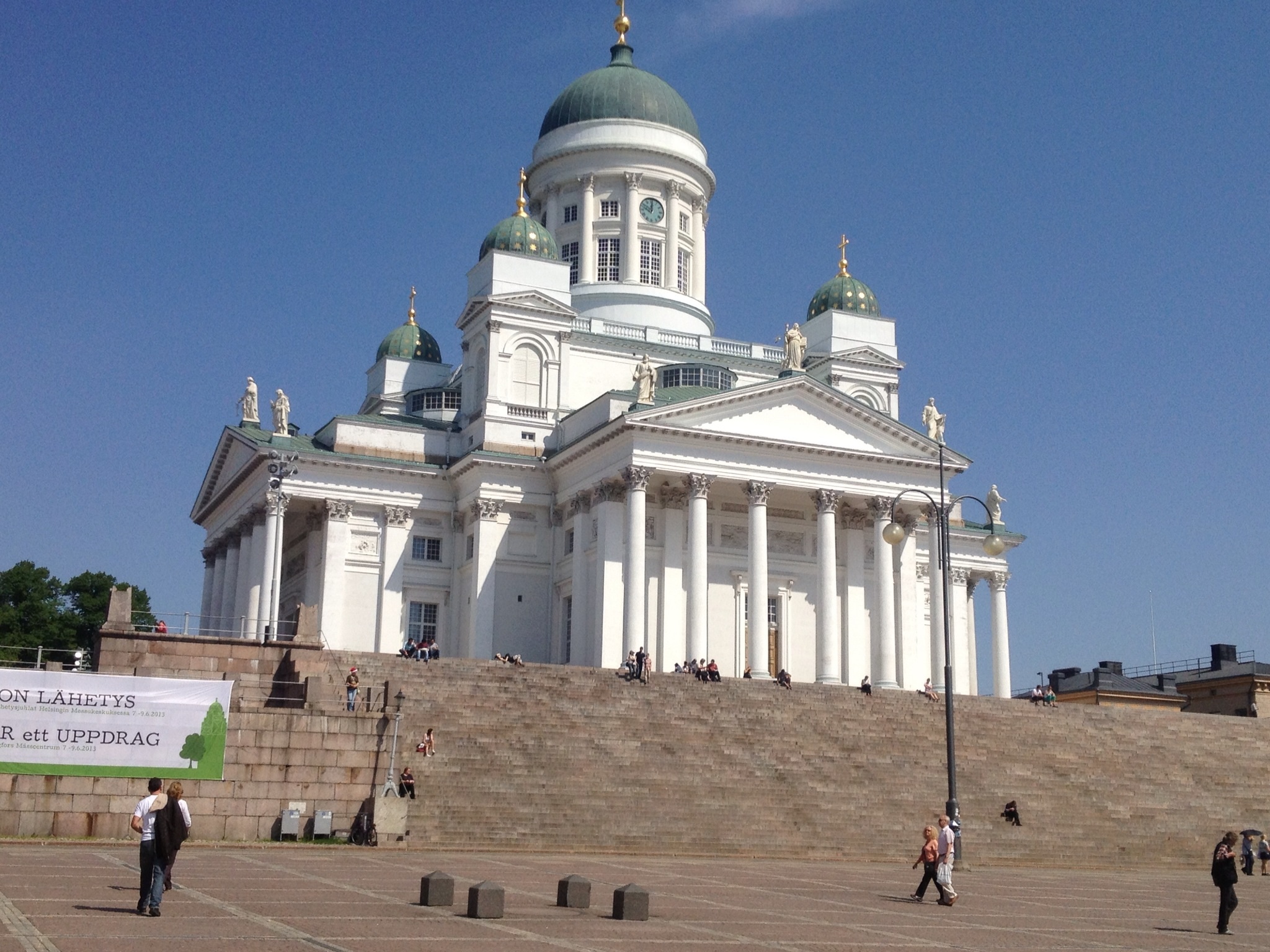
As is turns out, the tour guide was from Tasmania. She’s been living in Helsinki for 11 years though, so she knew a great deal about the city and told us little stories about the city’s main attractions. The tour began in Senate Square right in front of Tuomiokirkko, a cathedral that is probably the most iconic and recognisable attraction in Helsinki. From there we moved to the lavishly adorned Uspenskin Katedraali, a Russian Orthodox cathedral. Now that I had moved out of Asia and well and truly into Europe, the host of temples that had formed the majority of tourist attractions were being replaced with churches and cathedrals such as these. We went inside to view the stunning interior, with paintings and alters and candles spread out through the entire building, but tread carefully so as not to disturb the large number of people who were there to pray and pay their religious respects.

The iconic Tuomiokirkko.

The iconic Tuomiokirkko.

The Russian orthodox Uspenskin Katedraali.

The Russian orthodox Uspenskin Katedraali.

Inside the orthodox cathedral.

Inside the orthodox cathedral.

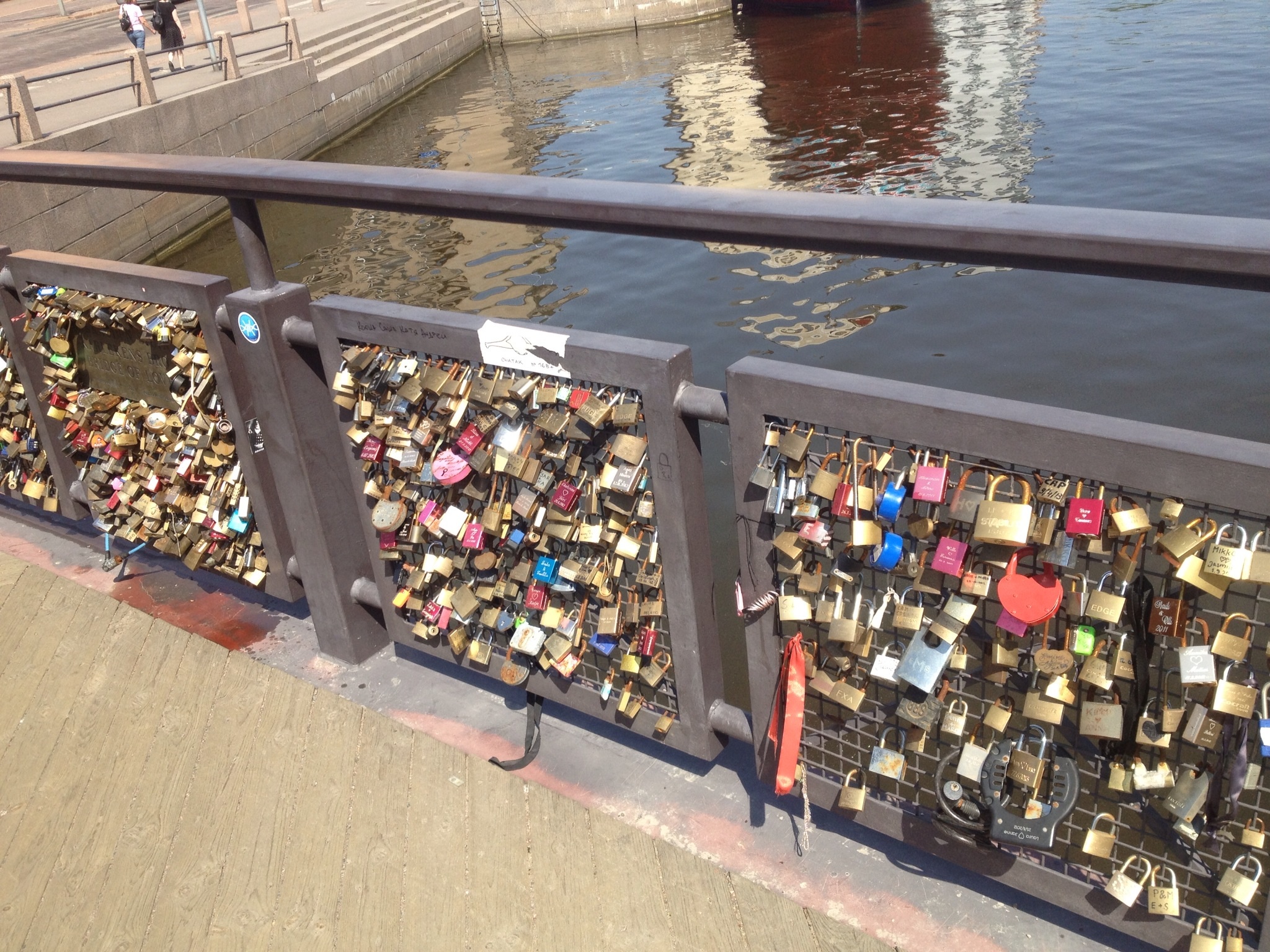
Helsinki's padlock bridge is far smaller than in Irkutsk, but there's no shortage of padlocks.

Helsinki’s padlock bridge is far smaller than in Irkutsk, but there’s no shortage of padlocks.

We wandered through the city looking at a range of different things, from the government houses and monuments, to quirky hotels and interesting buildings. We also passed a bridge that was absolutely full of padlocks, just like the one in Irkutsk. I remember Jenna telling me there was a similar bridge in Paris, so I guess it must be quite a common European tradition. From there we moved to a market by the sea and had some lunch, where the tour guide warned us of the particularly vicious seagulls. After that we walked through a park and a graveyard that was commonly thought to be haunted, and finished with a building called the Chapel of Silence. It was a peculiar structure with a round shape and was made of wood, and served as a non-denominational space that could be used for all kinds of ceremonies, but what was so interesting about it was the acoustics. It was designed in a way so that it almost completely eliminated all outside noise – the silence inside the chapel was almost deafening. It was an eerie building, but at the same time extremely tranquil. The interior was beautiful, and I could imagine a small, elegant wedding ceremony taking place on the main elevated area.

One of the menacing seagulls.

One of the menacing seagulls.

This monument was a gift to Finland from Russia - and was cheekily placed in front of the Swedish embassy in Helsinki.

This monument was a gift to Finland from Russia – and was cheekily placed in front of the Swedish embassy in Helsinki.

Despite the reputation for being haunted, Finnish people don't waste a single moment of daylight, and this very central grassy area was full of living people soaking up the sun.

Despite the reputation for being haunted, Finnish people don’t waste a single moment of daylight, and this very central grassy area was full of living people soaking up the sun.

The Chapel of Silence.

The Chapel of Silence.

***

After the sightseeing I met Susanna back at my hostel to say goodbye. After a rushed and hungover breakfast that morning, I had decided that I didn’t want to spend much longer in Helsinki. I’d met some nice locals, seen the way they lived, and by the afternoon I would have seen the city’s major sites too. I have to admit, after being told how long I would be staying in each location for the last three weeks, it was a bit of a shock to the system to have to make these definitive decisions right on the spot. I like to think I can be pretty spontaneous, but I can’t deny it was a little stressful. Especially when I was booking my place on the overnight ferry at 10:50am and I had to check out of the room at 11:00.

But that’s what I did. I found an extremely good fare, so I snatched the deal up and bought a last minute ticket to Stockholm. I still had no idea where I would be staying, and I didn’t know anyone in Stockholm, so it was a combination of excitement, adventure, and sheer terror. I’d had a lovely time in Helsinki, getting to know Susanna and experiencing the excitement of the beginning of their summer, but it was time to officially kick off my Eurotrip and see what the vast, multicultural continent had in store for me.

Saying goodbye to Susanna, and to Helsinki.

Saying goodbye to Susanna, and to Helsinki.

Down in the Park: Drinking in Helsinki

The weekend I was in Helsinki turned out to be quite an eventful one for the usually quiet city. Susanna had warned me that on Saturday I would see a lot of people walking around wearing white, ceremonious caps, and a lot of teenagers drinking in the park. I had arrived in Finland at the end of the last week of school before the summer holidays began, and for the teenagers that were finishing high school, it was the day of their official graduation ceremonies. It was such a beautiful sunny day that I had decided to talk the 45 minute walk into the city instead of catching the train, and on the way I saw white caps on many of the teenagers I passed, laughing with their friends and fidgeting as their parents tried to get them to stand still for photos. However, the parks didn’t seem quite so full of young boozers, I had noticed as I myself laid in one of the city parks, soaking up some rays and using my new favourite human right to Skype some of my friends. That would all change later.

Susanna’s brother was coming to stay with her on Saturday – she’d been able to let me stay there for a couple of nights, but I’d had to find somewhere else to stay after that. “I’m really sorry, but… well, I don’t even know how the two of us are going to manage, the space is small enough as it is.” Which I totally understood, and was still completely grateful – two nights free accommodation is better than zero. Yet I hadn’t been able to find a host on Couchsurfing – Susanna put it down to the fact that a lot of people in Helsinki live in small apartments like hers, and therefore don’t really have room to host people – so in the afternoon I checked into the city’s student accommodation, which becomes a hostel in the summer months. From there, Susanna and I went to dinner – it was the birthday of one of the girls in her group of Finnish friends, and she had invited me to come along and join the crowd. Always keen to meet the locals, I was quick to accept.

One of he beautiful sunny parks, before they were stormed by drunken high school graduates.

One of he beautiful sunny parks, before they were stormed by drunken high school graduates.

Dinner was at a Turkish restaurant, and I sat with Susanna and listened to a few of the conversations of some of her friends, and chatted to a few of them about my travels, where I’d come from and where I was going. At one point, in a break from all the other conversations, I had to lean over and quietly ask Susanna, “Are all of these people Finnish?”
“Yeah, they’re all from Finland,” she said, “but I’m pretty sure most of them know each other from a school or something where they all spoke English, so that’s why they mainly talk to each other in English, I think.”
But she had misunderstood my confusion. “Oh… No, I didn’t even think of that.” English is so widespread in Scandinavia you would have a very hard time finding anyone who didn’t speak it. “I mean, it’s just that a lot of them sound American.”
She had a good laugh at that. “Yeah, it happens a lot here. When they’re taught English by Americans, or American resources, then that’s how they learn to speak it, accent and all.” It was strange to see someone who could so easily pass as an American with a native English tongue to slip seamlessly into the long, low tones of the Nordic language. Finland actually has quite a complicated history with languages – Swedish and Finnish are both official languages, and there are small minorities of Finnish people whose mother tongue is actually Swedish. Politically, Finland’s history has been somewhat of a wrestling match for control and influence between Russia and Sweden, and there’s a whole range of other factors that basically mean all Finnish people seem to speak a minimum of three languages – the two official ones and English – with spikes Russian, Norwegian, Danish and German thrown in for good measure,

***

After dinner, we were to move onto the park to have some drinks. I was a little shocked when Susanna told me that – I hadn’t gotten drunk in a park since I was underage, and now for me drinking in a park refers to finishing the bourbon and Coke that I poured into a plastic bottle at pre-drinks while I’m walking through Hyde Park on the way to Oxford St. However, once I arrived I realised that it was quite a different environment. Well, I guess there were a lot of school kids getting drunk in celebration of the graduation, but we sat on the other side of the park, away from the throng of drinking youths. One of Susanna’s friends had some decent speakers for playing some music, and a few more produced towels or blankets from their bags to sit on, and we all sat around in the park having a little alcoholic picnic of beer, wine and cider. It was obvious that this was quite a popular and common thing to do in the summer months, making the absolute most of the outdoors and the sunshine after the months of long winter and seemingly endless darkness. It lasted for a a couple of hours through the evening sunshine and into the twilight. At one point the police arrived – while this kind of thing is commonplace during the summer months, at some point it became necessary to break up the crowd of teens as they grew too rowdy. Eventually the sprinklers came on, and we all and a bit of a chuckle as we watched them flee… until the sprinklers near us came on too, and we scattered, though only to relocate a few metres away, out of the reach of the water.

As we looked out over the now nearly deserted park, I saw a few people walking around picking up cans and bottles. “For every can or bottle you return to the supermarket, you get about twenty euro cents,” Susanna explained to me. “So all throughout these nights of drinking in the park, you have bottle collectors who go around picking them all up so they can make some money out of it”. I thought that was nice – even though it came with a financial incentive, it meant that people were still looking after the environment and cleaning up the local parks. But I was mistaken – as the collectors moved away, standing on the sidelines of the park and waiting for us to be finished with our beer and cider cans, I noticed that there were still a bunch of other cans still left on the grass. “Yeah, not all of the cans come with a refund, so they don’t bother picking them up.” That was a little disheartening, to learn that care for the environment, or even a desire just to keep the city clean, was completely lacking – it was all about making a few quick bucks. When the time came for us to move on from the park and onto one of the bars, I stood up and threw my can as far as I could to the other side of the park, and watched all the can collectors scurry to be the first to snatch up what was essentially a twenty cent coin. At least that way they were working for the money.

***

After the park, our party moved through the small, cobbled streets of Helsinki to one of the popular bars called Corona Bar. It was a large, dimly lit hall full of snooker and billiard tables, which seemed to be the main focus and attraction of the venue. The chatter and banter between the patrons was almost louder than the music, and there was a really authentic feeling about it that was a combination of American roadhouse and alternative grunge bar. Beer and wine was relatively cheap, and Susanna and I played a game of pool against two of her Finnish friends. Despite the two of us insisting that we were terrible players, I remembered back to the tips and tricks that Sana had taught me on our Cambodian date night, and with a few extra pointers from some of her other friends, both Susanna and I managed to sink a few balls with shots that I would never have believed I was capable of and ended up winning the game, representing Australia and proving that sometimes skills really do get better with booze.

One kind of cool thing that happened was that nearly everyone in the bar commented on my shirt. Tom of Finland is an artist that creates a lot of hyper-masculine and erotic cartoons, most of which are very graphic and detailed. Back at my old place of work, we sold t-shirts and singlets with some of the less explicit designs – some of the cartoons and artworks go as far as to essentially be pornography. Whenever I wore my Tom of Finland shirt back at home, it would usually get a lot of comments from people laughing and loving the fact I was adorning a picture of a naked muscle man on my shirt. However, here no one seemed that amazed by the content of my shirt, save for the fact that it was Tom of Finland – as in, they were actually familiar with the work of Tom of Finland. I have to admit I got a little kick out of wearing the Tom of Finland shirt in Finland, but I didn’t realise that there was actually such a strong connection to the country in the name, or that so many people, including heterosexual males, would know anything about it. One of the guys even mentioned that Tom, the artist behind the artworks, used to live not too far from the park where we’d been drinking earlier. What I had intended to be an outfit with a slightly meta undertone had turned into a relevant cultural tribute.

Welcomed With Wasps

My train arrived in Helsinki precisely on time at six o’clock, although the sun outside felt as though it should only be about three in the afternoon. I disembarked and made way to the end of the platform where I found Susanna waiting for me. Although we’d never actually met, I guess you could say Susanna was technically a family friend. Her mother is a close friend of one of my aunts, and when I had been telling her about my travel plans and mentioned that I was thinking of going through Scandinavia, she has suggested that I get into contact with her daughter Susanna. She’d Susanna might be able to offer me a place to stay or at the very least show me around Helsinki, the capital city of Finland. Susanna herself was from Canberra, living and working in Helsinki, so even though it was our first time meeting we seemed to have a bit of common ground, and we got on quite well.

Helsinki Station.

Helsinki Station.

We got one of the local trains back to her apartment, which was only five or ten minutes away from the city, and as we walked from the station she explained the public transport system a little bit more, and told me which trains to back to the city. She also explained a few of the other little quirks about the Finnish systems and culture: the tickets were available on trains, but the people who sell them aren’t the people who check for them; beer is available in the supermarkets but only until 9pm, and everything else is sold at shops appropriately called ‘Alcos’; most people diligently obey road rules, including pedestrians – you won’t see any jaywalking from a local in Helsinki; access to free Internet is officially a human right in Finland, and there is free wifi basically everywhere. It was interesting how different things were from Russia – particularly the alcohol availability – when the geographical distance was so small, but that was one of the beautiful things I was soon to discover about Europe. You can travel a matter of hours between countries, or even just within cities, and there is such a rich and unique cultural diversity that just isn’t as prevalent or profound as it is in “multicultural Australia”.

When we arrived at her place, Susanna gave me a quick tour of the building, showing me the laundry room where I could do a much needed load on washing, and the sauna where she had a weekly reservation every Friday evening. She gave me a detailed briefing, to the point where I could essentially be left to my own devices, though it was only at that point that I realised that was exactly what she was doing. She clarified by saying that she had work the following day, a Friday, and then an all day hens party on Saturday, and that she was going to leave me the keys to her place and stay with a friend for a few days. I was a little shocked, and again felt a surge of gratitude towards someone who I hardly knew, yet was going out of her way so far as to give me her apartment for the next two nights. It was a small studio, so realistically it would have been a bit of a squeeze for the two of us, but she assured me that it was no problem for her. She’d mentioned a few times that she had done a bit of travelling herself, so I suppose she knew how much a few free nights of accommodation can mean to a budget backpacker. Furthermore, it would be nice to have my own room and some private space for the first time in weeks.

***

As I was unpacking my things, and Susanna was preparing to leave, I noticed a bug flying around in the kitchen. I moved a little closer to take a look… and then bolted to the other side of the apartment. It was a wasp.
“Ahh, Susanna? Is it normal to have a wasp in the apartment?”
“What? A wasp?” She’d been in the bathroom gathering some of her things, but now she stuck her head out into the main room. “Err, no. No, that’s not normal.” We watched the wasp buzz around, hoping it would fly out the window again. Instead, it circled around and flew to the top of the windowpane – where its nest was hanging from the curtain railing.
“Oh my God! Is that a wasps nest?” It was only the size of a golf ball, but there was no denying what it was it after we watched the wasp climb through the hole at the bottom. “It’s definitely new. They must have come in and made it today, because that was not there this morning.” Her reaction was a combination of disbelief and concern – but I had to drop a bombshell that could potentially add panic to the mix.
“Ah, just before anything else happens, I should probably mention that I’m allergic to wasp stings.”
“Shit, really? Like anaphylactic allergic?”
“Um, I don’t really know. I haven’t been stung in years, but I don’t have an epi-pen or anything.”

After a little while of deciding what we were going to do, the wasp emerged from the nest, and I had a mini panic attack and ran to the bathroom to hide in terror. But by some chance the wasp decided to fly out the window, and Susanna quickly jumped the close them all as soon as it left. We’d previously been deliberating whether or not we could knock it out the window with the broom, but we weren’t sure how many wasps were inside and were too concerned that it might miss, which would be even more of a disaster. We’d even googled “How to get rid of wasps nests” and watched some pretty unhelpful YouTube videos that only inspired more fear. But now, as we slammed the windows shut, the nest seemed lifeless. But it wasn’t a risk we were willing to take, and Susanna had no equipment suitable for removing wasp nests. We made a quick trip to the supermarket to see if we could find some kind of pesticide or bug spray that might help, and on the way back we ran into some of her neighbours who were working in the communal garden.

“The wasps mostly live in the trees around here, like the ones just outside the apartment,” Susanna had reasoned, “so maybe some of them will have experience with getting rid of one.” She conveyed the problem to one of the older women, using a combination of English and Finnish, and it was almost a little amusing to watch the expressions on their faces change as the tale was told and retold in Finnish. Eventually one of the men offered to come up and have a look at the nest for us. When we got there, he simply plucked the small nest from the curtain railing and put it in a plastic bag. There mustn’t have been any more wasps inside, because that was the end of it – we thanked the man and he took the bag with the nest out with him. Later, I would find a wasp angrily buzzing at the closed window, so I made a point of opening none of them for the rest of the evening.

***

After that initial moment of excitement, I spent the rest of my evening – and in fact most of my time in Helsinki – just relaxing. I spent a bit of time in my evenings at Susanna’s sending requests and emails on Couchsurfing – Susanna was only able to offer me a place to stay for two nights, and I also didn’t have any contacts for the next few cities I would be visiting. I also used the sauna during the time when Susanna had her weekly reservation – she wasn’t going to be around and said that I was more than welcome to use it. Saunas are hugely popular in Finnish culture, and my experiences in Russia had reignited my love for their intense steamy heat. However, in Finland it’s customary to always be naked when inside the sauna, and is actually considered quite rude, and in some cases unhygienic, to wear swimwear whilst in a sauna. I don’t really have a problem with nudity in the first place, but since I had the sauna to myself I didn’t see any reason as to why I shouldn’t go naked.

During the day I ventured out into the city to do some exploring. I walked through some shops and ate at a few places, and it was quite startling to see how expensive things were. I’d been warned that Scandinavia in particular was quite expensive, but it was a culture shock that had progressively escalated, all the way from South-East Asia and right across the Trans-Siberian. Susanna had advised me of a lounas culture, a custom in which many places offer buffet style lunch menus that are about a third of the price of similar meals when ordered during the evening. Finding cheap places to eat at night could also be difficult, so Susanna encouraged me to make lunch the main meal of the day. I managed to find a few nice places though, and after all the rushing around with the Trans-Siberian tour, in the end I found one of the nicest things to do was lay in the park and enjoy the seemingly endless hours of sunshine. Even some of the locals agreed that it was one of the best things I could be doing, obviously smitten by their summer weather in the same way that the Russians were.

I was more than happy to sit back, soak up the sun, and access my human right to free wifi in the park. I had an email from my parents, who were also taking a short holiday through Europe, saying that the weather in Spain was cold and rainy. It seemed a little ironic, but I couldn’t suppress the sense of smugness that I felt when I replied to inform them that I was currently sunbathing, in Finland of all places.