Rome Wasn’t Built in a Day

After a decent nights sleep at Valerio’s house, I woke up feeling remarkably refreshed and ready to take on Rome. I had been told by almost everyone who had visited Rome that the city was enormous, and that if you didn’t have a plan of attack you could easily waste all your valuable sightseeing time trying to find your way around the maze of combined modern and ancient history. Lucky for me, I had met Selma in Barcelona, who had seemed more excited than I was at the fact that I was going to Rome. We had exchanged contact details, and at some point during my stay in Madrid she had sent me a huge message that had included a list of all the famous sights, monuments and neighbourhoods, as well as a detailed itinerary of how to make the most of all these things and visit as many as possible in the three days that I had to explore Rome. I felt a mix of overwhelming gratitude and guilt – I hoped she had already had this itinerary written down and had just forwarded it on to me, because what I got had been so much more than I had expected when I’d asked for “a few tips”. Nevertheless, she had saved me a great deal of planning when it came to all that touristic stuff that I’d never really been any good at.

As convenient as getting to Valerio’s house from the airport had been, getting from Valerio’s house to central Rome was somewhat more of a challenge. I had to get a bus to the closest metro station, and then from there catch the metro into the heart of the city. The whole trip should have only taken me half an hour if the public transport ran on time, but I was about to learn very quickly that literally nothing in Italy runs on time. So it took a little longer. Given the size of the city, I was also surprised that Rome only had two metro lines that ran diagonally across the city and intersected only once or twice in the middle. Cities like Moscow, Berlin, Paris, Madrid and even Barcelona all had upwards of around fifteen metro lines, so it was puzzling as to why Rome was so far behind. Valerio would later tell me that the city was working on a third line. It’s completion was scheduled for approximately somewhere in the next several years – Rome wasn’t built in a day, I guess?

When I finally reached central Rome, my first stop was Piazza del Popolo, a large public square with a huge obelisk towering over the tourists crossing the plaza. From there I following Selma’s directions and climbed the stairs up to Pincio Hill. The top of the hill was a beautiful and quite peaceful garden, a stark contrast to the hustle and bustle of the lower streets of Rome that I had been in so far. It was also a spot that afforded excellent panoramic views of Rome, so I stopped to take a couple of photos before wandering through the greenery. I followed the edge of Pincio Hill until I rather unwittingly walked down the next attraction, Scalinata della Trinità dei Monti: the Spanish Steps. It wasn’t until I reached the bottom and arrived at Piazza di Spagna, thought to be the most famous square in Rome, that I turned around and took in my surroundings. The square is a common rest stop for tourists wandering the city, so it was quite crowded, and at the top of the steps sat the French church Chiesa della Trinità dei Monti.

The obelisk in Piazza del Popolo.

The obelisk in Piazza del Popolo.

The view of Piazza del Popolo from the top of Pincio Hill.
The view of Piazza del Popolo from the top of Pincio Hill.

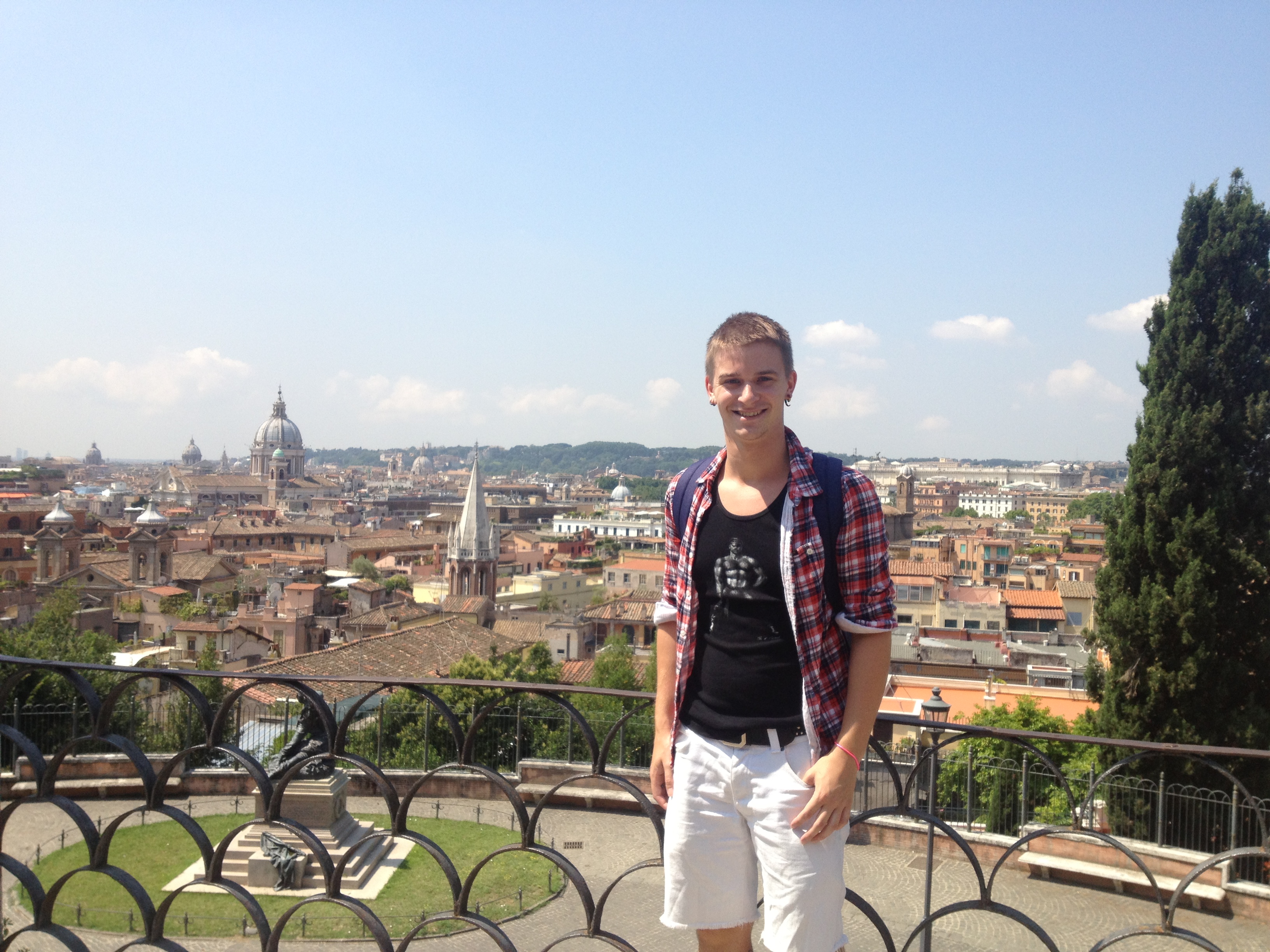
View of Rome from the top of Pincio Hill.

View of Rome from the top of Pincio Hill.

The garden on top of Pincio Hill.

The garden on top of Pincio Hill.

At the foot of the Spanish Steps I came across my first Roman fountain, the Barcaccia, sculpted in 1627 in the style of a sinking boat. Valerio had told me that the water in all of the fountains around Rome was safe to drink. I hadn’t understood at the time, but I would soon learn that similar fountains were scattered all around the city, and thirsty tourists and locals alike could be seen stealing a sip from the flowing water, or filling up their water bottles. The water all comes from clean underground springs and is completely safe to drink as it pours out of the fountain. It was a cute little feature of the city, and particularly convenient given how hot it was that day, and all the walking I still had left to do. From Piazza di Spagna I walked down Via dei Condotti, the posh shopping strip of Rome that was lined with expensive designer and luxury brands. It was an amusing juxtaposition, to see such expensive and modern designer brands in the shop fronts that were situated in some of the oldest streets in the world. Though the entire city of Rome was full of such contrasts – modern stores that were built a few months ago stood side by side in the street with structures that had been standing in place for over 3000 years. For someone who comes from a country as young as Australia, it was a strange concept to fathom.
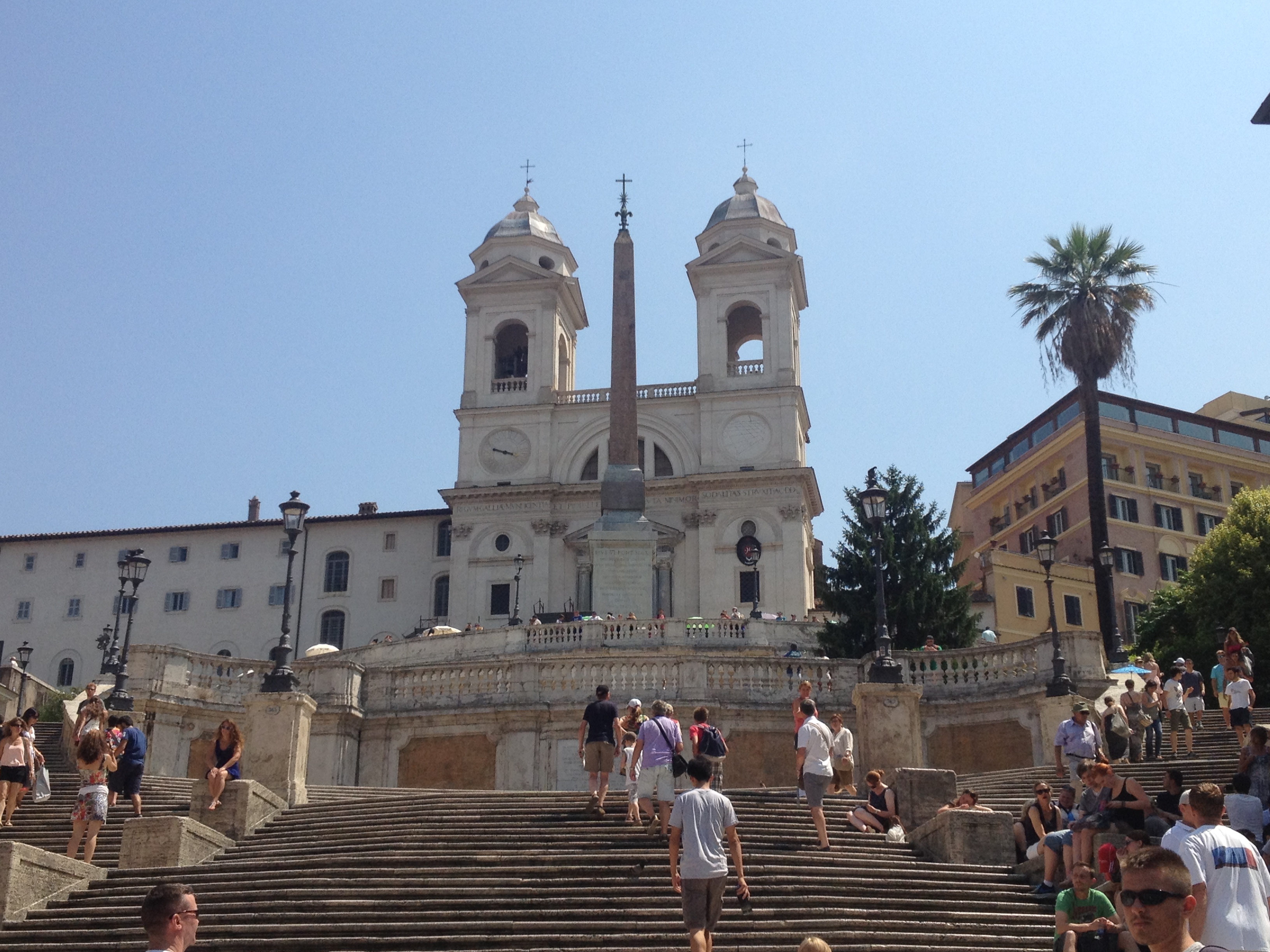
The Spanish Steps and the church at the top, as seen from Piazza di Spagna.

The Spanish Steps and the church at the top, as seen from Piazza di Spagna.

The Barcaccia fountain at Piazza di Spagna.

The Barcaccia fountain at Piazza di Spagna.

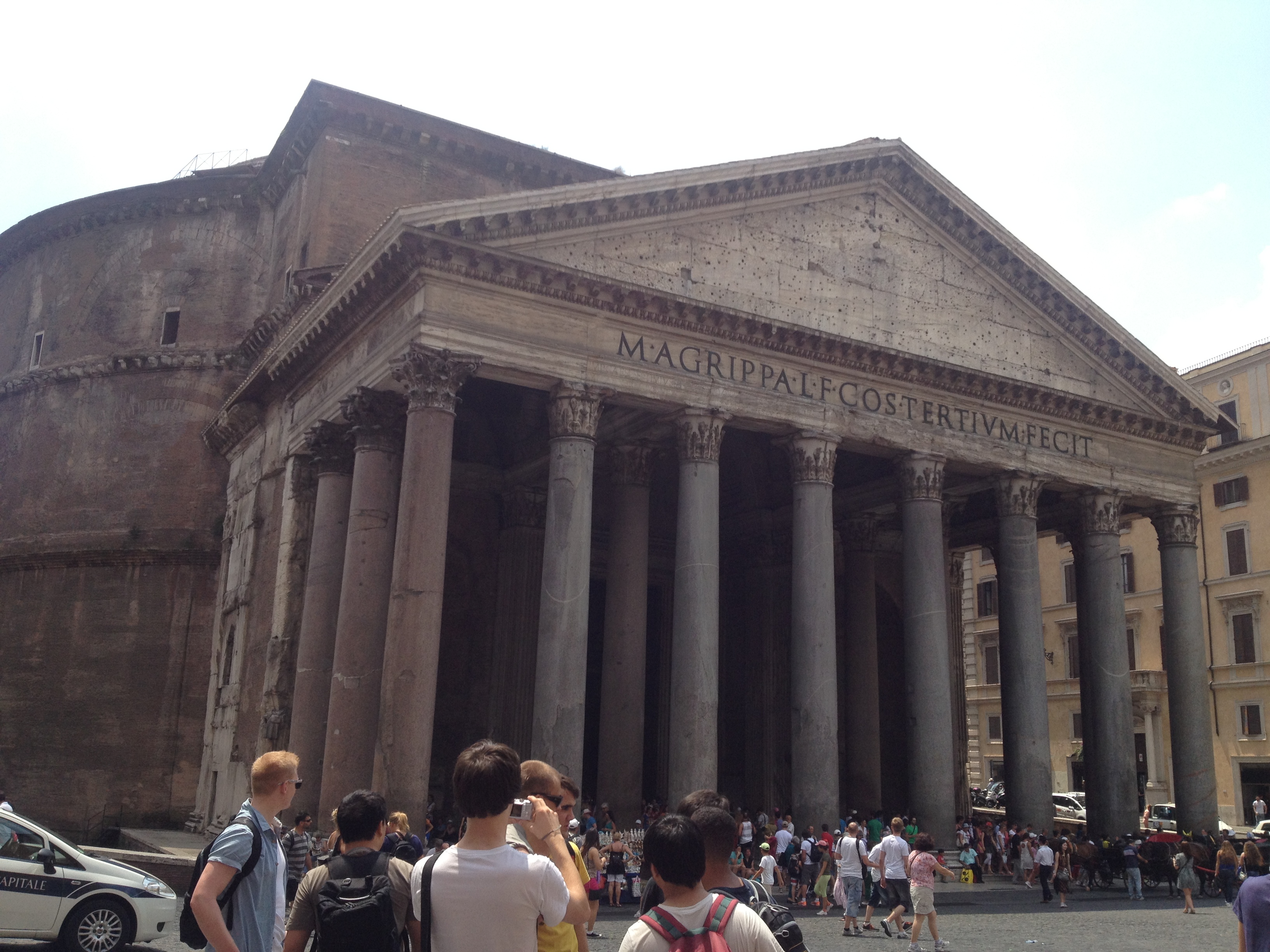
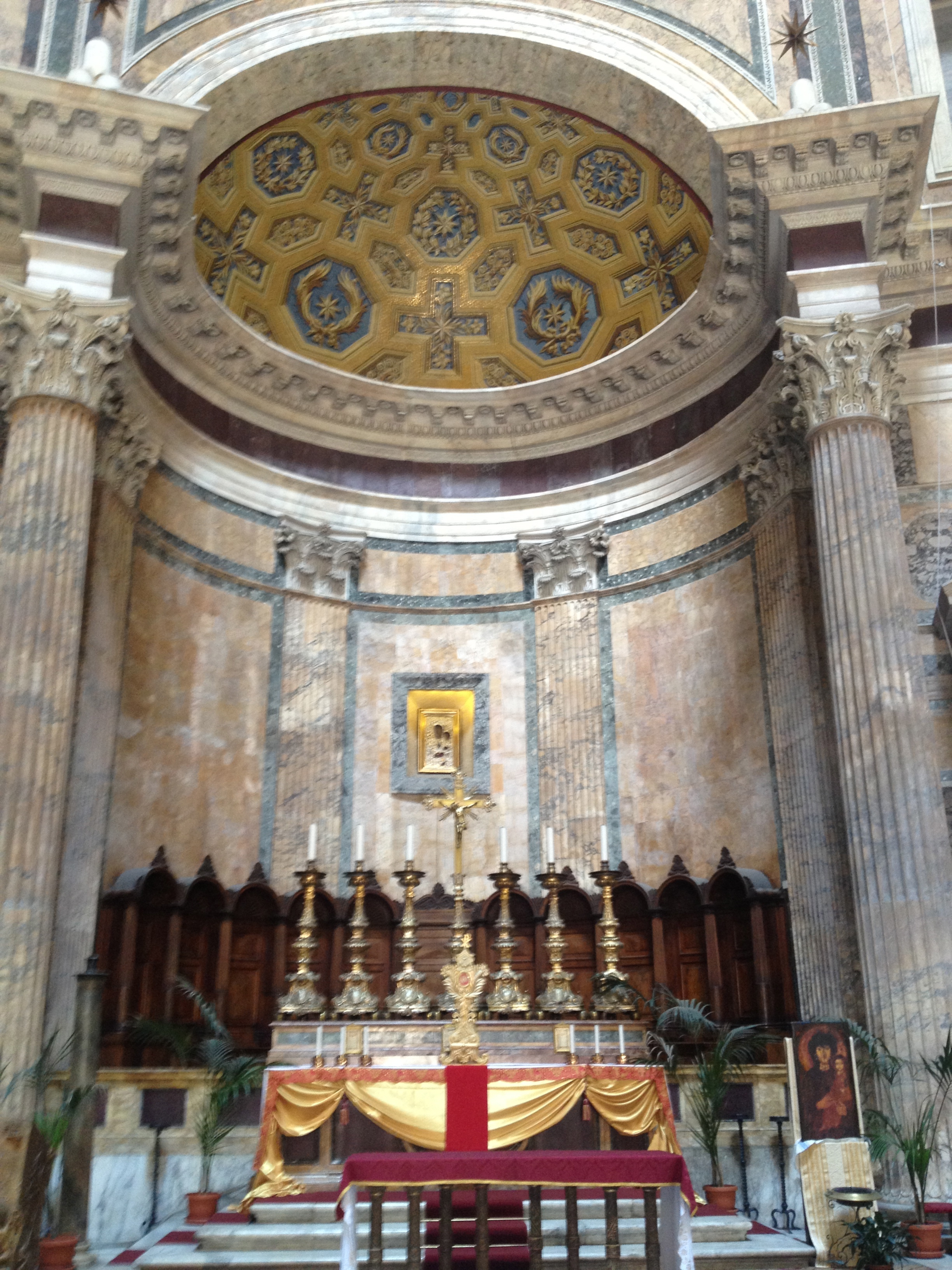
At the end of that street came the Trevi Fountain, one of the more well-known and more highly anticipated sights of Rome. The crowds around the fountain were unbelievable – it was almost impossible to get a photo without someone else being the photo. I actually saw a couple of fights break out between groups who were trying to take photos while other groups were getting in the way. It was actually quite frightening, and at that point I decided I wasn’t going to stay in any areas heavily populated by tourists for any longer than necessary. It was at that point that I broke away from Selma’s itinerary, although not entirely intentionally. I thought I was following her directions to another plaza, but after a while I emerged into a clearing to behold the Pantheon, another instantly recognisable sight. The 2000-year-old temple is now a church, and one of the best preserved monuments in Rome. It was beautiful, both inside and out, and the dome in the roof that is considered to be the ancient Romans greatest architectural achievement allowed a cylinder of sunlight to pour in from the sky. It was a little eerie, but also gave a rather holy feel to the aesthetic of the huge old room. I wandered around the inner chambers and admired some of the artworks and decorations before taking leave back out into the midday sun.

Trevi Fountain.

Trevi Fountain.

In front of (or as close as I could get to) Trevi Fountain.
In front of (or as close as I could get to) Trevi Fountain.

The Pantheon.
The Pantheon.

Alter inside the Pantheon.

Alter inside the Pantheon.

Sunlight pouring through the dome in the roof of the Pantheon.

Sunlight pouring through the dome in the roof of the Pantheon.

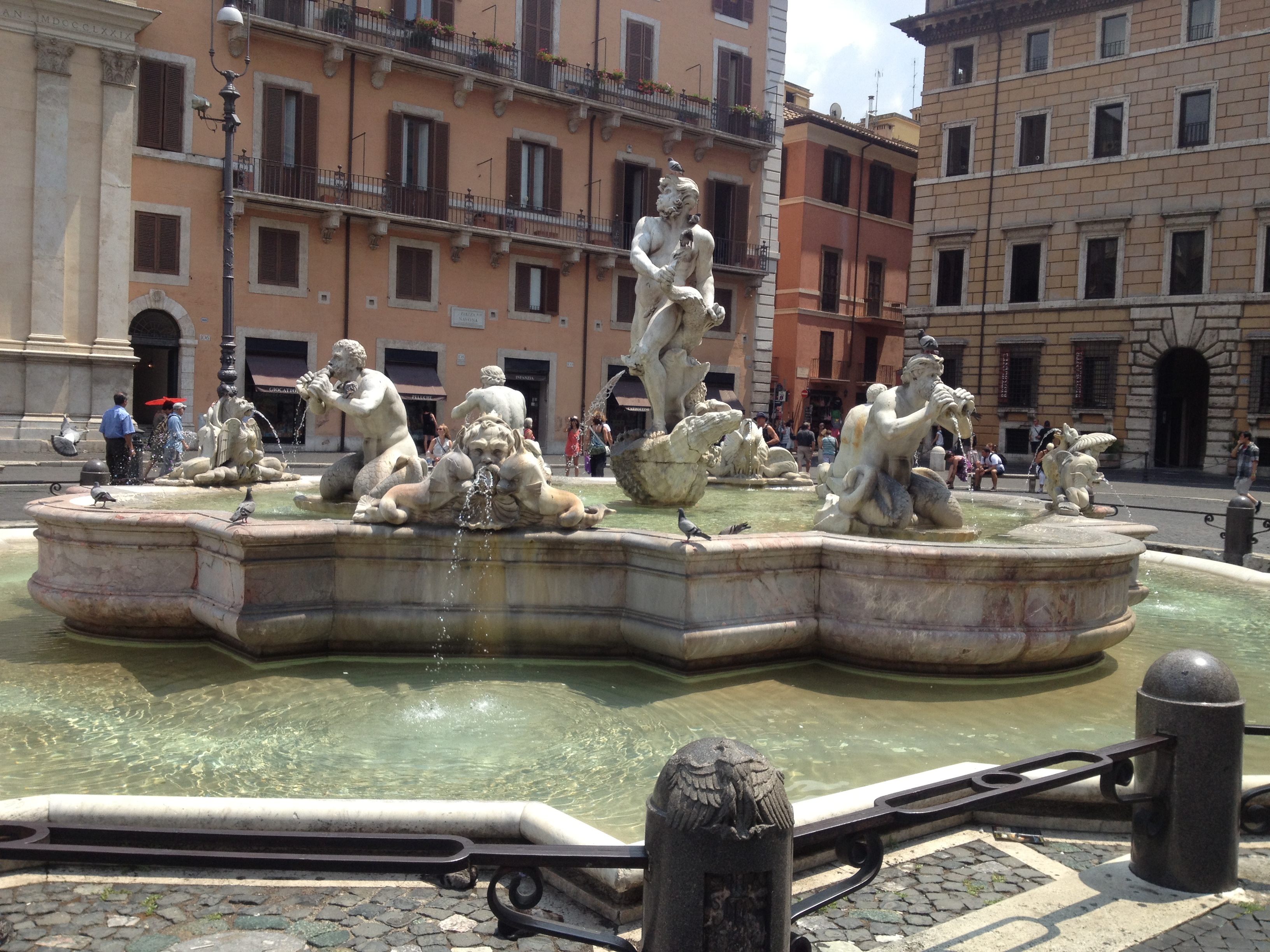
A few short streets later and I found myself at Piazza Navona, a long plaza that is home to several fountains, the most famous of which is Fontana dei Quattro Fiumi, the Fountain of Four Rivers. The plaza was full on tourists, but it also seemed to be a popular place for buskers, street performers, artists drawing both realistic sketches and caricatures, and peddlers selling all kinds of souvenirs and trinkets. It reminded me a lot of some of the heavily touristic areas in Paris, and I stayed for long enough to observe some of the interesting things going on, and take a few photos of course, before heading off and moving on.

The Fountain of the Four Rivers, the centrepoint of Piazza Navona.

The Fountain of the Four Rivers, the centrepoint of Piazza Navona.

The Neptune Fountain in Piazza Navona.
The Neptune Fountain in Piazza Navona.

La Fontana del Moro, the Moor Fountain, in Piazza Navona.

La Fontana del Moro, the Moor Fountain, in Piazza Navona.

There were a few other things on Selma’s itinerary for the first day, but they were more missable things such as places to eat or where to get some good gelato. I would have followed through and investigated, but by that point I was completely exhausted. My body still hadn’t fully recovered from the breakdown in Madrid, so I ended up grabbing some quick take away food before heading back to Valerio’s to rest and recover for the remainder of the afternoon. I know, it seems sacrilegious in a city and country known for some amazing cuisine, but the last thing I felt like doing was sitting down at an overpriced tourist restaurant by myself. However, I did swing by the Termini train station on my way home, so that I could book my tickets out of Rome for a few days time. On my way there I passed a building which I later learned to be Monumento Nazionale a Vittorio Emanuele II, the Alter of the Fatherland, the National Monument for Victor Emmanuel II, which had also been on Selma’s itinerary. It’s a controversial monument that was built in honour of the first king of unified Italy, and also holds the home of Italy’s Tomb of the Unknown Soldier and the accompanying eternal flame.

The National Monument for Victor Emmanuel II.

The National Monument for Victor Emmanuel II.

After waiting an hour to be served and book my train tickets (again, this is Italy, so no surprise there), I took the metro and the bus back home to Valerio’s. Considering I was far from my peak physical condition, I felt I had done a decent job of sightseeing for the day. Rome wasn’t built in a day, and you certainly can’t see it in one either, so I had a quiet and early night, making sure I got plenty of sleep to continue the exploring tomorrow.
Sacred Sunrise: Angkor Wat

The streets of Siem Reap were almost deserted – it could have been a ghost town if it weren’t for the few other tuk tuks and the occasional motorbike that puttered along on the road beside us. I rubbed the sleep from my eyes as dawn unfolded around the small Cambodian town – as I’ve mentioned before, early mornings and I make strange bedfellows, and I have no clear recollection of the last time I was getting out of bed at dawn. I peered through the thin light around us, and watched as the streets fell away to be replaced by dense woodlands and rainforest. I was on my way to the temples of Angkor Wat, to see what is regarded by many as one of the most beautiful sunrises in the world.

***

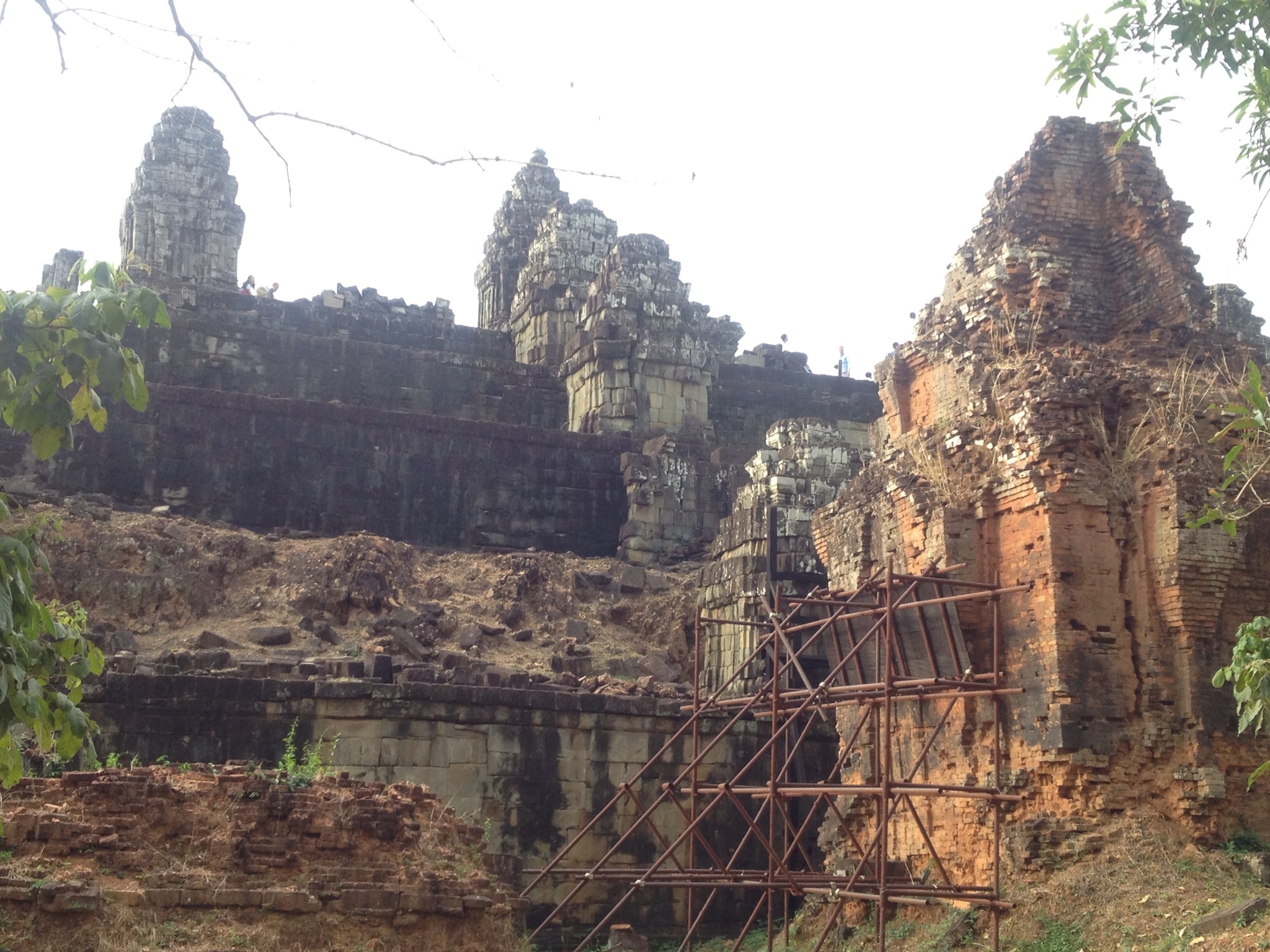
Yet my Angkor Wat experience had started the previous afternoon. After crawling off my overnight bus from Sihanoukville, I stumbled into a tuk tuk and asked to be taken to a cheap hostel. After being shown the dingy and humid dorm rooms, I caved in to the sales pitch of the hostel owners and checked into a private room – after the weekend I’d had, a comfortable bed, a private bathroom and a place to wash my underwear proved to be irresistible. Treat yourself, I told myself, and collapsed onto the bed to the catch up on the sleep that I had not managed to acquire during my overnight transit. I’d managed to strike an arrangement with my tuk tuk driver to be my guide through the major temples of Angkor Wat, so he told me he would come back this afternoon to take me up there to see the sunset. Unfortunately, he’d failed to mention that to be allowed inside any of the sacred buildings, you need to have the standard respectful clothing. In other words, attire that covers your shoulders and knees. I should have known better – it’s been the same with all the temples and palaces that I’ve visited throughout South East Asia. But my momentary lapse in judgement allowed me to rock up to the temple that is famous for its view of the sunset, only to be advised I wouldn’t be allowed to climb to the top due to the singlet I was wearing. I kicked myself for not realising this before I set out from the hotel, and then took a few photos of the view that I could see.

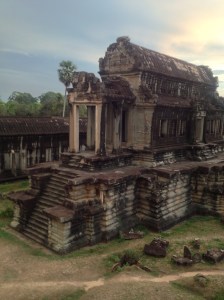
The ruin which has a beautiful view of the sunset, which I was not able to enter.

The ruin which has a beautiful view of the sunset, which I was not able to enter.

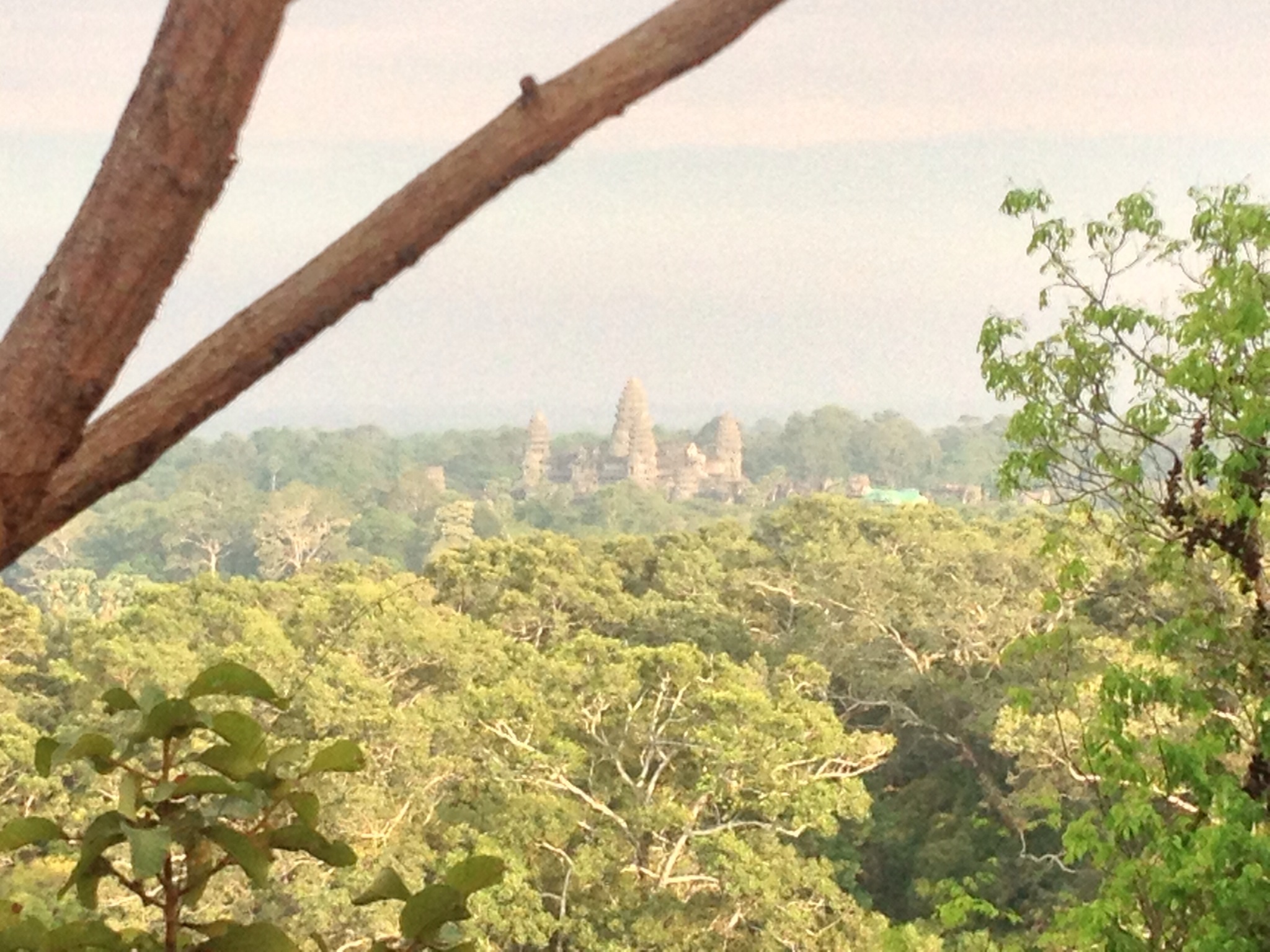
View of Angkor Wat from the base of the sunset ruins.

View of Angkor Wat from the base of the sunset ruins.

I was about to ask to go back to Siem Reap, but my tuk tuk driver said that I’d still be able to walk across the bridge that crossed the moat that surrounds the main Angkor Wat temple, all the way up to the main gate, so I decided to make the most of the sunset and check it out. The temple is really quite a fascinating structure, and it looked beautiful bathed in the light of the setting sun. I wandered up to see now far I would be allowed in. However, what I didn’t realise is that the temples technically close at five o’clock, and at this point it was almost six. Despite there being lots of people around, there were no guards or staff checking for tickets. As a result, my wandering found me quite deep inside some of the main chambers before I realised that I was well within the areas that required one to be ‘respectfully dressed’. But I’d come this far, and I couldn’t pass up the opportunity to take a few photos of the temple when it wasn’t completely flooded with tourists. I took a few photos of the mystical place, made a silent apology through prayer to anyone I may have offended, and quickly scampered out of the temple and back to my tuk tuk.

Angkor Wat in the light of the sunset.

Angkor Wat in the light of the sunset.

Inside the main Angkor Wat temples.

Inside the main Angkor Wat temples.

One of the entrances into the main temple.

One of the entrances into the main temple.

***

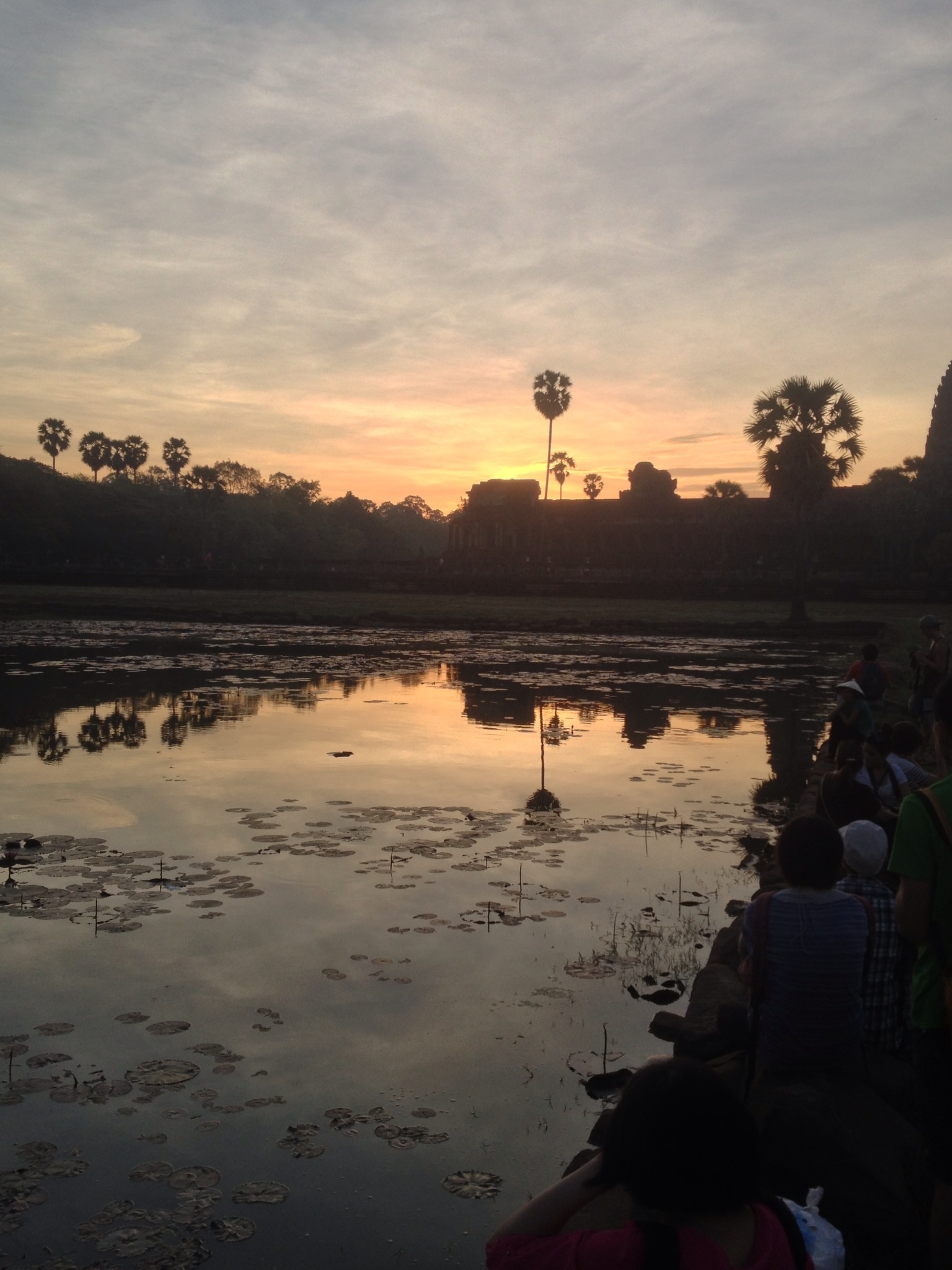
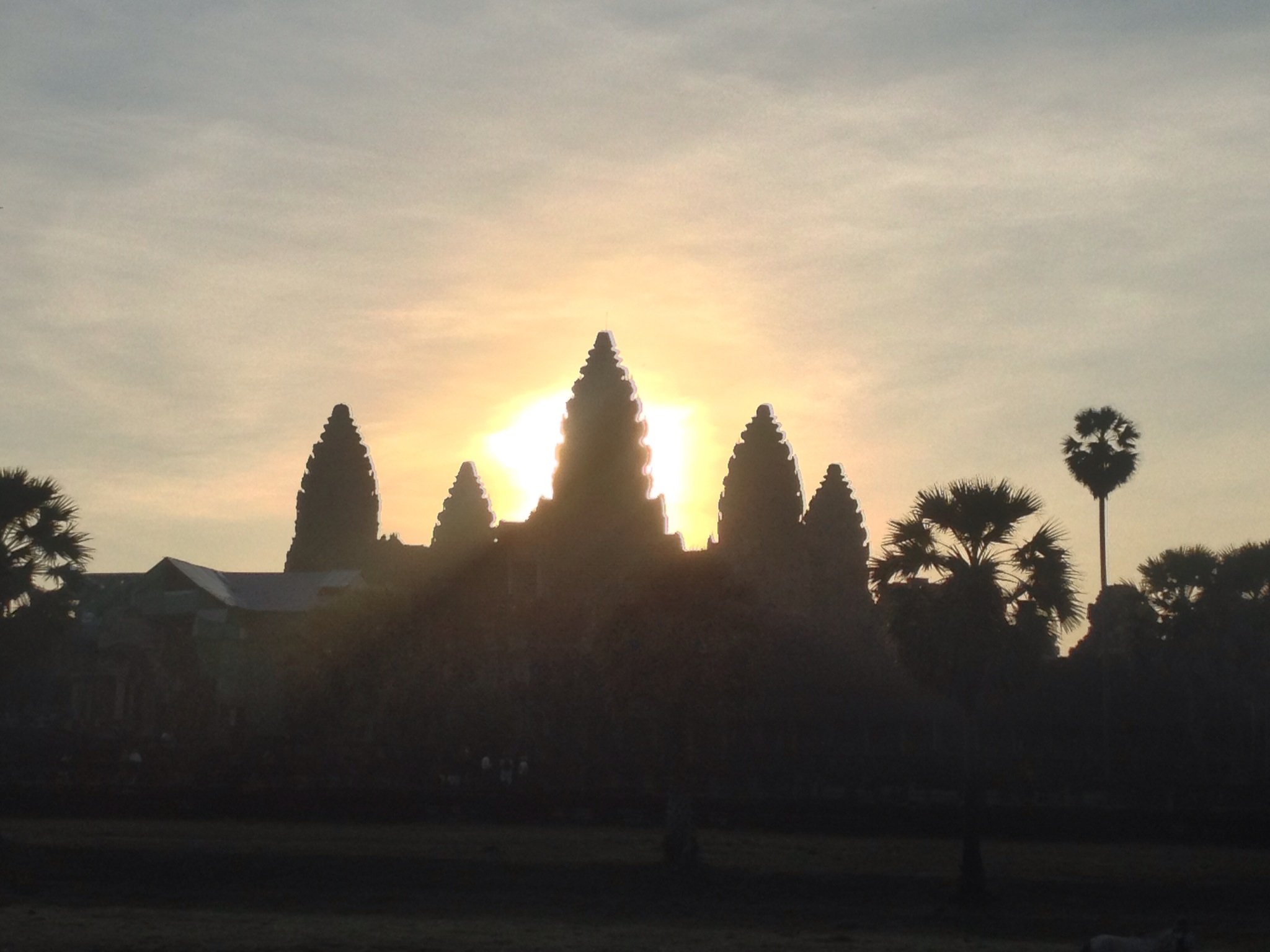
Flash forward to the next morning, and I am stepping out of the same tuk tuk in the same location, into a throng of people who are all making their way across the moat into Angkor Wat. Like cattle we plodded through the gates and into the inner compound, where there were already hundreds of people claiming their positions and setting up their cameras, keenly anticipating the rising sun. I found my own spot amongst the crowd and readied my camera for the moment the sun broke from behind the horizon and cast the temple into a silhouette. It was clear to see why the sunrise was such a popular event – the reflection in the pool within the grounds was simply stunning, and the temple took on an even greater air of majesty with sun burning brightly in the background. However, I couldn’t help but feel as though the experience was detracted somewhat by the extreme presence of tourism. It felt as though this structure, originally built as a famous and majestic Hindu palace, has been reduced to a holiday snap, a postcard, or simply just another checked box on a list of things to do in South East Asia. While I was still able to admire the view, the sense of mysticism and spirituality that I had while exploring the inner chambers yesterday had been successfully drained by the amount of photo taking going on around me.

Reflection of the sunrise on the Angkor Wat pool.

Reflection of the sunrise on the Angkor Wat pool.

The throng of tourists crowding around the pool in anticipation.

The throng of tourists crowding around the pool in anticipation.

Sunrise over Angkor Wat.

Sunrise over Angkor Wat.

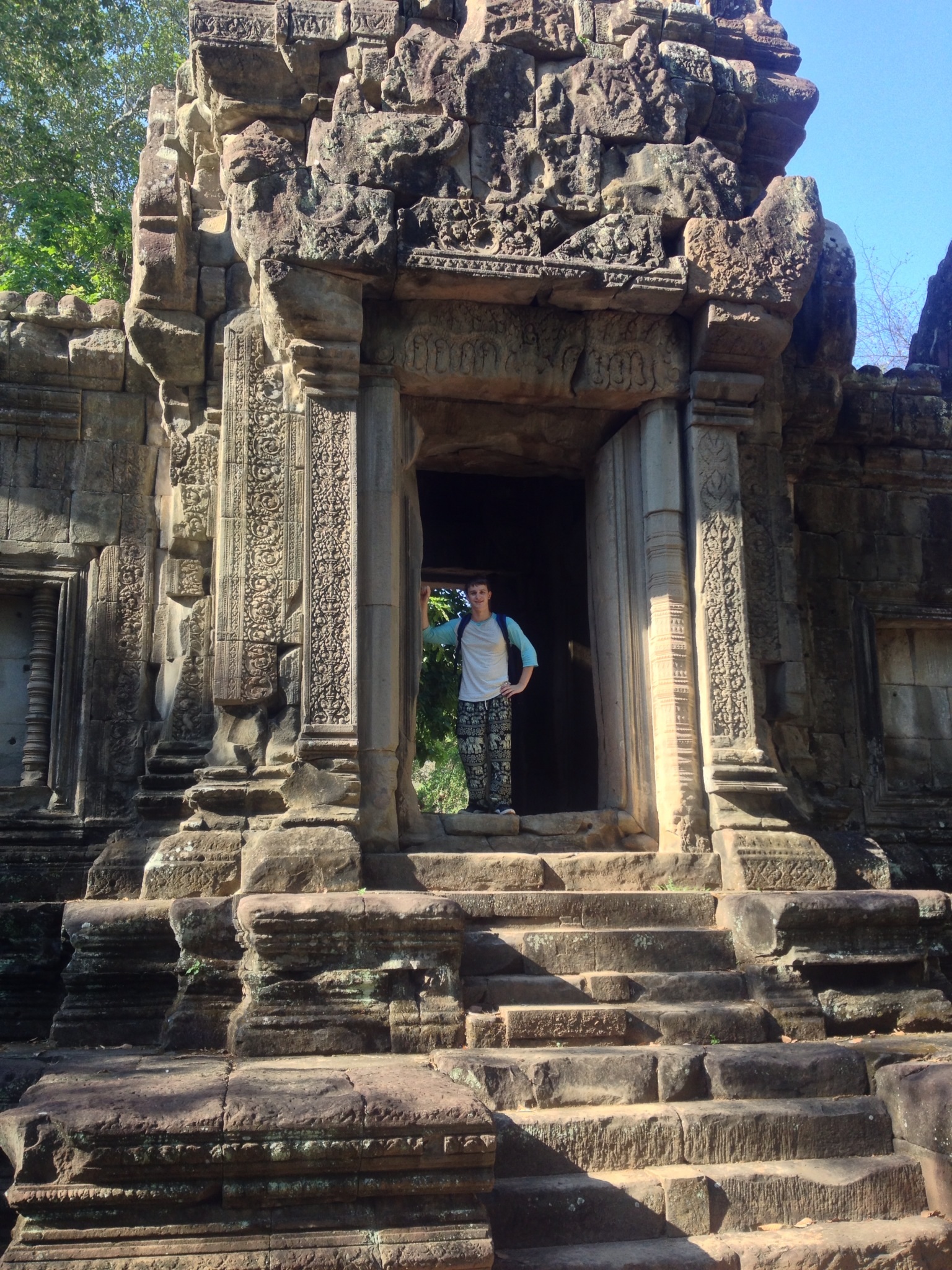
Standing in one of the entrances to the inner chambers.

Standing in one of the entrances to the inner chambers.

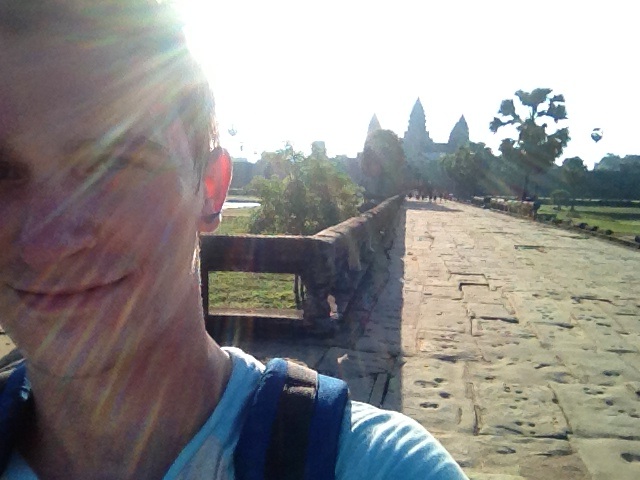
Sunrise selfies at Angkor Wat.

Sunrise selfies at Angkor Wat.

***

However, Angkor Wat is only one temple in what is actually a huge collection of relics and ruins scattered throughout a huge area. The entrance into the domain of these temples is about four kilometres from the town of Siem Reap, and once you pass the main temple you reach Angkor Thom, four times the size of Angkor Wat and not so much a temple as it is an ancient enclosed city, full of its own collection of ruined temples, the largest and most impressive of which is Bayon. My tuk tuk driver dropped me off there, and allowed me to explore the smaller ruins spread out within the walls of Angkor Thom. It was here, wandering through the rainforest and getting lost inside the deserted temples, that I really felt the awe and wonder that comes with the history behind these epic structures. While Angkor Wat was originally built as a Hindu palace, Bayon and the rest of Angkor Thom were Buddhist monuments. I still struggle to get my head around the specifics of the history, a tale riddled with kings, conversions and a host of sects within the two religions, even after a later visit to the Angkor National Museum, but for the moment I was happy to just wander through and explore the ancient wonderland.

Bayon temple inside Angkor Thom.

Bayon temple inside Angkor Thom.

Inside one of the smaller ruins.

Inside one of the smaller ruins.

A building colloquially known at the Elephant Temple.

A building colloquially known at the Elephant Temple.

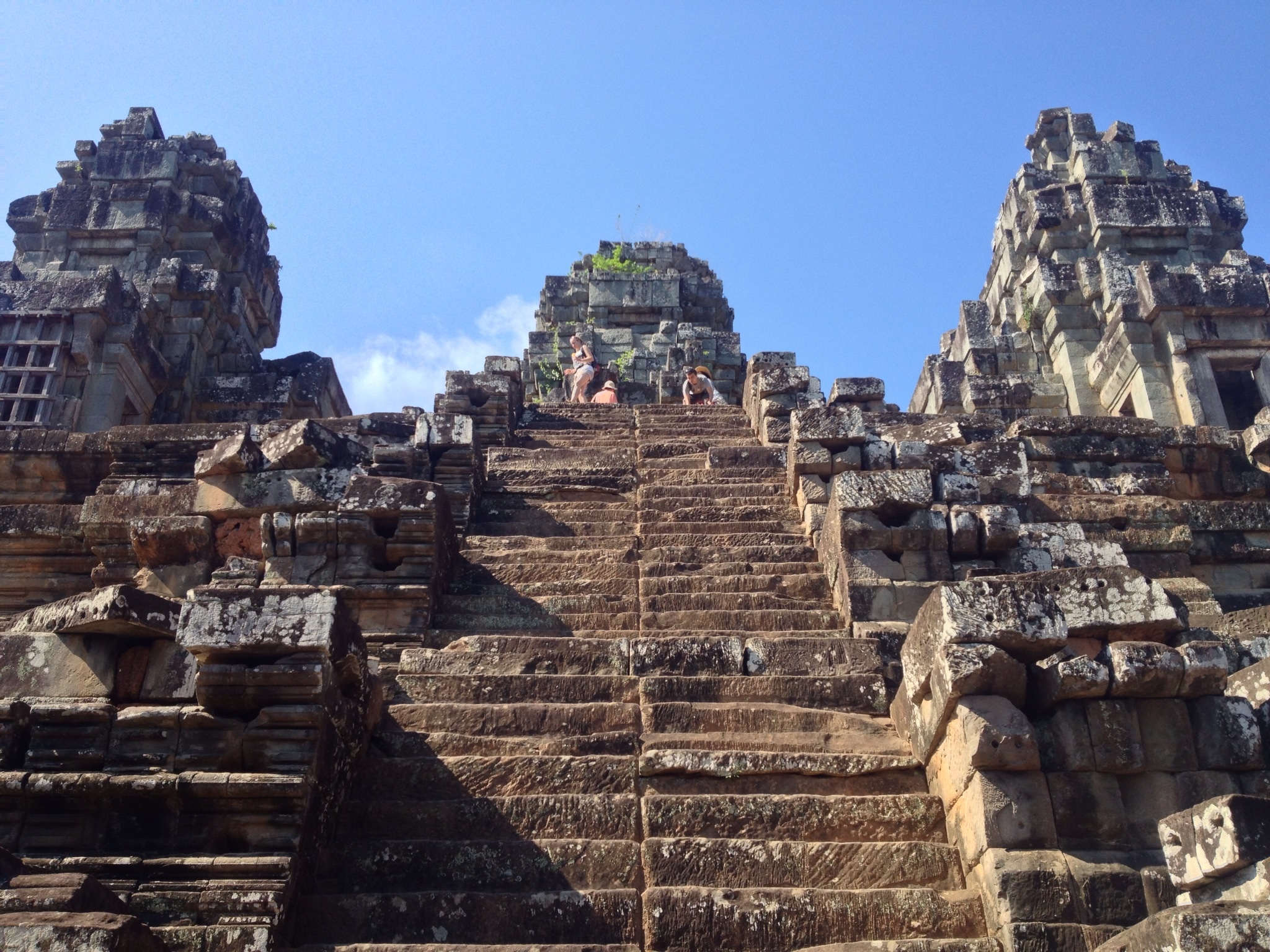
The steep steps of Ta Keo.

The steep steps of Ta Keo.

Part of the temple featured in Tomb Raider.

Part of the temple featured in Tomb Raider.

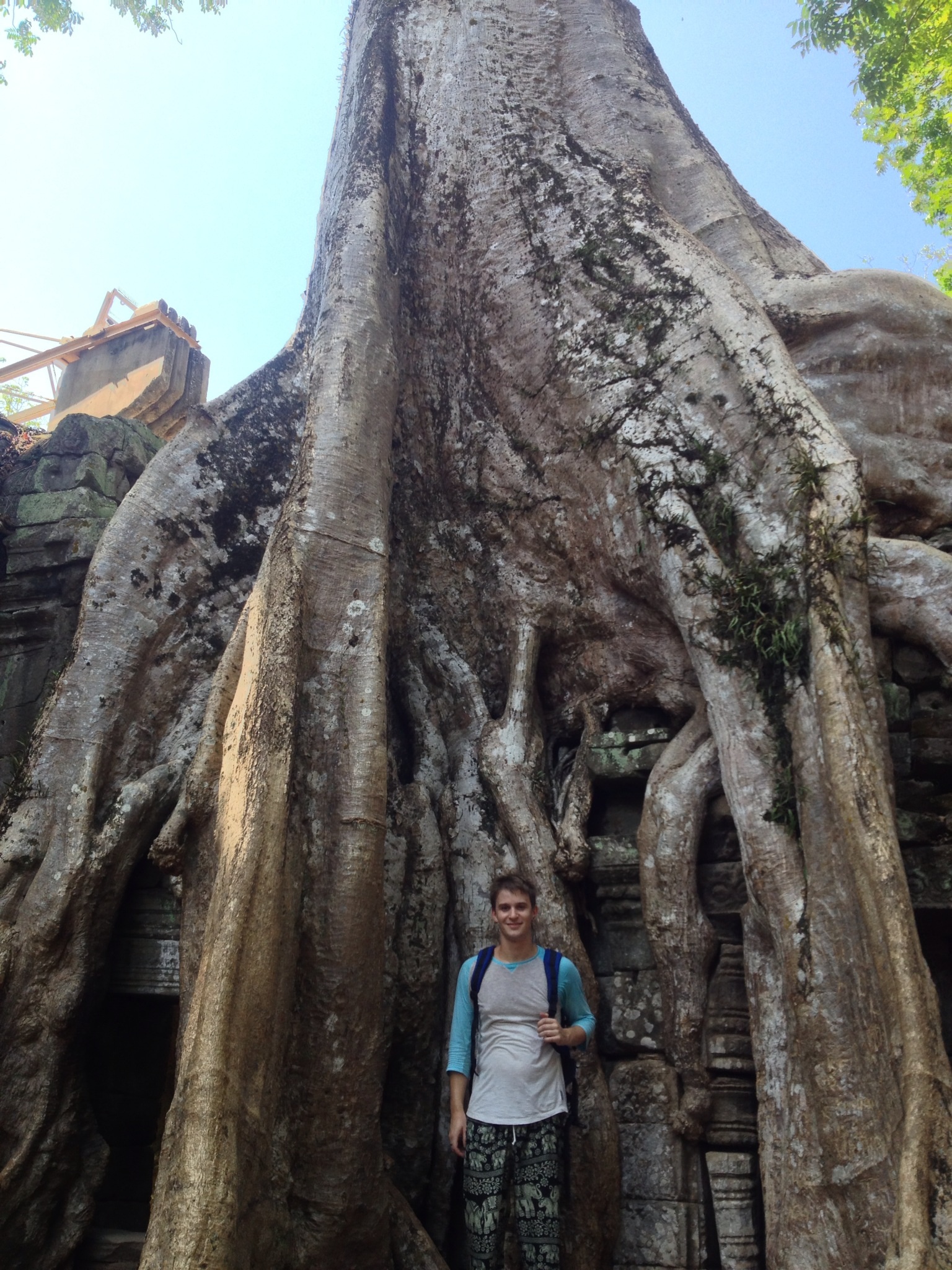
Myself with the 'Tomb Raider tree'.

Myself with the ‘Tomb Raider tree’.

***

My tuk tuk taxied me between the rest of the temple highlights, including an unfinished temple called Ta Keo, which lacked the detail of some of the other temples but whose steep staircases provided me with my daily exercise, and a dilapidated compound which I believe was called Ta Prohm, which contained several areas that were the location for the filming of Tomb Raider. Many of the temples were in poor condition, with parts of them closed off to the public due to reconstructions that were underway, but they were nevertheless an impressive sight. I was told by my mother that most people allow three days to see the temples. In Bangkok, Brendon had said one day was enough to see the best bits, unless you were truly mad about temples. In the end it wasn’t even midday before I decided to wrap things up at Angkor Wat. Between my afternoon visit, and having been awake since before sunrise, I had grown exhausted, and I also felt like I had seen quite a lot of what the area had to offer. Of course, there were more temples, but as my time in South East Asia was drawing to a close, I decided I had seen enough temples in the past six weeks.

Having said that, the temples of Angkor Wat really are something entirely different and special. It might have been checking off another box on the list of things to do in South East Asia, but it was definitely more than that. It’s an ancient and marvellous wonder, and one of the few things in this part of the world that could unquestionably be classified as a must see.

***

NB: While I tried my best to learn the history of the temples that I visited, it was long and complicated, and I can’t guarantee that everything I’ve said is correct, especially regarding what these temples were used for in previous ancient cultures. For more reliable facts on these things, please continue your research elsewhere